Should I hire someone to blow out my sprinkler lines?
Hire it out if you do not have a compressor that delivers 10 to 25 cubic feet per minute, if you cannot tell where the blowout fitting and drains are, or if the backflow device needs attention. Do it yourself only when you have the right compressor, a 50 psi regulator, eye protection and a system with simple zones.
Free to ask. Local shops send quotes, and you pay only when you book one.
By Kasra Taheri, Founder, LoclisPublished
Researched and drafted with AI, then checked claim by claim against the sources listed below before it was published. Prices and rules change; the dates beside each source say when it was last checked.
Step by step
Read when to stop and call a pro, further down this page, before you start.
Step 1: Check for drain valves
Look for manual or automatic drain valves at the low points of your system, since they may mean no blowout is needed.[4]
Step 2: Check your compressor
See whether you can rent or buy a compressor that delivers 10 to 25 cubic feet per minute and has a regulator that holds air to 50 psi.[4]
Step 3: Find the blowout fitting
Locate the air connection on the mainline and confirm that it is after the backflow assembly.[1]
Step 4: Decide
If any of those are missing, or you are unsure, hire a contractor; otherwise follow the blowout steps carefully.
Step 5: Hire with a licence check
Check the contractor's DPOR licence and get the scope in writing before the visit.[3]
Hire someone if you do not have a compressor that suits the job, or if anything about the system, the blowout fitting or the backflow device is unclear to you. Do it yourself if you have the right compressor, a regulator set to 50 psi, eye protection and a system with simple zones. Rain Bird says that if the appropriate air compressor is not available, you should call an irrigation contractor.[4]
The reason to be careful is what a bad winter does. Richmond Public Utilities says water left in sprinkler lines, valves or the backflow device can split or crack pipes, even buried ones.[5]
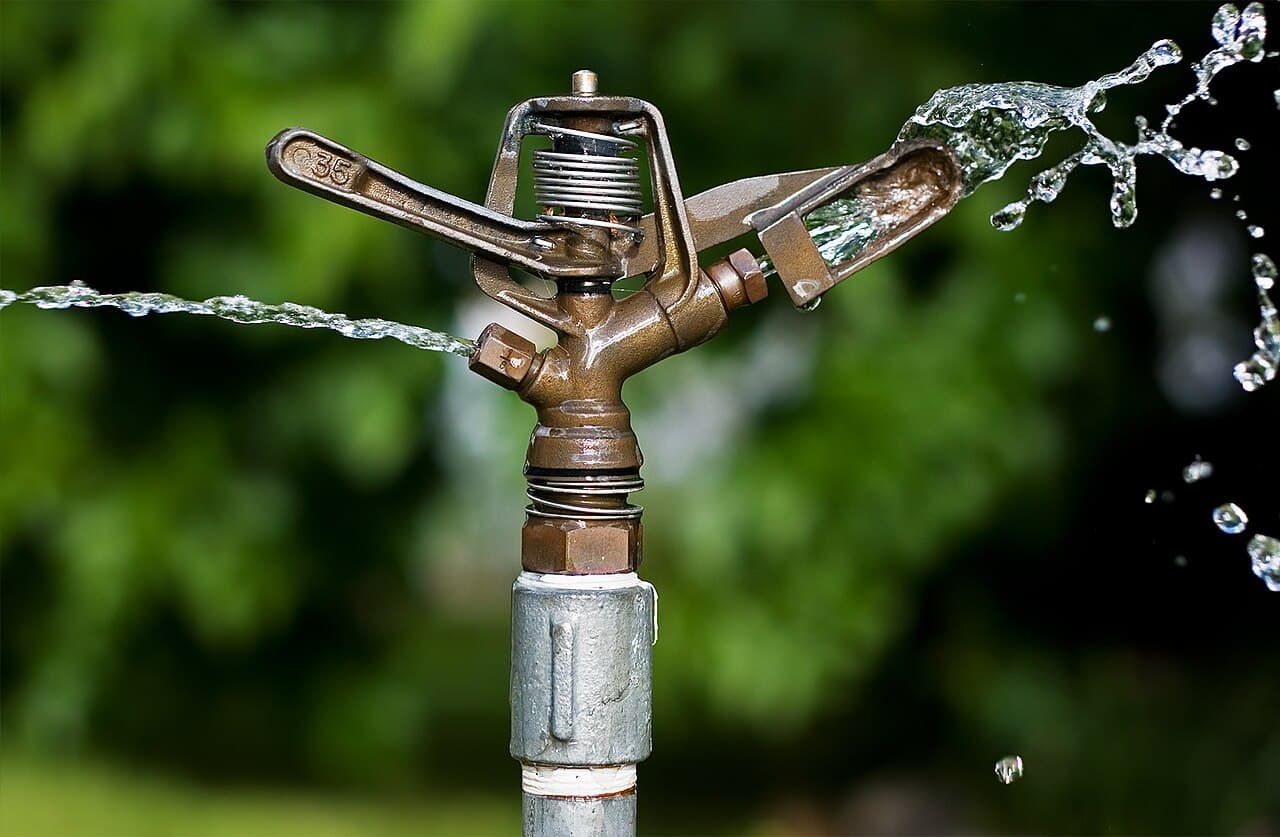
When hiring makes sense
You do not have the right compressor. Rain Bird says to rent or buy a compressor that delivers 10 to 25 cubic feet per minute, and warns that some small 2 hp shop compressors may not be adequate.[4] Rain Bird warns that a high-pressure, low-volume compressor puts very severe stresses on every component of the system.[4] A contractor arrives with the right equipment.
You are not sure of the limits. Rain Bird says air pressure must not exceed 50 psi during a blow-out, and that a pressure regulating valve must be used.[4] If you do not know how to set or check that, do not start.
The system is large or has delicate parts. Many sprinklers with plastic gear drives use water for lubrication and cooling, so running air alone for long can damage the drive.[4] Many zones, many rotors or a system you do not know well all raise the chance of a mistake.
The backflow device or the fitting is in question. In Chesterfield County a blow-off connection must be installed after the backflow prevention assembly, not upstream of it.[1] Chesterfield County says its backflow assemblies cannot be wrapped with insulation and must be protected from freezing.[1] Fixing that is plumbing work, not a blowout. See what a backflow preventer is and how it is tested.
You want it bundled. Rain Bird says local irrigation contractors usually offer the blowout service, which may also include spring startup.[4] One visit in fall and one in spring from the same company also makes it easy to know whom to call.
When doing it yourself is reasonable
You can do it if you have the right compressor, you can set it to 50 psi, you can stand clear of the lines, and your system has a clear blowout fitting on the mainline. Do not stand over pipes, valves or sprinklers during a blow-out.[4] The full method is in how to winterize a sprinkler system. If your system has drain valves, you may not need a compressor at all.
Hiring in Virginia
DPOR's guide says a Virginia contractor's licence is required when the work is valued at $1,000 or more.[2] Check the licence on DPOR's licence lookup.[3] Virginia law requires all licensed contractors to provide a written contract for residential work.[2] For a price idea, read what a sprinkler blowout costs in Virginia.
Stop and call a pro if
- You do not have the right compressor. Rain Bird says to call an irrigation contractor if the appropriate air compressor is not available.[4]
- The backflow device needs to be opened or tested. Leave that to a certified tester.
- Anything leaks or hisses once air is on. Shut the compressor off, then call a licensed contractor.
- You cannot find the blowout fitting. Do not improvise a connection.
Getting help in Virginia
Browse more irrigation answers or irrigation businesses. When you are ready, describe the sprinkler job once and licensed local contractors can quote it.
Common questions
- When is hiring clearly the better choice?
- When you do not have a compressor that delivers 10 to 25 cubic feet per minute. Rain Bird says that if the appropriate air compressor is not available, you should call an irrigation contractor. A small shop compressor is not a substitute.
- Is it dangerous to blow out sprinkler lines myself?
- It can be. Wear eye protection, keep the air at or below 50 psi, and do not stand over pipes, valves or sprinklers during a blow-out. Rain Bird warns that a high-pressure, low-volume compressor puts very severe stresses on every component of the system.
- What can go wrong if the blowout is done badly?
- Water left in sprinkler lines, valves or the backflow device can split or crack pipes, even buried ones, according to Richmond Public Utilities. Too much air or too long on one zone can also damage valves and the drive mechanism of plastic-gear sprinklers.
- What should I ask a contractor before booking?
- How many zones the price covers, what air pressure they use, whether the visit includes the backflow device and spring startup, and what happens if they find a leak. Get it in writing, and check the licence on DPOR before they arrive.
- Does the contractor need to be licensed?
- DPOR's guide says a Virginia contractor's licence is required when the work is valued at $1,000 or more. A routine blowout is typically under that, but any repair work found afterwards can cross it, so check the licence anyway.
Sources
- [1] A Guide to Selecting, Installing and Maintaining Backflow Preventers in Residential Irrigation Systems, Chesterfield County Utilities Department. Checked October 27, 2026.
- [2] What You Should Know Before You Hire a Contractor, Virginia Board for Contractors, DPOR. Checked October 27, 2026.
- [3] License Lookup, Virginia Department of Professional and Occupational Regulation. Checked October 27, 2026.
- [4] Homeowner's Guide to Winterization, Rain Bird Corporation (manufacturer). Checked October 27, 2026.
- [5] Winterize Your Sprinkler System Before It's Too Late (posted October 29, 2025), City of Richmond Department of Public Utilities. Checked October 27, 2026.
Want a pro to handle it?
Describe the job once. Licensed local businesses send quotes, and you pay only when you book one.
Get a quote from a local pro