Why did my sprinkler pipes crack over the winter?
Water left in the pipes, valves or backflow device froze and expanded, and that pressure split them. Buried lines are not safe: Richmond Public Utilities says most yards do not bury sprinkler lines deep enough to escape the cold. In spring, open the water slowly, run each zone, and look for pooling water to find the damage.
Free to ask. Local shops send quotes, and you pay only when you book one.
By Kasra Taheri, Founder, LoclisPublished
Researched and drafted with AI, then checked claim by claim against the sources listed below before it was published. Prices and rules change; the dates beside each source say when it was last checked.
Step by step
Read when to stop and call a pro, further down this page, before you start.
Step 1: Keep the sprinkler water off
Leave the sprinkler mainline shut-off valve closed and the controller on rain mode until you are ready to test, so no water runs through a split pipe.
Step 2: Look at the backflow device
Check the backflow device for visible cracks or damage from the winter freeze, and make sure its valves are closed.[2]
Step 3: Open the water slowly
Open the mainline valve slowly and gradually to pressurize the system.[2]
Step 4: Run one zone at a time
Start each station from the controller and watch for water pooling around heads or along pipe runs, and for misting or weak heads.[2]
Step 5: Mark the wet spots and shut off
Put a flag or stake at each soggy spot or geyser, then close the mainline valve again until the pipe is repaired.
Freezing water did it. When water is left inside your sprinkler lines, valves or backflow device, it freezes and expands. That pressure can split or crack pipes, even those buried underground.[1] Rain Bird says the same thing in plain terms: if any water freezes in your sprinkler pipes, it will expand, which can cause them to break or burst.[4]
Why buried pipes are not safe
Many people assume sprinkler pipes sit below the frost line. Richmond Public Utilities warns that in most yards, sprinkler lines are not buried deep enough to be protected from the cold.[1] Sprinkler pipe is laid shallow, so a hard freeze reaches it.
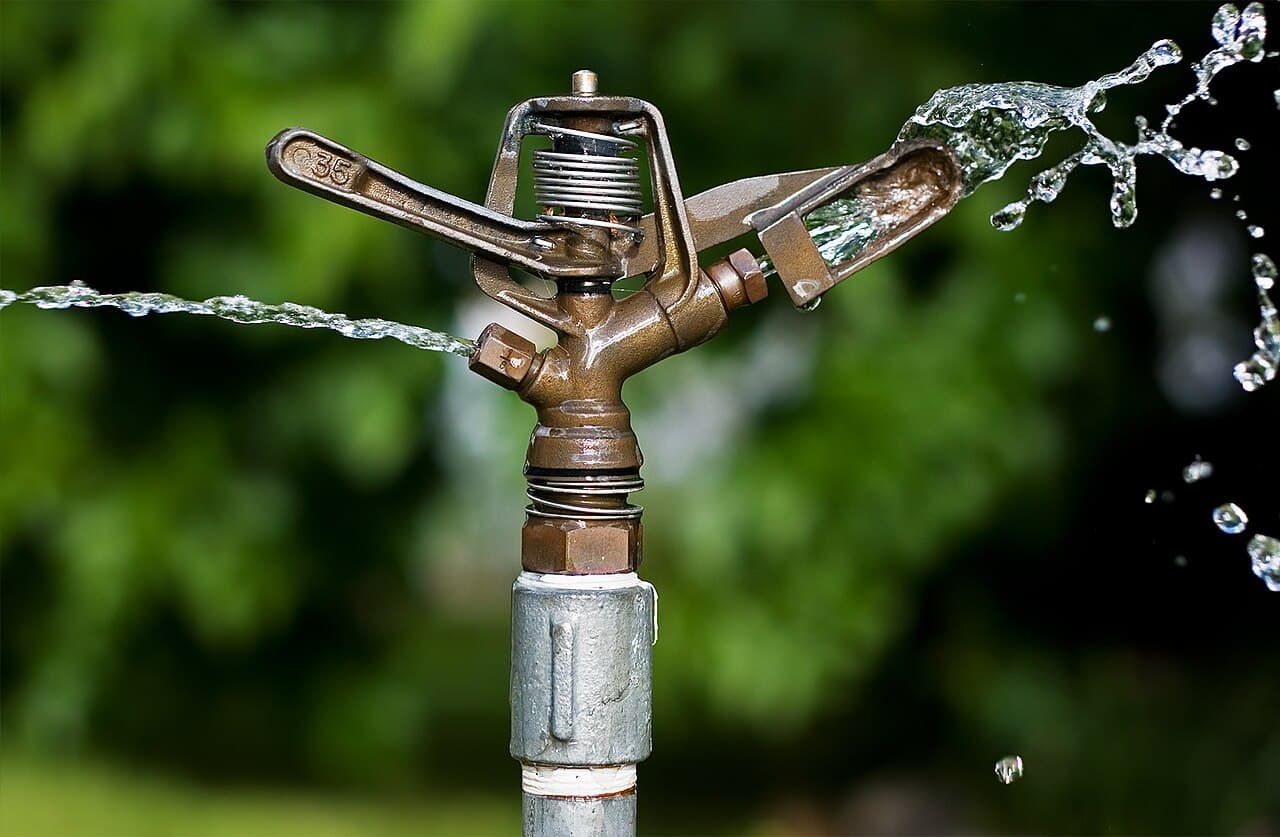
The damage depends on where the water sat. Richmond's guidance is blunt: water left inside pipes is the main cause of winter damage.[1] The usual culprits are a zone that was never fully drained, a low spot in the pipe run where water collects, a valve that still held water, and a backflow device left uncovered above ground.
Sometimes the system was never drained at all, and sometimes a drain valve was stuck or an air blow-out missed a section. Either way, you find out in spring.
Finding the damage in spring
Winter does not leave a clear signal. Rain Bird puts it this way: pipes may have frozen, seals may have cracked, and your backflow preventer may need close inspection.[2] A quiet crack can run for weeks before you see it, which is why Richmond lists higher water bills from unnoticed damage as one result of failing to winterize.[1]
Start at the backflow device. Look for visible cracks or damage from the winter freeze.[2] Then bring the water back slowly. Rain Bird advises opening the valve slowly and gradually to pressurize the system to avoid unnecessary wear and tear.[2] Opening it fast can turn a hairline crack into a blowout.
Run each zone for a minute or two and walk it. Water pooling at a head or along a line, a head that mists, or a zone with weak pressure points to a split pipe or a cracked fitting. If you want the full spring routine, see how to turn a sprinkler system back on in spring.
One caution: high pressure causes similar damage on its own. Rain Bird notes that a system with too much pressure will result in cracked pipes, busted valves, sprinkler head leaks and inefficient watering.[3] If a pipe cracked in a mild winter, pressure may be part of the story.
What a repair involves
A cracked head or riser near the surface is a small job; see how to replace a broken sprinkler head. A split in buried pipe means digging, cutting out the damaged section and splicing in new pipe and fittings, and it may mean several breaks in one zone, because ice rarely cracks only one spot. A cracked valve or backflow device is a different matter again. For cost drivers, see what a sprinkler repair costs in Virginia.
Stop and call a pro if
- Water keeps running after you close the mainline valve. That points to a valve or a leak on the house side of the system.
- The backflow device is cracked. It protects the drinking water, and ask your water utility who may test and replace it; see what a backflow preventer is and how it is tested.
- You find more than one wet spot in a zone. Several breaks mean a longer repair, and a contractor can pressure-test each section.
- The leak is near the house, driveway or a utility line. Do not dig there yourself.
- The water bill jumped and you cannot find a wet spot. A hidden leak needs a professional.
Preventing a repeat
Drain the system before the first hard freeze, every fall. How to winterize a sprinkler system walks through the options, and when to winterize in Virginia covers timing. If you would rather pay for it, read whether to hire someone to blow out your lines. Browse more irrigation answers or irrigation businesses.
When you are ready, describe the sprinkler damage once and licensed local contractors can quote it.
Common questions
- My pipes are buried. How could they freeze?
- Because most sprinkler lines are shallow. Richmond Public Utilities says many people assume their pipes are safe below the frost line, but in most yards sprinkler lines are not buried deep enough to be protected from the cold. Water trapped in them can freeze and split them.
- I blew out my system in the fall. Can it still crack?
- It can. Rain Bird notes that pipes may have frozen and seals may have cracked even when a fall blow-out was done, so the spring check matters. Water that stays in low spots, valves or the backflow device after a blow-out is the usual reason.
- How do I know where the pipe is cracked?
- Run one zone at a time with the water turned on slowly and look for pooling water, a soggy patch that returns, or a head that mists or barely lifts. The wet ground is usually within a few feet of the split, though water can travel along the pipe trench.
- Can a freeze crack more than the pipes?
- Yes. Richmond Public Utilities names pipes, valves and the backflow device. Look at the valve boxes and the backflow device for cracked housings, and ask a licensed contractor about anything you cannot reach.
- Will I notice a hidden leak?
- Not always. Richmond Public Utilities lists higher water bills from unnoticed damage among the results of failing to winterize, so compare your first bills of the season with last year.
Sources
- [1] Winterize Your Sprinkler System Before It's Too Late (posted October 29, 2025), City of Richmond Department of Public Utilities. Checked October 28, 2026.
- [2] Is Your Sprinkler System Ready for Spring? Here's How to Get Started, Rain Bird Corporation (manufacturer). Checked October 28, 2026.
- [3] Springtime Sprinkler Tune-Up Checklist, Rain Bird Corporation (manufacturer). Checked October 28, 2026.
- [4] Fall is Blow-Out Season: Tips for Winterizing Your Sprinkler System, Rain Bird Corporation (manufacturer). Checked October 28, 2026.
Want a pro to handle it?
Describe the job once. Licensed local businesses send quotes, and you pay only when you book one.
Get a quote from a local pro