When should I winterize my sprinklers in Virginia?
Before the first freeze, which averages from about October 10 in Blacksburg to October 27 in Danville, with later dates toward the coast. In practice, aim to be finished in the first half of October in the mountains, by mid to late October in the Piedmont, and by late October to early November in the southeast, and move sooner if the forecast shows a night near 32 degrees.
Free to ask. Local shops send quotes, and you pay only when you book one.
By Kasra Taheri, Founder, LoclisPublished
Researched and drafted with AI, then checked claim by claim against the sources listed below before it was published. Prices and rules change; the dates beside each source say when it was last checked.
Step by step
Read when to stop and call a pro, further down this page, before you start.
Step 1: Find your area's first-freeze date
Look up the average first fall freeze for your area, and treat it as the date to be finished by, not the date to start.[2]
Step 2: Watch the forecast
Check the 7-day forecast from mid-October, and move your date earlier if a night at or below 32 degrees F is coming.[2]
Step 3: Shut off the sprinkler water
Close the sprinkler mainline shut-off valve and put the controller on rain mode.[1]
Step 4: Drain the lines
Open the manual drain valves, let automatic drains work, or blow the lines out with a regulated compressor, as described in the winterizing guide.[4]
Step 5: Insulate and put hoses away
Wrap an outdoor shut-off valve and bring hoses indoors.[1]
Winterize before the first freeze of the fall. The point is simple: Richmond Public Utilities tells residents to winterize your sprinkler system before freezing weather hits, and warns that waiting too long can lead to burst pipes, flooding and expensive repairs in the spring.[1] Pick a target date from the numbers below, then move it earlier if a cold night shows up in the forecast.
When the first freeze arrives in Virginia
The National Weather Service's Blacksburg office counts a freeze as low temperatures at or below 32 degrees F.[2] For the sites it tracks, the average first freeze is October 10 in Blacksburg, October 22 in Roanoke, October 25 in Lynchburg and October 27 in Danville.[2]
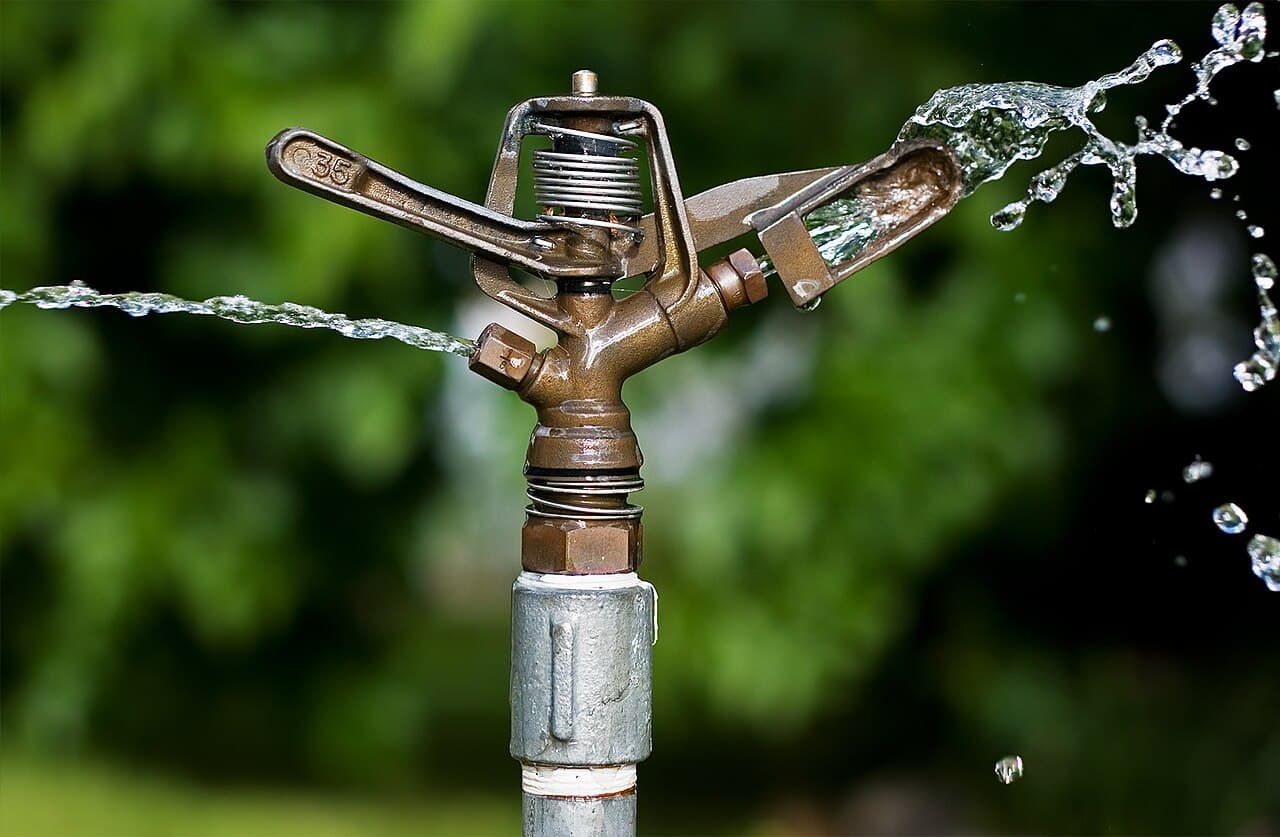
Averages are the middle of the range, not the edge. By the same records, the earliest freezes on record came on September 5, 1982 in Blacksburg, September 29, 1942 in Roanoke, October 2, 2003 in Lynchburg and October 3, 1974 in Danville.[2] Because an average is only the middle of the range, finishing a week or two ahead of it is the safer plan.
The state also has milder areas. Virginia Cooperative Extension gives 50 percent first fall frost ranges by hardiness zone: Zone 7a is October 15 to 25, zone 7b is October 25 to November 5 and zone 8a is November 1 to 15.[3] Extension adds that actual last and first killing frost dates will vary due to local conditions and yearly temperature fluctuations.[3] Hampton Roads and the southeast tend toward the later end; the mountains toward the earlier end.
A practical window
Nothing official gives one date for lawn sprinklers, so read these as a rule of thumb built on the dates above:
- Mountains and the Shenandoah and New River valleys: the first half of October.
- Northern Virginia, the Piedmont and the Roanoke and Lynchburg area: mid to late October.
- Richmond, Hampton Roads and the southeast: late October through the first week or two of November.
Early is cheap. Once the pipes are drained there is nothing to freeze, and you can hand-water a new lawn through a dry fall. Late can be costly: the latest first freezes reached November 8, 2004 in Blacksburg, November 19, 2002 in Roanoke, November 16, 1946 in Lynchburg and November 17, 1970 in Danville.[2] A warm November does not mean the pipes are safe, because one clear night can reach 32 degrees.
Richmond's message is the same: Don't wait for the first freeze.[1] A hard-freeze forecast is the deadline, not the starting gun.
What winterizing involves
Shut off the sprinkler mainline, put the controller on rain mode and clear the water. Rain Bird's homeowner guide names three ways to clear the water: manual drain valves, automatic drain valves, or an air blow-out.[4] Which one fits depends on how your system was built. The full method, with the compressor limits, is in how to winterize a sprinkler system.
If you plan to hire it out, book early. Contractors fill up in the weeks before the first freeze, and a freeze forecast is the worst time to start calling. What a blowout costs in Virginia and whether to hire someone to blow out the lines help you decide.
Stop and call a pro if
- You have no drain valves and no compressor. A blow-out needs the right equipment; a contractor arrives with it.
- A hard freeze is forecast tonight and the system is full. Close the mainline valve now, and call a contractor for the next day.
- You are not sure where the mainline valve or drains are. Guessing under pressure can break fittings.
- The backflow device sits above ground and is not insulated or enclosed. Ask your water utility what it requires.
If the pipes already froze
Read why sprinkler pipes crack over winter and plan a spring check with how to turn your system back on. Browse more irrigation answers or irrigation businesses.
When you are ready, describe the sprinkler job once and licensed local contractors can quote it.
Common questions
- Is it too early to winterize in early October?
- Not for most of the state. Once the system is drained, there is nothing to freeze, and you can still water by hand. The cost of going early is a few weeks without automatic watering; the cost of going late is a split pipe.
- Do I have to wait for the first frost?
- No, and you should not. Richmond Public Utilities tells residents not to wait for the first freeze. Frost on the lawn is a warning that hard freezes are close.
- Does the date differ across Virginia?
- Yes. The National Weather Service's climate sites run from October 10 in Blacksburg to October 27 in Danville for the average first freeze, and Virginia Cooperative Extension gives later fall frost ranges for the warmer hardiness zones in the east and south. Use the date for the town nearest you.
- What if a freeze is forecast before I get to it?
- Shut off the mainline valve and drain as much as you can that day, then finish the rest, or call a contractor, before the next cold night. Open drain valves and shutting the supply is better than leaving a full system.
- Does a mild winter mean I can skip it?
- No. A single hard night is enough to crack a pipe holding water, and Virginia has recorded first freezes as late as November 19. Winterize every year.
Sources
- [1] Winterize Your Sprinkler System Before It's Too Late (posted October 29, 2025), City of Richmond Department of Public Utilities. Checked October 28, 2026.
- [2] Autumn Freeze Climate Information, National Weather Service, Blacksburg, Virginia. Checked October 28, 2026.
- [3] Virginia's Home Garden Vegetable Planting Guide (426-331), Virginia Cooperative Extension, Virginia Tech. Checked October 28, 2026.
- [4] Homeowner's Guide to Winterization, Rain Bird Corporation (manufacturer). Checked October 28, 2026.
Want a pro to handle it?
Describe the job once. Licensed local businesses send quotes, and you pay only when you book one.
Get a quote from a local pro