Should I repair or replace my gutters?
Repair them when the trouble is in one place and the metal is sound: a leaking joint or two, a few loose hangers, one dented section or a downspout. Replace them when most seams leak, the metal is rusted through or split, the gutter sags in several places, it overflows even when clean, or the fascia behind it is rotten along much of the run.
Free to ask. Local shops send quotes, and you pay only when you book one.
By Kasra Taheri, Founder, LoclisPublished
Researched and drafted with AI, then checked claim by claim against the sources listed below before it was published. Prices and rules change; the dates beside each source say when it was last checked.
Step by step
Read when to stop and call a pro, further down this page, before you start.
Step 1: Watch it in the rain
From the ground during a steady rain, note where water drips from joints, spills over the front, or runs down behind the gutter.
Step 2: Clean it before judging
Have the gutters cleared first, since a clogged gutter overflows and sags whatever its condition.
Step 3: Count the leaking joints
Mark each dripping end cap, corner and joint; one or two is a repair, most of them is a sign the system is worn out.
Step 4: Look for holes and splits
Check the trough and downspouts for rust holes, splits along the bottom and dents that hold water.
Step 5: Check the hanger spacing
Compare the spacing with one hanger every 24 inches, or every 18 inches in heavy ice and snow areas.[4]
Step 6: Check the fascia
From a single-storey ladder, press a screwdriver into the fascia beside a few hangers; wood that is soft along most of a run means the gutter has to come down anyway.
Step 7: Find out the age
Look for receipts or ask the previous owner, and ask each business how much life it expects your gutter material to have left.
Step 8: Get both prices
Ask each business to quote a repair and a replacement on the same runs so you can compare them side by side.
Repair your gutters when the trouble is in one place and the metal is sound: one or two leaking joints, a few loose hangers, a dented section, or a clogged or loose downspout. Replace them when the problems are everywhere at once: most of the seams leak, the trough is rusted through or split, it sags in several places, it overflows even when clean, or the fascia behind it is rotten along most of the run. Age matters, but condition decides it.
When a repair makes sense
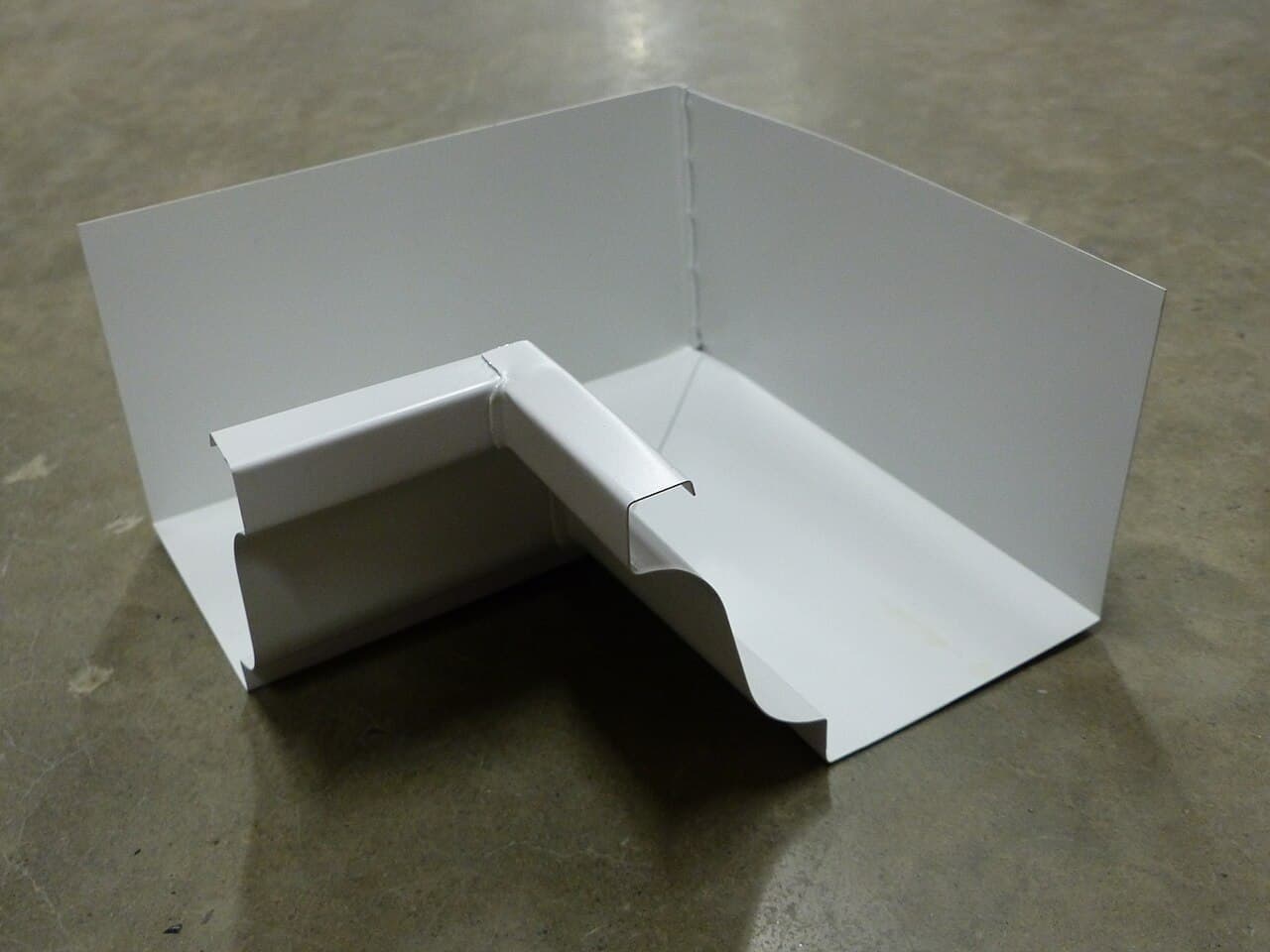
Most gutter trouble is local. A corner mitre or end cap that drips is a resealing job, covered in how to fix a leaking gutter seam. A short run that droops between hangers usually needs hangers added or refastened into sound wood; Amerimax's installation sheet calls for one hanger every 24 inches, or every 18 inches in areas with heavy ice and snow loads.[4] A downspout that has come loose or a single section crushed by a ladder or falling limb can be swapped out without touching the rest.
Repair is the sensible choice when:
- the problems are confined to one or two runs;
- the metal is sound, with no rust holes or splits along the bottom;
- the fascia behind it is firm;
- the gutter carries the water you get without spilling over the front once it is clean.
When replacement makes more sense
The system is worn out. When most joints leak and the trough is rusting or splitting, resealing one joint just moves the leak to the next. Gutters last longer or shorter depending on the material, how well they were installed and how often they were cleaned. An old galvanized gutter with rust holes is near the end; a newer aluminum one with two bad corners is not.
It has been damaged all along a side. The Building America guide notes that copper and galvanized steel withstand impacts from ladders and tree branches better than vinyl and aluminum, which can crack or dent.[3] A long aluminum run dented by a falling tree or years of ladders rarely sits true again.
It is too small for the roof. The Northern Virginia Soil and Water Conservation District says streaks or watermarks on the outside of the gutters and downspouts, and erosion along the drip line, are signs the gutters overflow when it rains and need cleaning.[2] It adds that spillover from gutters that look clean is a sign the system is undersized, and it suggests considering larger gutters.[2] No amount of sealant fixes a gutter that cannot carry the water, though extra downspouts sometimes can.
The fascia is rotten along most of the run. A gutter has to come down for fascia to be replaced. Amerimax's replacement procedure starts by removing the old gutters and inspecting the fascia board, replacing it if needed,[4] and once old, bent sectional gutter is off the wall, putting new gutter up is often little more work than rehanging the old.
The warranty math. New gutter material often carries a manufacturer's warranty. Englert, for one, offers a 20-year limited finish warranty on gutter material installed by authorized designers and installers in accordance with its specifications and maintenance instructions.[1] Ask any installer which warranty applies and get it in writing. If you replace, compare options in are seamless gutters worth it and how much new gutters cost in Virginia.
Hiring for either job
Ask each business for two prices on the same runs: one to repair, one to replace. Virginia's Department of Professional and Occupational Regulation advises homeowners to get at least three written bids or estimates using identical plans and specifications,[5] and it says if the work you are considering is valued at $1,000 or more, a valid Virginia Contractor's License is required.[5] Under the Code of Virginia, a Class C licence covers construction, removal, repair or improvement jobs with a single contract over $1,000 and under $30,000.[6]
For payment, DPOR suggests an initial deposit of no more than 10% of the total price or $1,000, whichever is less.[5] Licensed contractors must use a legible written contract for residential work, signed by both the consumer and the contractor before work starts or payment is accepted.[7] Permits are rarely needed: Pittsylvania County lists gutters among the jobs that need no building permit,[8] though it is worth asking your own building office if roof sheathing or framing is part of the job.
Costs and what moves them are covered in how much gutter repair costs in Virginia.
Stop and call a pro if
- The gutters are above the first storey, or the only way to inspect them is from the roof.
- A section has torn away from the house or is hanging.
- The fascia is soft or crumbling, or the rafter ends behind it look dark.
- Water is running behind the gutter at the roof edge.
More on eaves and roofs is in the roofing answers and gutter repair on Loclis, or browse exterior pros around Blacksburg. When you are ready for prices, describe the gutter job once and licensed local businesses quote it, repair or replace.
Common questions
- Can I replace just one section of gutter?
- Often, yes, on sectional gutters, as long as a matching size, profile and colour is available. Ask the business to show you the replacement piece or its specification, since an off-profile section joined to old gutter can leak at the new joints.
- How long should gutters last?
- Not by age alone. Gutters last longer or shorter depending on the material, the installation and how well they were maintained. Condition matters more than age: count the leaking joints, look for rust holes and splits, and check the fascia, then ask for a repair price and a replacement price.
- My gutters overflow even when clean. Repair or replace?
- Overflow from clean gutters points to a gutter that is too small or has too few downspouts. The Northern Virginia Soil and Water Conservation District suggests considering larger gutters in that case, so a replacement or added downspouts usually beats resealing.
- Is it worth repairing gutters before selling a house?
- Small repairs such as resealing joints and rehanging a sagging run are usually worth doing, since an inspector will note leaking or loose gutters. Whether a full replacement pays back depends on the house and the market, so get a repair quote and a replacement quote and compare.
- Do I need a permit to replace gutters in Virginia?
- Usually not. Pittsylvania County lists gutters among the jobs that need no building permit. Ask your county or city building office if the job also involves roof sheathing, framing or drainage changes.
Sources
- [1] Warranties, Englert, Inc.. Checked October 26, 2026.
- [2] Gutters and Downspouts: Wetness or Erosion Problems, Northern Virginia Soil and Water Conservation District, Fairfax County. Checked October 26, 2026.
- [3] Gutters and Downspouts, Building America Solution Center, Pacific Northwest National Laboratory, U.S. Department of Energy. Checked October 26, 2026.
- [4] Installing Metal Gutter Systems, Amerimax Home Products. Checked October 26, 2026.
- [5] What You Should Know Before You Hire a Contractor, Virginia Department of Professional and Occupational Regulation. Checked October 26, 2026.
- [6] Va. Code § 54.1-1100, Definitions (Contractors), Code of Virginia, Virginia General Assembly. Checked October 26, 2026.
- [7] 18VAC50-22-260, Filing of charges; prohibited acts (Board for Contractors Regulations), Virginia Administrative Code, Virginia General Assembly. Checked October 26, 2026.
- [8] Do I Need a Permit, Pittsylvania County, Virginia. Checked October 26, 2026.
Want a pro to handle it?
Describe the job once. Licensed local businesses send quotes, and you pay only when you book one.
Get a quote for Roofing