Should I repair or replace an old toilet?
Repair it when the problem is a part: a flapper, fill valve, handle, chain or gasket is inexpensive and quick to change. Replace it when the porcelain is cracked, it keeps clogging, parts no longer fit, or it is an older model that uses far more water than a WaterSense toilet at 1.28 gallons per flush.
Free to ask. Local shops send quotes, and you pay only when you book one.
By Kasra Taheri, Founder, LoclisPublished
Researched and drafted with AI, then checked claim by claim against the sources listed below before it was published. Prices and rules change; the dates beside each source say when it was last checked.
Step by step
Read when to stop and call a pro, further down this page, before you start.
Step 1: Run a dye test
Put a few drops of food coloring in the tank and wait 10 minutes without flushing; color in the bowl means a leak.[2]
Step 2: Read the flush volume
Lift the seat and look for the gallons-per-flush stamp on the bowl just in front of the tank.[6]
Step 3: Look for cracks
Check the tank and bowl with a flashlight, inside and out, for hairline cracks or seepage at the porcelain.
Step 4: Check that it is firm
Sit on the toilet and shift your weight; a bowl that rocks points to loose bolts or a damaged flange.[5]
Step 5: Note what fails
Write down whether it runs, leaks, rocks or clogs, and how often, so a plumber can quote the right fix.
Step 6: Price the parts
Compare the cost of a new flapper or fill valve with a new toilet, keeping water savings and any utility rebate in mind.
Step 7: Check the plumber
If you hire it out, look up the business on DPOR's licence lookup and get the scope and price in a written contract.[10]
Repair an old toilet when the problem is a part, and replace it when the problem is the toilet. Almost everything that makes a toilet run, ghost flush, flush weakly or leak from the tank is an inexpensive part you or a plumber can change without replacing the toilet. Cracked porcelain, a toilet that clogs every week, parts that no longer fit, or an old model that uses several times the water of a new one are the reasons to replace it.
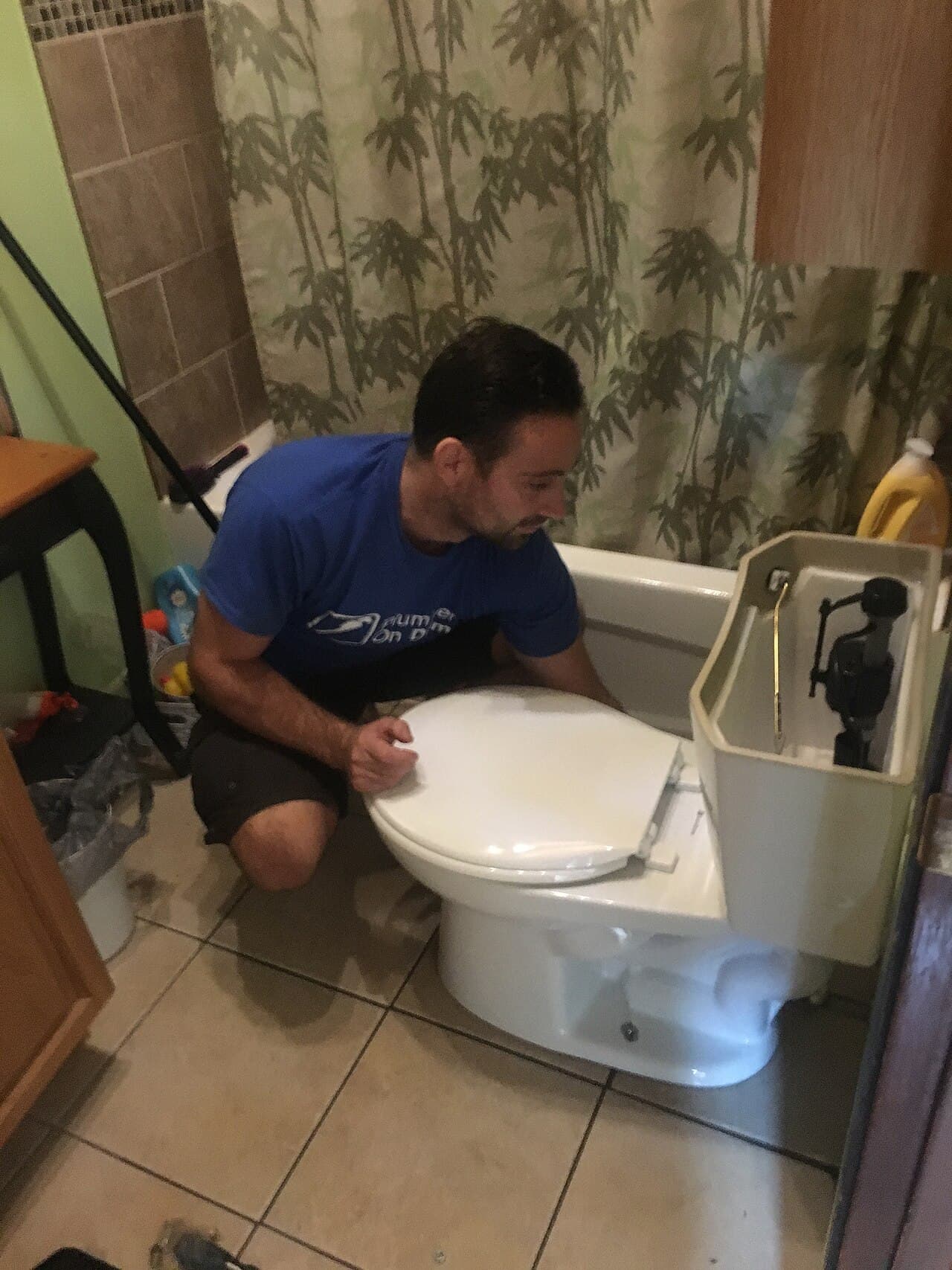
Problems that are worth repairing
A running toilet or one that flushes on its own. Most toilet leaks are due to old or worn-out flappers, an inexpensive rubber, plastic or silicone part that EPA calls quick and easy to replace.[1] EPA says the flapper should be checked periodically and replaced at least every five years,[2] and warns that an old or worn flapper can make a toilet flush on its own or silently leak thousands of gallons a year.[2]
Chesterfield County's utility notes that a toilet leak is the most common and overlooked type of water leak because it cannot be seen.[3] Its test: take the lid off and listen. If water is flowing into the overflow tube in the tank, the valve may not be cutting off completely,[3] which means the fill valve needs adjusting or replacing.
A weak flush or a handle that sticks. A loose handle can cause a weak flush or no flush, and a chain that is too long or too short stops the flapper sealing.[4] Both are adjustments, not new toilets. Mineral buildup can also clog the holes under the rim and reduce the flush, and those can be cleaned out.[4]
Water under the tank. A worn flush valve gasket can leak between the tank and the bowl, and sediment from the water lines can clog the fill valve over time.[4] Oatey notes that a worn flush valve can be replaced with a universal flush valve kit.[4]
A toilet that rocks. A bowl that rocks often means the bolts are loose, broken or badly installed, and repeated movement can point to a damaged flange that has to be fixed before new bolts go in.[5] That is a repair under the toilet, and the same toilet can usually go back down on a new wax ring.
Signs it is time to replace
- Cracked porcelain. A hairline crack in the bowl or tank that weeps water is not a part you can swap. Replace the toilet before the crack opens.
- It uses a lot of water. Older, inefficient toilets can use as much as 6 gallons per flush, while toilets with the WaterSense label use 1.28 gallons per flush or less.[1] EPA estimates that replacing old, inefficient toilets with WaterSense models can cut the water a family uses for toilets by 20 to 60 percent.[1] To see what yours uses, lift the seat: a toilet's gallons-per-flush rating is typically stamped on the bowl in front of the tank.[6]
- It clogs constantly. EPA notes that the early low-flow toilets of the 1990s were sometimes associated with performance issues such as needing a double flush.[1] If yours is one of those and the drain line is clear, a new certified toilet often solves it. See how to stop a toilet from clogging first.
- Parts no longer fit. Some older or unusual toilets take flush valves or tank kits that are no longer made. When the repair needs a part you cannot get, the repair is a replacement.
- You are remodeling anyway. A new floor is the easiest time to set a new toilet, because the flange height is being dealt with too.
A rebate can tip the decision. Since October 2024, City of Charlottesville residents can get a rebate of up to $150 per toilet for replacing a toilet that uses 1.6 gallons per flush or more with a WaterSense model.[7] Ask your own water utility what it offers.
Hiring someone for it
A straight swap usually does not need a permit. Virginia's building code exempts from a permit the replacement of plumbing fixtures without alteration of the water supply and distribution systems, sanitary drainage systems, or vent systems.[8] In a special flood hazard area, the building official can require a permit even for exempted work.[8] Moving the toilet, or any repair that changes the drain or supply piping, is different: alterations to the water supply, drainage or vent system need a permit from your local building department.[8] That is work worth handing to a licensed plumber.
If you pay someone, check the licence. Virginia's Board for Contractors regulates individual plumbers, and state certification of the trade is mandatory, not optional.[9] Since April 1, 2025, Virginia has also issued a Residential Plumbing licence for plumbers who work only in residential structures.[9] Virginia law requires all licensed contractors to provide a written contract for residential work.[10] Ask for the diagnosis and the price for both options, repair and replacement, in writing, so you can choose.
Stop and call a pro if
- Water is on the floor around the base, the floor is soft or the ceiling below is stained. See why water leaks around the base of a toilet.
- The shutoff valve behind the toilet will not close, or leaks when you turn it.
- The toilet still runs after a new flapper and fill valve, or the tank cracks while you are working on it.
- Sewage backs up into the toilet or a tub when other fixtures drain. That is a drain line problem, not a toilet problem.
Getting help on Loclis
Licensed plumbers on Loclis repair and replace toilets. Start with a running toilet repair, browse toilet repair and installation, find plumbers in Blacksburg, read what a toilet replacement costs in Virginia, or see every plumbing answer.
Describe the toilet problem once and licensed local plumbers quote the repair, the replacement, or both.
Common questions
- Is it worth fixing a running toilet?
- Usually, yes. A running toilet is most often a worn flapper or a fill valve that does not shut off, and both are inexpensive parts. EPA suggests checking the flapper periodically and replacing it at least every five years.
- How do I know how much water my toilet uses?
- Lift the seat and look at the bowl just in front of the tank, where the gallons-per-flush rating is typically stamped. EPA puts the current federal standard at 1.6 gallons per flush, and a WaterSense model uses 1.28 or less.
- Can a cracked toilet be repaired?
- A crack in the porcelain of the tank or bowl is a reason to replace the toilet rather than patch it, because a crack can grow and start to leak. A cracked tank lid, by contrast, is just a lid and can be replaced on its own if the maker still sells it.
- Do I need a licensed plumber to replace a toilet in Virginia?
- For a straight swap you do yourself, the rule to check is the permit. Virginia's building code exempts a like-for-like fixture replacement from a permit, although in a special flood hazard area the building official can still require one. If you pay someone to do it, Virginia's Board for Contractors regulates plumbers, and Virginia law requires all licensed contractors to provide a written contract for residential work.
- Are new low-flow toilets any good?
- EPA says the early low-flow toilets of the 1990s sometimes needed a double flush, but WaterSense labeled toilets sold today are certified to a performance test for clearing waste and far outperform toilets from the 1980s and 1990s.
Sources
- [1] WaterSense: Residential Toilets, U.S. Environmental Protection Agency. Checked October 26, 2026.
- [2] WaterSense: Fix a Leak Week, U.S. Environmental Protection Agency. Checked October 26, 2026.
- [3] High Usage and Leaks, Chesterfield County, Virginia, Department of Utilities. Checked October 26, 2026.
- [4] Parts of a Toilet: DIY Plumbing Guide, Oatey. Checked October 26, 2026.
- [5] 5 Signs It's Time to Replace Your Toilet Bolts, Oatey. Checked October 26, 2026.
- [6] How to Easily Remove Water from a Toilet, Oatey. Checked October 26, 2026.
- [7] WaterSense Labeled Toilet Rebates, City of Charlottesville, Virginia. Checked October 26, 2026.
- [8] 13VAC5-63-80. Section 108 Application for permit (Virginia Uniform Statewide Building Code), Virginia Administrative Code, Virginia General Assembly. Checked October 26, 2026.
- [9] Tradesmen Program, Virginia Department of Professional and Occupational Regulation. Checked October 26, 2026.
- [10] What You Should Know Before You Hire a Contractor, Virginia Department of Professional and Occupational Regulation, Board for Contractors. Checked October 26, 2026.
Want a pro to handle it?
Describe the job once. Licensed local businesses send quotes, and you pay only when you book one.
Get a quote for Plumbing Repair