How do I stop my toilet from clogging?
Flush only toilet paper and human waste, and less paper at a time. Wipes, even ones labeled flushable, paper towels, sanitary products and cotton swabs go in the trash. Keep the rim holes clean, use a flange plunger at the first slow flush, skip chemical drain cleaners, and call a plumber when clogs keep coming back.
Free to ask. Local shops send quotes, and you pay only when you book one.
By Kasra Taheri, Founder, LoclisUpdated
Researched and drafted with AI, then checked claim by claim against the sources listed below before it was published. Prices and rules change; the dates beside each source say when it was last checked.
Step by step
Read when to stop and call a pro, further down this page, before you start.
Step 1: Put a bin by the toilet
Keep a lidded trash can in every bathroom so wipes, sanitary products, swabs and floss have somewhere to go.
Step 2: Tell the household
Make sure everyone knows that paper towels, sanitary products and wipes, even flushable ones, do not go down the toilet.[4]
Step 3: Flush in stages
When a lot of paper is needed, flush partway through rather than sending it all down at once.
Step 4: Clean the rim holes
Clean the water jets under the rim regularly so mineral buildup does not weaken the flush.[4]
Step 5: Keep a flange plunger handy
Store a flange plunger next to the toilet, because that type creates a better seal in a toilet.[4]
Step 6: Plunge at the first sign
If the bowl drains slowly, seat the plunger in the outlet, push down gently to seal, then pull up sharply several times.[4]
Step 7: Skip chemical cleaners
Do not pour drain cleaner into a toilet; use a plunger or a toilet auger instead.[4]
Step 8: Watch the other drains
Notice whether a tub or floor drain gurgles or backs up when the toilet is flushed, which points past the toilet to the drain line.
Most toilet clogs are caused by what goes into the bowl, so most of the prevention is a habit: flush only toilet paper and human waste, and not too much paper at once. Add clean rim holes, a proper plunger kept within reach, and no chemical drain cleaners, and a household toilet should rarely need more. When clogs keep coming back anyway, the cause is usually the toilet's design or the drain line beyond it.
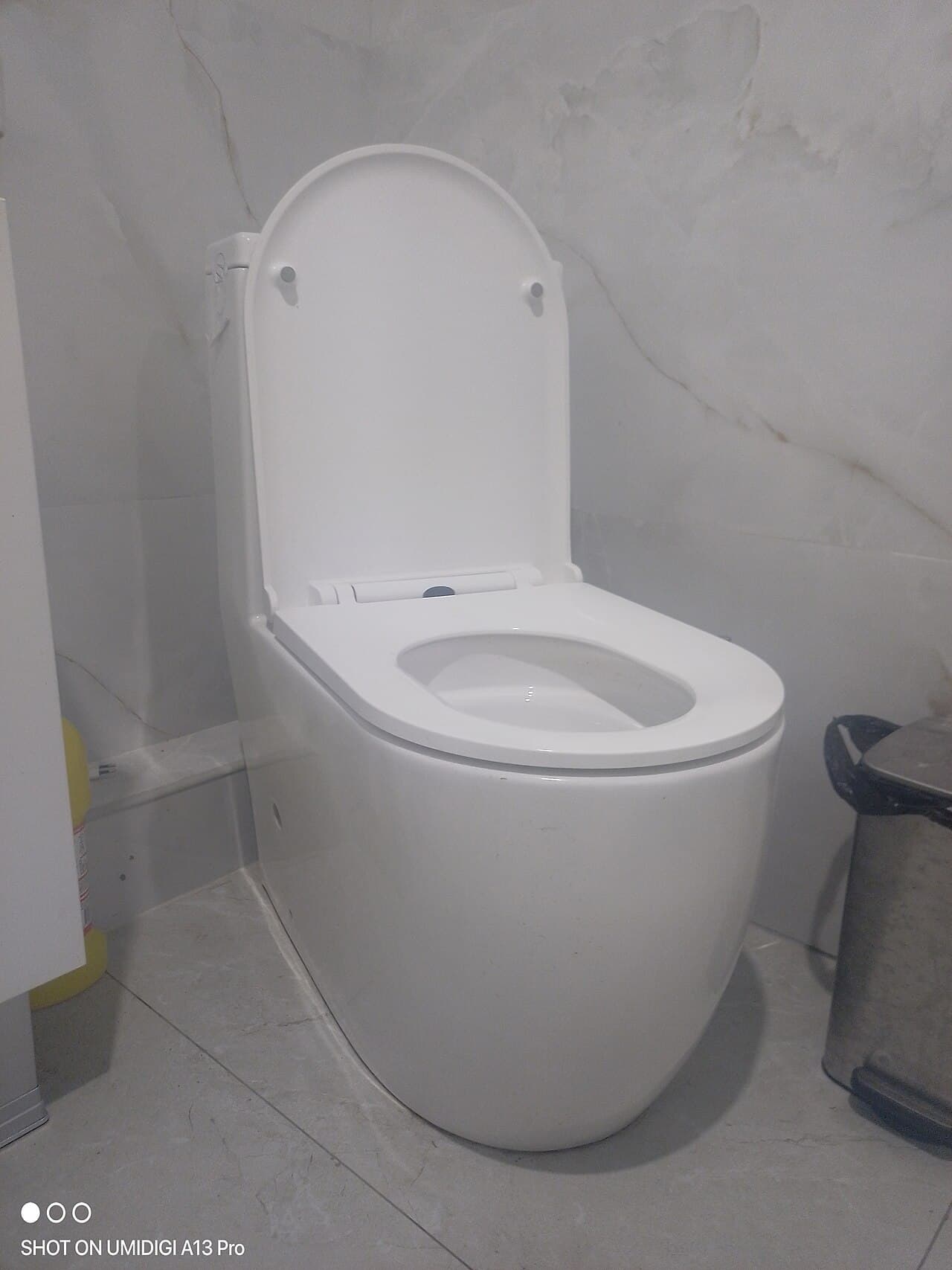
Flush only what breaks apart
The City of Salem puts the rule plainly: "The only items that should ever be washed down the sink or flushed down the toilet are natural, organic materials that would break apart easily in one's hands."[1] Toilet paper does that. Almost nothing else sold for the bathroom does.
Salem and Alexandria give much the same advice about what to keep out, and Fairfax County adds a list for homes on grinder pumps:
- Wipes, including "flushable" ones. Salem lists wet wipes, diapers, sanitary napkins, tampons, paper towels, cardboard and cloth as things never to flush, and warns that even wipes labeled "flushable" build up in pipes and cause blockages.[1]
- Personal care items. Alexandria tells residents not to flush so-called "flushable" wipes, paper towels, condoms, tissues, feminine care products or cotton swabs, and to put them in the trash instead.[2]
- Medications. Alexandria also asks residents not to flush medications, and to mix them with kitty litter or used coffee grounds in a sealed bag in the trash instead.[2]
- Cloth, toys and grease, on a grinder pump. For homes on a low-pressure sewer that uses a grinder pump, Fairfax County's list of things never to put in sinks, toilets or drains includes diapers, socks, rags or cloth of any kind, plastic objects such as toys, and cooking grease, which the county says can damage the pump or cause blockages.[3]
The easiest way to make this stick is a lidded trash can in every bathroom. In a house with toddlers, a toilet lid lock keeps toys out of the bowl.
Use less paper per flush
Large wads of paper often cause clogs on their own. When a lot of paper is needed, flushing partway through is easier on the toilet than sending it all at once. Oatey also suggests a bidet as a way to limit toilet paper use.[4]
Keep the flush strong
A toilet clears waste with a rush of water from the tank through the holes under the rim and the jet at the bottom of the bowl. Oatey notes that mineral buildup in the rim holes reduces flush efficiency,[5] and Oatey's maintenance advice is to clean the water jets around the rim weekly.[4] A toilet brush with a narrow head, or a bent wire, clears the holes.
Make sure the tank fills to its marked water line and the flapper chain has a little slack. A tank that fills short, or a flapper that drops before the tank empties, can give a weak flush that leaves waste in the trap.
Plunge early, and properly
A slow-draining bowl is a warning. Deal with it then, before it becomes a full clog.
A flange plunger is the right tool for a toilet because it creates a better seal.[4] If the water is rising toward the rim, turn off the supply valve behind the toilet first so it does not overflow.[4] Seat the plunger in the outlet. Push down gently to create a seal, then pull up sharply, repeating quickly, and keep some water in the bowl, because it helps push the blockage through.[4] Once it drains, flush a second time so the waste does not stop farther down the pipe.[4]
If plunging does not work, a toilet auger (a short snake with a bend and a guard that protects the porcelain) is the next step.
Skip the chemicals
Oatey's technical team does not recommend drain cleaners for toilets, because the harsh chemicals can damage the toilet's finish,[4] and it advises against improvised tools that can melt the wax seal or scratch the porcelain.[4]
When the toilet itself is the problem
Some toilets clog because of how they were made. EPA notes that the early low-flow toilets of the 1990s were sometimes associated with performance issues such as needing a double flush.[7] WaterSense labeled toilets sold today are certified for clearing waste from the bowl and carrying it through the drain line,[7] so replacing an early low-flow model often ends the habit. See whether to repair or replace an old toilet.
When it is the drain line
A toilet that clogs while you are flushing only paper, especially if a tub or floor drain gurgles or backs up at the same time, points past the toilet. Fairfax County's sewer guidance draws the line this way: if the backup occurs only when facilities such as a toilet, tub, washer or sinks are used, you may need a plumber; if sewage backs up when nothing is being used, there may be a problem in the county main line.[3] Fairfax County asks residents to call the county before calling a plumber when they think a sewer backup is in the county main line.[3] Other Virginia localities run their own sewer lines and have their own numbers, so check your utility's.
Stop and call a pro if
- A chemical drain cleaner is already in the bowl. Do not plunge or auger it. Clorox, the maker of Liquid-Plumr, does not recommend using a plunger when a clog remover is in the drain, because plunging can splash the product back onto you or your clothing.[6] Tell the plumber what you poured and when.
- Plunging and a toilet auger do not clear it, or the clog comes back within days.
- Other drains gurgle, bubble or back up when the toilet is flushed.
- Sewage comes up in a tub, shower or floor drain. Stop using water and call your sewer utility or a plumber. Protect yourself, other people and pets from contact with the wastewater, which the City of Salem warns can contain harmful bacteria and chemicals.[1] See when to call a plumber for a clogged drain.
- Something solid is stuck in the trap, such as a toy or a phone, and an auger will not bring it back. The toilet may need to come off the floor.
For the rest of the house, read how to keep drains from clogging.
Getting help on Loclis
Licensed plumbers on Loclis clear toilet clogs and drain lines. Browse toilet repair and installation, find plumbers in Blacksburg, or see every plumbing answer.
Describe the clog once, including whether other drains are affected, and licensed local plumbers quote it.
Common questions
- Are flushable wipes safe to flush?
- Salem and Alexandria both say no. The City of Salem warns that even wipes labeled flushable build up in pipes and cause blockages, and Alexandria tells residents to put so-called flushable wipes in the trash. A lidded bin beside the toilet is the simplest fix.
- Should I use a chemical drain cleaner on a clogged toilet?
- No. Oatey's technical team does not recommend drain cleaners for toilets because the harsh chemicals can damage the toilet's finish. Use a flange plunger first, then a toilet auger, and call a plumber if neither clears it.
- Why does my toilet clog so often?
- The usual causes are too much paper at once, things that should not be flushed, mineral buildup that weakens the flush, or an older low-flow toilet with a weak design. If other drains gurgle or back up too, the problem is more likely in the drain line than in the toilet.
- Can I flush medications down the toilet?
- The City of Alexandria asks residents not to, because flushed medications are a hazard to water quality. It suggests mixing them with kitty litter or used coffee grounds in a sealed bag and putting that in the trash.
- Will a new toilet stop the clogs?
- It can, if the old toilet is the cause. EPA says early 1990s low-flow toilets sometimes needed a double flush, while WaterSense toilets sold today are certified for clearing waste and carrying it through the drain line. If the clogs are in the pipe beyond the toilet, a new toilet will not help.
Sources
- [1] Frequently Asked Questions: Water & Sewer, Backup vs. Overflow, City of Salem, Virginia. Checked October 26, 2026.
- [2] Sewers, City of Alexandria, Virginia. Checked October 26, 2026.
- [3] Sanitary Sewer Backups and Overflows, Fairfax County, Virginia, Department of Public Works and Environmental Services. Checked October 26, 2026.
- [4] How to Unclog a Toilet, Oatey. Checked October 26, 2026.
- [5] Parts of a Toilet: DIY Plumbing Guide, Oatey. Checked October 26, 2026.
- [6] FAQs on How to Unclog a Drain or Sink, Liquid-Plumr, The Clorox Company. Checked October 27, 2026.
- [7] WaterSense: Residential Toilets, U.S. Environmental Protection Agency. Checked October 26, 2026.
Want a pro to handle it?
Describe the job once. Licensed local businesses send quotes, and you pay only when you book one.
Get a quote for Plumbing Repair