Should I replace my ridge vent when I get a new roof?
Usually yes. The ridge is exposed during a re-roof, so a new vent costs mostly material, and a worn or mismatched vent undercuts a new roof. Have the roofer check the attic intake and insulation, then write the vent type, length and any intake work into a written, itemized contract with a licensed roofer.
Free to ask. Local shops send quotes, and you pay only when you book one.
By Kasra Taheri, Founder, LoclisPublished
Researched and drafted with AI, then checked claim by claim against the sources listed below before it was published. Prices and rules change; the dates beside each source say when it was last checked.
This is a job for a licensed pro in Virginia
This page explains what the work involves, the permits, what a licensed pro does and what drives the cost. It does not give step-by-step instructions, because this work needs a licence, a permit or both, and doing it wrong can injure someone. Before you hire, check the licence on Virginia's DPOR record.
Yes, in most cases the ridge vent should be replaced, or at least reviewed, when you get a new roof. The ridge is where the roofer finishes the job, the vent is part of how the new roof breathes, and a new roof over an attic that cannot ventilate leaves the ventilation problem in place. Treat the vent as a line item in the roofing contract, not an afterthought.
Why the ridge is the time to deal with it
A ridge vent sits under the cap shingles at the peak. When the old roof comes off, that area is exposed anyway, so the extra cost of a new vent is mostly the material. Fixing a failing vent later means breaking into a finished roof again.
A vent that is old, cracked or brittle, or that was never matched to the soffit intake, is a good candidate for replacement. If it is in good shape, ask the roofer to say so in writing and to explain how it will be reused.
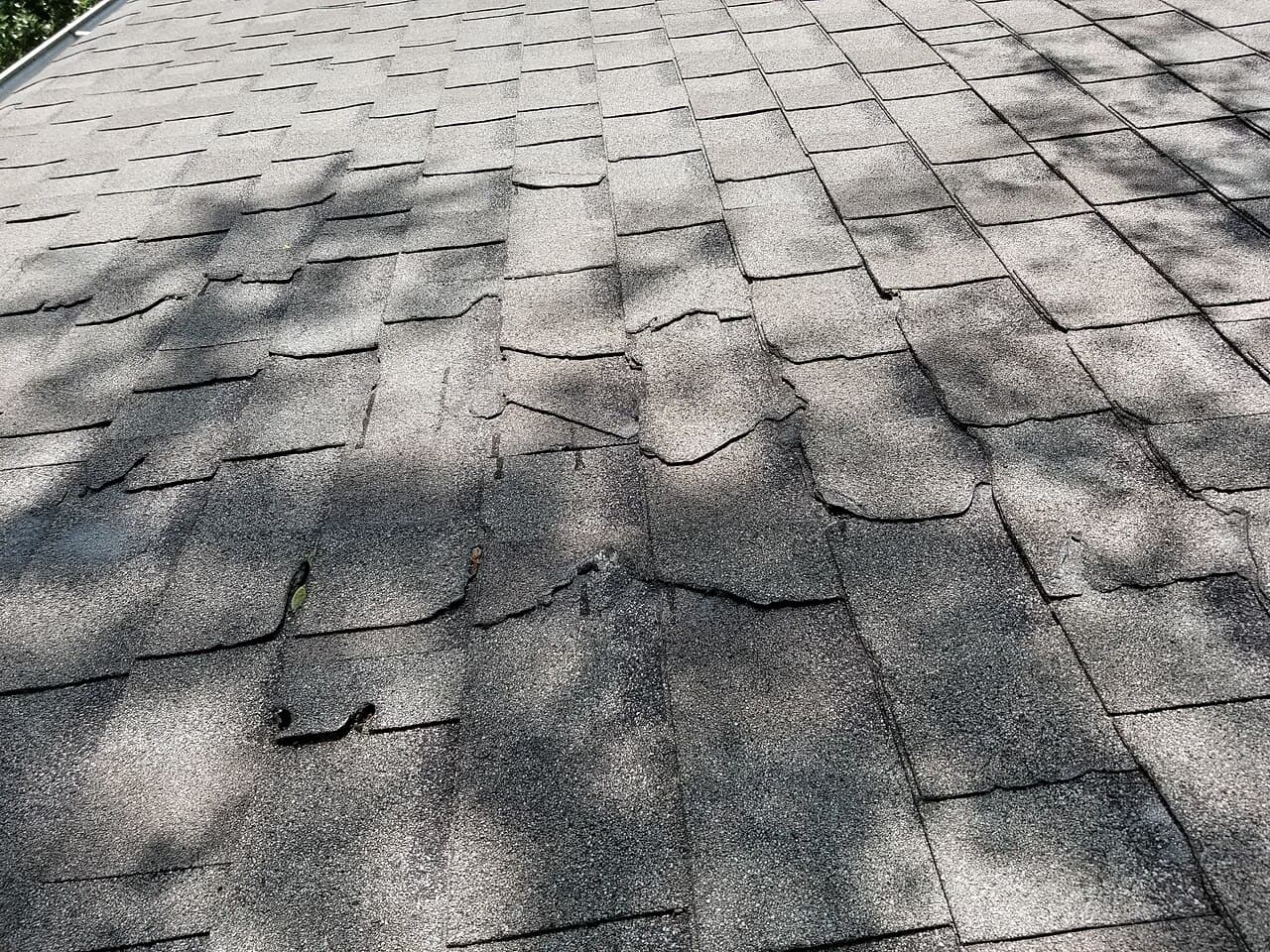
Ask for a ventilation check, not just a vent
New roofing does not fix a ventilation problem; it can hide one. Before the quote, ask the roofer to look at the attic and answer these questions in the estimate:
- Is there continuous intake at the eaves? Virginia Cooperative Extension says most homes should have a combination of a continuous ridge vent along the peak of the roof and continuous soffit vents at the eaves to provide the most effective ventilation.[1]
- Is there enough vent area? As a general guide Extension gives approximately 1 ft2 of net vent opening for every 150 ft2 of ceiling or attic space, and says to check your local code.[1]
- Is insulation blocking the intake? The Building America guide says baffles and insulation dams should be installed to keep insulation out of the soffit vents and to direct cooling air flow from the soffit vents up along the underside of the roof deck to the ridge vents.[2]
- Where do the bath fans and dryer vent? They should go outdoors, not into the attic.
ENERGY STAR advises hiring a professional where there is little or no attic ventilation,[3] and the same list includes wet or damp insulation, indicating a leaky roof,[3] and moldy or rotted attic rafters or floor joists, indicating moisture problems.[3] If you see those, ask for the cause to be dealt with in the same project.
Be cautious if the roofer wants to drop the soffit intake or change the vent layout. A roofer should be able to explain the plan and how much vent area it provides.
Permits and deck repairs
Virginia's building code exempts from permit application the replacement of an unlimited amount of roof covering or siding in Group R-3, R-4, or R-5 provided the building or structure is not in an area where the nominal design wind speed is greater than 100 miles per hour,[4] and the replacement of 256 square feet (23.78 m2) or less of roof decking in Group R-3, R-4, or R-5, with a fire-rating exception.[4] The building official may still require an application for roofing in a historic district: the code says an application for a permit may be required by the building official for the installation of replacement siding, roofing, and windows in buildings within a historic district.[4] Confirm with your building department and ask the roofer who is responsible for any permit.
Putting it in the contract
DPOR advises homeowners to get at least three written bids or estimates using identical plans and specifications,[5] so make the ridge vent part of that specification: the type and length of vent, the cap shingles, and any intake work. Virginia's Board for Contractors requires the contract to contain a listing of specified materials and work to be performed[6] and a statement of assurance that the contractor will comply with all local requirements for building permits, inspections, and zoning.[6] Do not accept "ventilation as needed" with no detail.
When to call a licensed pro
For all of it. A new roof is a licensed job, and ridge work is done at the highest and most exposed part of the house. DPOR says that if the work you are considering is valued at $1,000 or more, a valid Virginia Contractor’s License is required,[5] and a re-roof will almost always be well over that. Check the licence before you sign.
To learn how the vent works, read what a ridge vent does. For what a repair costs, see how much ridge vent repair costs in Virginia. Browse roofing repair answers or roofing services, and when you are ready, describe the job once to hear from licensed local roofers.
Common questions
- Do I have to replace the ridge vent with a new roof?
- Nothing requires it, but most roofers will recommend a new vent with new ridge shingles, because the ridge is open during the job and a worn vent is hard to reuse. Ask for the decision and the reason in the written estimate.
- Can I add a ridge vent to a roof that does not have one?
- Often yes, but it only works with intake at the eaves. A roofer should check the soffits and the attic first, and may recommend intake work in the same project.
- Will a new roof need a permit in Virginia?
- Often not. The building code exempts replacing roof covering on most one- and two-family houses outside high-wind areas, and the exemption covers up to 256 square feet of decking. A building official can still require one in a historic district, so confirm with your locality.
- What is the right amount of ventilation for my attic?
- Virginia Cooperative Extension gives approximately 1 ft2 of net vent opening for every 150 ft2 of ceiling or attic space as a general guide, with exceptions. Your local building code controls, and a roofer should show how the plan meets it.
Sources
- [1] ENERGY SERIES: What about Ventilation? (2908-9024), Virginia Cooperative Extension, Virginia Tech. Checked October 27, 2026.
- [2] Attic Air Sealing, Insulating, and Ventilating for Ice Dam Prevention, Building America Solution Center, Pacific Northwest National Laboratory, U.S. Department of Energy. Checked October 27, 2026.
- [3] Attic Air Sealing Project, ENERGY STAR, U.S. Environmental Protection Agency. Checked October 27, 2026.
- [4] 13VAC5-63-80. Section 108 Application for permit (Virginia Uniform Statewide Building Code), Virginia Administrative Code, Virginia General Assembly. Checked October 27, 2026.
- [5] What You Should Know Before You Hire a Contractor, Virginia Board for Contractors, DPOR. Checked October 27, 2026.
- [6] 18VAC50-22-260, Filing of charges; prohibited acts (Board for Contractors Regulations), Virginia Administrative Code, Virginia General Assembly. Checked October 27, 2026.
Want a pro to handle it?
Describe the job once. Licensed local businesses send quotes, and you pay only when you book one.
Get a quote for Roofing