Why is my ridge vent leaking?
A ridge vent that seems to leak is usually one of four things: rain or snow getting past a damaged or lifted vent or cap, condensation from warm, humid house air in a cold attic, melting snow backing up as an ice dam, or a leak elsewhere running to the ridge. Timing tells them apart, and a licensed roofer should confirm the cause.
Free to ask. Local shops send quotes, and you pay only when you book one.
By Kasra Taheri, Founder, LoclisPublished
Researched and drafted with AI, then checked claim by claim against the sources listed below before it was published. Prices and rules change; the dates beside each source say when it was last checked.
This is a job for a licensed pro in Virginia
This page explains what the work involves, the permits, what a licensed pro does and what drives the cost. It does not give step-by-step instructions, because this work needs a licence, a permit or both, and doing it wrong can injure someone. Before you hire, check the licence on Virginia's DPOR record.
Water showing up near the ridge is rarely one problem with one fix. Most "leaking ridge vent" reports turn out to be one of four things: rain or snow getting past a damaged or lifted vent, condensation inside the attic, melting snow forced back under the shingles, or a leak from somewhere else that runs down to the ridge. Telling them apart matters, because replacing the vent will not cure condensation.
The four usual causes
1. Weather getting past the vent itself. A ridge vent is an open slot with a cover over it, so it can let in wind-driven rain or snow if the product is cracked, crushed, torn loose or poorly fastened, or if the ridge cap shingles on top have lifted. Sections can also be damaged by a storm or by a fall of branches. This kind of leak usually shows up during or right after a storm, and mostly with wind from one direction.
2. Condensation, which looks like a leak. Warm, humid house air that reaches a cold attic can condense on the underside of the roof deck and nails, then drip. ENERGY STAR describes the pattern: "In cold weather, you may see frosty areas in the insulation caused by warm, moist air condensing and then freezing as it meets the cold air in the attic. In warmer weather, you might find water staining in these same areas."[1] If the drips appear on cold, still days with no rain, suspect this. The common contributors are air leaking from the house into the attic and moist air piped into the attic. ENERGY STAR lists kitchen, bathroom or clothes dryer vents that exhaust moist air directly into the attic space instead of outdoors as a condition to have a professional correct.[1] The Department of Energy's Building America program says the most important step is to seal all of the air leaks from the conditioned space into the attic space to keep warm air from entering the attic in the first place.[2]
3. Ice dams and snow melt. Heat escaping into the attic can warm the roof deck and melt snow from underneath. Building America notes that ice dams can form with as little as 2 inches of snow accumulation on a roof,[2] and the melt that refreezes at the eaves can back up under shingles. That leak shows at the eaves, but a roof with weak ventilation or a blocked intake can also show staining higher up. See why ice dams form.
4. A leak from somewhere else. Water runs along rafters and decking before it drips, so a stain near the ridge may start at a plumbing vent, chimney flashing, skylight or a nail pop. A roofer traces it back rather than guessing.
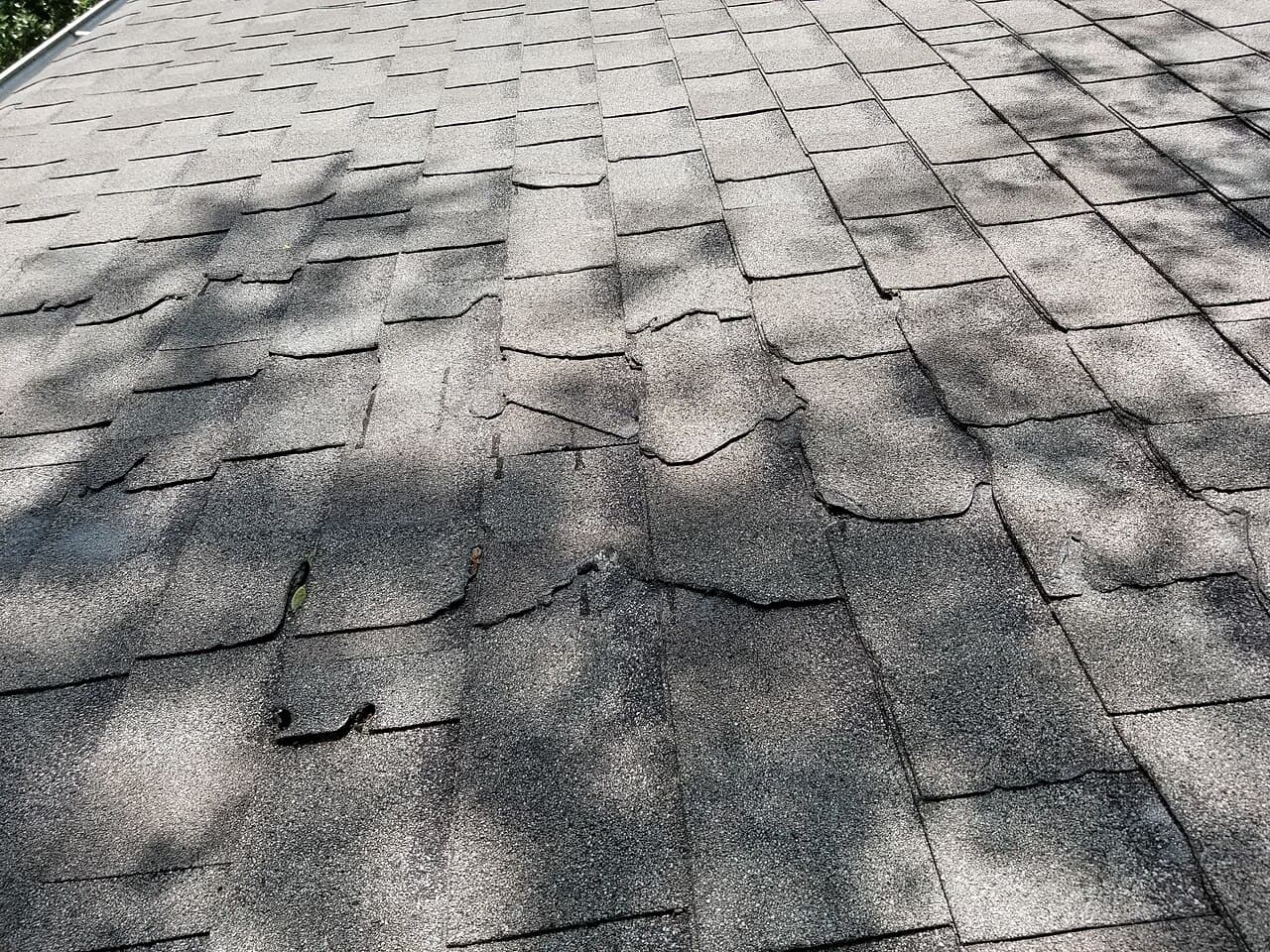
What you can safely check without going on the roof
- Look from the ground, ideally with binoculars, for ridge cap shingles that are lifted, missing or cracked, and for a vent section that sags or has come loose.
- Note when it drips. During wind-driven rain points to the vent or cap. On cold dry mornings points to condensation.
- From the attic floor with a flashlight, look at the underside of the deck near the ridge for dark staining, rusty nail tips and frost. ENERGY STAR names wet or damp insulation, indicating a leaky roof,[1] and moldy or rotted attic rafters or floor joists, indicating moisture problems,[1] as conditions to hand to a professional.
- Check where the bath fans and range hood discharge. They should reach outdoors.
- Put a bucket under the drip and take dated photos. They help a roofer and an insurer.
Stay off the roof. A ridge is the steepest, most exposed part of it, and wet roofs are slick.
When to call a licensed pro
Inspecting or repairing a ridge vent means working at the peak, so this is a roofer's job. Virginia's Board for Contractors defines roofing contracting as the service that provides for the installation, repair, removal, or improvement of materials common to the industry that form a watertight, weather resistant surface for roofs and decks.[3] The Board's consumer guide says that if the work is valued at $1,000 or more, a valid Virginia Contractor's License is required for the license category in which the contractor is to work,[4] so check the licence on DPOR's lookup and get a written scope before work starts.
Call promptly if water is coming through a ceiling, insulation is soaked or you see mold. In the meantime, protect belongings and contain the drip, as described in what to do when your roof starts leaking.
Ask the roofer to explain which of the four causes they found and to inspect the attic, not just the ridge. A fix that only re-caps the vent fails if the real problem is moisture from the house. For background see what a ridge vent does, what ridge vent repair costs in Virginia and whether to replace the vent with a new roof. More in roofing repair answers and roofing repair services. To have licensed local roofers look at it, describe the job once.
Common questions
- Can condensation make a ridge vent look like it leaks?
- Yes. Warm, moist house air that meets a cold roof deck can condense and drip, and ENERGY STAR describes frost in cold weather and water staining in warmer weather where that happens. Drips on dry, cold days point to condensation.
- Is a leaking ridge vent an emergency?
- Treat it as urgent if water is coming through a ceiling or insulation is soaked. Contain the water, protect belongings and call a roofer promptly.
- Can I seal the ridge vent with caulk myself?
- Not safely. It means working at the peak of the roof, and sealing the slot can block the airflow the vent exists to provide. A roofer should find the cause first.
- Will a new ridge vent fix the leak?
- Only if the vent or cap is the cause. If the cause is moisture from the house, a new vent will not stop it, so ask the roofer to check the attic too.
- Do I need a licensed roofer in Virginia?
- For work valued at $1,000 or more, the Board for Contractors says a valid Virginia Contractor's License is required. Verify it on DPOR's lookup before you sign.
Sources
- [1] Attic Air Sealing Project, ENERGY STAR, U.S. Environmental Protection Agency. Checked October 27, 2026.
- [2] Attic Air Sealing, Insulating, and Ventilating for Ice Dam Prevention, Building America Solution Center, Pacific Northwest National Laboratory, U.S. Department of Energy. Checked October 27, 2026.
- [3] 18VAC50-22-30, Definitions of specialty services (Board for Contractors Regulations), Virginia Administrative Code, Virginia General Assembly. Checked October 27, 2026.
- [4] What You Should Know Before You Hire a Contractor, Virginia Board for Contractors, DPOR. Checked October 27, 2026.
Want a pro to handle it?
Describe the job once. Licensed local businesses send quotes, and you pay only when you book one.
Get a quote for Roofing