How do I know if my attic is ventilated well?
A well-ventilated attic has open soffit intake at the eaves, a clear exhaust such as a ridge vent, insulation kept off the vents with a gap under the deck, and no frost, damp, stained wood or mold. Virginia Cooperative Extension suggests about 1 ft2 of net vent opening per 150 ft2 of attic. Check from the attic floor and have a roofer fix problems.
Free to ask. Local shops send quotes, and you pay only when you book one.
By Kasra Taheri, Founder, LoclisPublished
Researched and drafted with AI, then checked claim by claim against the sources listed below before it was published. Prices and rules change; the dates beside each source say when it was last checked.
This is a job for a licensed pro in Virginia
This page explains what the work involves, the permits, what a licensed pro does and what drives the cost. It does not give step-by-step instructions, because this work needs a licence, a permit or both, and doing it wrong can injure someone. Before you hire, check the licence on Virginia's DPOR record.
A well-ventilated attic stays close to the outdoor temperature, has no damp smell, stained wood or frost, and has a clear path for air from the eaves up to the ridge. You can check most of this yourself from the attic floor and the ground, without touching the roof, then ask a roofer to confirm anything that looks off.
What a ventilated attic looks like
Virginia Cooperative Extension says that most building codes require roof and soffit vents to exhaust humidity and moisture that could cause insulation or other building materials to deteriorate,[1] and that most homes should have a combination of a continuous ridge vent along the peak of the roof and continuous soffit vents at the eaves to provide the most effective ventilation.[1] As a general guide, a home should have approximately 1 ft2 of net vent opening for every 150 ft2 of ceiling or attic space, though there are exceptions, so your local building code governs.[1] Extension adds that if individual vents are used instead of continuous ones, the vents should be divided equally between the ridge and soffits.[1]
The key idea is a path: air enters low at the soffits and leaves high at the ridge. Both ends have to be open.
A checklist you can do safely
Pick a dry day and use a flashlight. Stay on the attic's floor framing or a board laid across it, and skip the roof entirely.
- Look for intake. From outside, check that the soffits under the eaves have vents that are open, not painted over or covered. From inside, look at the eaves for daylight or moving air.
- Check the insulation at the eaves. Building America says baffles and insulation dams should be installed to keep insulation out of the soffit vents and to direct cooling air flow from the soffit vents up along the underside of the roof deck to the ridge vents,[2] and that an air gap of at least 2 inches should be provided between the top of the insulation and the underside of the roof deck.[2]
- Find the exhaust. Confirm there is a ridge vent, gable vents or roof vents, and that they are not damaged or blocked from outside.
- Read the wood. Dark staining, rusty nail tips, mold or soft rafters mean moisture has been lingering. ENERGY STAR lists moldy or rotted attic rafters or floor joists, indicating moisture problems,[3] and wet or damp insulation, indicating a leaky roof,[3] as reasons to hire a professional first.
- Trace the fan ducts. Bath fans, the range hood and the dryer should discharge outdoors. ENERGY STAR flags kitchen, bathroom or clothes dryer vents that exhaust moist air directly into the attic space instead of outdoors.[3]
- Watch the seasons. Frost on the underside of the deck in winter or a hot, stuffy attic on mild days both suggest air is not moving.
A single check is a snapshot. Looking again after a cold snap and in midsummer tells you more than one visit.
Ventilation is only half of it
Air leaking from the living space into the attic undoes good venting. Building America says the most important step is to seal all of the air leaks from the conditioned space into the attic space to keep warm air from entering the attic in the first place.[2] Ice dams are a common sign of this, and ice dams can form with as little as 2 inches of snow accumulation on a roof.[2] See how to prevent ice dams.
When to call a licensed pro
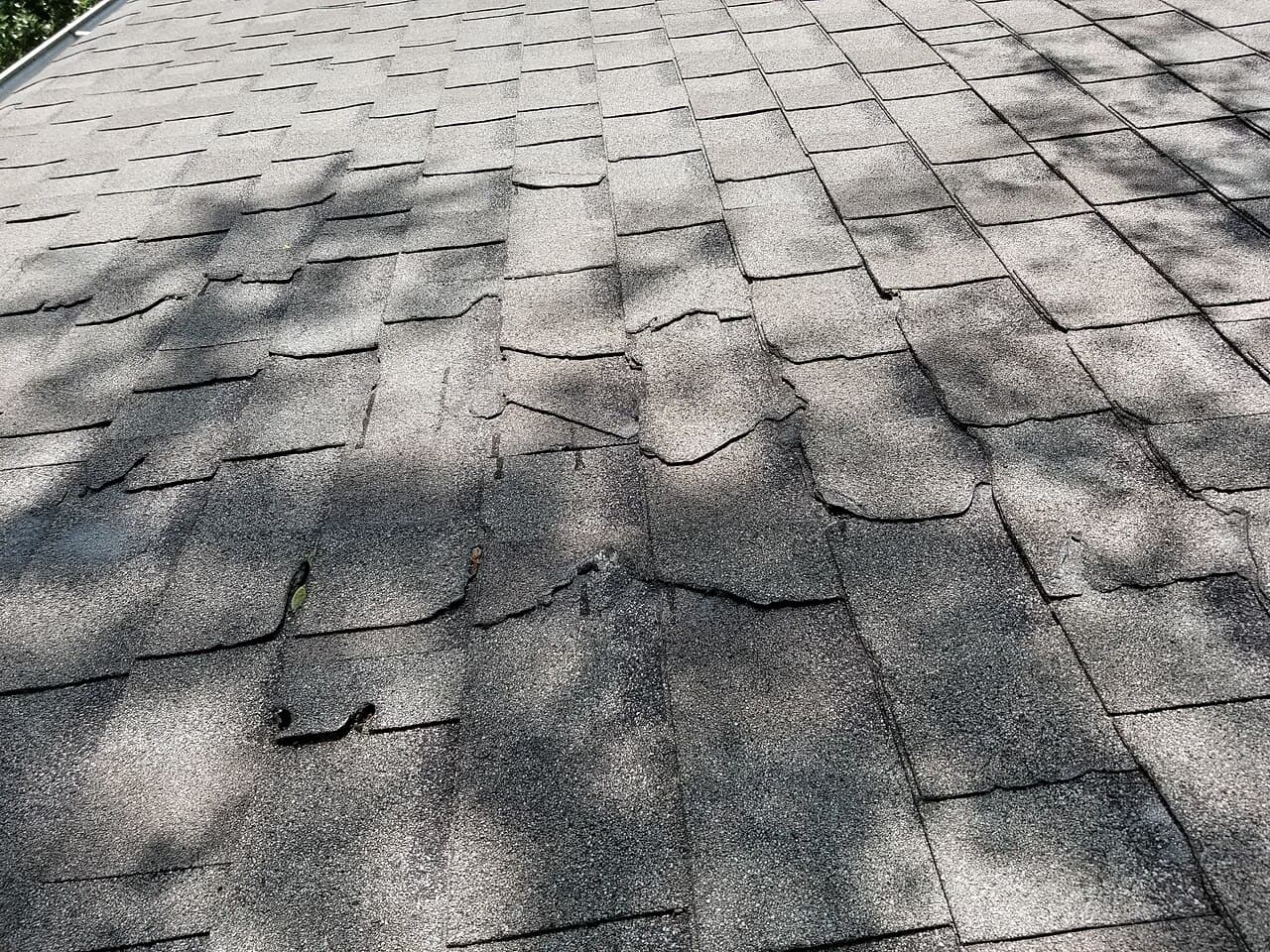
Call a roofer if the intake is blocked or missing, the vent is damaged, or you see any of the moisture signs above. Adding or repairing ridge and soffit vents involves roof work and, depending on the job, cutting into roof or eave framing, so it is not a DIY project. Virginia's Board for Contractors defines roofing contracting as the service that provides for the installation, repair, removal, or improvement of materials common to the industry that form a watertight, weather resistant surface for roofs and decks.[4] The Board's consumer guide says that if the work is valued at $1,000 or more, a valid Virginia Contractor's License is required for the license category in which the contractor is to work,[5] so check the licence on DPOR's lookup first.
Ask the pro to measure existing vent area against the 1-to-150 guide, check the intake and look at where the fans discharge, and get the findings in writing. Related reading: what a ridge vent does, what repair costs in Virginia and replacing the vent with a new roof. Browse roofing repair answers and roofing repair services, or describe the job once to hear from licensed local roofers.
Common questions
- How much attic ventilation do I need?
- Virginia Cooperative Extension gives approximately 1 ft2 of net vent opening for every 150 ft2 of ceiling or attic space as a general guide, with exceptions, so check your local building code.
- Is a ridge vent enough by itself?
- Usually not. It exhausts air, so it needs intake openings such as soffit vents. Extension recommends a continuous ridge vent combined with continuous soffit vents.
- What are signs of poor attic ventilation?
- Frost or dark staining on the deck, rusty nail tips, damp insulation, mold, and a stuffy attic are common signs. ENERGY STAR advises professional help for damp insulation, mold or rot.
- Should bath fans vent into the attic?
- No. ENERGY STAR flags fans that exhaust moist air into the attic instead of outdoors as a problem to correct.
- Can I walk on the roof to check the vents?
- Do not. Look from the ground and from inside the attic, and have a roofer inspect the roof itself.
Sources
- [1] ENERGY SERIES: What about Ventilation? (2908-9024), Virginia Cooperative Extension, Virginia Tech. Checked October 27, 2026.
- [2] Attic Air Sealing, Insulating, and Ventilating for Ice Dam Prevention, Building America Solution Center, Pacific Northwest National Laboratory, U.S. Department of Energy. Checked October 27, 2026.
- [3] Attic Air Sealing Project, ENERGY STAR, U.S. Environmental Protection Agency. Checked October 27, 2026.
- [4] 18VAC50-22-30, Definitions of specialty services (Board for Contractors Regulations), Virginia Administrative Code, Virginia General Assembly. Checked October 27, 2026.
- [5] What You Should Know Before You Hire a Contractor, Virginia Board for Contractors, DPOR. Checked October 27, 2026.
Want a pro to handle it?
Describe the job once. Licensed local businesses send quotes, and you pay only when you book one.
Get a quote for Roofing