What does a ridge vent do?
A ridge vent lets hot, humid air escape from the attic through an opening along the roof peak while cooler air enters at the soffits. That airflow helps protect the roof deck and insulation from heat and moisture and helps reduce ice dams. It only works with a clear intake, and repairs belong to a licensed roofer.
Free to ask. Local shops send quotes, and you pay only when you book one.
By Kasra Taheri, Founder, LoclisPublished
Researched and drafted with AI, then checked claim by claim against the sources listed below before it was published. Prices and rules change; the dates beside each source say when it was last checked.
This is a job for a licensed pro in Virginia
This page explains what the work involves, the permits, what a licensed pro does and what drives the cost. It does not give step-by-step instructions, because this work needs a licence, a permit or both, and doing it wrong can injure someone. Before you hire, check the licence on Virginia's DPOR record.
A ridge vent lets hot, damp air leave your attic through a slot along the roof peak, while cooler outside air comes in at the eaves to replace it. Working as a pair, the intake and the exhaust keep the space under your roof closer to the outdoor temperature, which protects the roof deck, the insulation and the ceilings below.
How a ridge vent works
Warm air rises. In an attic that air carries heat in summer and household moisture in winter, from showers, cooking and laundry. A ridge vent is a continuous exhaust opening at the very top of the roof, covered by a vent product and capped with ridge shingles so rain does not get in. Because it sits at the highest point, the rising air has a clear way out.
An exhaust vent only works if air can get in. That intake is normally the soffit vents under the overhang. Most building codes require roof and soffit vents to exhaust humidity and moisture that could cause insulation or other building materials to deteriorate.[1] Virginia Cooperative Extension says most homes should have a combination of a continuous ridge vent along the peak of the roof and continuous soffit vents at the eaves to provide the most effective ventilation.[1]
How much vent area a house needs
Extension gives a general guide of approximately 1 ft2 of net vent opening for every 150 ft2 of ceiling or attic space, with some exceptions, so your local building code governs.[1] Net vent opening means the open area air can actually pass through, not the size of the product. Extension adds that if individual vents are used instead of continuous ones, the vents should be divided equally between the ridge and soffits.[1]
What a ridge vent does for you
It cools the roof deck. Heat and trapped moisture shorten the life of roofing and framing, and an attic that breathes is gentler on both.
It helps with ice dams. Snow melts on a roof that is warmed from below and refreezes at the eaves. The U.S. Department of Energy's Building America program says to vent the roof to keep the roof cool to minimize the snow melt that leads to ice dam formation.[2] Ventilation is only half of the fix, though. The same source says the most important step is to seal all of the air leaks from the conditioned space into the attic space to keep warm air from entering the attic in the first place.[2] See why ice dams form on a roof and how to prevent them.
It moves moisture out. That helps protect insulation and wood from damp, which is a common root of attic mold and rot.
Why a ridge vent may not be working
A ridge vent is only as good as the path of air leading to it.
- Blocked intake. Insulation pushed against the eaves can smother the soffit vents. The Building America guide says baffles and insulation dams should be installed to keep insulation out of the soffit vents and to direct cooling air flow from the soffit vents up along the underside of the roof deck to the ridge vents,[2] and that an air gap of at least 2 inches should be provided between the top of the insulation and the underside of the roof deck.[2]
- No intake at all. Some houses have a ridge vent and no soffit openings, or soffits painted or boxed shut. Air then has nowhere to come from.
- Moisture dumped into the attic. ENERGY STAR lists kitchen, bathroom or clothes dryer vents that exhaust moist air directly into the attic space instead of outdoors as a problem to correct.[3] A ridge vent cannot keep up with that.
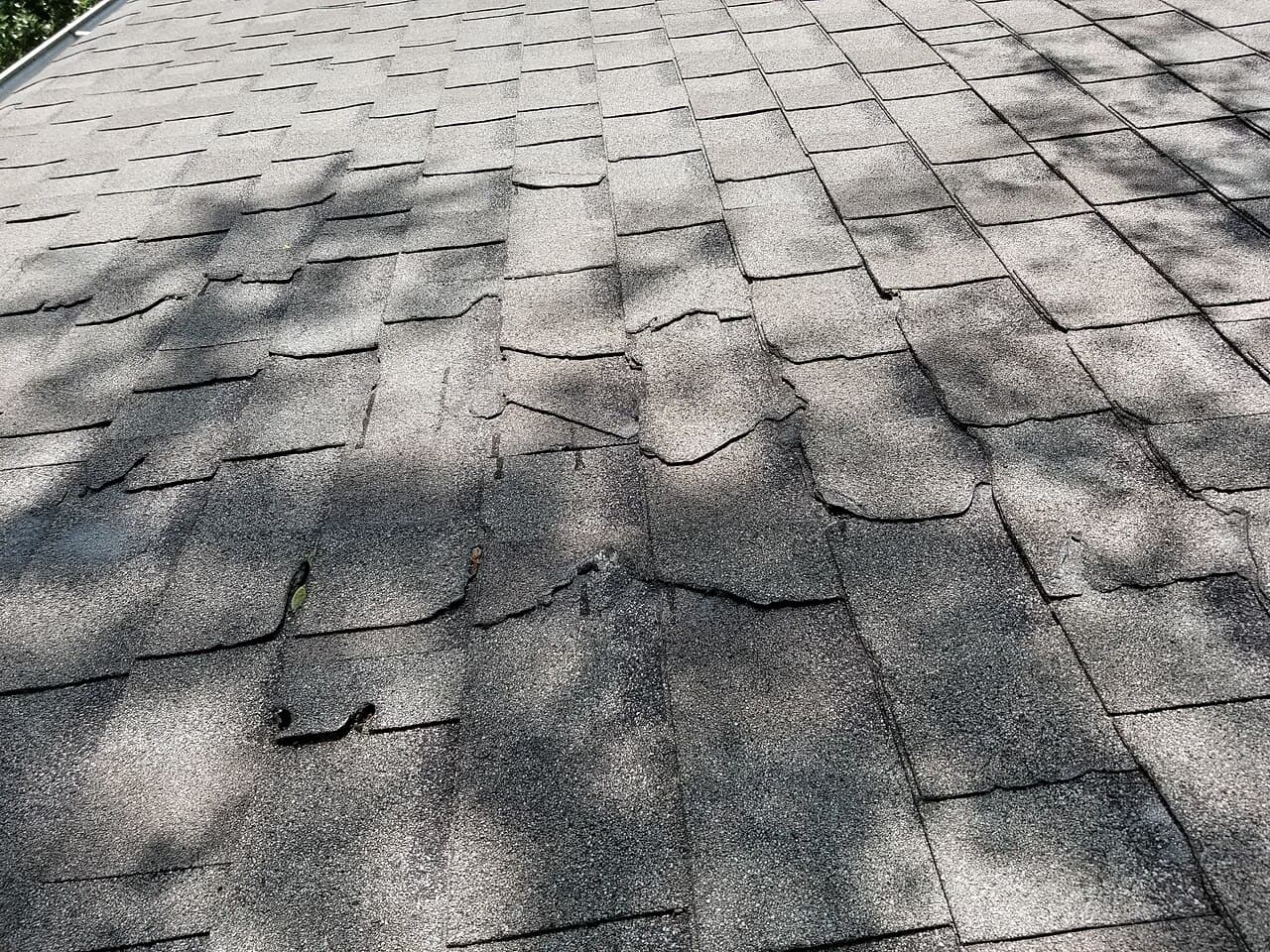
- Damage. A cracked, crushed or torn-off section, or a ridge cap that has lifted, can let in weather and pests.
Signs worth a look include frost on the underside of the deck in cold weather, stained or dark sheathing, and rust on nail points. ENERGY STAR also names wet or damp insulation, indicating a leaky roof,[3] and moldy or rotted attic rafters or floor joists, indicating moisture problems,[3] as conditions to have a professional deal with.
When to call a licensed pro
Inspecting, repairing or replacing a ridge vent means working on the roof ridge, which is a fall hazard, so leave it to a roofer. In Virginia, the Board for Contractors defines roofing contracting as the service that provides for the installation, repair, removal, or improvement of materials common to the industry that form a watertight, weather resistant surface for roofs and decks.[4] In the Board's classes, Class C covers a single contract over $1,000 but less than $30,000, with higher classes above that,[5] so check the licence on DPOR's lookup before you sign.
Ask the roofer to look at the attic as well as the roof. A good inspection covers the soffit intake, the insulation at the eaves and what the bath and kitchen fans vent into.
Next steps: read how much ridge vent repair costs in Virginia, see whether a new roof is the time to replace the vent, browse roofing repair answers or roofing repair services. To have licensed local roofers look at yours, describe the job once.
Common questions
- Do I need soffit vents if I have a ridge vent?
- Yes, in nearly every house. A ridge vent only exhausts air, so it needs intake openings, usually soffit vents, to pull air through the attic. Virginia Cooperative Extension recommends a continuous ridge vent paired with continuous soffit vents for the most effective ventilation.
- Does a ridge vent make my attic cooler?
- It helps by letting hot air out while cooler outside air comes in at the eaves. The attic still follows the weather, so expect it to run closer to the outdoor temperature rather than feel cool.
- Can a ridge vent help with ice dams?
- It is part of the answer. Venting keeps the roof deck cool so snow melts less from below, but the Department of Energy's Building America program says sealing air leaks from the house into the attic is the most important step.
- How much attic ventilation does a house need?
- Virginia Cooperative Extension gives approximately 1 ft2 of net vent opening for every 150 ft2 of ceiling or attic space as a general guide, and tells readers to check their local building code because there are exceptions.
- Can I check my ridge vent myself?
- You can look for signs from the ground and from inside the attic, such as stained sheathing or frost in winter. Do not walk the ridge. Have a roofer check the vent, the intake and the insulation.
- Do bathroom fans need to vent outdoors?
- Yes. ENERGY STAR lists kitchen, bathroom or clothes dryer vents that exhaust moist air into the attic instead of outdoors as a problem to correct before other attic work.
Sources
- [1] ENERGY SERIES: What about Ventilation? (2908-9024), Virginia Cooperative Extension, Virginia Tech. Checked October 27, 2026.
- [2] Attic Air Sealing, Insulating, and Ventilating for Ice Dam Prevention, Building America Solution Center, Pacific Northwest National Laboratory, U.S. Department of Energy. Checked October 27, 2026.
- [3] Attic Air Sealing Project, ENERGY STAR, U.S. Environmental Protection Agency. Checked October 27, 2026.
- [4] 18VAC50-22-30, Definitions of specialty services (Board for Contractors Regulations), Virginia Administrative Code, Virginia General Assembly. Checked October 27, 2026.
- [5] Va. Code § 54.1-1100, Definitions, Code of Virginia, Virginia General Assembly. Checked October 27, 2026.
Want a pro to handle it?
Describe the job once. Licensed local businesses send quotes, and you pay only when you book one.
Get a quote for Roofing