Is it worth refinishing old furniture?
Usually yes for solid wood furniture with sound joints and a worn finish, or any piece you value. It is usually not worth it for laminate, particleboard or thin veneer, for pieces with structural or pest damage, or for a valuable antique whose original finish should stay. Compare an itemized written quote with a like-for-like replacement.
Free to ask. Local shops send quotes, and you pay only when you book one.
By Kasra Taheri, Founder, LoclisPublished
Researched and drafted with AI, then checked claim by claim against the sources listed below before it was published. Prices and rules change; the dates beside each source say when it was last checked.
Step by step
Read when to stop and call a pro, further down this page, before you start.
Step 1: Identify what it is made of
Look at the edges and underside. Grain that runs over the edge means solid wood; a uniform fine-particle core or a printed surface means a composite or laminate.
Step 2: Sort the damage
Separate worn finish from structural problems such as loose joints, splits and a warped top.
Step 3: Check for pests
Look for small round holes and fine powder beneath the piece, which NPS describes as signs of beetle damage,[1] and for wood that feels soft.
Step 4: Think about age and value
If it might be an antique, have it assessed before anything is stripped or sanded.[1]
Step 5: Check for old paint
If it is painted and made before 1978, do not dry sand it; ask how lead will be handled.[2]
Step 6: Get a written quote
Ask a refinisher for an itemized quote covering repairs, stripping and the finish.
Step 7: Compare with a replacement
Set the quote beside the price of a comparable piece and weigh in what the furniture means to you.
It depends on what the piece is made of and what is wrong with it. Refinishing is usually worth it for solid wood furniture with sound joints and a worn, damaged or unwanted finish, and for pieces with sentimental value. It is usually not worth it for a low-cost laminate or particleboard piece, one with deep damage, or a valuable antique whose original finish should stay.
When refinishing is worth it
Solid wood in sound shape. Almost all furniture is made from two or more pieces of wood, joined together in some fashion,[1] and a well-built piece can take a new finish and last decades more. A solid dresser, table or chair with a tired surface is the best candidate.
The finish is truly worn. NPS guidance says refinishing is preferred if the existing finish is either inappropriate or almost completely worn away.[1] If the finish is only dull or lightly scratched, cleaning and spot repair may be enough, and that costs far less than a full strip.
The piece means something to you. Value is not only money. A family dresser that fits your room and holds your clothes may be worth more refinished than any replacement.
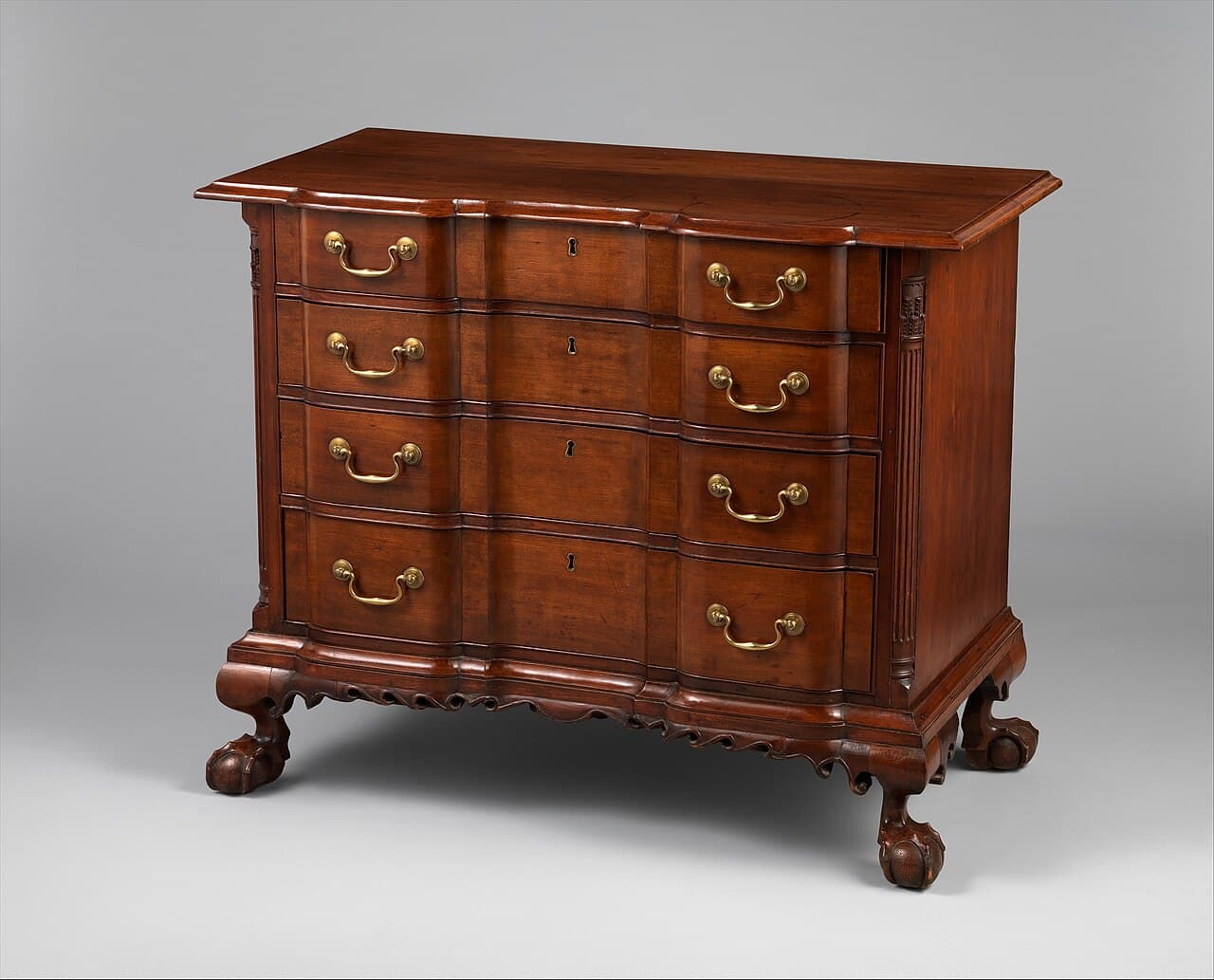
When it is probably not worth it
Laminate, particleboard or thin veneer. These are not built to be sanded or stripped. Veneered surfaces may split or buckle because the grain orientation of the veneer is different from that of the underlying wood,[1] and a thin veneer can be sanded through. A low-cost flat-pack piece is rarely worth the professional labor.
Structural or pest damage. If joints are failing, the wood is soft or there are signs of insects, the money goes into repair before any finish. Beetles do the most damage to furniture and wooden objects,[1] so look for small round holes and fine powder before you pay for a finish.
A valuable antique. Do not refinish it before it has been assessed. Poorly done repairs are another common cause of damage to wooden objects,[1] and future conservation treatment may be made more difficult by the use of irreversible materials.[1] A restorer can tell you whether leaving the original finish is worth more.
Do the numbers
Put three figures side by side: a written itemized refinishing quote, the price of a comparable new or secondhand piece, and what the furniture means to you. Our guide to what furniture refinishing costs in Virginia explains what drives the quote. If the quote is a large share of a good replacement and the piece has no special value, buying another may make more sense. If you are willing to do the work yourself, refinishing a wood dresser shows the effort involved, and for tables see whether an old dining table is worth repairing.
Safety can change the answer
Old painted furniture is a special case. The EPA lists refinishing old furniture among the jobs that can put you in contact with lead.[2] The federal ban on lead-containing paint covers furniture articles for consumer use that bear lead-containing paint, and applies to products manufactured after February 27, 1978.[3] An older painted piece may predate it, so ask how the refinisher will handle the dust before you commit.
Stripping is also hazardous. The CPSC says that if work must be done indoors under low ventilation conditions, consider having the work done professionally instead of attempting it yourself.[4] If you do not have outdoor space, paying a shop for the stripping may be the real value of hiring.
Stop and call a pro if
- The piece might be an antique or an heirloom. Get an assessment before any stripping or sanding.
- It is old and painted. Lead changes how it must be handled.
- The veneer is lifting or the structure is loose or cracked. Get a repair quote first.
- You have nowhere to ventilate the work. Pay for a shop to strip it.
Getting help in Virginia
Browse refinishing requests or read more furniture repair answers.
When you are ready, describe the piece once and local furniture refinishers can quote it.
Common questions
- Is it cheaper to refinish or replace furniture?
- For a solid wood piece with sound joints, refinishing is often cheaper than buying a comparable solid piece. For a low-cost laminate or particleboard piece, replacement usually wins. Get an itemized written quote and compare it with a like-for-like replacement.
- Which furniture is not worth refinishing?
- Laminate, particleboard and thin veneer, pieces with structural or pest damage, and valuable antiques whose original finish should stay. The National Park Service notes that veneered surfaces may split or buckle and that beetles do the most damage to furniture.
- Does refinishing an antique lower its value?
- It can. The National Park Service lists poorly done repairs as a common cause of damage to wooden objects. Have an antique assessed by a restorer or appraiser first.
- Is old furniture paint dangerous?
- It can be. The EPA lists refinishing old furniture among the jobs that can put you in contact with lead, and the federal ban on lead paint on consumer furniture applies to pieces manufactured after February 27, 1978.
- Do I need to strip furniture to refinish it?
- Not always. The National Park Service says refinishing is preferred if the existing finish is either inappropriate or almost completely worn away. A sound but dull finish may only need cleaning and a light recoat.
Sources
- [1] Museum Handbook, Part I, Appendix N: Curatorial Care of Wooden Objects, National Park Service, U.S. Department of the Interior. Checked October 27, 2026.
- [2] Protect Your Family from Sources of Lead, U.S. Environmental Protection Agency. Checked October 27, 2026.
- [3] 16 CFR Part 1303, Ban of lead-containing paint and certain consumer products bearing lead-containing paint, Consumer Product Safety Commission, Electronic Code of Federal Regulations. Checked October 27, 2026.
- [4] What You Should Know About Using Paint Strippers, U.S. Consumer Product Safety Commission. Checked October 27, 2026.
Want a pro to handle it?
Describe the job once. Licensed local businesses send quotes, and you pay only when you book one.
Get a quote for Furniture