Should I take my mower to a shop for a yearly tune-up?
Do the routine work yourself on a push mower: oil, air filter, spark plug and fuel. Take it to a shop if it is a riding or zero-turn mower, needs belts, a transmission or blade balancing, is hard to start, or is under warranty. Whoever does it, ask for a written itemised estimate first.
Free to ask. Local shops send quotes, and you pay only when you book one.
By Kasra Taheri, Founder, LoclisPublished
Researched and drafted with AI, then checked claim by claim against the sources listed below before it was published. Prices and rules change; the dates beside each source say when it was last checked.
Step by step
Read when to stop and call a pro, further down this page, before you start.
Step 1: Look at your mower
Note whether it is a push, riding or zero-turn model, its age, and whether it is under warranty.
Step 2: Decide what you can do
Oil, air filter, plug and fuel are routine; disconnect the spark plug first.[2]
Step 3: Book the rest
Take blade balancing, belts, transmission and hard-starting problems to a shop.
Step 4: Get the quote in writing
Ask for an itemised estimate that lists parts, labor and any fees before work starts.
Step 5: Add stabilizer at season end
Add fuel stabilizer before storage if the mower will sit idle for more than a few weeks.[3]
Short answer
For most homeowners the oil, air filter, spark plug and fuel can be done at home on a push mower. A yearly shop visit is worth it when the work is beyond your tools or comfort, the mower is a riding or zero-turn machine, or a warranty or hard-to-start engine is involved. A good compromise is to do the routine items yourself and pay a shop for the blade and anything that will not run right.
The routine schedule is modest. For most residential lawnmowers, oil is typically changed every year,[1] fuel filters typically on an annual basis,[1] and spark plugs typically every two years.[1] That is the work a yearly tune-up covers.
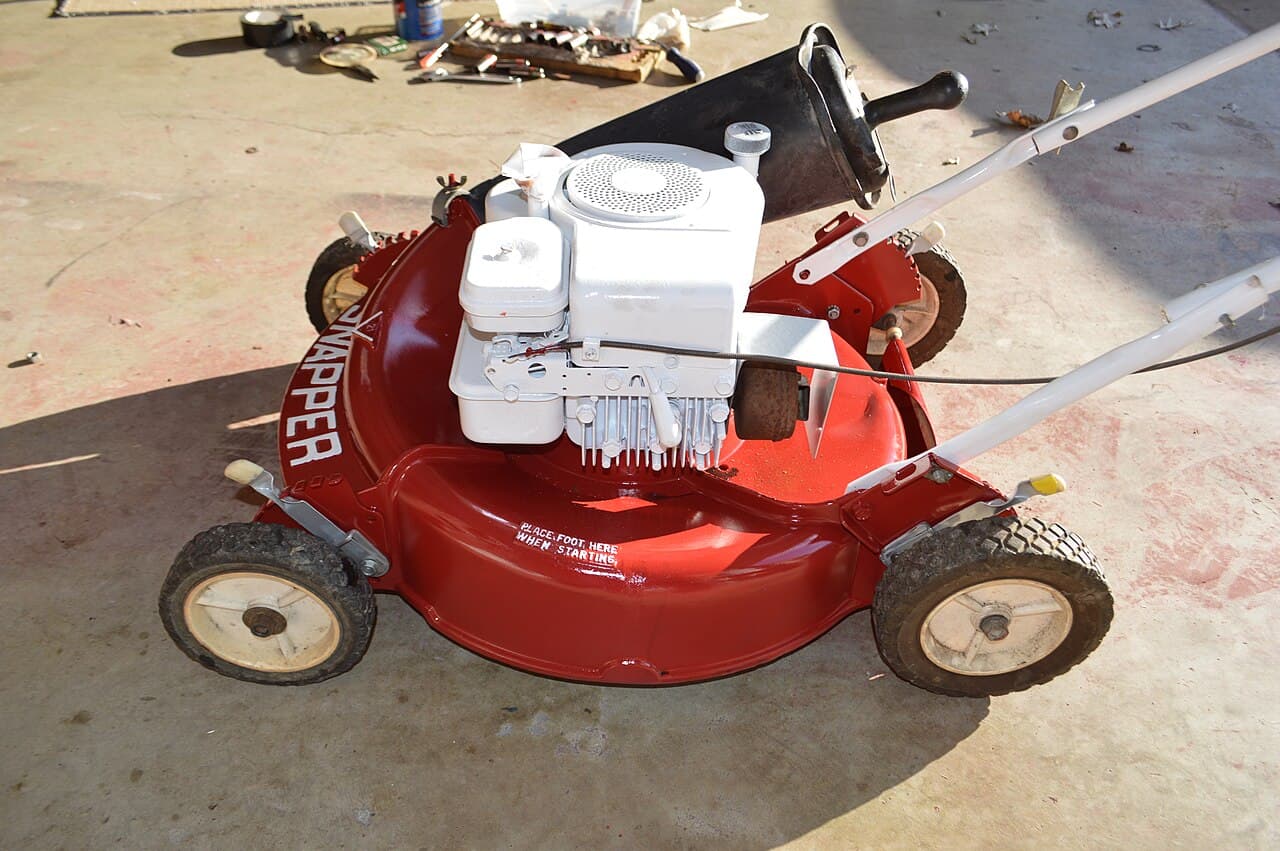
Do it yourself when
You own a basic socket set, the mower is a push model, and you can follow the manual. The first rule is safety: disconnect the spark or electric plug before troubleshooting or repairing the mower.[2] The tasks are straightforward, and how to tune up a mower walks through them. Changing oil on a riding mower is also manageable; see how to change the oil in a riding mower.
Take it to a shop when
- It is a riding or zero-turn mower and the work goes beyond oil and filters: belts, deck spindles, transmission or electrics.
- The blade needs balancing or replacing and you have no way to do it safely. An unbalanced blade can create a slight wobble that causes strain on a mower.[1] Compare sharpening it yourself or having it sharpened.
- It is hard to start or stalls after fresh fuel, a clean filter and a new plug.
- The mower is under warranty. Check the warranty terms in the manual before doing the work yourself.
- You have nowhere safe to tip it. A mower can tip over easily.[2]
Fuel matters whoever services it
Engines that are rarely or seasonally used, such as lawnmowers or chainsaws, are especially prone to difficulties with ethanol-blended gasoline,[3] and the advice is to add fuel stabilizer if the equipment will be idle for more than a few weeks.[3] Do that at the end of the season, whoever services the mower.
What a yearly shop visit should include
Ask for a written list: oil, air filter, spark plug, blade sharpened and balanced, deck cleaned, and a check of belts and cables. Ask for an itemised estimate before they start; see what servicing costs. Shops tend to be busy in spring, so an end-of-season visit often means the mower is ready when the season starts.
Stop and call a pro if
- You smell fuel or see a leak you cannot trace to a loose cap.
- The mower shakes, smokes or makes a new noise. Stop using it.
- A safety switch or guard is damaged or bypassed. Never disengage any safety switches or devices.[2]
- You doubt a blade repair. The blades turn at 2,000 to 4,000 revolutions per minute,[2] so leave it to a shop.
Getting help in Virginia
Browse more lawn equipment answers or local lawn equipment repair pros.
When you are ready, describe the mower once and local repair shops quote it.
Common questions
- Is a yearly shop tune-up necessary?
- Not always. A push mower with light use can be serviced at home on a yearly oil and filter schedule. A shop earns its fee on riding mowers, blade balancing and hard-to-start engines.
- When is the best time to take the mower in?
- Shops tend to be busy in spring, so an end-of-season visit often gets the mower back before the first mow.
- Will doing the work myself void the warranty?
- Check the warranty terms in the manual before you start; some require specific oil or service records.
Sources
- [1] Mower Maintenance, University of Illinois Extension. Checked October 27, 2026.
- [2] Lawn Care: Rotary Mower Safety (BSE-42P), Virginia Cooperative Extension, Virginia Tech. Checked October 27, 2026.
- [3] Fuel Ethanol: Hero or Villain?, Penn State Extension. Checked October 27, 2026.
Want a pro to handle it?
Describe the job once. Licensed local businesses send quotes, and you pay only when you book one.
Get a quote for Lawn Equipment