What does a cold spot on a thermal image of a wall mean?
A cold spot means that part of the wall surface is cooler than its surroundings. On a winter scan the usual causes are missing or sagging insulation, an air leak, or damp material, and the straight vertical lines you see are often just the studs. The image cannot say which, so rule out ordinary features and have the spot confirmed with a moisture meter.
Free to ask. Local shops send quotes, and you pay only when you book one.
By Kasra Taheri, Founder, LoclisPublished
Researched and drafted with AI, then checked claim by claim against the sources listed below before it was published. Prices and rules change; the dates beside each source say when it was last checked.
Step by step
Read when to stop and call a pro, further down this page, before you start.
Step 1: Read the color legend
Find the temperature scale on the image before judging a color. In the classic palette the Department of Energy describes, cooler areas show as black and warm regions as white, but many cameras use the reverse.[1]
Step 2: Check the conditions
Confirm the scan was taken with at least a 20°F difference between inside and outside air.[1] Cold spots on a mild day mean little.
Step 3: Look at the shape
Straight, evenly spaced vertical stripes are usually framing. A blotchy patch, a triangle in a corner or a thin line along a joint is worth following up.
Step 4: Match it to a feature
Compare the spot with what is on the other side: an outlet, a window, a plumbing wall, a cold-air return or a place where furniture or drapes sat against the wall.
Step 5: Check for air leaks
On a cold or windy day, hold the back of your hand near the spot to feel for a draft. Other places to check for leaks include windows, doors, lighting and plumbing fixtures, switches, and electrical outlets.[3]
Step 6: Look for moisture clues
Check the wall and ceiling nearby for stains, bubbling paint, peeling wallpaper, a musty smell or condensation, and look at the other side of the wall if you can reach it.[2]
Step 7: Ask for a second check
Ask the operator to confirm the spot with a moisture meter, a blower door reading or a small inspection opening before anyone cuts into the wall.
Step 8: Record and compare
Save the image with its date and the wall it shows, so a contractor can see it and you can compare a rescan after any repair.
A cold spot on a thermal image of a wall means that part of the wall surface is cooler than the area around it. In winter the usual causes are missing, thin or sagging insulation, air moving through a gap, or material that has gotten damp. The camera shows surface temperature only, so the spot is a place to look, not a diagnosis. It is the start of a question, and a few quick checks usually narrow the answer.
Read the image before you worry
Colors are not standard. The U.S. Department of Energy describes thermal images that record the temperature variations of the building's skin, ranging from white for warm regions to black for cooler areas,[1] but many cameras use blue for cold and red for hot. Look for the temperature scale on the image before deciding which patches are cold.
Conditions matter as much as the picture. The most accurate thermographic images usually occur when there is a large temperature difference (at least 20°F [14°C]) between inside and outside air temperatures.[1] A scan on a mild day can show faint patterns that disappear on a cold one. See what a thermal imaging inspection can find for how to book a scan at the right time.
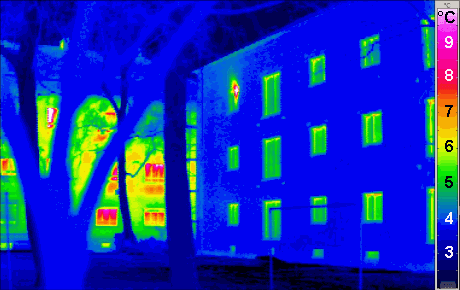
The common causes of a cold spot
Missing or settled insulation. A patch with no insulation behind it, or insulation that has slumped to the bottom of the cavity, cools the wall surface in that spot. The resulting thermograms help assessors determine whether a building needs insulation and where in the building it should go.[1] A cold patch that is larger than a stud bay, or one at the top of a wall, often points here.
An air leak. Moving air chills the surface as it passes. Scans are often done with a blower door, which helps exaggerate air leaking through defects in the building shell.[1] Such air leaks appear as black streaks in the infrared camera's viewfinder.[1] Streaks that follow a joint, an outlet, a window frame or the line where wall meets ceiling are typical. Other places to check for leaks include windows, doors, lighting and plumbing fixtures, switches, and electrical outlets.[3]
Damp material. Wet material can read cooler than dry material beside it. The Department of Energy notes that because wet insulation conducts heat faster than dry insulation, thermographic scans of roofs can often detect roof leaks.[1] The same logic applies to a leaking pipe, a wet window sill or condensation. Condensation can be a sign of high humidity,[2] so a spot near a cold window or a bathroom wall deserves a closer look.
Ordinary building features. Studs, headers, plumbing walls, ducts and the backs of closets all show up in a scan without being a defect. Evenly spaced vertical stripes are usually framing. A cold-looking spot on an exterior wall may also be where furniture or drapes sat against it, which is why assessors ask you to move them first.
Why the exact spot may not be the problem
Warm air does not always move through a wall in a straight line, so the Department of Energy warns that heat loss detected in one area of the outside wall might originate at some other location on the inside of the wall.[1] A cold spot near the floor can come from a leak higher up. That is also why interior scans are favored: interior surveys are generally more accurate because they benefit from reduced air movement.[1] Ask the operator which side the image was taken from, and whether the wall was checked on both sides.
Check it yourself
Start with what you can see and feel, and let the checks above guide you. Look for stains, bubbling paint, peeling wallpaper, a musty smell or condensation. Mold may be hidden in places such as the back side of dry wall, wallpaper, or paneling,[2] so a smell with no visible source is a reason to dig further. On a cold day, a hand held near outlets, switches and trim will often find a draft. Note whether the spot lines up with something in the room.
If the evidence points to water, act quickly. The key to mold control is moisture control,[2] and it is important to dry water-damaged areas and items within 24-48 hours to prevent mold growth.[2]
Stop and call a pro if
- The spot is damp, stained or smells musty. Water is the problem to find and fix before any insulation work. A plumber or roofer may be needed.
- A cold spot sits on an outlet, switch, breaker or panel. Do not remove covers or probe. A licensed electrician should look at it.
- The scan suggests missing insulation inside a wall or attic. Opening the wall and adding insulation is a job for an insulation or general contractor.
- A cold patch comes with a draft, soot or a combustion appliance nearby. Do not seal gaps around a furnace, water heater or chimney yourself. Call an energy assessor or an HVAC contractor.
- You want the finding written up as part of a home inspection. Ask a licensed home inspector or a qualified energy auditor.
Getting help in Virginia
Before booking, read how much a thermal imaging inspection costs in Virginia and whether one is worth it. Loclis lists DPOR-licensed businesses with their licence number and class: browse inspection services or see more inspection answers.
When you are ready, describe what you want checked once and local businesses quote it.
Common questions
- Does a cold spot always mean missing insulation?
- No. The Department of Energy says the resulting thermograms help assessors determine whether a building needs insulation and where in the building it should go, but a cool patch can also be an air leak, damp material, framing, or a pipe or duct behind the wall. It is a lead to follow, not a diagnosis.
- Is a cold spot a sign of mold?
- Not by itself. A scan cannot identify mold. A cool, damp area can be a place where moisture is collecting, and the EPA says mold may be hidden in places such as the back side of dry wall, wallpaper, or paneling. Check for stains and smells, and have the moisture source found.
- What is the difference between a cold spot and an air leak?
- An air leak usually looks like a streak or a plume that follows a gap, such as a joint, outlet or window frame, and gets stronger with the blower door running. A cold spot from insulation looks more like a broad patch. The Department of Energy says air leaks appear as black streaks in the infrared camera's viewfinder.
- Why does the cold spot look different from outside?
- Wind, sun and siding change exterior readings. The Department of Energy says interior surveys are generally more accurate because they benefit from reduced air movement, and that heat loss detected in one area of the outside wall might originate at another location on the inside of the wall.
- Do I need to open the wall to find out?
- Often not. A moisture meter or a second scan on a different day can show whether the spot is real. If the spot is confirmed, a small opening shows what is behind it. Leave anything involving wiring or a possible leak to the right licensed trade.
Sources
- [1] Thermographic Inspections, U.S. Department of Energy, Energy Saver. Checked October 28, 2026.
- [2] A Brief Guide to Mold, Moisture and Your Home, U.S. Environmental Protection Agency. Checked October 28, 2026.
- [3] Do-It-Yourself Home Energy Assessments (archived copy), U.S. Department of Energy. Checked October 28, 2026.
Want a pro to handle it?
Describe the job once. Licensed local businesses send quotes, and you pay only when you book one.
Get a quote from a local pro