What does prewiring a house for smart home devices involve?
Prewiring means running the cables and boxes your smart devices will need while the walls are still open: network and coax cable, thermostat, doorbell, speaker and camera runs, and switch boxes that suit smart switches. In Virginia most wiring under 50 volts needs no permit, but a new circuit, outlet or fixture is permitted electrical work for a licensed electrician.
Free to ask. Local shops send quotes, and you pay only when you book one.
By Kasra Taheri, Founder, LoclisPublished
Researched and drafted with AI, then checked claim by claim against the sources listed below before it was published. Prices and rules change; the dates beside each source say when it was last checked.
This is a job for a licensed pro in Virginia
This page explains what the work involves, the permits, what a licensed pro does and what drives the cost. It does not give step-by-step instructions, because this work needs a licence, a permit or both, and doing it wrong can injure someone. Before you hire, check the licence on Virginia's DPOR record.
Prewiring a house for smart devices means running the cables and setting the boxes your future devices will need while the walls and ceilings are open, so nothing has to be fished through finished drywall later. It has two halves. The low-voltage half is network, coax, speaker, camera, doorbell and thermostat cable. The line-voltage half is the house wiring those devices plug into or replace: switch boxes that suit smart switches, outlets where hubs and cameras sit, and power for doorbell transformers and network gear.
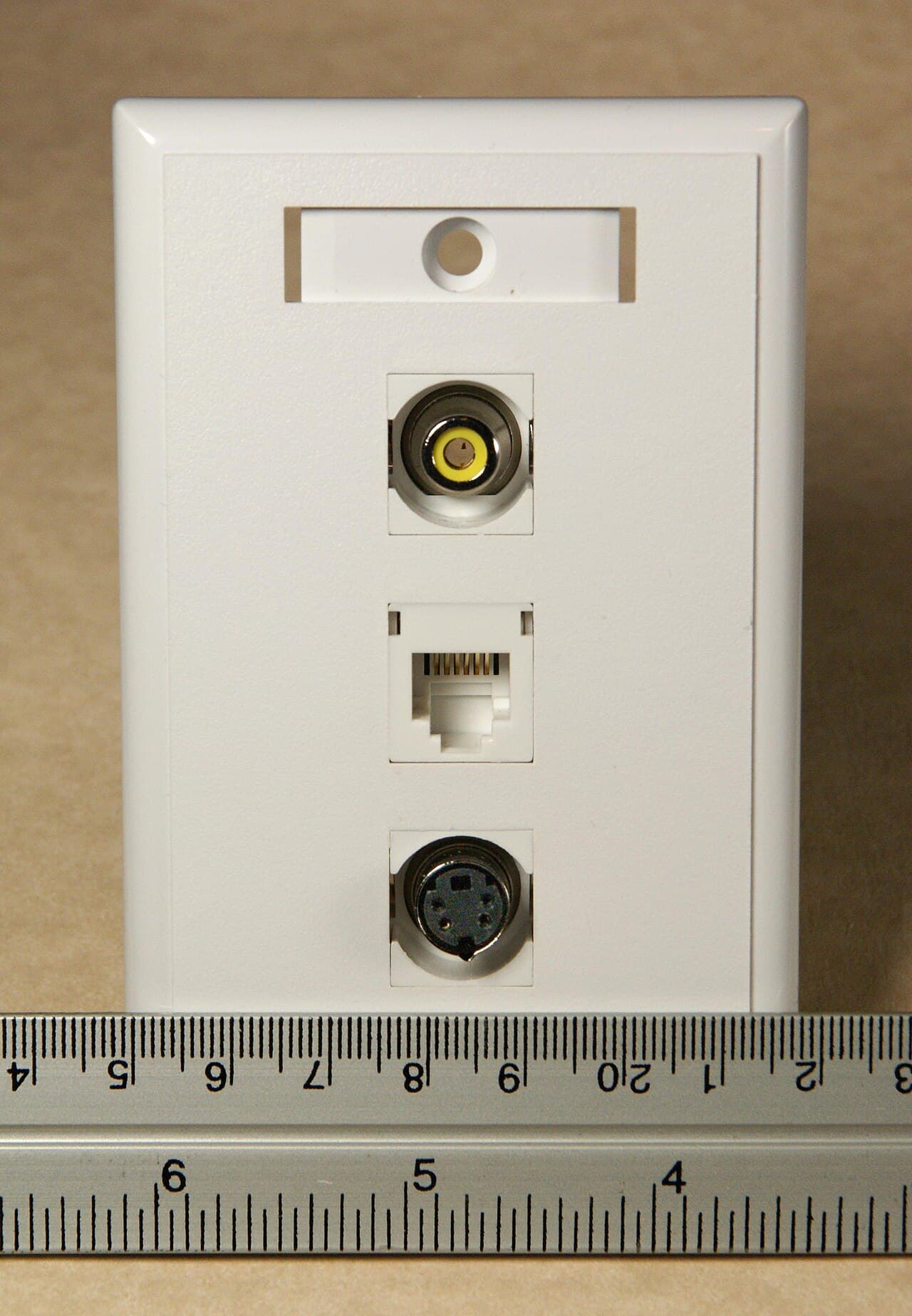
This page explains what the job covers so you can plan it with your builder and read a quote. The work itself, especially anything on house power, is a job for licensed pros.
What typically gets wired
Network cable to fixed devices. TVs, desks, game consoles and ceiling-mounted wireless access points usually run better on a cable than on Wi-Fi. Each run normally goes back to one central spot.
A central wiring location. A closet, utility room or basement wall where the incoming internet service, the router and every cable meet, with a power outlet nearby. Most prewiring plans start here, because every other run ends here.
Camera and doorbell runs. Cable to each planned camera location under the eaves or by doors, and a run for a wired video doorbell.
Thermostat cable. Smart thermostats need steady power. Google Nest notes, "Some systems may require a common wire (C wire) or the Nest Power Connector."[10] Running thermostat cable with spare conductors avoids that problem.
Speaker and coax runs. In-wall or in-ceiling speaker wire, and coax where a TV or cable modem may go.
Switch boxes that suit smart switches. Many smart switches need a neutral conductor in the box, which older homes often lack. Leviton sells no-neutral smart dimmers and switches for older homes, which work through its Wi-Fi bridge,[11] but in new or open walls the simpler answer is to have the electrician provide a neutral at every switch location.
Smoke alarms. The U.S. Fire Administration says, "Only qualified electricians should install hardwired smoke alarms."[12] It also advises: "Choose interconnected smoke alarms so that when one sounds, they all sound."[12] If you plan a smart smoke alarm system, settle it with the electrician at the same time.
Permits: low voltage and line voltage
Virginia's Uniform Statewide Building Code says a permit is required before work on electric wiring begins.[1] It then carves out low-voltage work: no permit is needed for wiring and equipment that operates at less than 50 volts, is for broadband communications systems, or is for monitoring or automation systems in dwelling units.[1] The exemption ends when that wiring runs in a plenum, goes through fire-rated or smoke-protected construction, or is part of a fire alarm, fire detection, access or egress control, or door control system.[1] And an exemption from the permit is not an exemption from the code's other requirements,[1] so the cable still has to be installed properly.
Localities read the same rule into their own lists. Prince William County, for example, lists installing low-voltage wiring under 50 volts, such as a door bell or security system, as work that needs no permit, while installing a new electrical circuit, fixture or receptacle does.[3] Your county or city building department will tell you how it applies to your house.
In practice, the network, speaker and camera cable is usually permit-free, and the new outlets, switch boxes and circuits that go in alongside it are not. On a remodel or new build, the electrician's permit covers the line-voltage side.
Timing: before the walls close
Prewiring happens at rough-in, after framing and before insulation and drywall. On the line-voltage side, the building code calls for electrical materials, equipment and systems to be inspected before they are concealed,[2] so the electrical rough-in inspection comes first. Low-voltage cable usually goes in at the same stage, so both trades should be scheduled before the insulation crew.
Before drywall goes up, take photos of every wall with a tape measure in the frame and keep a simple list of what each cable is and where both ends are. That record is what makes later changes easy.
Who does the work
Low-voltage cable. Virginia's Board for Contractors licenses low-voltage work as electronic/communication service contracting (ESC), which covers telephone wiring, computer cabling, sound systems, data and network installation, television and cable TV wiring, antenna wiring, fiber optics and other systems that operate at 50 volts or less.[4] The electrical contractor (ELE) classification covers all work under the electrical provisions of the building code, including the ESC and fire alarm specialties.[5] So an electrical contractor can do both halves, or a low-voltage firm can take the cable while the electrician does the power.
House wiring. Under Virginia law, no individual may do electrical work as a tradesman, or offer to, unless licensed or working under the supervision of a licensed tradesman in that specialty.[6] Our answer on doing your own electrical work in Virginia covers the owner's own exemption and its limits.
Alarms and cameras. Virginia law defines electronic security equipment to include burglar alarms and cameras used to detect intrusions, concealment or theft,[8] and a business that installs it for a homeowner needs a private security services business licence from the Department of Criminal Justice Services, and its electronic security technicians must be registered.[8][9][7] Ask a security installer for that licence as well as any contractor licence.
When to call a licensed pro
Call an electrician, or an electrical contractor who also does low-voltage work, before framing is finished, ideally when you are still finalising room layouts. That is when it costs least to add a neutral to every switch box, an outlet at each camera and access point, and a dedicated outlet at the central wiring spot. Call one too if you are prewiring during a remodel of an older house, where the existing wiring may need attention before anything new connects to it; see what rewiring an old house involves.
Ask for a written quote that lists every cable run by room, the cable type, the central wiring location, the outlets and switch boxes, who pulls the electrical permit, and what labelling and documentation you get at the end. Then check the contractor's licence before you sign. For costs, see what smart home wiring costs in Virginia, and for a remodel, whether to prewire during a remodel.
You can also browse smart home wiring services, find electricians in Blacksburg, or read more electrical answers.
Describe your smart home wiring job and licensed local pros quote it.
Common questions
- Do I need a permit to prewire a house for smart devices in Virginia?
- Not for most of the low-voltage cable. Virginia's building code exempts wiring under 50 volts, broadband communications wiring and home monitoring or automation wiring from permits, unless it runs in a plenum, goes through fire-rated construction or is part of a fire alarm or access control system. New circuits, outlets and switch boxes are electric wiring and need a permit.
- Is Wi-Fi enough, or should I still run network cable?
- Wi-Fi works for most plug-in gadgets, but devices that stay in one place, such as TVs, desks, wireless access points and cameras, usually work more reliably on a cable. Prewiring is the cheapest moment to give those spots a wired connection.
- Who should I hire to prewire, an electrician or a low-voltage installer?
- Either can run the low-voltage cable: Virginia's Board for Contractors licenses it as the electronic/communication service (ESC) specialty, and an electrical contractor's licence covers it too. Line-voltage work, such as new outlets or switch boxes, needs a licensed electrician. Alarm and camera installers also need a Virginia private security services licence.
- What is a C wire and why does it matter for prewiring?
- It is the common wire in a thermostat cable, which delivers steady power to a smart thermostat. Google Nest says some systems may require one. Running a thermostat cable with spare conductors while the walls are open avoids a workaround later.
- Can I run the low-voltage cable myself?
- An owner can run cable in their own home, and most of it needs no permit, but it must still meet code and stay out of fire-rated assemblies and plenums. Anything that connects to house power is electrical work, which this page does not teach. Ask your electrician which runs you can safely leave to yourself.
Sources
- [1] 13VAC5-63-80, Virginia Uniform Statewide Building Code, Section 108 Application for permit, Virginia Administrative Code, Legislative Information System. Checked October 27, 2026.
- [2] 13VAC5-63-130, Virginia Uniform Statewide Building Code, Section 113 Inspections, Virginia Administrative Code, Legislative Information System. Checked October 27, 2026.
- [3] Do I Need a Permit?, Prince William County, Virginia, Building Development Division. Checked October 27, 2026.
- [4] 18VAC50-22-30, Definitions of specialty services, Virginia Administrative Code, Legislative Information System. Checked October 27, 2026.
- [5] 18VAC50-22-20, Definitions of contractor classifications, Virginia Administrative Code, Legislative Information System. Checked October 27, 2026.
- [6] Code of Virginia § 54.1-1129, Necessity for licensure, Code of Virginia, Legislative Information System. Checked October 27, 2026.
- [7] Private Security Services, Virginia Department of Criminal Justice Services. Checked October 27, 2026.
- [8] Code of Virginia § 9.1-138, Definitions (private security services), Code of Virginia, Legislative Information System. Checked October 27, 2026.
- [9] Code of Virginia § 9.1-139, Licensing, certification, and registration required, Code of Virginia, Legislative Information System. Checked October 27, 2026.
- [10] Check if a Google Nest thermostat is compatible with your system, Google Nest Help. Checked October 27, 2026.
- [11] Smart Home: Decora Smart, Leviton. Checked October 27, 2026.
- [12] Smoke Alarms, U.S. Fire Administration. Checked October 27, 2026.
Want a pro to handle it?
Describe the job once. Licensed local businesses send quotes, and you pay only when you book one.
Get a quote for Electrical Repair