What does replacing a broken light socket involve?
A licensed electrician turns off the circuit, removes the socket from the fixture, checks the wiring and connections behind it for heat damage, fits a matching new socket and tests the light. If the socket is cracked or scorched or the fixture is old, the electrician may suggest replacing the whole fixture. In Virginia anyone paid to do this must hold an electrical tradesman licence.
Free to ask. Local shops send quotes, and you pay only when you book one.
By Kasra Taheri, Founder, LoclisPublished
Researched and drafted with AI, then checked claim by claim against the sources listed below before it was published. Prices and rules change; the dates beside each source say when it was last checked.
This is a job for a licensed pro in Virginia
This page explains what the work involves, the permits, what a licensed pro does and what drives the cost. It does not give step-by-step instructions, because this work needs a licence, a permit or both, and doing it wrong can injure someone. Before you hire, check the licence on Virginia's DPOR record.
Replacing a broken light socket means a licensed electrician switches off the circuit, takes the socket out of the fixture, checks the wiring and connections behind it, fits a matching new socket and tests the light. When the socket is cracked, scorched or loose, the electrician may recommend a new fixture instead, because a new socket in an old fixture is not always the better buy.
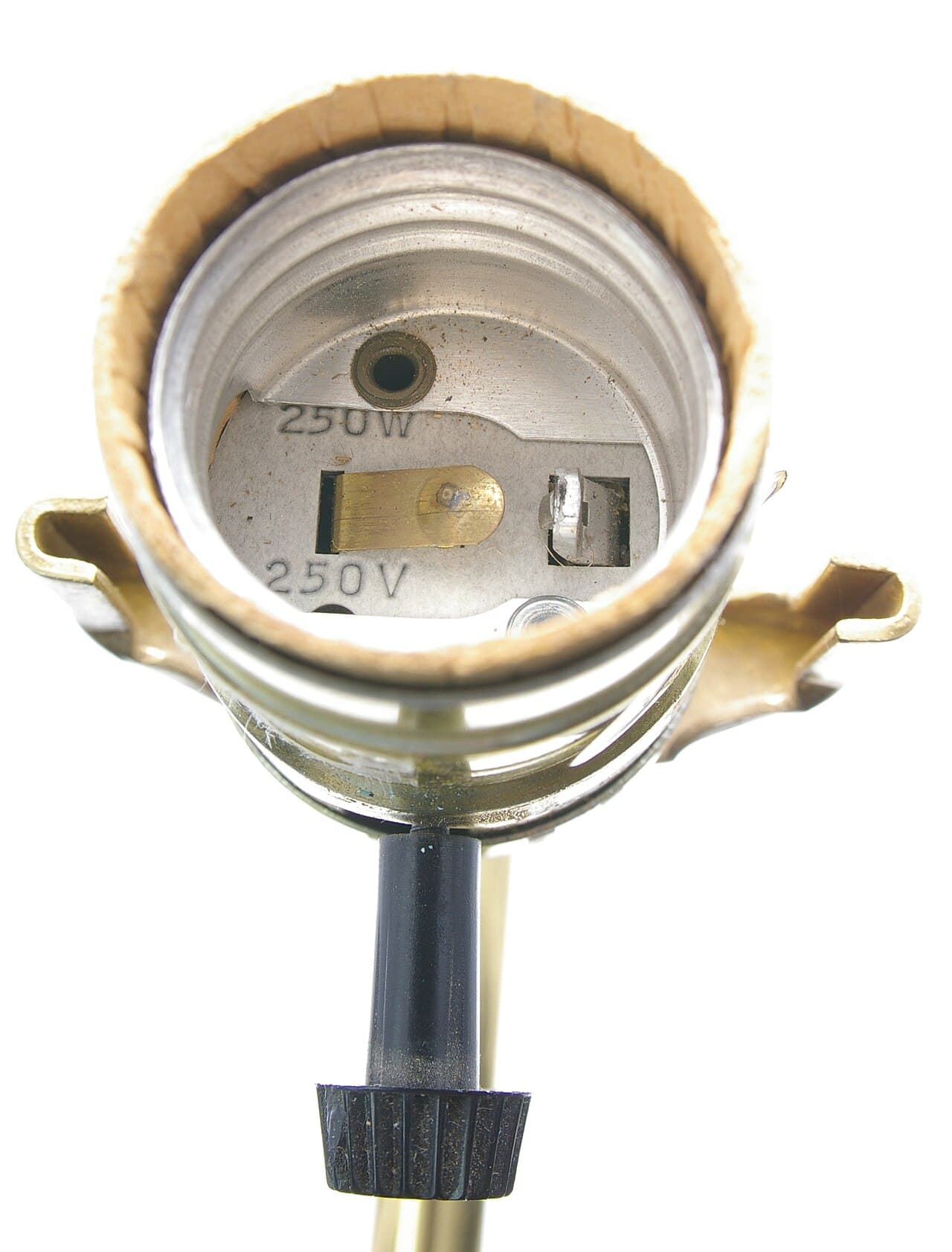
What the visit covers
Finding out why it failed. A light that will not come on is not always the socket. The electrician first rules out the bulb, the switch and the circuit, then looks at the socket itself: a centre contact that has lost its spring, a cracked or discoloured insulating sleeve, a loose body, or corrosion from moisture.
Looking at the heat damage. A socket usually fails because something has run hot. The CPSC says a bulb that is a higher wattage than recommended may overheat the light fixture, wiring or nearby combustible materials, leading to a fire.[1] Its checklist advice: "if you aren't sure, use a bulb 60 watts or less."[1] The U.S. Fire Administration gives the same guidance: use lightbulbs that match the recommended wattage on the lamp or fixture, and keep anything that can burn away from lamps, light fixtures and light bulbs.[2] If the wire insulation inside the fixture is brittle or browned, a pro will say so, because a new socket on damaged wire only hides the problem.
The repair itself. The socket is replaced with one of the same type and rating, the connections are remade, and the fixture is put back and tested. On a fixture with several sockets, a good electrician looks at the others while the fixture is open, since they have usually had the same bulbs and the same heat.
Repair or replace the fixture. If the fixture is old, damaged, rusted or made with parts that are no longer sold, replacing the whole fixture may be the better value, so ask for both options in the quote. A like-for-like fixture swap is covered in how much an electrician charges to replace a light fixture in Virginia.
Permits and older wiring
Virginia's building code lists, among the ordinary repairs, replacement of general use snap switches, dimmer and control switches, 125 volt-15 or 20 ampere receptacles, luminaires (lighting fixtures), and ceiling (paddle) fans in Group R-2 where serving a single dwelling unit and in Groups R-3, R-4, and R-5.[4] That item is about replacing fixtures; whether a repair inside a fixture needs a permit is for the electrician and your building department to say. A new circuit, a new fixture location or new wiring is not, so ask the electrician whether a permit applies.
If the house dates from the 1960s or 1970s, mention it. A national survey for the CPSC found that homes built before 1972, and wired with aluminum, are 55 times more likely to have one or more wire connections at outlets reach "Fire Hazard Conditions" than homes wired with copper.[3] It also says cables installed between 1965 and the mid 1970s in new homes, in additions, and as part of rewired/new circuits may contain aluminum wiring.[3] If an electrician finds aluminum wire in the fixture box, ask how they plan to handle the connection.
When to call a licensed pro
For a paid repair, always. Virginia defines a tradesman as any individual who engages in, or offers to engage in, work for the general public for compensation in the trades of electrical, plumbing and heating, ventilation and air conditioning.[5] The Code says that no individual shall engage in, or offer to engage in, work as a tradesman as defined in § 54.1-1128 unless he has been licensed.[6] The Board for Contractors also warns: if you contract with someone who does not hold a license, the Board for Contractors may not be able to help you resolve a complaint,[7] so check the licence before you book.
Leave the light off and call promptly if you see any of these:
- scorch marks, melted plastic or a burning smell at the fixture
- a bulb that flickers or a socket that buzzes or crackles
- a switch plate or ceiling around the fixture that feels warm
- a fixture that has come loose or hangs unevenly
- a breaker that trips every time the light is switched on
Find help
Browse electrical repair on Loclis or read more electrical repair answers. For related jobs, see what an electrician does to fix a ceiling fan.
Describe your light fixture problem and licensed local electricians quote it.
Common questions
- Can I replace a broken light socket myself?
- A failed socket is electrical work on the fixture's wiring, and this page does not give instructions for it. If you are paying someone, Virginia requires a licensed electrician. If the bulb is simply the problem, that is a different matter.
- Does replacing a light socket need a permit in Virginia?
- Replacing a luminaire (lighting fixture) is on the building code's list of ordinary repairs for single-dwelling residential groups. Whether a socket repair needs a permit, and any new wiring or circuit, is a question for the electrician and your local building department.
- Is it a fire risk to keep using a broken socket?
- It can be. Scorch marks, a burning smell, buzzing or a bulb that flickers in a loose socket are reasons to leave the light off. The U.S. Fire Administration advises keeping anything that can burn away from lamps, light fixtures and light bulbs.
- Should I just replace the whole fixture instead?
- Often it is a fair choice when the fixture is old, damaged or hard to find parts for. Ask the electrician to quote both a new socket and a new fixture so you can compare.
- Does the bulb wattage matter?
- Yes. The CPSC says a bulb with a higher wattage than recommended may overheat the fixture, wiring or nearby combustible materials. Use a bulb that matches the rating on the fixture.
Sources
- [1] Home Electrical Safety Checklist (Publication 513), U.S. Consumer Product Safety Commission. Checked October 27, 2026.
- [2] Appliance and electrical fire safety, U.S. Fire Administration, FEMA. Checked October 27, 2026.
- [3] Repairing Aluminum Wiring (Publication 516), U.S. Consumer Product Safety Commission. Checked October 27, 2026.
- [4] 13VAC5-63-80, Virginia Uniform Statewide Building Code, Section 108 Application for permit, Virginia Administrative Code, Legislative Information System. Checked October 27, 2026.
- [5] Code of Virginia § 54.1-1128, Definitions, Code of Virginia, Legislative Information System. Checked October 27, 2026.
- [6] Code of Virginia § 54.1-1129, Necessity for licensure, Code of Virginia, Legislative Information System. Checked October 27, 2026.
- [7] What You Should Know Before You Hire a Contractor, Virginia Board for Contractors, DPOR. Checked October 27, 2026.
Want a pro to handle it?
Describe the job once. Licensed local businesses send quotes, and you pay only when you book one.
Get a quote for Electrical Repair