What does a roof inspector look for after a storm?
After a storm, a roof inspector looks for missing, lifted or creased shingles from wind, bruises and lost granules from hail, punctures from limbs and debris, loose or bent flashing around chimneys and vents, damaged gutters, and signs inside the attic that water is already getting in. They also photograph the damage, which your insurer will want to see before final repairs.
Free to ask. Local shops send quotes, and you pay only when you book one.
By Kasra Taheri, Founder, LoclisUpdated
Researched and drafted with AI, then checked claim by claim against the sources listed below before it was published. Prices and rules change; the dates beside each source say when it was last checked.
This is a job for a licensed pro in Virginia
This page explains what the work involves, the permits, what a licensed pro does and what drives the cost. It does not give step-by-step instructions, because this work needs a licence, a permit or both, and doing it wrong can injure someone. Before you hire, check the licence on Virginia's DPOR record.
After a storm, a roof inspector is looking for three things: damage the wind did, damage the hail or debris did, and any sign that water is already getting in. They check the shingles, the flashing around chimneys and vents, the gutters and the attic, and photograph what they find so it can go into a repair quote or an insurance claim. Here is what each kind of damage looks like and what to do while you wait.
Wind damage
Damaging winds are classified as those exceeding 50-60 mph,[1] and damage from severe thunderstorm winds is more common than damage from tornadoes.[1]
Wind works on the edges first: the rakes, the eaves, the ridge and the corners. An inspector looks for:
- Missing shingles or tabs, often found in the yard or the gutters.
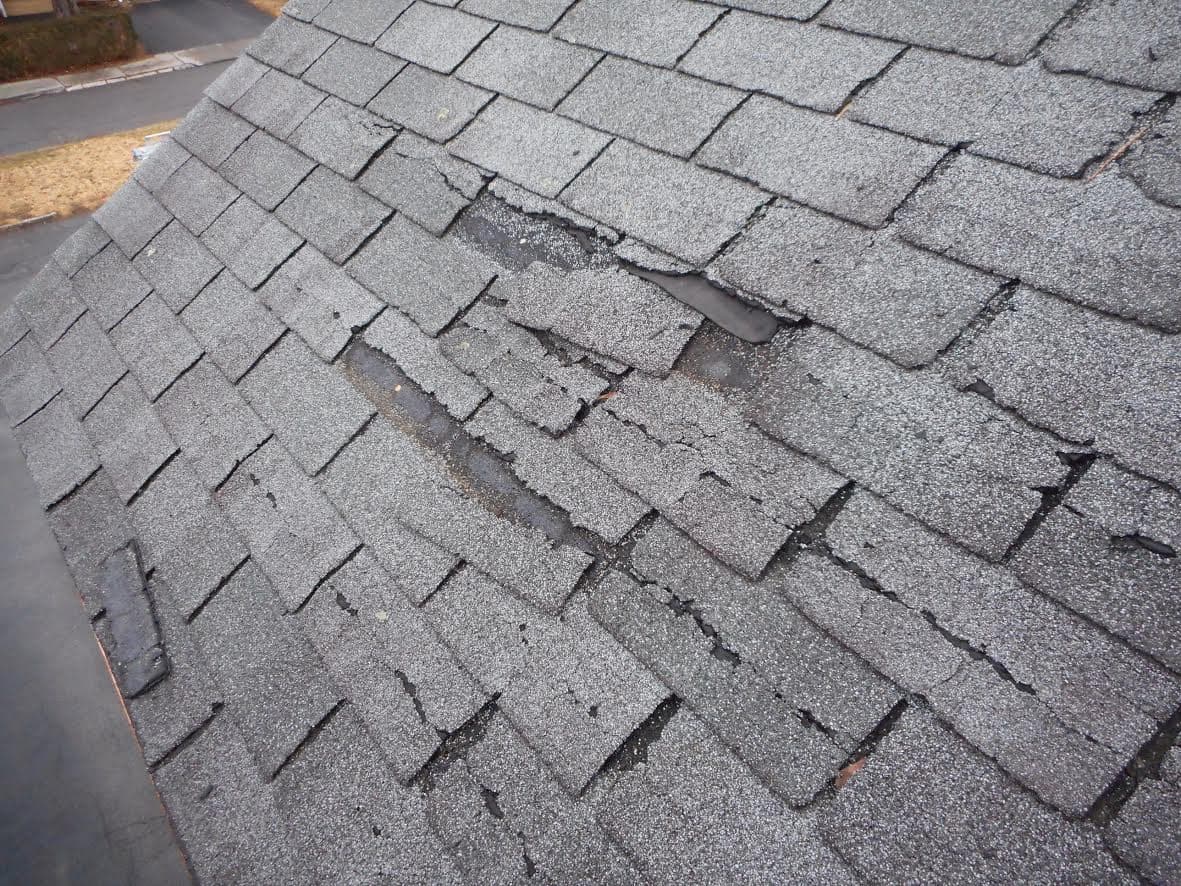
- Lifted or creased shingles. A shingle that bent back in the wind may lie flat again but have a crease across it and a broken seal underneath, which lets the next storm lift it more easily.
- Backed-out nails that have pushed up through the shingle above.
- Debris strikes from limbs and flying objects.
When shingles are damaged or blown off, the underlayment and roof sheathing are the only protection against rain, and unsealed joints or holes in the sheathing can let water in, soaking insulation and ceiling drywall.[7] That is why a missing or lifted shingle is worth a prompt repair: replacing damaged shingles, resealing lifted ones and resetting backed-out nails.
Hail damage
Hail can damage aircraft, homes and cars,[2] and NOAA's storm researchers say hail quarter size or larger is considered severe.[2] If you can, measure a few stones after the storm: for hail size, measurements using a ruler, calipers or a tape measure are best,[2] and a dated photo of a hailstone beside a ruler helps a claim.
On asphalt shingles, hail tends to leave round spots where the granules have been knocked off, sometimes with a soft bruise underneath. Inspectors usually check the soft metal on the roof too, such as gutters, downspouts, vent caps and flashing, because dents there show the size and direction of the hail even when the shingles are hard to read. They are looking for cracked, curled or missing shingles and any excessive loss of the protective mineral granules, which protect the asphalt from the sun.
Flashing, chimneys and penetrations
Wind and debris often loosen the metal that seals the roof around chimneys, skylights, walls and vent pipes. Flashing joints are where a storm often does its harm. The inspector checks that flashing is still tight, not bent away, and not torn at its fasteners.
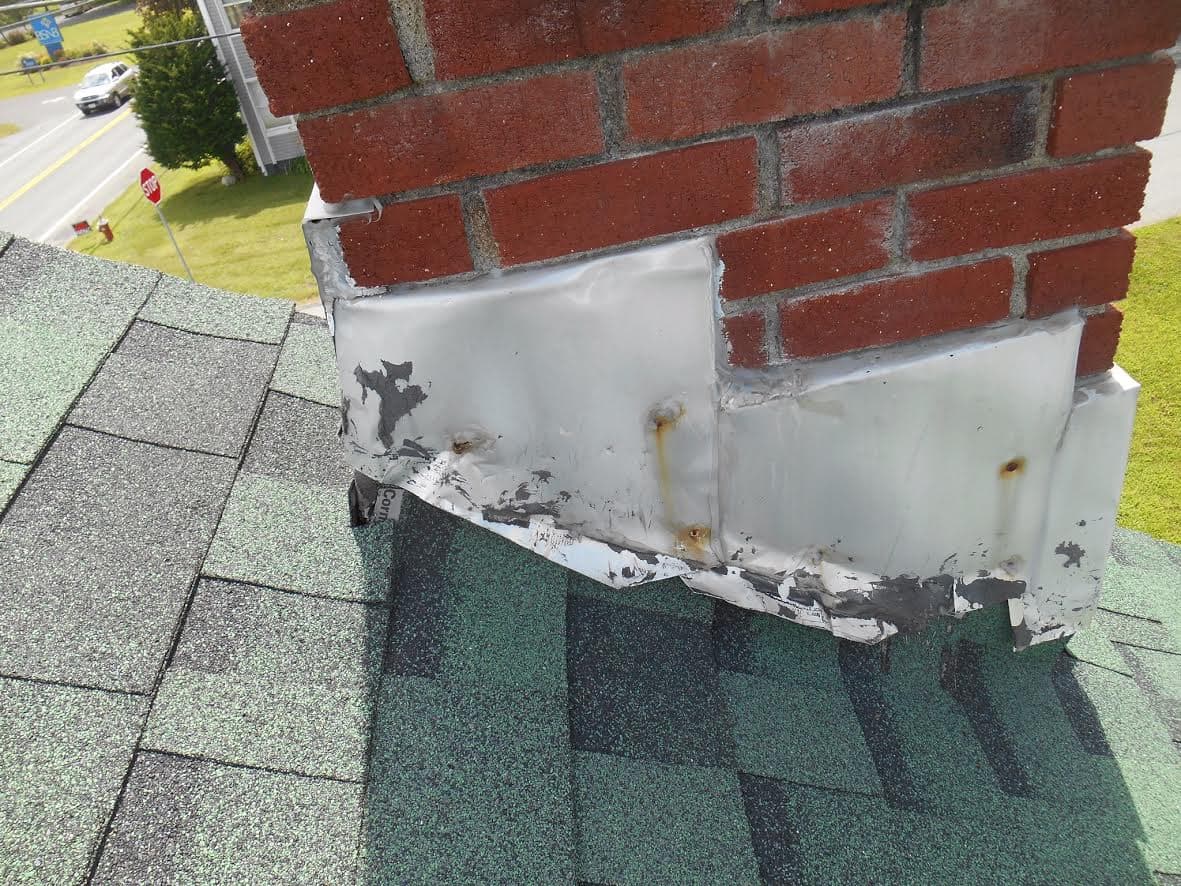
Repairs here usually mean re-securing or replacing the flashing.
Gutters, limbs and the structure
Gutters pulled away from the fascia, crushed by a limb, or packed with granules and debris are noted. If a tree or large limb hit the roof, the inspector looks beyond the shingles to the decking and framing, and may recommend a structural engineer if anything has cracked or sagged.
Inside the attic
The attic tells you whether water is already coming in. Inspectors check the underside of the roof deck and rafters for stains or wet spots that show water leaks, along with wet insulation and daylight through the boards.
Older roofs
An older roof often shows more damage from the same storm. Part of the inspector's job after a storm is to say whether the damage is a repair or whether the roof was near the end anyway; see how to know if you need a new roof.
While you wait for the inspection
Stay safe first. If there are lines down near the house, keep clear: Ready.gov warns that underground or downed power lines can electrically charge the water.[3] Then:
- Photograph everything from the ground and inside. Ready.gov's advice is direct: "Document any property damage with photographs. Contact your insurance company for assistance."[3]
- Limit damage inside. Use buckets or other means to collect water and keep it from damaging insulation and ceilings.
- Get the roof covered by a pro. Virginia's Bureau of Insurance says insurers expect homeowners to protect their property from further damage and will pay the reasonable costs associated with protecting the property.[4] Placing tarps on the roof is a way of protecting your property from further damage,[4] and a roofer can do it safely.
- Keep the order right for insurance. The Bureau advises you to take pictures of the damaged property before making any temporary repairs, and keep receipts.[4] For final repairs: "Unless the insurance company has advised you in writing to go ahead and make final repairs, you should wait."[4] If a roofer finds hidden damage the insurer did not allow for, contact the company representative to try to resolve the difference.[4]
When to call a licensed pro
Call a licensed roofer for any storm damage you can see, any leak, and any time hail or high winds have hit hard enough to leave debris in the yard. Do not go up yourself: a storm-damaged roof is slippery and unpredictable, and walking on it is dangerous.
Storms bring out unlicensed crews. DPOR warns: "Be wary of door-to-door solicitations promising repairs at a discounted price."[5] It lists "High-pressure or scare tactics" among its scam signals,[5] and advises you to limit the deposit: "Pay 10 percent down or $1,000, whichever amount is less."[5] Work valued at $1,000 or more needs a valid Virginia contractor's licence.[6] Check any roofer using DPOR's License Lookup or by calling (804) 367-8511,[5] or follow how to check a contractor's licence.
For more, read what a roof inspection includes and what it costs in Virginia. Licensed roofers are listed under roof repair and exterior contractors in Blacksburg, and the rest of our roof answers are under exterior answers.
Report storm damage to your roof: add photos from the ground, say whether water is coming in, and licensed local roofers quote or offer to come and look.
Common questions
- How do I know if hail was big enough to damage my roof?
- NOAA's National Severe Storms Laboratory treats hail quarter size, about 1 inch, or larger as severe. Measure a few stones with a ruler if you can and note the date. Dents in gutters, downspouts or a car after the storm are a good reason to have a roofer look, even if nothing shows from the ground.
- My roof looks fine from the ground. Do I still need an inspection?
- After a severe storm, it can be worth it. Lifted shingles that have lost their seal, hail bruises and loose flashing are hard to see from the yard. Check the attic with a flashlight for stains or wet spots too, since that is where a hidden leak shows first.
- Should I call my insurer or a roofer first?
- Both, early. Photograph the damage, call your agent or insurer to report it, and have a licensed roofer stop further water getting in. Most insurers want to see the damage before final repairs, so hold off on permanent work until they say in writing to go ahead.
- A roofer knocked on my door after the storm. Should I let them inspect?
- Be careful. DPOR warns to be wary of door-to-door offers of discounted repairs and lists high-pressure tactics as a scam signal. Check the company's licence with DPOR's License Lookup, do not sign anything on the spot, and get other licensed roofers to look.
- Can I go up and look at the damage myself?
- No. A storm-damaged roof is more dangerous than usual, with loose shingles, debris and sometimes downed power lines nearby. Do not walk or climb on it. Look from the ground and the attic.
Sources
- [1] Severe Weather 101: Damaging Winds Basics, NOAA National Severe Storms Laboratory. Checked October 26, 2026.
- [2] Severe Weather 101: Hail Basics, NOAA National Severe Storms Laboratory. Checked October 26, 2026.
- [3] Hurricanes, Ready.gov, Federal Emergency Management Agency. Checked October 26, 2026.
- [4] Insured Homeowner's Guide for Loss Due to a Disaster, Virginia State Corporation Commission, Bureau of Insurance. Checked October 26, 2026.
- [5] Disaster Recovery: Avoiding Fraud, Virginia Department of Professional and Occupational Regulation. Checked October 26, 2026.
- [6] What You Should Know Before You Hire a Contractor, Virginia Board for Contractors, DPOR. Checked October 26, 2026.
- [7] Asphalt Shingle Roofs, Building America Solution Center, Pacific Northwest National Laboratory for the U.S. Department of Energy. Checked October 27, 2026.
Want a pro to handle it?
Describe the job once. Licensed local businesses send quotes, and you pay only when you book one.
Get a quote for Roofing