What should I check before calling an electrician about a dead outlet?
Find out whether it is one outlet or several, whether it is a GFCI or sits downstream of one, and whether a lamp works in it. Press test then reset on any GFCI nearby. Note any warmth, buzzing or burn marks. Do not open the outlet or touch the wiring: leave that to a licensed electrician. Then tell the electrician what you found.
Free to ask. Local shops send quotes, and you pay only when you book one.
By Kasra Taheri, Founder, LoclisPublished
Researched and drafted with AI, then checked claim by claim against the sources listed below before it was published. Prices and rules change; the dates beside each source say when it was last checked.
This is a job for a licensed pro in Virginia
This page explains what the work involves, the permits, what a licensed pro does and what drives the cost. It does not give step-by-step instructions, because this work needs a licence, a permit or both, and doing it wrong can injure someone. Before you hire, check the licence on Virginia's DPOR record.
Check three things first: is it one outlet or several, is a GFCI involved, and is the outlet warm or marked. Those answers tell an electrician more than anything else, and they cost nothing. Do not unscrew the cover plate or touch the wiring behind it.
Is it one outlet or several?
Plug a lamp you know works into the dead outlet, then into the other half of the same outlet and into the next outlets along the wall. Note which ones work. A single dead outlet points to that outlet, its connection or a GFCI it depends on. A whole wall or room dead points upstream, toward a breaker or a connection earlier on the circuit. Write down the rooms affected, because the electrician will ask.
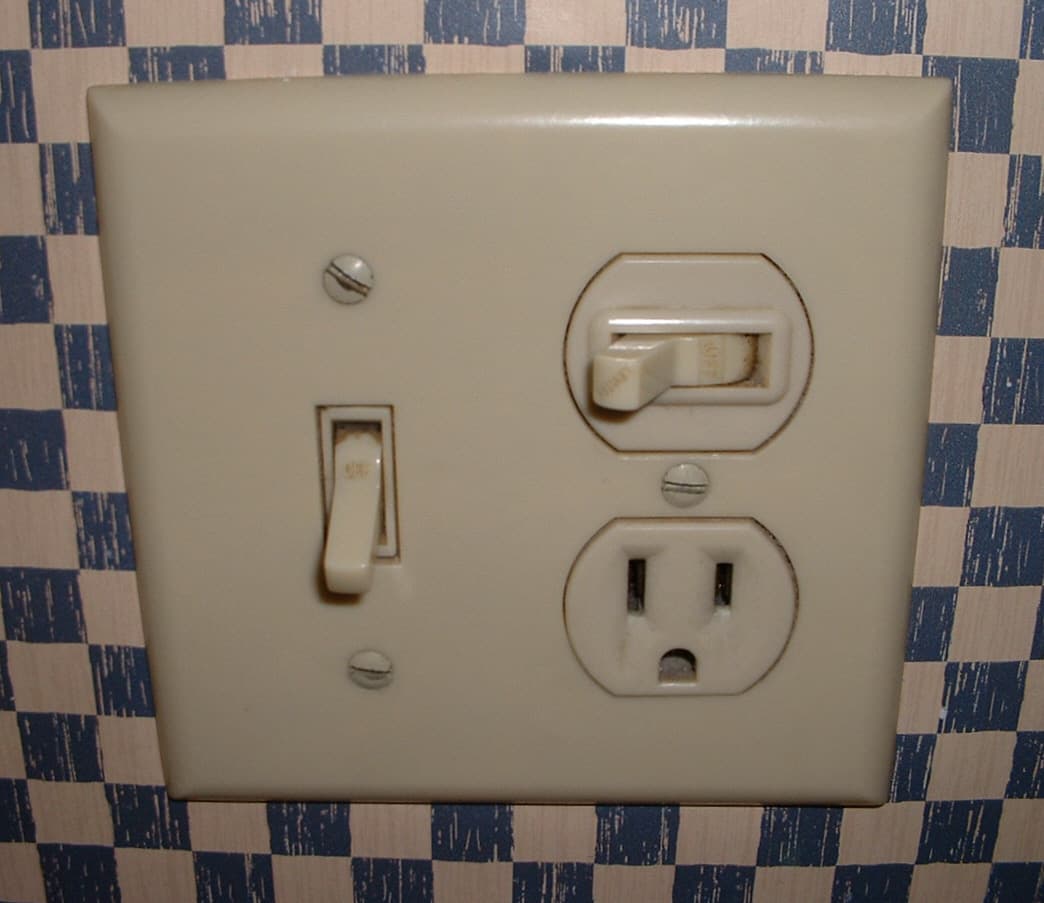
Look for a GFCI
A GFCI outlet has a TEST and a RESET button between the sockets. It trips to stop the flow of electricity when it senses a ground fault, and it can be the reason other outlets are dead.[2] Leviton describes the load wiring of a GFCI as delivering power from the GFCI to another receptacle in the circuit.[2] So an outlet in a bathroom, garage, basement or outside may be dead because a GFCI somewhere else tripped. The CPSC recommends GFCIs in kitchens, bathrooms, and other areas where the risk of electric shock is higher.[1]
Look for GFCIs in the kitchen, bathrooms, garage, basement, laundry and outdoors, and test each the way the maker intends. The Consumer Product Safety Commission's home electrical safety checklist tells owners to test every GFCI once a month according to the manufacturer's instructions.[1] If there are no instructions, its procedure is to plug a light into the outlet and turn it on, press the test button, and see whether the light goes out.[1] Then press the reset button and see whether the light comes back on.[1] If the light does not go out, or does not come back on, the CPSC says to replace the GFCI.[1]
If you press reset and the outlets come back, tell the electrician what tripped it and how often it happens. A GFCI that keeps tripping is a fault being reported, not a nuisance.
When a GFCI will not reset
Leviton's instruction sheet says a GFCI has a lockout feature that prevents reset if no power is being supplied to it, if the line and load connections are reversed, or if it cannot pass its internal test.[2] That means a GFCI that will not reset may be worn out, miswired or cut off from power further back. Pressing the button over and over does not fix any of those. Leave it and call.
What the outlet is telling you
Look at the dead outlet and the ones near it, without touching the wiring.
- Warmth. The CPSC says unusually warm outlets or switches may indicate an unsafe wiring condition, such as a loose electrical connection, and to stop using them until an electrician checks the problem.[1] Some dimmer switches may warm in normal use, it adds.[1]
- Burn marks, melted plastic, buzzing or a burning smell. Treat these as urgent and stop using the outlet.
- Loose-fitting plugs. The CPSC says loose-fitting plugs can cause overheating and fires and that the outlet should be replaced.[1]
- An outlet that works only when you wiggle the plug. The CPSC says outlets that do not work properly may indicate an unsafe wiring condition, and that a loose screw holding a wire or a worn out switch can lead to electrical arcing, overheating, or a fire.[1]
What to tell the electrician
A short list saves diagnosis time: which outlets are dead, whether any GFCI tripped or will not reset, when it started, what was plugged in or running at the time, and whether anything felt warm or smelled. Photos of the outlet and the panel label help. If you know of recent work by others in that room, say so.
When to call a licensed pro
For anything past these checks. Virginia's building code lists replacement of 125 volt, 15 or 20 ampere receptacles in a single dwelling unit among the work that needs no permit,[3] but the same section says that does not exempt the work from the code's other requirements. Repairing a fault in the wiring is a different job from swapping a worn receptacle.
The Code of Virginia says "no individual shall engage in, or offer to engage in, work as a tradesman as defined in § 54.1-1128 unless he has been licensed",[4] and the Code defines a tradesman as someone who works for the general public for compensation in the trades of electrical, plumbing and heating, ventilation and air conditioning.[5] Ask any electrician for their licence number and look it up before work starts, using how to check if a contractor is licensed in Virginia.
Next, read when to call an electrician for a dead outlet and what a dead outlet repair costs in Virginia. You can also browse electrical services or more electrical repair answers.
When you are ready, describe the dead outlet once and licensed local electricians quote it.
Common questions
- Why is only one outlet dead when the rest of the room works?
- Often because that outlet is a GFCI that has tripped, or sits downstream of one, or because a connection at the outlet itself has failed. Leviton describes a GFCI's load wiring as delivering power from the GFCI to another receptacle in the circuit, so a tripped GFCI in one spot can switch off outlets elsewhere.
- My GFCI will not reset. What does that mean?
- Leviton's instruction sheet says a GFCI has a lockout feature that prevents reset if no power is being supplied to it, if the line and load connections are reversed, or if it cannot pass its internal test. The CPSC says to replace a GFCI whose light does not come back on at reset. Either way it needs an electrician or a licensed replacement, not repeated pressing.
- Is a warm outlet the same as a dead one?
- No, and it is more urgent. The CPSC says unusually warm outlets or switches may indicate an unsafe wiring condition and to stop using them until an electrician checks the problem.
- Can I replace the outlet myself?
- Virginia's building code does not require a permit for replacing a standard 15 or 20 ampere receptacle in a home, but the code states that this does not exempt the work from its other requirements. Hiring someone to do it for the public requires a licensed electrician.
Sources
- [1] Home Electrical Safety Checklist (Publication 513), U.S. Consumer Product Safety Commission. Checked October 27, 2026.
- [2] Testing a GFCI Receptacle (GFNT1 instruction sheet), Leviton Manufacturing Co.. Checked October 27, 2026.
- [3] 13VAC5-63-80, Virginia Uniform Statewide Building Code, Section 108 Application for permit, Virginia Administrative Code, Legislative Information System. Checked October 27, 2026.
- [4] Code of Virginia § 54.1-1129, Necessity for licensure, Code of Virginia, Legislative Information System. Checked October 27, 2026.
- [5] Code of Virginia § 54.1-1128, Definitions, Code of Virginia, Legislative Information System. Checked October 27, 2026.
Want a pro to handle it?
Describe the job once. Licensed local businesses send quotes, and you pay only when you book one.
Get a quote for Electrical Repair