How do I keep fleas out of my yard?
Keep your pets on a flea preventive, then make the yard a poor place for fleas to develop: mow, trim low branches so sun reaches pet resting spots, clear brush, junk and cluttered firewood, and stop feeding strays and wildlife. Fleas breed in shaded, protected spots where pets and animals rest, so treat only those spots, and only when you find fleas there.
Free to ask. Local shops send quotes, and you pay only when you book one.
By Kasra Taheri, Founder, LoclisPublished
Researched and drafted with AI, then checked claim by claim against the sources listed below before it was published. Prices and rules change; the dates beside each source say when it was last checked.
Step by step
Read when to stop and call a pro, further down this page, before you start.
Step 1: Keep pets on prevention
Keep every dog and cat on a preventive flea product so stray fleas they pick up die before laying eggs.[1]
Step 2: Find the hot spots
Walk shaded pet resting areas in white socks pulled high and look for fleas against the white.[1]
Step 3: Let the sun in
Trim low-hanging branches and shrubs over the spots where pets lie so sunlight reaches the ground.[3]
Step 4: Keep vegetation low
Mow regularly and keep grass and underbrush cut and thinned around the house and play areas.[2]
Step 5: Clear debris
Remove brush, rock piles, junk and cluttered firewood that shelter rodents and other animals.[4]
Step 6: Take away food
Bring pet food inside and limit food, water and shelter for strays and wildlife.[3]
Step 7: Clean pet resting areas
Wash outdoor pet bedding and clean doghouses and kennel areas regularly.
Step 8: Spot-treat only if needed
If you find fleas, treat only shaded resting areas with a labeled insect growth regulator spray such as pyriproxyfen.[1]
Step 9: Follow the label
Keep pets and children off treated areas as the label directs, and do not spray on a windy day.[7]
Step 10: Check pets for ticks
When pets spend time outdoors, check them and the children for ticks every four hours.[5]
Most yards never need a flea treatment at all. Most flea problems can be eliminated by treating the pet and, if needed, the inside of the home.[1] Keeping fleas out of the yard is mostly about two things: keeping your pets from carrying fleas around, and making the shaded, sheltered corners where fleas breed less welcoming to them and to the animals that bring them.
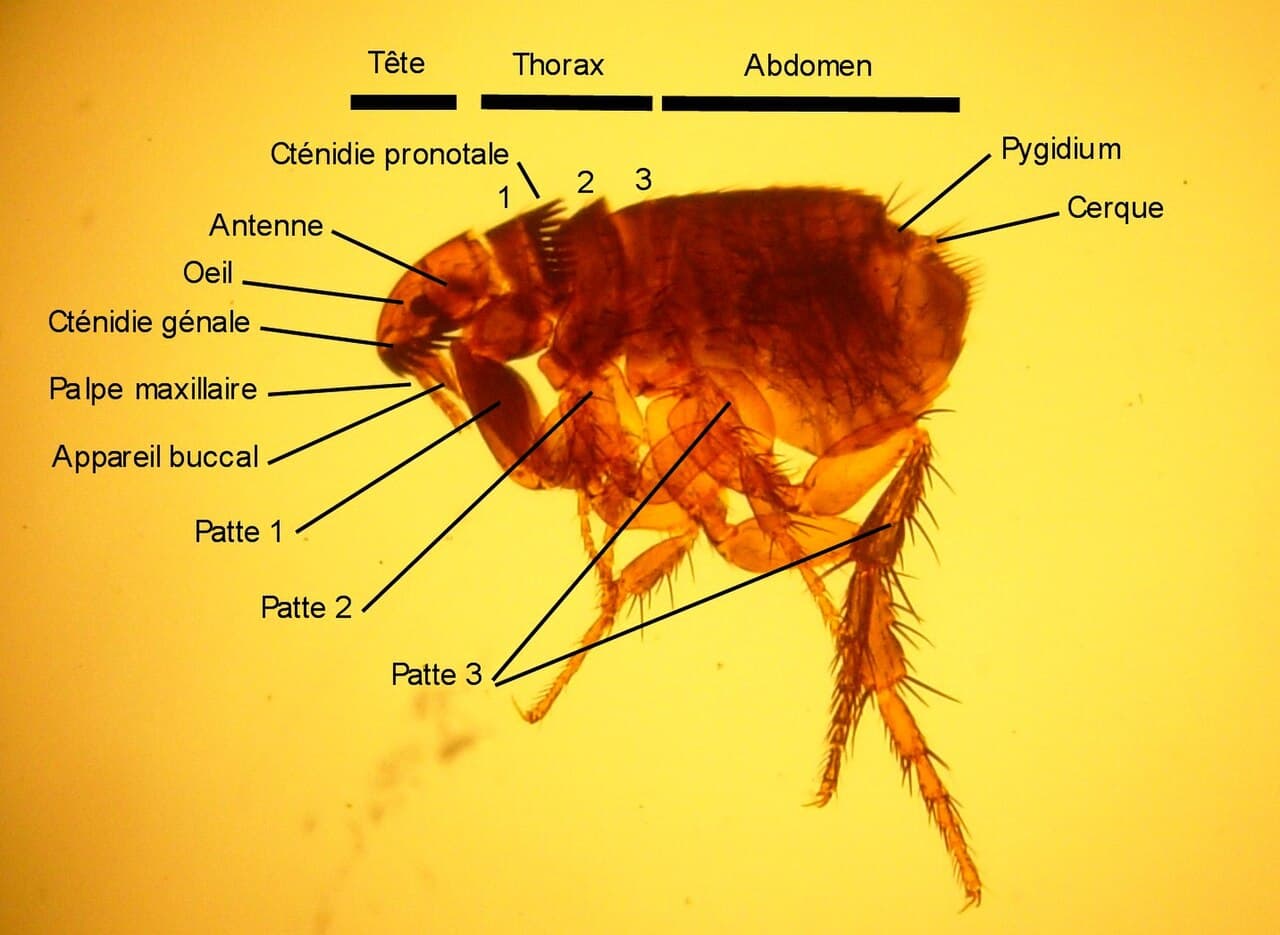
Start with your pets
The best way to avoid future household infestations is to keep pets on a preventive product, seasonally or year round depending on where you live, so any stray fleas they pick up are killed before laying eggs.[1] That matters for the yard too, because a treated pet stops adding eggs to its favorite resting spots. Pets pick up new fleas at kennels and groomers and while moving through yards and neighborhoods, and opossums, raccoons and other wildlife seed fleas into those outdoor spaces.[1] Ask your veterinarian what interval makes sense where you live, and never treat pets with the same products used on carpets or the yard.[1]
Where fleas live outdoors
Fleas are fussy about where their young grow up. Flea larvae develop only in protected places with at least 75% relative humidity, and they develop faster in warmth, preferring 70° to 90°F.[3] Flea numbers tend to increase dramatically in spring and early summer, when conditions favor larval development.[3] Immature fleas are unlikely to survive in areas exposed to sunlight,[3] so an open, sunny lawn is a poor nursery.
Outdoor flea problems concentrate where pets rest, sleep and run: doghouses and kennel areas, along fences, under decks and next to the foundation.[1] Check shaded areas where your pets often lie outside.[2] The simplest test is to walk the property wearing white athletic socks pulled high on the leg[1] and look for dark specks jumping onto the white.
Make the yard a poor home for fleas
Let the sun in. Sunlight can kill young fleas by drying them out,[2] and where pets sleep outside, open those areas to sunlight by removing low-hanging vegetation.[3] Trim shrubs and lower branches over the spots your dog favors, and rake out thick leaf litter under decks and along fences.
Keep it tidy. Remove debris and keep vegetation low in your yard.[2] Mow on a regular schedule, keep the edges along fences and the foundation trimmed, and do not let grass grow up around the doghouse.
Clean what your pets lie on. Wash outdoor pet bedding often and clean out the doghouse and kennel area, since that is where eggs and flea droppings collect.
Discourage the animals that bring fleas
Wildlife and strays restock a yard with fleas even when your own pets are treated. Feral cats, opossums, squirrels and coyotes can cause outdoor flea problems, so limit the food, water and shelter they find on your property.[3] The Virginia Department of Health's advice for preventing flea-borne typhus is similar: keep rodents and animals away from your home, and remove brush, rock piles, junk, cluttered firewood and food supplies, especially pet food.[4] The same list includes the simplest step: "Keep fleas off your pets."[4] In the United States, the most common type of typhus is murine typhus, which fleas spread.[4]
In practice that means feeding pets indoors, securing trash can lids, stacking firewood neatly off the ground and away from the house, and, once you are sure nothing is living there, closing off the space under porches and sheds so animals cannot den there. If an animal is already living under the house or in the attic, getting it out is a job for a wildlife professional; see how to keep raccoons and squirrels out of the attic.
Treat only where you find fleas
Treat outside your home only if you have heavily infested areas.[2] If pets spend most of their time outdoors, it may be useful to treat the yard, but it is seldom necessary to treat the entire yard or areas in full sun.[1] Products containing an insect growth regulator such as pyriproxyfen prevent flea eggs and larvae from developing for several months; diluted in water, they can be applied with a hose-end or pump-up sprayer.[1]
Read the whole label before you buy and again before you spray. Keep pets and children away from treated areas as directed on the label.[7] Pick a calm day: spraying on a windy day can carry the product into water that wild animals drink.[7]
Ticks share the same yard
The habits that discourage fleas also help with ticks. Virginia Cooperative Extension passes on the Virginia Department of Health's advice to keep grass and underbrush mowed and thinned, check children and pets for ticks every four hours when staying outside, and ask your veterinarian to recommend tick controls for your pets.[5] The American dog tick is found mostly in western Virginia and west of the Blue Ridge, while the lone star tick can be very common in the Piedmont and Coastal Plain.[5] Letting pets stay indoors as much as possible reduces their chance of being bitten by ticks and fleas.[6]
Stop and call a pro if
- You find fleas indoors as well; the house and every pet need treating, as in how to get rid of fleas in the house.
- You have no pets but still find fleas. When fleas show up in a home with no pets, raccoons, opossums, skunks or squirrels are often the source, and the animals should be removed by a nuisance wildlife or pest control professional.[1]
- An animal is denning under a porch, deck or shed, or in the crawl space or attic.
- You want the yard treated for you. In Virginia no one may apply or recommend a pesticide commercially without a pesticide business license and a certified commercial applicator on staff.[8]
Getting help on Loclis
If fleas keep coming back, read why you still have fleas after treating your pet and what flea treatment costs in Virginia. Browse flea and tick services or mosquito and tick control, find pest control around Blacksburg, or read more pest control answers. When you are ready, describe the job on Loclis so licensed pest control businesses can quote it.
Common questions
- Do I need to spray my whole yard for fleas?
- Rarely. Fleas develop in shaded, protected spots where pets and animals rest, not in open, sunny lawn. Treat outdoors only if you find heavily infested areas, and then only those spots, such as under a deck, along a fence line or around a doghouse.
- How do I know if my yard has fleas?
- Pull on white athletic socks, high on the leg, and walk slowly through the shaded spots where your pets lie. Adult fleas jump onto the socks and are easy to see against the white.
- Does cutting the grass help with fleas?
- Yes. Keeping vegetation low and trimming shrubs and branches over pet resting spots lets sunlight reach the ground, and immature fleas are unlikely to survive in sunny, dry spots. Shorter grass and thinned underbrush also help against ticks.
- Can wild animals bring fleas into my yard?
- Yes. Opossums, raccoons, squirrels, feral cats and rodents carry fleas and leave them where they rest. Remove brush piles, junk and cluttered firewood, bring pet food inside, and do not leave out food or water that draws animals in.
- When are fleas worst in Virginia yards?
- Flea numbers tend to rise sharply in spring and early summer, when warmth and humidity favor the larvae. That is a good time to make sure pets are on a preventive and to tidy the shaded corners of the yard.
- Is it safe to use a yard flea spray around pets?
- Only as the label directs. Keep pets and children off treated areas for the time the label states, never use a yard product on the pet itself, and do not spray on a windy day. If you would rather not apply it yourself, hire a licensed pest control business.
Sources
- [1] Flea Control and Prevention (ENTFACT-602), University of Kentucky Department of Entomology. Checked October 26, 2026.
- [2] Fleas, National Pesticide Information Center, Oregon State University and U.S. EPA. Checked October 26, 2026.
- [3] Pest Notes: Fleas, University of California Statewide IPM Program. Checked October 26, 2026.
- [4] Typhus, Virginia Department of Health. Checked October 26, 2026.
- [5] Common Ticks of Virginia, Virginia Cooperative Extension, Virginia Tech. Checked October 26, 2026.
- [6] Controlling Fleas and Ticks Around Your Home, U.S. Environmental Protection Agency. Checked October 26, 2026.
- [7] Read the Label First: Protect Your Pets, U.S. Environmental Protection Agency. Checked October 26, 2026.
- [8] Code of Virginia § 3.2-3924. Annual business license required, Virginia General Assembly, Legislative Information System. Checked October 26, 2026.
Want a pro to handle it?
Describe the job once. Licensed local businesses send quotes, and you pay only when you book one.
Get a quote from a local pro