Who does Venetian plaster and limewash in Virginia?
Painting contractors, plasterers and decorative finishers do both, and for masonry a mason may be involved. In Virginia, paid work valued at $1,000 or more needs a licensed contractor, and the licence can be checked on DPOR. Ask to see finished walls like yours, get written bids and call references before you sign.
Free to ask. Local shops send quotes, and you pay only when you book one.
By Kasra Taheri, Founder, LoclisPublished
Researched and drafted with AI, then checked claim by claim against the sources listed below before it was published. Prices and rules change; the dates beside each source say when it was last checked.
Step by step
Read when to stop and call a pro, further down this page, before you start.
Step 1: Define the job
Write down which walls get the finish, whether they are drywall, plaster or brick, and the look you want, with photos.
Step 2: Ask for finished work
Ask each contractor for photos and, if possible, a visit to finished walls like yours, and for local references to call.[3]
Step 3: Check the licence
Look up the licence number, class and classification on DPOR before you talk price.[3]
Step 4: Ask about lead-safe certification
If the house was built before 1978 and the work will disturb painted surfaces, ask for the firm's EPA lead-safe certification.[4]
Step 5: Get three written bids
Ask for at least three written bids that list the same walls, repairs, products, coats and topcoat.[3]
Step 6: Sign a written contract
Read the written contract in full, and do not sign it blank or incomplete.[3]
Step 7: Keep the deposit small
Agree a deposit of no more than 10% of the price or $1,000, whichever is less, and pay in step with the work.[3]
Venetian plaster and limewash are done by painting contractors, plasterers and decorative finishers, and for brick that needs repair first, by a mason. In Virginia the question that matters most is not what the person calls themselves but whether they hold a contractor licence for the job and can show finished walls like yours.
Who does which finish
Venetian plaster is a troweled, layered wall finish, usually on smooth interior walls. It is done by decorative finishers and plasterers, and by painting firms that offer specialty finishes. It is a craft job: results depend on the person with the trowel, so look at their work, not their website.
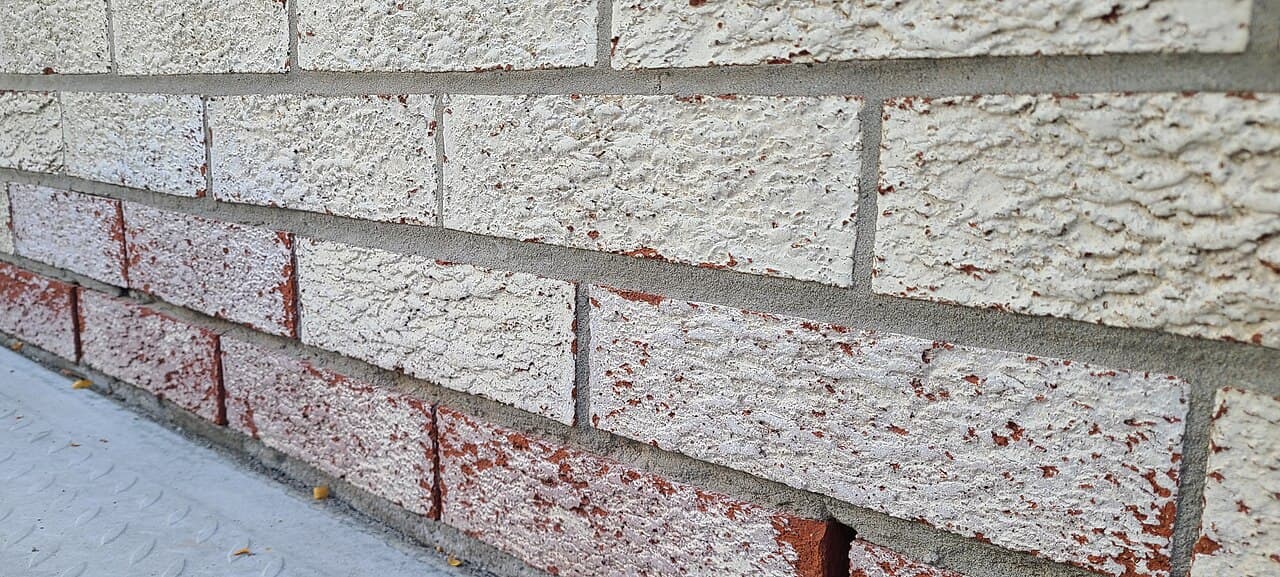
Limewash is a thin mineral wash brushed on bare masonry. A painting contractor who works with masonry usually applies it. The limewash manufacturer Romabio says its Classico Limewash is formulated for unsealed, unpainted and absorbent brick, stone or masonry,[5] so a good contractor will first check that the brick is bare, absorbent and sound. If the masonry is damaged, have a mason look at it before painting. You can limewash a wall yourself if it is bare brick; see how to limewash a brick wall.
What licence they need
The Board for Contractors says that if the work you are considering is valued at $1,000 or more, a valid Virginia contractor's license is required for the license category in which the contractor is to work.[3] The lowest class, Class C, is for a single contract or project over $1,000 but less than $30,000.[2]
Virginia's regulations define painting and wallcovering contracting as the application of materials common to the painting and decorating industry for protective or decorative purposes,[1] and say the CBC and RBC classifications and the HIC and CIC specialties also provide for this function.[1] Masonry contracting includes installation of grout, caulking, tuck pointing, sand blasting, mortar washing, parging, and cleaning and welding of reinforcement steel related to masonry construction.[1] The regulations do not list Venetian plaster by name, so ask the contractor which classification they hold for your work and make sure it appears on the licence. For a wider look, see does a painter need a licence in Virginia.
A license number in an advertisement or on a business card does not necessarily mean the contractor's license is valid,[3] so look it up on DPOR's licence lookup yourself.
Check the work, not just the licence
A licence says a firm is registered. It does not say they can trowel a smooth, even plaster. The Board for Contractors advises you to ask the contractor for local references, and call them to see if they were satisfied with the contractor's work.[3] The Board also suggests that, if possible, you go out and look at finished projects.[3] For a plaster finish, ask to see:
- a wall in a room with the same light as yours, because plaster looks different in sun and lamplight
- a sample board of the finish and colour, made before you commit
- how the contractor handles corners, outlets and where the finish meets trim
Older homes
If your house was built before 1978 and the work will disturb painted surfaces, ask about lead. EPA's RRP rule requires that anyone paid to perform work that disturbs painted surfaces in homes, childcare facilities and preschools built before 1978 be certified, with workers trained in lead-safe work practices.[4] If the prep will sand or scrape painted surfaces, ask for the firm's certification.
Bids, contract and deposit
Plaster finishes are hard to compare on price alone. Follow the Board's advice to get at least three written bids,[3] list the same walls, repairs, products, coats and topcoat on each, and read how much Venetian plaster costs in Virginia so you know what drives the numbers.
Never sign a blank or partially blank contract.[3] On the deposit, the Board gives a rule of thumb of an initial deposit of no more than 10% of the total price or $1,000, whichever is less.[3]
Stop and call a pro if
- The contractor has no licence number or a number that does not check out on DPOR for work of $1,000 or more.
- They will not show finished work or give references.
- The wall has water damage, cracks that keep returning or crumbling brick. The wall needs repair first, and the cause of any moisture needs finding.
- They want a large cash deposit or will not put products, coats and price in writing.
Loclis lists DPOR-licensed painters with their licence number and class. Browse painting services or read more painting answers. See pricing for how Loclis charges.
When you are ready, describe the job and local painters will quote it.
Common questions
- Is there a special licence for Venetian plaster in Virginia?
- Virginia's contractor regulations define painting and wallcovering contracting as the application of materials common to the painting and decorating industry for protective or decorative purposes. Ask the contractor which classification they hold for your job, then check it on DPOR.
- Do I need a licensed contractor for a small accent wall?
- If the work is valued at $1,000 or more, the Board for Contractors says a valid Virginia contractor's licence is required for the licence category in which the contractor is to work. The Board's threshold is stated at $1,000 or more; either way, you can still ask for references.
- Who should I hire to limewash brick?
- A painting contractor that works with masonry for the coating. If the brick is damaged, have a mason repair it first; Virginia's regulations say masonry contracting includes tuck pointing and parging.
- Can I hire a handyman or an artist?
- For paid work valued at $1,000 or more the person or their firm needs a Virginia contractor licence. Many skilled decorative finishers work through licensed painting firms. Ask for the licence number and check it.
- What should I ask to see before hiring?
- Finished work on walls like yours, in person if possible, plus local references you can call. A sample board of the finish you want is also worth asking for.
Sources
- [1] 18VAC50-22-30. Definitions of specialty services (Board for Contractors Regulations), Virginia Administrative Code, Virginia General Assembly. Checked October 27, 2026.
- [2] Va. Code § 54.1-1100. Definitions, Code of Virginia, Virginia General Assembly. Checked October 27, 2026.
- [3] What You Should Know Before You Hire a Contractor, Virginia Board for Contractors, DPOR. Checked October 27, 2026.
- [4] Lead Renovation, Repair and Painting Program, U.S. Environmental Protection Agency. Checked October 27, 2026.
- [5] Limewash Paint Frequently Asked Questions, Romabio (limewash manufacturer). Checked October 27, 2026.
Want a pro to handle it?
Describe the job once. Licensed local businesses send quotes, and you pay only when you book one.
Get a quote from a local pro