How do I limewash a brick wall?
Limewash only bare, unpainted, absorbent brick. Dilute the limewash in a separate bucket, dampen the wall, brush it on in sections, and wash part of it back with a hose if you want an aged look. Work between 50 and 88 degrees F, away from direct sun, with no heavy rain due for 12 hours. Wear gloves and goggles.
Free to ask. Local shops send quotes, and you pay only when you book one.
By Kasra Taheri, Founder, LoclisPublished
Researched and drafted with AI, then checked claim by claim against the sources listed below before it was published. Prices and rules change; the dates beside each source say when it was last checked.
Step by step
Read when to stop and call a pro, further down this page, before you start.
Step 1: Confirm the brick is bare
Check that the brick is unpainted, unsealed and absorbent; limewash is meant for that kind of masonry, not for painted or sealed brick.[1]
Step 2: Pick the day
Choose a day between 50 and 88 degrees F, out of direct sun, with no heavy rain expected for 12 hours and no run of two freezing nights after.[1]
Step 3: Protect yourself and the surroundings
Wear gloves, goggles and long sleeves, and cover plants, windows, trim and the ground below the wall.[2]
Step 4: Treat stains first
Plug only the affected pores of any stained brick with a stain-blocking primer so the rest of the wall can still breathe.[1]
Step 5: Dilute in a separate bucket
Pour the concentrate into a clean bucket, add the water the label calls for, and mix 2 to 4 minutes with a paddle or spatula until there is no standing water.[2]
Step 6: Dampen the wall
Wet the brick with water before the first coat, without leaving it dripping.[1]
Step 7: Brush it on in sections
Apply the limewash with a masonry brush, working in small sections and into the shade as the day moves.[1]
Step 8: Wash back for an aged look
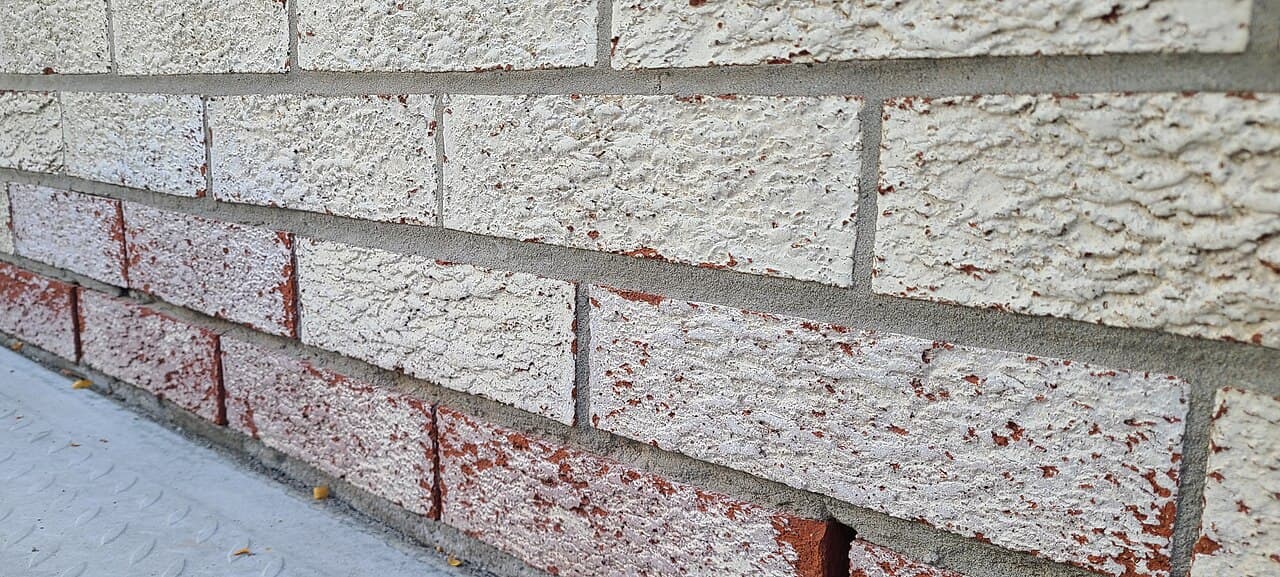
If you want brick showing through, wash part of the limewash off with a garden hose once it starts to dry and is no longer dripping.[2]
Step 9: Let it cure
Keep heavy rain off the wall for 12 hours; it looks translucent while drying and dries opaque.[1]
Limewash brick that is bare, dry and absorbent, and keep the rest simple: dilute the paint, dampen the wall, brush it on in sections and wash some back if you want the old-world look. This is a good first masonry project for a careful homeowner, as long as the brick has never been painted or sealed.
Check the wall first
Limewash soaks into brick and hardens there, so it needs brick that can absorb it. Romabio, a limewash manufacturer, says its Classico Limewash is formulated for unsealed, unpainted and absorbent brick, stone or masonry, and cannot be used on drywall or painted trim and siding.[1] If water sprinkled on the wall beads up or runs off, the brick is probably sealed or painted and limewash will not bond.
Limewash is also not meant for floors, patios, steps or other horizontal surfaces where water can pool.[1] The manufacturer does not recommend limewash inside a fireplace because it is susceptible to charring and soot.[1] The brick face around the opening is fine.
If you are not sure what an old wall is made of, or the brick is crumbling, see how to choose paint colors for a house for planning the look, and read the pro section below before you start.
Pick the weather and the time of day
Outdoors, the weather decides how well limewash bonds. The manufacturer says not to apply it below 50F or above 88F, and not if the surface will see two nights of freezing right after.[1] Avoid direct sun on a hot wall: the paint can flash dry on a hot surface, which stops it absorbing into the brick and weakens the bond.[1] Follow the shade around the house and work in the cooler hours.
Rain matters too. After 3 to 4 hours of drying, normal rain will not affect the finish, but heavy rain in the 12-hour drying time can stop it bonding and hardening correctly.[1]
Protect yourself
Limewash is caustic. The manufacturer's safety data sheet classes the product as causing serious eye damage and recommends protective clothing, gloves and eye and face protection.[2] Wear goggles, nitrile or rubber gloves and long sleeves, and cover plants, windows, trim and the ground. If any gets in your eyes, rinse with clean water and get medical advice.
Prepare, mix and apply
Sweep or brush off loose dirt and cobwebs, and let the wall dry if it is soaking wet. Stains can bleed through limewash. If you see rusty or dark patches, the manufacturer advises plugging only the affected pores with a stain blocking primer rather than sealing the whole wall.[1]
Limewash is sold as a concentrate. Dilute it in a separate bucket, not the paint can: mix for 2 to 4 minutes until the consistency is uniform with no standing water.[2] Use the dilution on your product's label. For Classico in the white base, the product page lists a 100% dilution, which the manufacturer defines as 1 part product to 1 part clean water.[2][1] Mix only what you will use, because diluted paint does not store well.
Masonry surfaces should be dampened before the first coat.[2] Mist the wall so it is damp but not running. Apply with a large masonry brush, working in sections about the size you can finish while the edges are still wet. A sprayer works too, but back-brushing helps the paint absorb.
Create the aged look
To wash some limewash back, the manufacturer says you need a garden hose or pressure washer outdoors and a spray bottle indoors.[2] Wash it back once the paint starts to dry and is no longer dripping; the manufacturer says that can be anywhere from 10 minutes to a couple of hours depending on weather and direct sun.[2] Use a gentle spray, stop when the brick shows through the way you like, and do a test patch low on the wall first.
The wet paint looks darker and streaky. It looks translucent while drying and then dries to a fully opaque finish.[1] Judge the colour when the wall is dry, not before.
Care afterwards
Limewash is meant to age. Lime wash is an old treatment: the National Park Service notes that whitewash with lime was applied to stucco, often annually, and the lime filled hairline cracks before they could develop into larger cracks and let in moisture.[3] The manufacturer says to clean it gently with mild detergent and water and to avoid harsh chemicals, pressurized water and abrasives.[1]
Stop and call a pro if
- The brick is painted or sealed. It cannot absorb limewash and needs a different coating or preparation. A painter who works with masonry can advise.
- The masonry is damaged. Crumbling brick, open joints or bulging courses should be repaired by a mason before any coating goes on.
- There is water coming through the wall or white salt crusts keep returning after cleaning. Fix the moisture first or the finish will fail.
- The wall is above ladder height or on a second storey. Hire a painter with the right access equipment.
- You want a deep colour or a uniform finish. Light limewash weathers naturally; a solid, even look is a painter's job.
If you want help, read who does Venetian plaster and limewash in Virginia and how much Venetian plaster costs in Virginia. More are in painting answers, and you can browse the painting category.
When you are ready, describe the job and local painters will quote it.
Common questions
- Can I limewash brick that is already painted?
- Not with a standard limewash. Romabio says its Classico Limewash is formulated for unsealed, unpainted and absorbent masonry, so sealed or painted brick needs extra steps and possibly a different coating. Ask the manufacturer of the product you plan to use.
- Will limewash turn red brick pink?
- The manufacturer says its limewash is an opaque, flat finish that completely covers the surface when it is not distressed or washed off, so the colour you choose is the colour that shows. Washing some off lets the brick show through.
- What weather is right for limewashing outdoors?
- Romabio says not to apply below 50F or above 88F, not in direct sun on a hot day, and not if heavy rain is likely in the 12-hour drying time or two freezing nights will follow.
- Does limewash need a topcoat?
- It is meant to weather and wear. Romabio sells an invisible topcoat, Mineral Shield, that repels water; it recommends it where the wall is not protected by an overhang, and a topcoat on interior surfaces people touch. Read the label for the product you choose.
- Can I limewash inside a fireplace?
- The manufacturer does not recommend it, because limewash in a firebox is susceptible to charring and soot. You can limewash the brick face around the opening.
- Is limewash safe to handle?
- Treat it as a caustic product. The manufacturer's safety data sheet classes it as causing serious eye damage, so wear goggles, gloves and long sleeves and rinse any splash from your eyes with clean water at once.
Sources
- [1] Limewash Paint Frequently Asked Questions, Romabio (limewash manufacturer). Checked October 27, 2026.
- [2] Classico Limewash product page, application guide and safety data sheet, Romabio (limewash manufacturer). Checked October 27, 2026.
- [3] Preservation Brief 22: The Preservation and Repair of Historic Stucco, National Park Service, U.S. Department of the Interior. Checked October 27, 2026.
Want a pro to handle it?
Describe the job once. Licensed local businesses send quotes, and you pay only when you book one.
Get a quote from a local pro