Who pays for a sewer backup in Virginia, me or the city?
It depends on where the pipe was blocked. If the public main is blocked, call the utility; Fairfax County, for one, says it will take corrective action in its own sewer. The owner pays for the private part of the lateral and, in Fairfax County and Salem, for the damage or cleanup it causes. Salem says most homeowners' insurance will not pay without added sewer backup coverage.
Free to ask. Local shops send quotes, and you pay only when you book one.
By Kasra Taheri, Founder, LoclisUpdated
Researched and drafted with AI, then checked claim by claim against the sources listed below before it was published. Prices and rules change; the dates beside each source say when it was last checked.
This is a job for a licensed pro in Virginia
This page explains what the work involves, the permits, what a licensed pro does and what drives the cost. It does not give step-by-step instructions, because this work needs a licence, a permit or both, and doing it wrong can injure someone. Before you hire, check the licence on Virginia's DPOR record.
The short version
Who pays turns on where the blockage was and on your locality's rules. A blockage in the public main is a call to the sewer utility. The pipe from your house to the main, the lateral, is at least partly yours, and the localities below differ on how much of it. Where the owner's part is blocked, the owner pays to clear it, and in Fairfax County and Salem the owner also carries the damage or cleanup, unless insurance steps in.
When the public sewer is the problem
Start with the utility. If the problem is in the county sewer, Fairfax County says it will take corrective action.[1] This is why the first call matters: when neighbors are also backing up, or sewage rises while nothing in your house is running, call the utility's emergency line before a plumber. Our guide to what to do in the first hour covers that call.
Fixing the main is not the same as paying for your basement, though. Damage from a public-sewer backup is a separate question, covered below.
When your lateral is the problem
When the blockage is in the private line, local rules decide how much of it the owner pays for. In Fairfax County, "the resident or building owner is responsible for resolving problems or damages resulting from blockages in the service line," which runs from the home to the county sewer and includes the connection to the sewer.[1] In Salem, the building owner is responsible for maintenance and repair of the sewer lateral on the owner's private property, as well as cleanup.[2] Spotsylvania County makes the owner responsible for all maintenance, operation, cleaning, repair and reconstruction of the upper, private lateral, from the house to the property line.[3]
Exactly where your share ends differs. Colonial Heights uses the cleanout as the dividing line. If there is no cleanout at the property line, the owner is considered to own the lateral all the way from the building to the main and is solely responsible for its flow and maintenance.[4] With an approved cleanout at the property line, the city claims ownership of the lateral from that cleanout to the main and is responsible for its maintenance and repairs.[4] For reference, when we checked on October 26, 2026, Colonial Heights listed a one-time fee of $200.00 for the city to install a cleanout at the property line of a single-family home.[4]
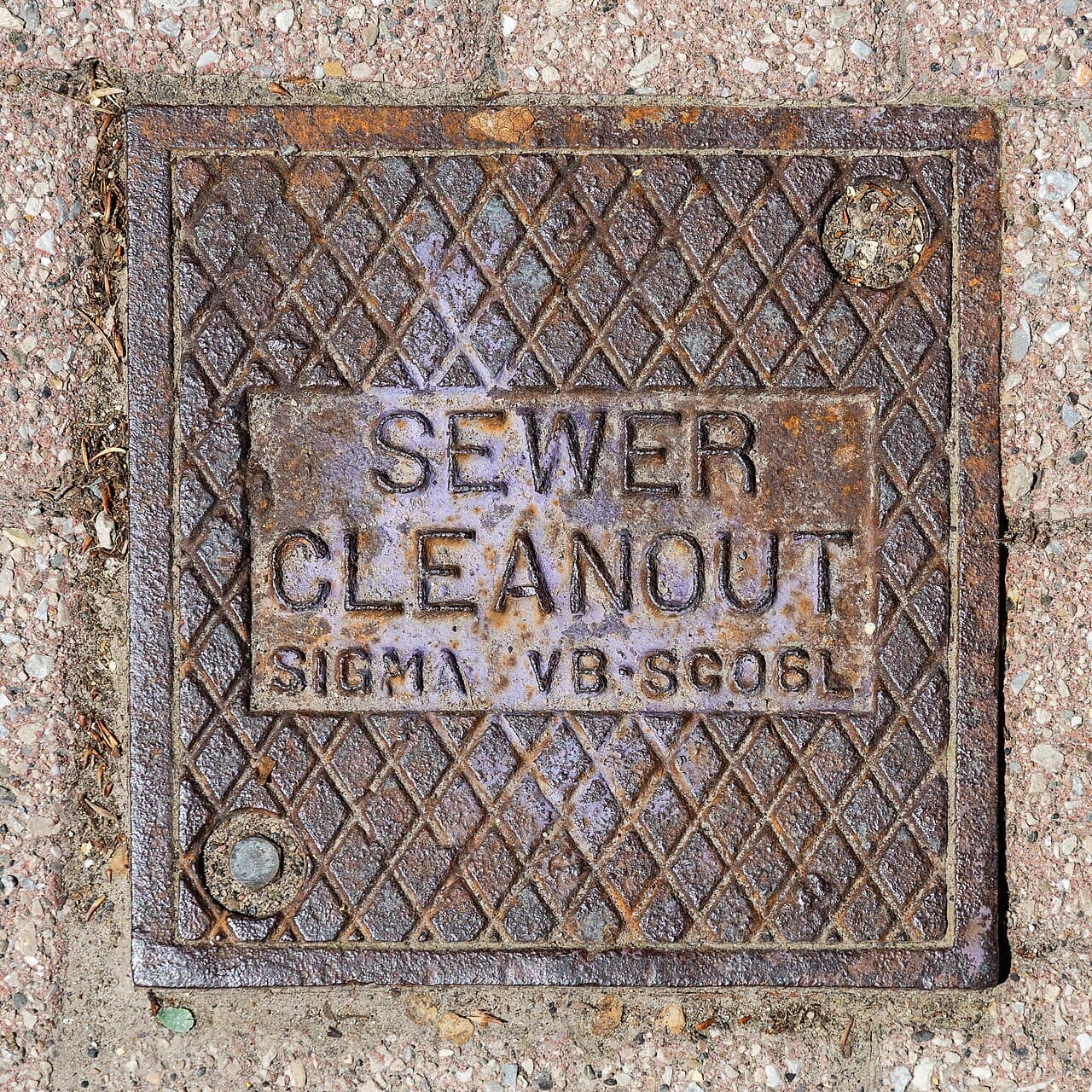
Fairfax County will not find your line for you, either: it does not locate or mark private sewer laterals.[1] Ask your own utility what it will and will not mark. Our guide to who is responsible for the sewer line between the house and the street goes through more local rules.
Insurance: check before you need it
A standard homeowners policy often leaves sewer backup out. According to the City of Salem, most homeowners' insurance will not pay for damage unless specific sewer backup coverage has been added to the policy.[2] Most homeowners' insurance will not pay for mitigation either.[2] Spotsylvania County notes that most insurance companies offer optional backup coverage on homeowner's policies.[3] Fairfax County calls the coverage inexpensive and advises property owners with fixtures below grade to look into it.[1]
Look for a water backup or sewer backup endorsement on your declarations page, and check its limit; a finished basement can cost more to restore than a low limit covers. After a backup, photograph everything before cleanup and keep every invoice.
Claims against a county, city or town
If you believe the locality's sewer caused your damage, Virginia sets a deadline for telling it. Code § 15.2-209 says: "Every claim cognizable against any county, city, or town for negligence shall be forever barred unless the claimant or his agent, attorney, or representative has filed a written statement of the nature of the claim, which includes the time and place at which the injury is alleged to have occurred, within six months after such cause of action accrued."[6] The statement goes to the county, city or town attorney, or to the chief executive or mayor.[6]
Filing notice does not mean the locality has to pay: the same section says it does not limit, expand or modify a locality's sovereign immunity.[6] Whether a utility is liable for a particular backup is a legal question; if the damage is large, talk to a Virginia attorney and your insurer early, well inside the six months.
Help with prevention costs
Some localities share the cost of protecting your basement. When we checked on October 26, 2026, the City of Alexandria reimburses up to 50 percent of the cost of having a licensed plumbing contractor install a backflow preventer, to a maximum of $2,000, for homeowners who apply and are approved.[5] Alexandria's conditions include a plumber licensed by the state and the city, an installation permit with an approved final inspection, and certification that the bill has been paid in full.[5] The City of Salem will reimburse up to $750 toward a sewer backwater valve if the Director of the Water Department approves it.[2] Ask your own utility whether it runs a similar program before you book the work; the guide to preventing sewer backups explains what these valves do.
When to call a licensed pro
Call a licensed plumber as soon as the utility tells you its main is clear, or straight away if only your house is affected. Choose a plumber you can look up on DPOR. Virginia's Board for Contractors regulates plumbers as tradesmen, and state certification of the trade is mandatory, not optional.[7] For a repair or any larger job, check the firm too: Virginia's contractor law defines Class C contractors as those working on a single contract or project worth over $1,000 but less than $30,000, and the Board requires a master tradesman licence as a condition of licensure for plumbing contractors.[8] Ask for a written invoice that says where the blockage was found and what caused it; your insurer and, if it comes to it, the utility will want that record.
Get help from a licensed pro
Loclis lists licensed businesses from Virginia's DPOR register. Find plumbers in Blacksburg, book a sewage cleanup company, or read more plumbing repair answers. When you are ready, describe the backup once and licensed local businesses quote it.
Common questions
- Will the city pay a plumber I already called?
- Do not count on it. Fairfax County, for example, says it will take corrective action when the problem is in its sewer, and makes the owner responsible for the private service line. Fairfax County asks residents to call the county before a plumber when they think the main is the problem, so call the utility first if neighbors are affected or sewage rises while nothing is running.
- Where does my part of the sewer line end?
- It varies by locality. Fairfax County makes the owner responsible all the way to the county sewer, including the connection. Spotsylvania County draws the line at the property line. Colonial Heights uses a property-line cleanout: with one, the city owns the lateral from the cleanout to the main; without one, the owner owns it all. Ask your sewer utility which rule applies.
- Does homeowners insurance cover sewer backups?
- Often not, unless you have added the coverage. The City of Salem says most homeowners' insurance will not pay for damage unless specific sewer backup coverage has been added to the policy. Check your declarations page for a water or sewer backup endorsement and its limit before you need it.
- Can I make a claim against the city for a sewer backup?
- Virginia Code § 15.2-209 requires a written statement of a negligence claim against a county, city or town within six months, filed with the locality's attorney, chief executive or mayor. The statute does not change a locality's sovereign immunity, so whether a claim can succeed is a legal question for a Virginia attorney.
- Does the city help pay for a backflow preventer?
- Some do. When we checked on October 26, 2026, Alexandria reimbursed approved homeowners up to 50 percent of the installation cost, to a maximum of $2,000, and Salem offered up to $750 toward a backwater valve with the Water Department Director's approval. Each program has its own conditions: Alexandria's include an installation permit, an approved final inspection and certification of payment in full, and Salem's include the Director's approval. Ask your own utility before the work is booked.
Sources
- [1] Wastewater Management: Sanitary Sewer Emergencies and Backups, Fairfax County Department of Public Works and Environmental Services. Checked October 26, 2026.
- [2] Water & Sewer: Backup vs. Overflow, City of Salem, Virginia. Checked October 26, 2026.
- [3] Utilities: Sanitary Sewer Lateral, Spotsylvania County, Virginia. Checked October 26, 2026.
- [4] City Cleanout Permit Application, City of Colonial Heights, Virginia. Checked October 26, 2026.
- [5] City Assistance Program for Sewer Backflow Prevention, City of Alexandria, Virginia. Checked October 26, 2026.
- [6] Code of Virginia § 15.2-209, Notice to be given to counties, cities, and towns of tort claims for damages, Code of Virginia, Legislative Information System. Checked October 26, 2026.
- [7] Tradesmen Program, Virginia Department of Professional and Occupational Regulation. Checked October 26, 2026.
- [8] Code of Virginia § 54.1-1100, Definitions, Code of Virginia, Legislative Information System. Checked October 27, 2026.
Want a pro to handle it?
Describe the job once. Licensed local businesses send quotes, and you pay only when you book one.
Get a quote for Plumbing Repair