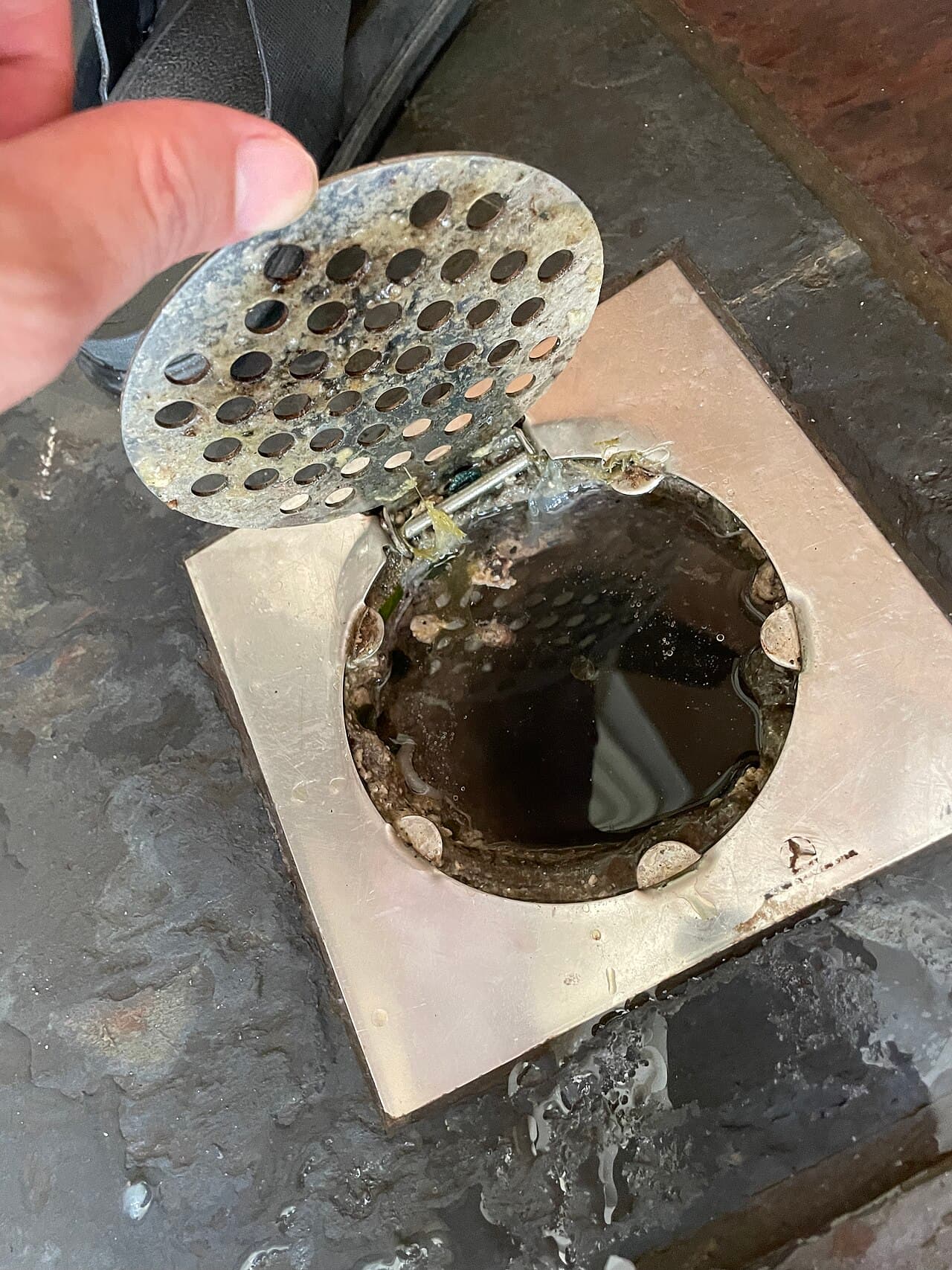
Why does my basement floor drain back up when it rains?
Often because rainwater is getting into the sanitary sewer, through cracked pipes, leaky joints and manholes, or through downspouts and sump pumps wrongly connected to it. When the sewer overloads, it pushes back up through the lowest opening it can find, often a basement floor drain. A cracked or root-filled lateral on your own property can do the same. A licensed plumber can find which.
Free to ask. Local shops send quotes, and you pay only when you book one.
By Kasra Taheri, Founder, LoclisUpdated
Researched and drafted with AI, then checked claim by claim against the sources listed below before it was published. Prices and rules change; the dates beside each source say when it was last checked.
This is a job for a licensed pro in Virginia
This page explains what the work involves, the permits, what a licensed pro does and what drives the cost. It does not give step-by-step instructions, because this work needs a licence, a permit or both, and doing it wrong can injure someone. Before you hire, check the licence on Virginia's DPOR record.
The short version
A floor drain that backs up only in heavy rain is often a sign that rainwater is getting into the sewer, either the public one or your own line. Alexandria describes sanitary sewers as designed to carry dirty water used for toilet flushing, bathing and showering, and washing clothes and dishes, and across more than 90 percent of the city by land area a separate system carries stormwater.[2] When a storm adds more water than the pipes can carry, the sewer fills and pushes back up through the lowest opening it can reach, and in a house with a basement that opening is often the floor drain.
How rain gets into a sewer that is meant to be dry
The City of Alexandria puts it plainly: "Basement back-ups or flooding can occur when water from a heavy or intense rain flows into the sanitary sewer system."[1] Utilities split the problem into two parts.
- Infiltration. Infiltration is groundwater that seeps in through cracks in the public sewer pipes, in the laterals that connect homes to them, and in manholes.[2]
- Inflow. Inflow is stormwater that enters the sanitary sewer directly, from sources in the public right-of-way and sometimes on private property.[2]
Either way the result is the same. As Alexandria puts it, "Rainwater can enter street and house sewers through cracked pipes or leaky joints and manholes."[1] And in Alexandria's words: "If the amount of rainwater entering the sanitary sewers is excessive, the street sewers become overloaded and can back-up into the basements of homes and businesses."[1]
The usual suspects
Downspouts, sump pumps and other drains tied into the sewer. Alexandria notes that some homes and businesses connect sump pumps and roof downspouts to the sanitary sewer, that these connections are not allowed, and that they discharge unwanted stormwater into it during rain.[1] Spotsylvania County's list of improper connections adds foundation drains and drains from window wells and driveways.[3] Older homes are the ones to check: Alexandria says that if your downspouts discharge into a pipe in the ground, or you have an outside basement stairwell drain, and your home was built before 1970, they may be connected to the sanitary sewer.[2]
A cracked or root-filled lateral. Your own line can leak groundwater in through the same cracks that roots use. Broken laterals can let tree roots or debris into the pipe, causing blockages and building backups.[3] A partly blocked line can drain well enough on a dry day and still back up when a storm adds water. Our guides to signs of a broken sewer line and keeping tree roots out of a sewer line go further.
An overloaded public sewer. Sometimes the problem is the main, not your house. In Alexandria's Old Town, sanitary and storm sewers are combined in the same pipe, and backups there can happen when the combined pipe's capacity is exceeded.[2] Alexandria also maps the areas of the city subject to sanitary sewer backups.[1] Ask your own utility whether your street has a history of surcharging.
Low ground. The City of Salem notes: "Homes that are subject to flooding are also more likely to experience a backup."[4]
Why the floor drain goes first
Water finds the lowest opening on the line. Salem's guidance states it simply: "Backups will enter through the lowest drains first."[4] In a house with a basement, that is usually the floor drain, then a basement shower or toilet.
Telling your problem from the city's
Watch what happens during the next storm. Fairfax County explains the difference this way: if the backup occurs only when fixtures such as the toilet, tub, washer or sinks are used, "it is possible that you need a plumber." If sewage backs up when you are not using any of them, "it is possible that there is a problem in the county main line."[5] Ask neighbors on the same street whether their basements backed up too. If they did, report it to your sewer utility; if only yours did, start with your lateral and your own connections.
While it is happening, stop running water in the house. If your basement has a sump pump, Salem advises turning it off during a backup, because sump pumps are meant to pump clear water to a green space or storm drain.[4] Only do this from a dry floor. FEMA's flood guidance warns of the risk of electrocution and says not to touch electrical equipment if it is wet or if you are standing in water.[7] If water has reached the pump's outlet or cord, or you would have to wade in, leave it alone and stay out of the basement. Our guide to what to do when sewage backs up covers the first hour and the cleanup.
What fixes it
The fix depends on which cause a plumber finds. A wrong connection is rerouted to drain outside. A cracked lateral is repaired, lined or replaced. Where the public sewer itself surcharges, a backwater valve or backflow preventer is designed to keep it out of your house. In the City of Alexandria's description, a backflow preventer protects the house only while it is closed during the sewage overload, a period that varies with the storm but generally lasts 2 to 6 hours, and the plumbing cannot be used while it is closed.[1] Our guide to preventing sewer backups covers valves, local cost-sharing programs and insurance.
When to call a licensed pro
Call a licensed plumber after the first rain-related backup, not the third. Ask for a camera inspection of the lateral and a check of where your downspouts, sump pump and stairwell drains discharge. For the lateral and any valve, choose a plumber you can look up on DPOR. Virginia's Board for Contractors regulates plumbers as tradesmen, and state certification of the trade is mandatory, not optional.[6]
Ask whether the work needs a permit. Under Virginia's Uniform Statewide Building Code, a permit is required for installations or alterations involving the sanitary drainage system, while some ordinary repairs are exempt, such as replacing plumbing fixtures without altering the drainage system.[8] Alexandria also notes that the property owner or plumber has to get the installation permits from the city for a backflow preventer.[1]
If you suspect the public main, call your sewer utility.
Get help from a licensed pro
Loclis lists licensed businesses from Virginia's DPOR register. Find plumbers in Blacksburg, book drain cleaning, or read more plumbing repair answers. When you are ready, describe the backup once and licensed local businesses quote it.
Common questions
- Why does the floor drain back up and not the toilets?
- The floor drain is usually the lowest opening on the house's sewer line. The City of Salem notes that backups will enter through the lowest drains first, so a basement floor drain shows the problem before any fixture upstairs does.
- Is it my pipe or the city's sewer?
- If neighbors back up in the same storm, or sewage rises while nothing in your house is running, the public sewer may be the cause, and you should call your utility. If it happens only in your house, especially when you run water, look at your own lateral and connections first: roots, cracks and downspouts or drains tied into the sewer are all possible causes.
- Can I plug the floor drain permanently?
- A floor drain is part of your plumbing, so ask a licensed plumber rather than sealing it. The lasting fixes are finding where rainwater gets in, repairing the lateral if it is cracked, and, where the public sewer surcharges, a backwater valve or backflow preventer installed with a permit.
- Does a sump pump connected to the sewer cause backups?
- It adds to them. Alexandria says sump pump and downspout connections to the sanitary sewer are not allowed and discharge unwanted stormwater into it during rain, which can overload the street sewer and push sewage back into basements.
- Will a backwater valve stop rain-related backups?
- It is designed to. Alexandria describes a backflow preventer as shutting the house off from the street sewer during a backup, and it must stay closed through the overload, generally 2 to 6 hours. You cannot use the plumbing while it is closed, and it needs maintenance.
Sources
- [1] City Assistance Program for Sewer Backflow Prevention, City of Alexandria, Virginia. Checked October 26, 2026.
- [2] Sanitary Sewers, City of Alexandria, Virginia. Checked October 26, 2026.
- [3] Utilities: Sanitary Sewer Lateral, Spotsylvania County, Virginia. Checked October 26, 2026.
- [4] Water & Sewer: Backup vs. Overflow, City of Salem, Virginia. Checked October 26, 2026.
- [5] Wastewater Management: Sanitary Sewer Emergencies and Backups, Fairfax County Department of Public Works and Environmental Services. Checked October 26, 2026.
- [6] Tradesmen Program, Virginia Department of Professional and Occupational Regulation. Checked October 26, 2026.
- [7] Floods, Ready.gov, U.S. Department of Homeland Security and FEMA. Checked October 27, 2026.
- [8] 13VAC5-63-80, Virginia Uniform Statewide Building Code, Section 108 Application for permit, Virginia Administrative Code, Legislative Information System. Checked October 26, 2026.
Want a pro to handle it?
Describe the job once. Licensed local businesses send quotes, and you pay only when you book one.
Get a quote for Plumbing Repair