Who should I hire to check a cracked foundation?
Hire a licensed professional engineer experienced in soils and foundations, ideally a geotechnical engineer, to find the cause before anyone sells you a repair. If there is significant structural damage, that engineer may advise bringing in a structural engineer. Hire a licensed contractor to do the repair only once the engineer's design is in hand.
Free to ask. Local shops send quotes, and you pay only when you book one.
By Kasra Taheri, Founder, LoclisPublished
Researched and drafted with AI, then checked claim by claim against the sources listed below before it was published. Prices and rules change; the dates beside each source say when it was last checked.
This is a job for a licensed pro in Virginia
This page explains what the work involves, the permits, what a licensed pro does and what drives the cost. It does not give step-by-step instructions, because this work needs a licence, a permit or both, and doing it wrong can injure someone. Before you hire, check the licence on Virginia's DPOR record.
Hire an independent engineer first, not a repair crew. A licensed professional engineer with experience in soils and foundations can find out why the foundation cracked and design a fix, and that diagnosis is what a contractor should then price. Fairfax County's marine clay guide puts it this way: a geotechnical engineer, one experienced in soils and foundation engineering, has the technical expertise to evaluate and design repairs for Marine Clay-Marumsco damage.[1] The same logic applies to soil problems elsewhere in Virginia.
Which kind of engineer
A geotechnical engineer looks at the soil under and around the house: moisture, clay that shrinks and swells, slopes, drainage. Fairfax County says a structural engineer is one who specializes in the design and stability of building structures.[1] You often start with one and the first may refer you on. If there is significant structural damage to the house, the geotechnical engineer should advise you if a structural engineer should be retained for further analysis.[1]
Virginia treats this as licensed work. In the Code of Virginia, a person shall hold a valid license prior to engaging in the practice of architecture or engineering which includes design, consultation, evaluation, or analysis and involves proposed or existing improvements to real property.[2] The statute says the practice of engineering includes consultation, investigation, evaluation, planning and design of structures.[3]
Choosing an engineer
Fairfax County's guide advises contacting at least three engineers and comparing the services offered, asking for proof of licensing, and looking up license records on the Department of Professional and Occupational Regulation website.[1] Add questions about experience with your type of soil and house, what the investigation will include (borings or test pits, how deep), and what the written report will contain. Ask for references and follow up on them.
Before the visit
Not every crack is a problem. Small settlement cracks (smaller than 1/16 inch) are not uncommon in new construction,[1] while cracks that appear abruptly after five, ten, or thirty years are likely caused by soil problems.[1] Help the engineer by keeping records. Measure and keep a record of the width and extent of the cracks and the time of the year that you made the recordings.[1] Photographs with a ruler beside the crack and dates are ideal.
Treat a few signs as urgent. If a wall is bowing or shifting, or a crack is growing fast, get someone out promptly. Call the gas company immediately if you think that your natural gas pipe or gas meter is under pressure from a damaged wall, since an explosion could occur from a leaking pipe.[1]
Then hire the repair contractor
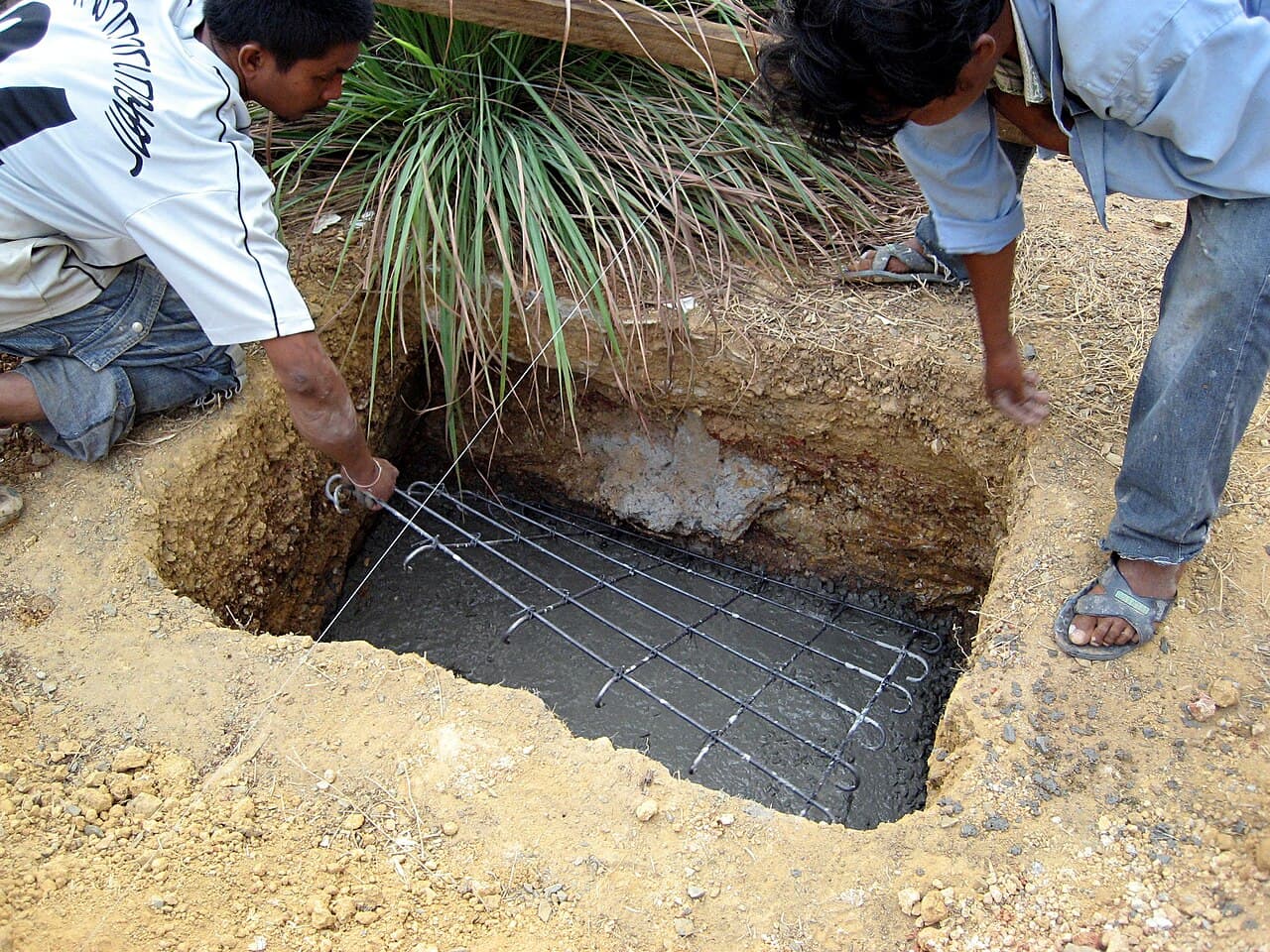
With a written design in hand, get bids from contractors who can do that work. Underpinning, piers and wall repair involve digging beside the foundation and carrying the house's load, and they should not be improvised. It is critical, however, that the engineer inspects the soils at the bottom of footings during underpinning construction because of possible variation of the soils.[1] The Uniform Statewide Building Code requires a permit for installations or alterations involving any structural component,[4] so ask who will pull it.
When to call a licensed pro
For the whole thing: diagnosis by a licensed engineer, repair by a licensed contractor. Under Virginia's contractor law, Class B contractors handle a single contract of $30,000 or more but less than $150,000,[5] and smaller jobs fall to Class C. Look up the licence and class before you sign; see how to check if a contractor is licensed in Virginia.
If you are building new instead, read what pouring footings for a house involves and how much a foundation costs for a new house in Virginia. Water control often matters too: see how a yard is regraded so water drains away from a house.
Browse excavation services or read more excavation answers. To get quotes once you have a design, describe the job once.
Common questions
- Should I call a foundation repair company first?
- Start with an independent engineer. A repair company profits from selling the repair; an engineer is paid to diagnose and design. Get the diagnosis first, then have contractors bid on the engineer's design.
- Is a home inspector enough for a cracked foundation?
- A home inspector can note the cracks, but a diagnosis of the cause and a repair design is engineering work, and Virginia requires a licence for engineering that involves existing improvements to real property.
- Are all foundation cracks serious?
- No. Fairfax County's guide says small settlement cracks (smaller than 1/16 inch) are not uncommon in new construction, but that cracks that appear abruptly after five, ten, or thirty years are likely caused by soil problems.
- What should I do before the engineer arrives?
- Photograph the cracks and record their width, extent and the date, as Fairfax County's guide advises. Note when they first appeared and whether they change with the seasons.
- Do foundation repairs need a permit?
- Often. The Uniform Statewide Building Code requires a permit for installations or alterations involving any structural component, so ask your building department about your repair before work starts.
Sources
- [1] Homeowner's Guide to Overcoming Problems with Marine Clay-Marumsco Soils in Fairfax County, Fairfax County and the Northern Virginia Soil and Water Conservation District. Checked October 27, 2026.
- [2] Code of Virginia § 54.1-406. License required, Virginia General Assembly, Legislative Information System. Checked October 27, 2026.
- [3] Code of Virginia § 54.1-400. Definitions, Virginia General Assembly, Legislative Information System. Checked October 27, 2026.
- [4] 13VAC5-63-80. Section 108 Application for permit (Virginia Uniform Statewide Building Code), Virginia Administrative Code, Virginia General Assembly. Checked October 27, 2026.
- [5] Va. Code § 54.1-1100, Definitions, Code of Virginia, Virginia General Assembly. Checked October 27, 2026.
Want a pro to handle it?
Describe the job once. Licensed local businesses send quotes, and you pay only when you book one.
Get a quote from a local pro