Why did my garage door come off its track?
Usually something knocked the door or the track out of true: an impact, a loose or bent track, a worn roller, or a spring or cable problem that left the door lopsided. A door that binds or sticks is a warning sign. Because springs, cables and bottom brackets are under strong tension, have a professional find the cause.
Free to ask. Local shops send quotes, and you pay only when you book one.
By Kasra Taheri, Founder, LoclisPublished
Researched and drafted with AI, then checked claim by claim against the sources listed below before it was published. Prices and rules change; the dates beside each source say when it was last checked.
This is a job for a licensed pro in Virginia
This page explains what the work involves, the permits, what a licensed pro does and what drives the cost. It does not give step-by-step instructions, because this work needs a licence, a permit or both, and doing it wrong can injure someone. Before you hire, check the licence on Virginia's DPOR record.
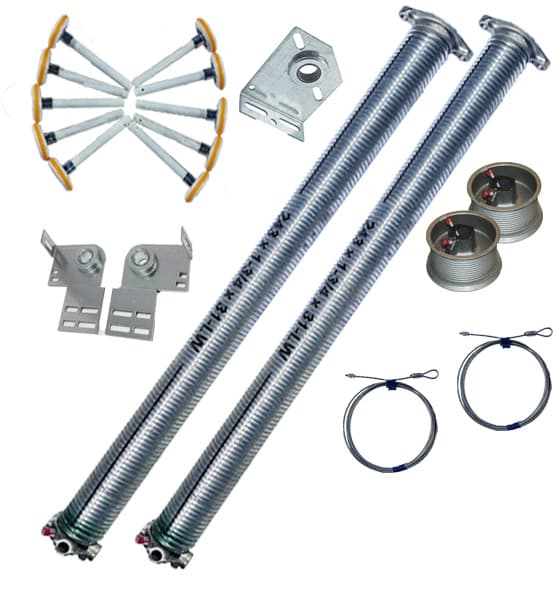
A garage door comes off its track when something has pushed the door, the rollers or the track out of line. The usual causes are an impact, a loose or bent track, a worn or broken roller, or a spring or cable problem that left the door lopsided. The cause matters, because a door reset without fixing it will tend to come off again.
If your door is off right now, read what to do if a garage door comes off its track first. This page is about why it happened.
The usual causes
A knock from a car or something carried through. A bumper, a bike or a ladder catching the door or the lower track edge can bend the track or pop a roller out. The damage is often small and on one side only, which is why the door ends up crooked.
Loose or bent track. The vertical and horizontal track holds the rollers in a fixed path. Clopay's installation manual says that if the tracks are not firmly stabilized they might spread, allowing the door to fall and cause severe injury and damage.[1] Tracks that have worked loose with years of door movement, or that were never braced well, can open just enough for a roller to slip out. The same manual notes that bolts must be installed at the rear end of horizontal tracks.[1] Those bolts stop the rollers rolling off the back of the track, so a missing one can let a door run out the rear.
Worn, cracked or broken rollers. A roller that has lost its wheel, or a stem that has snapped or slid out of its hinge, no longer rides in the track. The door then drags to one side. A related reason rollers pop out is covered in why garage door rollers wobble or pop out of the track.
A door that is out of balance. A door is held up by springs and cables. If a cable slips off its drum or a spring weakens or breaks, one side carries more weight than the other. CPSC describes the standard: "A properly operating garage door will be 'balanced.'"[2] A door that is not balanced can twist in the opening, and the high side can come out of the track. For how the two spring types differ, see torsion versus extension springs.
Something in the way. An object left under the door as it closes can stop one side while the opener keeps pushing, which can jam a roller and force it out.
Warning signs before it happens
Doors rarely jump the track without notice. Common warning signs are a door that rubs or squeals on one side, closes crooked, looks uneven along the bottom edge, jerks in the same spot every time or will not stay put when lifted halfway by hand. Why a garage door is crooked when it opens covers one of the most common.
CPSC advises: "If doors are not 'balanced,' or if they bind or stick, they should be serviced by a professional."[2] LiftMaster's maintenance schedule says the same in its monthly check: "Manually operate door. If it is unbalanced or binding, call a trained door systems technician."[3] CPSC also lists "Hardware and fittings should be checked to keep the door on track at all times."[2]
Leave hardware adjustments to the technician.
Why diagnosis is not a do-it-yourself job
Working out why a door came off means looking at the track, the rollers, the hinges, the cables and the springs, and the parts at the bottom corners are the worst to disturb. Clopay's manual states that "Springs, cables, and bottom fixtures are under strong spring tension" and tells owners, "Do not attempt to loosen any fasteners on these components."[1] A door that has already shifted can be carrying more force than it looks.
A technician will make the door safe first, then trace the cause from the marks left on the track and rollers. The fix can be as small as a reset and tightening, or can include track, rollers, hinges, cables or springs. For the work involved, see what realigning a garage door track involves, and for the bill, what it costs to put a garage door back on its track in Virginia.
When to call a licensed pro
Always, for the repair and for finding the cause. When a reset turns into a track, spring or cable job, the cost can climb, and DPOR's hiring guide says: "If the work you are considering is valued at $1,000 or more, a valid Virginia Contractor's License is required."[4] Look the company up before agreeing to the work with how to check a contractor's licence in Virginia, and ask for a written quote that lists parts and labor separately and says what caused the problem.
Loclis lists DPOR-licensed businesses with their licence number and class. Browse garage door answers, see garage door businesses on Loclis, or describe the job once and local pros quote it.
Common questions
- Was it something I did?
- Often it is a build-up rather than one event. A roller wears, a track bracket loosens, or the door starts to drag on one side, and one more trip off the wall button is enough to push it out. A bump from a car or a hard slam can do it in a single go. A technician can usually tell which from the marks on the track and rollers.
- Will it come off again after it is reset?
- It can if the cause is left in place. Putting the rollers back in a bent or loose track fixes the symptom only. Ask the technician what made it come off, whether any track, rollers or hinges were replaced, and whether the door is balanced when lifted by hand.
- Can a door come off its track from one side only?
- Yes, and it is the usual pattern. A one-sided problem such as a bent track section, a broken roller or a cable that has gone slack on one side lets that edge drop or swing out while the other stays in place, leaving the door crooked.
- How can I tell whether my door is getting close to coming off?
- With the door closed, lift it by hand using the handle and watch. A door that binds, sticks, rubs, sits crooked or will not stay put halfway open is giving a warning. Do not adjust anything yourself, but have it looked at before it jumps the track.
- Does a door off its track mean I need a new door?
- Not necessarily. Many are fixed with a reset plus new rollers or a straightened or replaced track section. Panels that have been bent or cracked in the fall may need replacing, so ask for a written quote that lists parts and labor separately.
Sources
- [1] Avante Garage Door Installation Instructions, Clopay Building Products. Checked October 28, 2026.
- [2] Non-Reversing Automatic Garage Door Openers Are a Hazard (CPSC publication 523), U.S. Consumer Product Safety Commission. Checked October 28, 2026.
- [3] LiftMaster Residential Maintenance, LiftMaster. Checked October 28, 2026.
- [4] What You Should Know Before You Hire a Contractor, Virginia Board for Contractors, Department of Professional and Occupational Regulation. Checked October 28, 2026.
Want a pro to handle it?
Describe the job once. Licensed local businesses send quotes, and you pay only when you book one.
Get a quote for Garage Doors