Why do my brakes squeal?
Most squeal is harmless vibration from moisture, dust or pad compound, but a constant squeal or a grinding feel can mean the pads are worn out. Virginia's inspection rules reject pads worn to less than 2/32 of an inch, so have them measured. If the pedal is soft or the red brake light is on, do not drive.
Free to ask. Local shops send quotes, and you pay only when you book one.
By Kasra Taheri, Founder, LoclisPublished
Researched and drafted with AI, then checked claim by claim against the sources listed below before it was published. Prices and rules change; the dates beside each source say when it was last checked.
This is a job for a licensed pro in Virginia
This page explains what the work involves, the permits, what a licensed pro does and what drives the cost. It does not give step-by-step instructions, because this work needs a licence, a permit or both, and doing it wrong can injure someone. Before you hire, check the licence on Virginia's DPOR record.
Most brake squeal is harmless noise from the pads and rotors vibrating, but a squeal that is new, constant or paired with a grinding feel can be the sound of worn-out pads, so treat it as a reason to have the brakes measured, not something to wait out. If the pedal feels soft or sinks, or the red brake warning light is on, do not keep driving.
The common reasons brakes squeal
Brakes work by pressing friction material against a spinning metal surface. Anything that makes that contact vibrate can produce a high-pitched squeal. The usual causes, roughly from harmless to serious:
- Moisture and surface rust. After rain, a wash or a cold night, a light film of rust forms on the rotors and squeals for the first few stops. It clears quickly and is normal.
- Brake dust and road grit. Dust and small stones can sit between the pad and rotor and sing. Virginia's inspection rules list "foreign material or debris caught between a drum or rotor and the brake pad" as a reason to reject.[2]
- Hard, glazed or low-grade pads. Some pad compounds are noisier than others, and pads that have overheated can glaze and squeal under light braking.
- Missing shims, dry hardware or loose clips. The small metal shims, clips and slides around the pad exist to damp vibration. When they are worn, missing or rusty, the pad rattles and squeals.
- A built-in wear indicator. Many pads carry a small metal tab that touches the rotor when the friction material is nearly gone, producing a steady squeal that often stops when you press the pedal. Others use an electronic sensor that lights a dashboard warning instead.
- Worn-out pads. Virginia's state safety inspection rules direct an inspector to reject a vehicle when pads or linings are "worn to less than 2/32 of an inch in thickness at any point".[2] Past that point, the squeal turns into grinding as metal meets metal, which damages the rotor and lengthens the stopping distance.
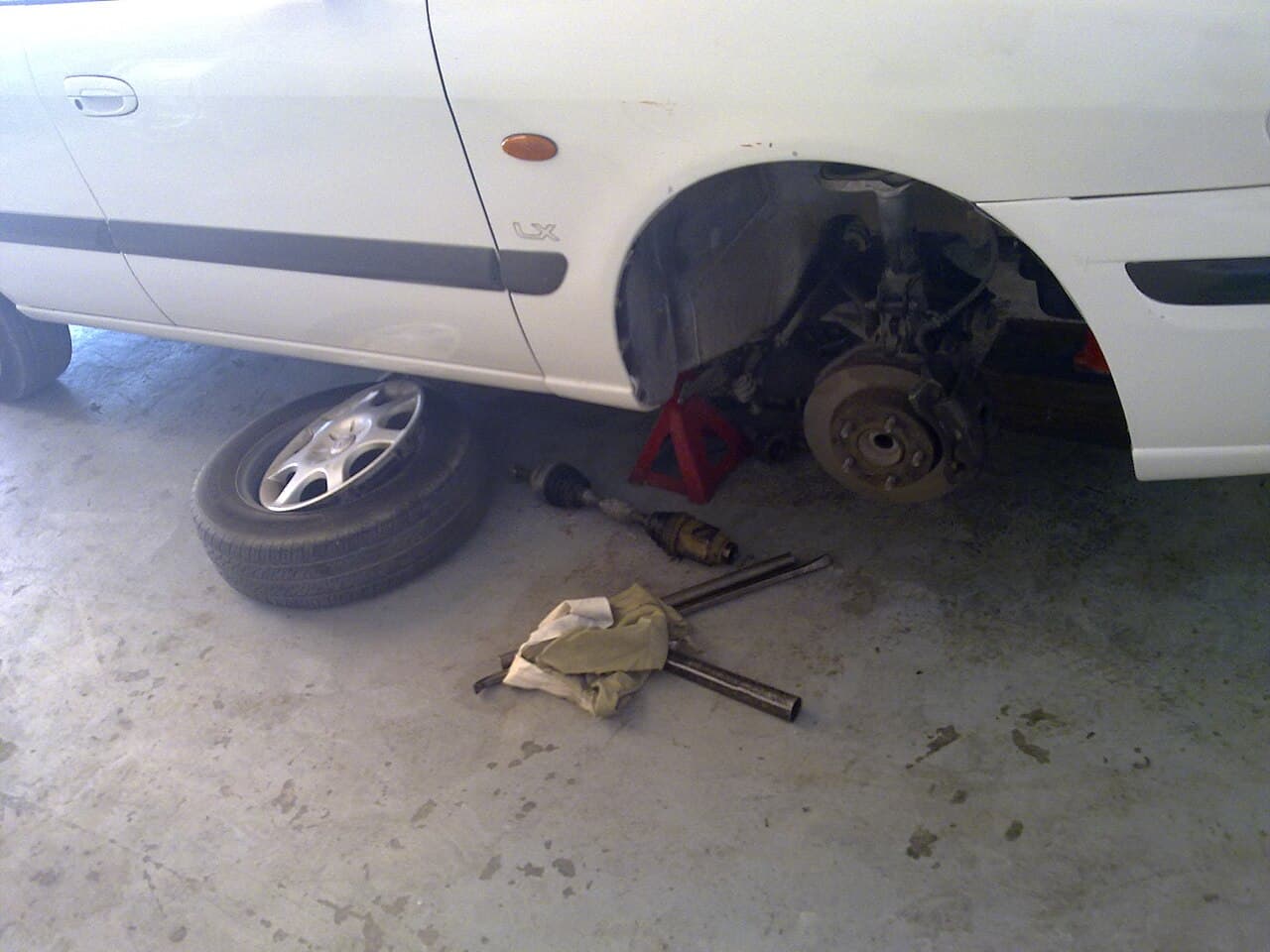
Telling harmless from serious
Use the pattern of the noise as a clue:
- Only the first stops of the day, or after rain, then it goes away. Usually surface rust. Mention it at your next service.
- Squeal that comes and goes with the pedal, getting worse over weeks. Likely a wear indicator, glazed pads or dry hardware. Book an inspection within the next couple of weeks.
- Constant squeal that changes when you press or release the pedal. Have the brakes checked soon.
- Grinding, a vibrating pedal or steering wheel, or the car pulling to one side. Stop driving it more than you must and get it looked at now. A pull to one side can point to a stuck caliper. The inspection rules include "any evidence of a caliper sticking or binding" as a reason to reject.[2]
- Soft or sinking pedal, red brake light, or fluid near a wheel. Do not drive. Have the car towed.
A brake pad wear warning light is not an automatic rejection, because it is the inspector's job to confirm whether the pads have passed the 2/32 inch tolerance.[2] That does not make it ignorable. It means the manufacturer's sensor expects the pads to need attention soon.
What a shop should do about it
A good shop does more than quiet the noise. Ask for these in the estimate:
- pad thickness measured on each wheel, in writing, in millimetres or thirty-seconds of an inch
- the condition of the rotors, with the minimum thickness stamped on them compared to the reading
- hardware, shims and slides inspected and replaced or lubricated as needed
- any sticking caliper, leaking seal or contamination identified, because the rules also reject cases where "grease or other contamination is present on the linings, drums, or rotors"[2]
- an explanation of why it is adding anything beyond pads, before it does the work
For what this usually costs and how to compare quotes, see how much a brake job costs in Virginia. For how long pads usually last and how to plan for them, see how often brakes should be replaced.
When to call a licensed pro
For the repair itself. Brakes are the system that stops the car, and fixing a squeal can involve lifting the vehicle, handling hydraulic parts and judging measurements against the manufacturer's specifications. Virginia law requires brakes adequate to control the movements of and to stop and hold the vehicle, maintained in good working order,[1] so an adjustment done wrong is a safety problem. Take the car to a qualified repair shop and describe when the noise happens, whether it is at low speed or high, and whether it changes with the pedal. That detail shortens the diagnosis.
Loclis lists Virginia businesses by trade and area. Read more automotive repair answers and what a suspension repair costs, another system that can make a car feel unsafe.
To get a shop to look at your own car, describe the job once.
Common questions
- Are squealing brakes dangerous?
- Not always. Light squeal after rain or a wash is usually surface rust that clears in a few stops. A squeal that persists, gets worse or turns into grinding can mean the pads are nearly gone, so have them measured soon.
- Why do my brakes squeal in the morning?
- Moisture overnight forms a thin film of rust on the rotors, and the first few stops scrape it off with a squeal. If the noise disappears quickly, it is normal. If it lasts all day, ask a shop to look.
- Can I stop the squeal with a spray or by driving harder?
- Sprays are not a repair, and a squeal from worn pads or missing hardware will not go away by driving. Have the pads and hardware inspected so the cause is found, not masked.
- Does a squealing noise mean my car will fail the Virginia inspection?
- Noise alone does not. The inspector measures the brakes, and rejects for things like pads worn below 2/32 of an inch, contamination or debris on the pads and rotors, or a sticking caliper.
- Do new brakes squeal?
- Sometimes for a short time while the pads bed in, and some pad compounds are noisier than others. If new brakes squeal for more than a few days, return to the shop and ask them to check the hardware and shims.
Sources
- [1] Code of Virginia § 46.2-1066, Brakes, Code of Virginia, Virginia General Assembly. Checked October 27, 2026.
- [2] 19VAC30-70-80, Service brakes, Virginia Administrative Code, Department of State Police. Checked October 27, 2026.
Want a pro to handle it?
Describe the job once. Licensed local businesses send quotes, and you pay only when you book one.
Get a quote for Automotive