Why does my riding mower click but not start?
A click with no cranking almost always means the starter is not getting enough power: a weak or dead battery, corroded terminals or loose wiring. Clean the terminals, tighten the connections and charge the battery first. If it still only clicks, the solenoid or starter is the likely fault and a shop should test it.
Free to ask. Local shops send quotes, and you pay only when you book one.
By Kasra Taheri, Founder, LoclisPublished
Researched and drafted with AI, then checked claim by claim against the sources listed below before it was published. Prices and rules change; the dates beside each source say when it was last checked.
Step by step
Read when to stop and call a pro, further down this page, before you start.
Step 1: Make the mower safe
Park on level ground, set the parking brake, turn the key off and take it out.
Step 2: Run through the start conditions
Check that the blade or PTO switch is off, the brake is set and the controls are in neutral, because a mower with an operator presence system shuts the engine off when the operator is out of the seat with the controls out of neutral lock or the PTO on.[1]
Step 3: Look at the battery and cables
Open the battery cover and look for white or green crust on the terminals, cables that wiggle on the posts, or frayed or broken wiring.[1]
Step 4: Disconnect the cables
Remove the black (ground) cable from the battery first, then the red one, keeping tools from touching both terminals at once.[2]
Step 5: Clean the terminals
Scrub the battery posts and the cable ends with a wire brush until they are bright, then coat them with grease or petroleum jelly.[1]
Step 6: Reconnect in order
Connect the red positive cable first and the black negative cable last, and tighten both so they cannot move.[1]
Step 7: Charge the battery
Charge it with an automotive battery charger, with the mower off and the charger leads matched to the correct terminals.[1]
Step 8: Try the key again
Turn the key to start. If the engine now cranks, the problem was power to the starter. If it only clicks, stop and have the solenoid and starter tested.
A click means the starter is short of power
When a riding mower clicks and the engine does not turn, the starter is being asked to work and is not getting enough power to do it. Ariens lists four causes for an engine that clicks but will not start: a weak or dead battery, corroded battery terminals, loose or damaged wiring, and a faulty solenoid or starter.[1] The first three are cheap and you can check them yourself. The fourth is a shop job.
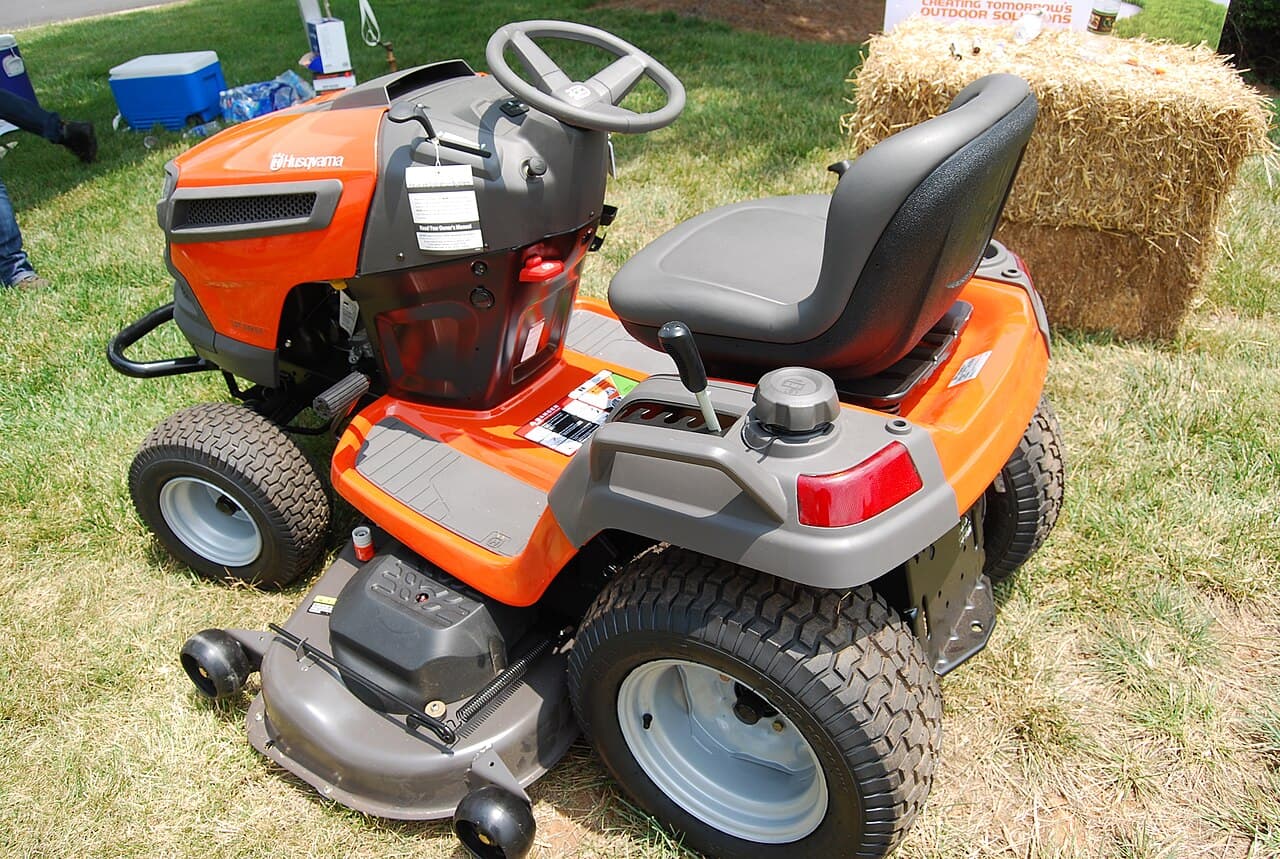
Its fixes follow the same order: recharge or replace the battery, clean the terminals and check all wiring, and contact a dealer for the solenoid or starter.[1] That is the order to work in.
Check the easy things first
A mower that is not clicking at all, or that does nothing when you turn the key, may simply be blocked by its safety switches. The operator presence system will shut the engine off if the operator leaves the seat with the attachment engaged or the controls out of neutral lock.[1] A mower with a faulty interlock can behave as if it will not start, so make sure the blade switch is off, the parking brake is set, the controls are in neutral and you are sitting in the seat. If the mower clicks, those are probably fine and the battery is the better place to look.
The battery and its connections
Open the battery cover and look. White or green crust on the posts, a cable end that moves when you push it, or a frayed cable all explain a click. Corrosion and dirt on the battery and terminals can cause the battery to lose power.[2] A battery that reads fine on a meter can still fail to turn the starter if the current has to squeeze through a dirty joint.
Before you touch the cables, disconnect the spark plug wire or electric plug, as Virginia Cooperative Extension advises before any troubleshooting or repair.[3] Then take the battery cables off: disconnect the black cable first, then the red.[2] Do not let a wrench or other object touch both terminals at the same time.[2] Clean the terminals and cable ends with a wire brush until bright and coat them with grease or petroleum jelly.[1] Reconnect with the positive cable first and the negative cable second,[1] because the positive terminal must be connected first to prevent sparks from accidental grounding.[2] Tighten both clamps until they will not turn by hand.
If the battery is low, charge it. Ariens recommends recharging at 6 to 10 amperes for 1 hour,[1] which is a normal setting on an automotive charger. Keep the mower off while it charges, and follow the charger maker's instructions for the leads.
Care around a lead-acid battery
Explosive gases from a battery can cause death or serious injury, so keep open flames, sparks and smoking materials away from it.[1] Battery fluid contains sulfuric acid, and contact with skin, eyes or clothing can cause severe chemical burns, so wear safety glasses and protective gear near the battery.[1] Do not tip the battery more than 30 degrees in any direction when you lift it out.[1]
Never try to force the starter by shorting across the starter relay. Husqvarna's manual says not to make a bridge short circuit across the starter relay to run the starter.[2] Sparking at the heavy cables of the starter circuit can cause a battery explosion, fire or eye injury.[2]
Why a new battery sometimes does not fix it
Wiring is the other half of the problem. A ground strap bolted to a painted or rusty frame, a cable that has chafed through under the seat, or a loose connector at the solenoid can all drop the voltage enough to make the solenoid click and the starter stay still. Look along the cables for rubbed insulation and shiny, loose connections.
If everything is clean, tight and the battery is charged, and the mower still only clicks, you have likely reached the solenoid or the starter itself. Testing those means measuring voltage while someone turns the key, and replacing them means working around a heavy battery cable. That is where a small-engine technician earns their fee.
Stop and call a pro if
- The mower still clicks after the battery is charged and the terminals are clean. The solenoid or starter is the next suspect, and Ariens' fix for it is to contact a dealer.[1]
- A cable is hot, melted or smells of burning. Leave the battery disconnected and have the wiring inspected before you try again.
- The battery is swollen, cracked or leaking. It contains sulfuric acid that can cause severe chemical burns, so wear safety glasses and gloves when you handle it.[1]
- The battery will not hold a charge after a full charge and a night's rest. The battery or the charging system on the engine needs testing.
- You hear a grinding noise, or the engine is hard to turn. That points to the engine or starter drive, not the battery.
When you ask a shop for a quote, ask for the diagnosis in writing: what was tested, what failed and the price for the part and the labor separately.
Getting help in Virginia
A starting problem is easier to prevent than to fix. Read how to change the oil in a riding mower as part of a spring routine, see how much riding mower repair costs in Virginia before you call a shop, and whether it is worth fixing an old riding mower if the bills are mounting. Browse more lawn equipment repair answers or lawn care and mower businesses near you.
When you are ready, describe the problem once and local mower repair shops quote it.
Common questions
- What does the clicking sound actually mean?
- It is usually the starter solenoid or relay closing and then dropping out because the battery cannot deliver enough current to turn the engine. That is why a weak battery or a poor connection is the first suspect, and why the clicking often gets faster and weaker as the battery drains.
- Can a new battery still click without starting?
- Yes. A new battery does nothing if a cable end is loose or corroded, or if the ground connection to the frame is poor. Clean and tighten every connection before you decide the battery is the problem.
- Why does it start fine some days and click on others?
- Intermittent clicking usually points to a connection that is borderline: corrosion on a terminal, a cable end that has worked loose, or a battery that is only just weak enough to fail when it is cold. It tends to get worse, so fix it before it fails at the start of the season.
- Can I jump-start a riding mower?
- Check your owner's manual first, since not every maker approves it. If you do connect a charger or jumper cables, match positive to positive and negative to negative: reversed connections can cause sparks that lead to serious injury, according to Ariens.
- Is it the starter or the solenoid?
- You cannot tell reliably by listening. A shop tests the voltage reaching the solenoid, the voltage at the starter while you turn the key, and the starter itself. Ask for the test result in the written quote before agreeing to a part.
Sources
- [1] EZR Zero Turn Mower, Owner/Operator Manual, Ariens Company. Checked October 28, 2026.
- [2] Operator Manual, zero-turn mower, Husqvarna. Checked October 28, 2026.
- [3] Lawn Care: Rotary Mower Safety (BSE-42P), Virginia Cooperative Extension, Virginia Tech. Checked October 28, 2026.
Want a pro to handle it?
Describe the job once. Licensed local businesses send quotes, and you pay only when you book one.
Get a quote for Lawn Equipment