Why does my toilet run on its own every few minutes?
A toilet that refills by itself is losing water from the tank, and the fill valve is topping it back up. The usual cause is a worn or warped flapper leaking into the bowl. A chain that is too tight, a dirty or cracked flush valve seat, a refill tube pushed into the overflow pipe, or a leak outside the tank can do the same.
Free to ask. Local shops send quotes, and you pay only when you book one.
By Kasra Taheri, Founder, LoclisPublished
Researched and drafted with AI, then checked claim by claim against the sources listed below before it was published. Prices and rules change; the dates beside each source say when it was last checked.
Step by step
Read when to stop and call a pro, further down this page, before you start.
Step 1: Look for water outside
Check under the tank, at the supply line and down the back of the bowl; drips there mean the water is escaping outside, not into the bowl.[1]
Step 2: Run a dye test
Add food coloring to the tank, do not flush, and after 15 to 30 minutes look in the bowl for color.[9]
Step 3: Mark and wait
Mark the water line, close the supply valve, and see where the level settles after a couple of hours.[3]
Step 4: Check the refill tube
If the small tube from the fill valve is pushed too far into the overflow pipe, pull it out and reattach it to the outside.[1]
Step 5: Check the chain
Set the flapper chain with one or two links of slack, so it neither holds the flapper open nor drops under it.[3]
Step 6: Clean the seat
With the tank drained, wipe the flapper and the rim of the flush valve clean of grit and mineral build-up.[1]
Step 7: Replace the flapper
If the dye test still shows color, fit a new flapper or seal of the right size for the flush valve.[3]
Step 8: Retest
Refill the tank and repeat the dye test; if the level still falls to the overflow tube or tank floor, the flush valve itself needs replacing.[3]
A toilet that refills by itself every few minutes is leaking water out of the tank, and the fill valve is putting it back. Fluidmaster describes it this way: "Sometimes you can hear a toilet refilling without being flushed. This sound can happen intermittently and occur every few minutes or every few hours. Such a refill sound is usually alerting you that your toilet is losing water, either internally or externally."[1] Chesterfield County's utilities department notes that with a flapper that does not close completely, the commode tank may refill and stop periodically.[7]
Korky calls it ghost flushing: "It signals that your flapper is leaking and needs replacement."[2] That is the most likely answer, but not the only one, and a few minutes of checking saves buying the wrong part.
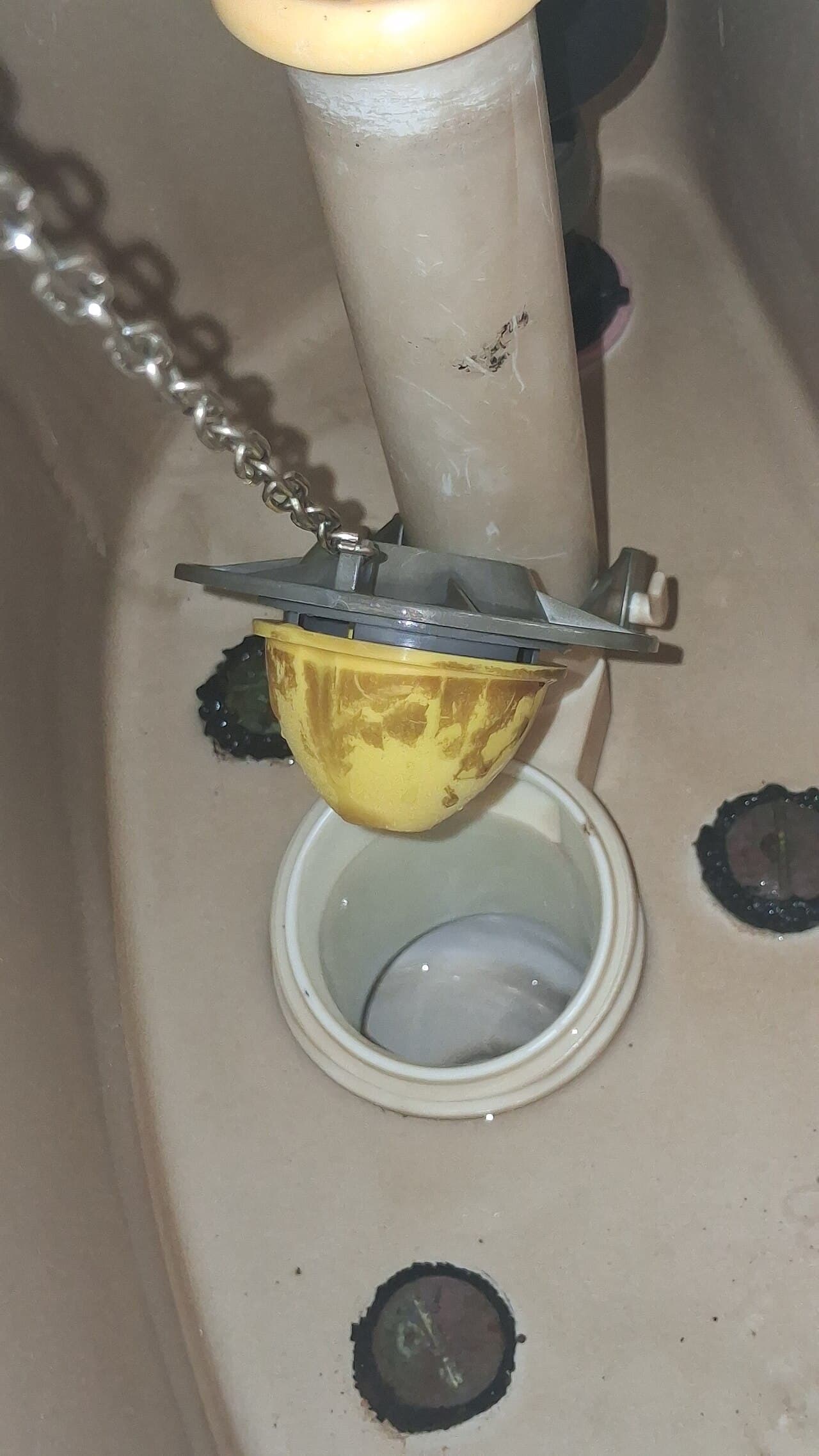
Why the toilet turns itself back on
The fill valve is controlled by a float. Korky explains that as the water level inside the tank drops, the fill valve float also drops and turns the water back on.[3] So the valve you hear is usually innocent: "Since you can hear your fill valve working, it is easy to assume that it is the main issue when your fill valve is doing its job of bringing water into the tank."[2] The question is where the water is going.
The usual causes, most likely first
A worn or warped flapper
Loudoun Water's description of the commonest toilet leak: "The flapper is worn or warped, preventing a tight seal."[8] Korky notes that well water, hard water, treated municipal water, and in-tank cleaning tablets can cause the rubber flapper to deteriorate and stop sealing properly.[4] A flapper that feels stiff, swollen or cracked is usually past its best. EPA warns: "An old or worn flapper can cause your toilet to flush on its own or silently leak thousands of gallons a year."[11]
A chain that is too tight or too loose
Korky recommends only leaving 1 to 2 chain links in slack, so that loose chain links do not fall into the flush valve drain opening, which prevents the flapper from sealing. Too little slack has the opposite effect: a chain under too much tension holds the flapper open.[3] It is worth checking when a brand-new flapper still leaks.
A dirty or damaged flush valve seat
The flapper seals against the rim of the flush valve at the bottom of the tank. Korky's advice: "If mineral deposits are present, clean the drain opening so the flapper can seal." And: "If you notice cracks, warping, or other damage, the flush valve will need to be replaced."[3]
The refill tube is pushed into the overflow pipe
The small tube from the fill valve should clip to the top of the overflow pipe. Fluidmaster's fix: "If refill tube is inserted too far into the overflow pipe, pull it out and reattach to outside of overflow pipe."[1] Korky's instructions for its own fill valves have the refill tube attached to the overflow tube with the included metal clip, though some Kohler flush valves need the tube pressed into the top, so follow your valve's instructions.[5]
The wrong flapper or seal
Flapper valves come in two sizes, standard two-inch and large three-inch,[6] and some toilets use a tall tower instead of a hinged flapper. Korky notes: "Tower or canister flush valves with seals require a replacement seal designed for that specific model."[3]
A leak outside the tank
If the bowl stays clear in a dye test, look outside. Fluidmaster notes: "Water visible at the rear of the toilet is most likely coming from the bottom of the fill valve, the water supply line or the seals between the tank and the bowl (in 2-piece toilets)."[1]
Pin it down with two tests
Dye test. Lynchburg's water conservation page says: "Add some food coloring into the toilet tank and wait 15 to 30 minutes." Then look in the toilet bowl, not the tank.[9] Prince William Water suggests a longer wait of 3 hours: "If you see colored water in the commode or the water in the tank is now clear, this is an indication that you have a toilet leak."[10] Flush when you are done so the dye does not stain.
Water-level test. This one tells you which part has failed. Mark the water line, then turn off the water supply valve and wait for at least 25 minutes, Korky says, and longer if you can.[3] Where the level ends up is the answer:
- "If the water level drops to the flapper or flush seal, you need to replace the toilet flapper or flush valve seal."[3]
- "If the water level drops to a point on your overflow tube or the bottom of the tank, you need to replace your flush valve."[3]
If the level does not move at all with the supply off, the tank is holding water, and the cause is more likely the fill valve, which may be set too high or failing to shut off. See how to fix a running toilet for setting the water level and replacing the fill valve.
Stop and call a pro if
- The level drops to the overflow tube or the floor of the tank, which means a new flush valve, and the tank has to come off the bowl.
- Water is collecting behind or under the toilet and tightening the supply nut by hand does not stop it.
- The shut-off valve will not close, or leaks once you turn it.
- The tank or bowl is cracked.
- The toilet still cycles after a new flapper, correct chain slack and a clean seat.
When to call a plumber for a running toilet covers what to look for in a plumber, and what the repair costs in Virginia covers price. To stop it coming back, see how often toilet parts should be replaced. More plumbing repair answers are in the browse page, and plumbers in Blacksburg are in the directory.
If it keeps cycling, describe the running toilet once and licensed local plumbers quote the repair.
Common questions
- What is ghost flushing?
- It is the name for a toilet that refills, or seems to flush, when nobody has used it. Water seeps from the tank into the bowl, the float drops, and the fill valve switches on to top the tank back up. Korky says it signals a leaking flapper.
- Is it the fill valve if I hear it turning on?
- Usually not. The fill valve is doing its job by replacing water that has leaked out. If the water stops at the right level and only comes back on later, look at the flapper, chain and flush valve seat first. A fill valve fault shows as water spilling into the overflow tube.
- I put in a new flapper and it still runs. Why?
- Check that the flapper is the right size for the opening, that the chain has one or two links of slack, that the flush valve rim is clean and uncracked, and that the refill tube is clipped outside the overflow pipe. If the level still drops to the overflow tube or tank floor, the flush valve needs replacing.
- How long should I leave dye in the tank?
- Virginia utilities give different waits: Lynchburg says 15 to 30 minutes, and Prince William Water says to let it sit for 3 hours. A longer wait catches slower leaks. Flush afterward so the dye does not stain the tank.
- Does it waste much water?
- It can. EPA warns that an old or worn flapper can silently leak thousands of gallons a year, and Loudoun Water says toilet leaks range from less than a gallon an hour to several gallons an hour.
Sources
- [1] Fix Toilet Ghost Flushing & Refill Sounds, Fluidmaster. Checked October 26, 2026.
- [2] How to Fix Toilet Flushing on its Own, Korky (Lavelle Industries). Checked October 26, 2026.
- [3] How to Fix a Running Toilet, Korky (Lavelle Industries). Checked October 26, 2026.
- [4] How to Replace a Toilet Flapper, Korky (Lavelle Industries). Checked October 26, 2026.
- [5] How to Replace Toilet Fill Valve, Korky (Lavelle Industries). Checked October 26, 2026.
- [6] What Size Flapper Do I Need?, Korky (Lavelle Industries). Checked October 26, 2026.
- [7] High Usage and Leaks, Chesterfield County, Virginia, Department of Utilities. Checked October 26, 2026.
- [8] Check For Leaks, Loudoun Water. Checked October 26, 2026.
- [9] Water Conservation, City of Lynchburg, Virginia. Checked October 26, 2026.
- [10] Leak, Prince William Water. Checked October 26, 2026.
- [11] Fix a Leak Week, U.S. Environmental Protection Agency, WaterSense. Checked October 26, 2026.
Want a pro to handle it?
Describe the job once. Licensed local businesses send quotes, and you pay only when you book one.
Get a quote for Plumbing Repair