How often should toilet parts be replaced?
There is no fixed schedule, but as a guide, EPA says to replace the flapper at least every five years, Korky puts fill valves at 5 to 7 years, and Fluidmaster suggests a new supply line once the old one is over 5 years old. Hard or sandy water and in-tank cleaning tablets shorten that. A yearly dye test tells you when.
Free to ask. Local shops send quotes, and you pay only when you book one.
By Kasra Taheri, Founder, LoclisPublished
Researched and drafted with AI, then checked claim by claim against the sources listed below before it was published. Prices and rules change; the dates beside each source say when it was last checked.
Step by step
Read when to stop and call a pro, further down this page, before you start.
Step 1: Run a dye test
Once a year, put a few drops of food coloring in the tank without flushing; color in the bowl after 10 minutes means the flapper needs replacing.[1]
Step 2: Watch a refill
Flush and check that the water stops below the top of the overflow tube rather than spilling into it.[5]
Step 3: Check the chain
Make sure the flapper chain has one or two links of slack, not tight and not coiled on the flapper.[4]
Step 4: Feel the flapper
With the water off and the tank drained, check whether the flapper is stiff, swollen or warped, which stops it sealing.[11]
Step 5: Snug the handle nut
If the handle feels loose, tighten the nut inside the tank so it is tight but still moves freely.[11]
Step 6: Inspect the supply line
Look for drips at both ends of the hose under the tank, and plan to replace a line that is over 5 years old.[9]
Step 7: Look under the tank
Check the tank bolts and the joint between tank and bowl for drips, a sign the tank-to-bowl gasket is wearing out.[8]
Step 8: Drop the bleach tablets
Clean the bowl from the bowl side instead of using in-tank drop-in cleaners that contain bleach or chlorine.[10]
Toilet parts do not come with a fixed service schedule, because how long they last depends on your water and how the toilet is used. The makers and EPA do give useful guides, and the flapper is the one to watch: Korky notes that normally toilet flappers are the first part to wear out.[7] EPA's WaterSense program says the flapper should be checked periodically and replaced at least every five years to ensure a good seal and avoid leaks.[1]
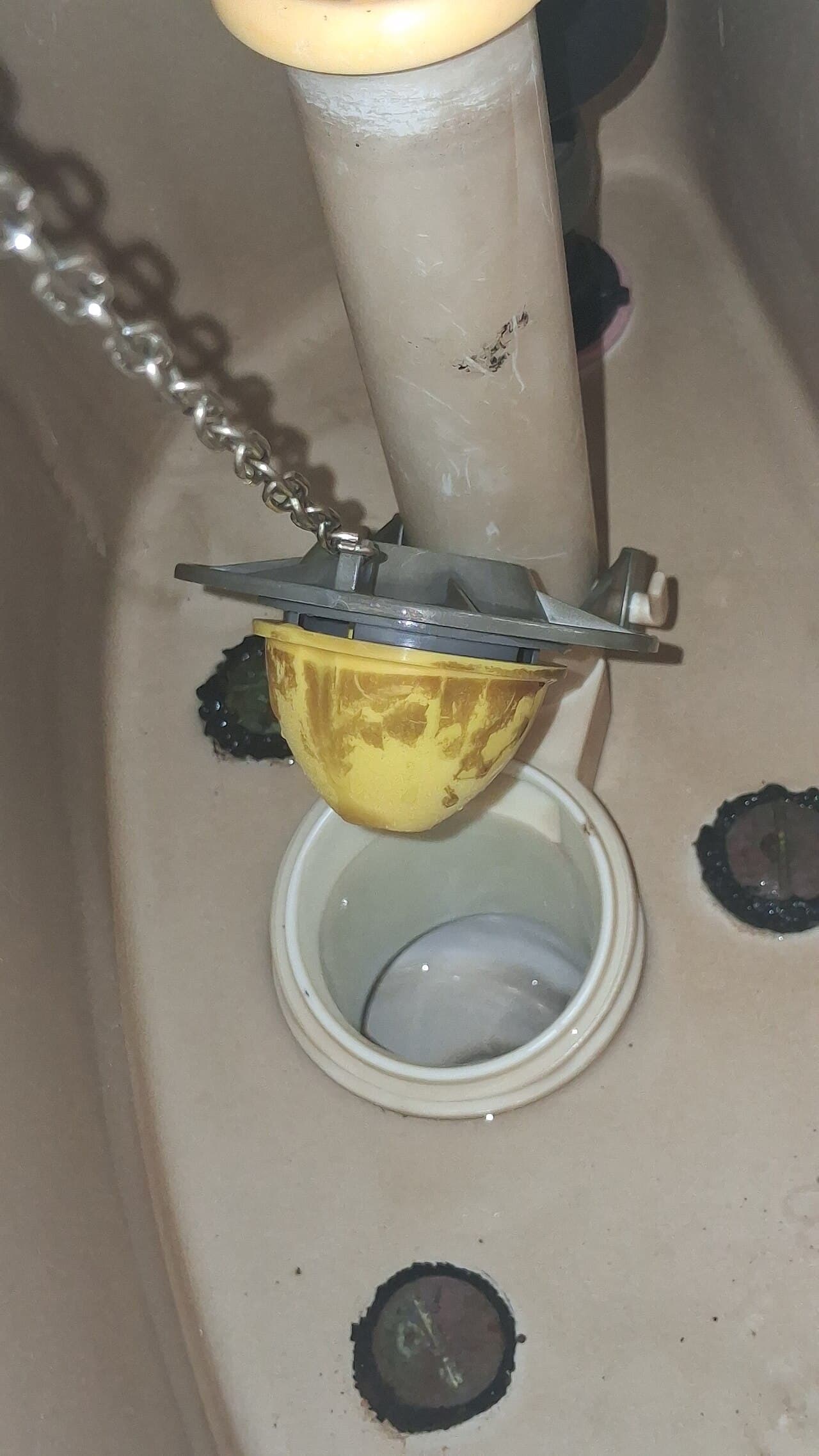
Typical lifespans, part by part
| Part | Guide | Signs it is due |
|---|---|---|
| Flapper | At least every five years (EPA)[1] | Dye shows in the bowl; the toilet refills on its own |
| Fill valve | 5-7 years (Korky)[5] | Slow or noisy refill; water spills into the overflow tube |
| Tower or canister seal | Every few years (Korky)[6] | Running, weak or hard flush on a tower-style toilet |
| Supply line | Over 5 years old (Fluidmaster)[9] | Drips at either end, bulging or kinking |
| Tank-to-bowl gasket | When it leaks | Water at the tank bolts or under the tank |
| Flush valve | When it cracks | Water level drops to the overflow tube or the tank floor |
Flapper. EPA's five-year guide is the conservative end. Korky's own guide says: "Replacing a flapper is a normal home maintenance that needs to be done every five to ten years."[2] Warranties give a hint too: "Most Korky flappers have a 5-year warranty," and two of its long-life flappers are backed by 10-year warranties.[3]
Fill valve. Korky notes: "Fill valves typically have a lifespan of 5-7 years, depending on the type of water you have." It adds: "Some water sources carry sediment that can build up internally, causing poor performance."[5]
Tower or canister seal. Some toilets, including certain Kohler, American Standard and Mansfield models, use a round seal under a tall canister instead of a hinged flapper. Korky says of these seals: "Replacing the seal is simple and usually only needed every few years."[6] For Kohler canister valves it sells a longer-life seal so owners can avoid replacing the seal every 5 years,[6] which gives a sense of how long a standard one lasts.
Supply line. The braided or plastic hose under the tank holds full water pressure all the time. Fluidmaster's advice: "It is always a good idea to replace the water supply line if it's older than 5 years."[9] Write the date on a tag when you fit a new one.
Tank-to-bowl gasket and flush valve. These are replaced when they fail rather than on a schedule. "Over time, the weight of the toilet tank and water can compress and wear down the tank-to-bowl gasket."[8] The flush valve rarely gives out: "In less common cases, your flush valve can develop cracks."[7] Both jobs mean taking the tank off the bowl, so when one is due, Korky suggests replacing the fill valve and flush valve at the same time.[7]
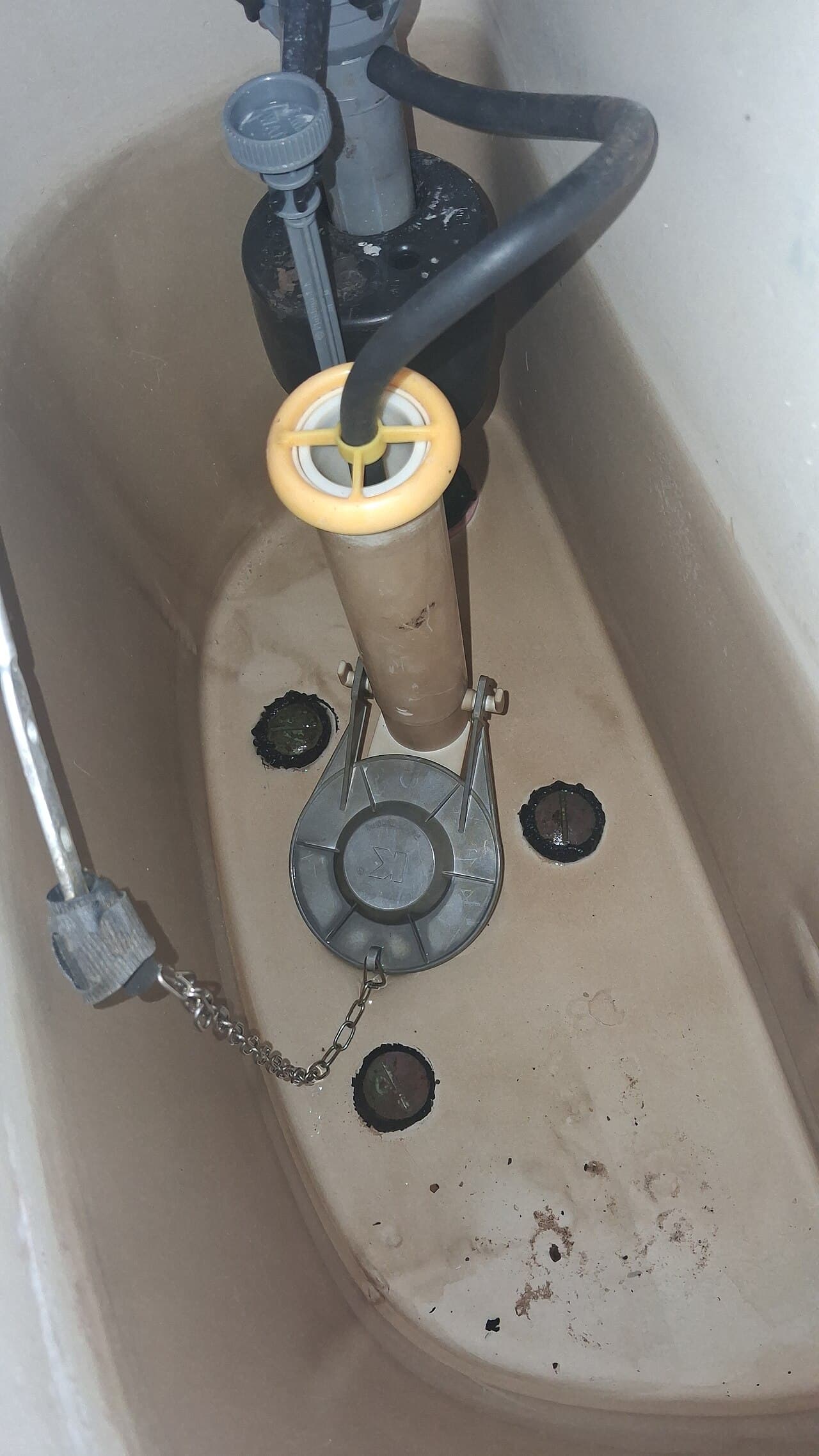
What wears parts out faster
Water is the main factor. Korky's FAQ says: "The life of your flapper depends on a few external factors, such as what kind of water you use or if you use chemical tablets to clean your toilet tank."[3] Elsewhere it notes that well water, hard water, treated municipal water, and in-tank cleaning tablets can cause the rubber flapper to deteriorate and stop sealing properly.[4]
The tablets are the easy one to change. Fluidmaster prints this warning on its repair pages: "DO NOT USE IN-TANK DROP-IN TOILET BOWL CLEANERS CONTAINING BLEACH OR CHLORINE. USE OF SUCH PRODUCTS WILL RESULT IN DAMAGE TO TANK COMPONENTS AND MAY CAUSE FLOODING AND PROPERTY DAMAGE."[10] Clean the bowl from the bowl side instead.
A yearly check instead of a calendar
Loudoun Water's advice is short: "Flappers do not last forever so check on them periodically."[11] A once-a-year look takes a few minutes and catches most failures early. A good time is EPA's annual Fix a Leak Week, held in March,[1] alongside a whole-house leak check.
The dye test is the heart of it: drop food coloring in the tank, do not flush, and EPA says if any color shows up in the bowl after 10 minutes, you have a leak.[1] Then watch one refill, check the chain, and look under the tank for drips.
When a part is due, buy the right one. EPA's tip: "Bring the old flapper (or a picture of it) to the hardware store to make sure you buy a new flapper that fits your toilet model."[1] How to fix a running toilet covers fitting a flapper and setting the fill valve.
Stop and call a pro if
- The tank-to-bowl gasket or flush valve needs replacing and you are not comfortable lifting the tank off and rebolting it evenly.
- The shut-off valve is seized or leaks when you turn it.
- The tank or bowl is cracked.
- The toilet still runs after new parts; see why a toilet runs on its own every few minutes.
For prices, see what fixing a running toilet costs in Virginia, or browse more plumbing repair answers and plumbers in Blacksburg.
If a part has failed and you would rather not fit it, describe the toilet repair once and licensed local plumbers quote it.
Common questions
- Should I replace toilet parts before they fail?
- For the flapper, a check is better than a calendar: a yearly dye test shows when it has started to leak. A supply line is different, because it is under water pressure all the time, so Fluidmaster's advice is to replace one that is over 5 years old.
- Should I replace the flapper and fill valve together?
- It is often sensible on an older toilet, since both wear and the tank is already drained. If the flush valve itself has to be replaced, which means taking the tank off the bowl, Korky suggests doing the fill valve at the same time.
- Do in-tank cleaning tablets damage toilet parts?
- They can. Korky lists in-tank cleaning tablets among the things that make flappers deteriorate, and Fluidmaster warns that drop-in cleaners containing bleach or chlorine damage tank parts and can cause flooding.
- How long does a whole toilet last?
- The china itself does not wear out the way the rubber and plastic parts inside the tank do. Replace the toilet when the tank or bowl cracks, parts become hard to find, or you want to cut water use.
- What part usually fails first?
- The flapper. Korky says normally toilet flappers are the first part to wear out, which is why the yearly dye test focuses on it.
Sources
- [1] Fix a Leak Week, U.S. Environmental Protection Agency, WaterSense. Checked October 26, 2026.
- [2] Toilet Troubleshooting Guide, Korky (Lavelle Industries). Checked October 26, 2026.
- [3] Frequently Asked Questions, Korky (Lavelle Industries). Checked October 26, 2026.
- [4] How to Replace a Toilet Flapper, Korky (Lavelle Industries). Checked October 26, 2026.
- [5] How to Replace Toilet Fill Valve, Korky (Lavelle Industries). Checked October 26, 2026.
- [6] What Flush Valve Seal Do I Need?, Korky (Lavelle Industries). Checked October 26, 2026.
- [7] How to Install a Flush Valve, Korky (Lavelle Industries). Checked October 26, 2026.
- [8] How to Fix Leak Between Toilet Tank and Bowl, Korky (Lavelle Industries). Checked October 26, 2026.
- [9] Fix Toilet Ghost Flushing & Refill Sounds, Fluidmaster. Checked October 26, 2026.
- [10] How to Fix a Toilet That is Constantly Running, Fluidmaster. Checked October 26, 2026.
- [11] Check For Leaks, Loudoun Water. Checked October 26, 2026.
Want a pro to handle it?
Describe the job once. Licensed local businesses send quotes, and you pay only when you book one.
Get a quote for Plumbing Repair