Why is my pool filter pressure so high?
Most often the filter is simply dirty. Compare the gauge with the clean pressure you noted at start-up: Hayward says to backwash a sand filter at 6-8 PSI above it, and Pentair says to clean a cartridge filter at about 10 psi above it. If the filter is clean and pressure is still high, check for a closed valve or blocked return line.
Free to ask. Local shops send quotes, and you pay only when you book one.
By Kasra Taheri, Founder, LoclisPublished
Researched and drafted with AI, then checked claim by claim against the sources listed below before it was published. Prices and rules change; the dates beside each source say when it was last checked.
Step by step
Read when to stop and call a pro, further down this page, before you start.
Step 1: Find your clean pressure
Look for the clean starting pressure written on a label on the filter or in the manual. If nobody recorded it, the first reading after a fresh backwash or cleaning becomes your baseline.[1]
Step 3: Check that the gauge is honest
With the pump off and pressure relieved, the gauge should read zero, and with the pump running it should show pressure.[2] Replace a gauge that sticks or is cracked.
Step 4: Check every valve
With the pump off, confirm the suction and return valves are fully open and the multiport valve sits squarely in Filter.[1]
Step 5: Backwash or clean the filter
Backwash a sand filter the way your manual describes. On a cartridge filter, shut off the pump, relieve pressure at the air relief valve, and hose each cartridge from top to bottom, between the pleats.[2]
Step 6: Recheck the reading
Start the pump with the air relief valve open until water flows, then compare the gauge with your clean pressure.
Step 7: Test and clear the pool side
If pressure is still high, look for a blocked return fitting, a closed return line, or a clogged inline heater or chlorinator in the return path.
Start with the clean pressure
A high reading usually means the filter is full of dirt. The gauge only means something against a baseline, so find the pressure the filter showed when it was clean. Hayward's sand filter manual says to note the gauge reading when the filter is clean and to backwash when it reads 6-8 PSI (0.41-0.55 BAR) higher than that.[1] That clean number varies from pool to pool with the pump and the piping, so a reading that is normal on one system can be alarming on another.
Pentair tells owners of its Clean & Clear Plus cartridge filter to record an "Original Starting Pressure" at first start-up and to clean the filter when the reading is approximately 10 psi higher, or when a significant reduction in flow is noticed.[2] The pressure reading rises as dirt is filtered from the pool, and how fast varies with bathing load, temperature and environmental conditions.[2]
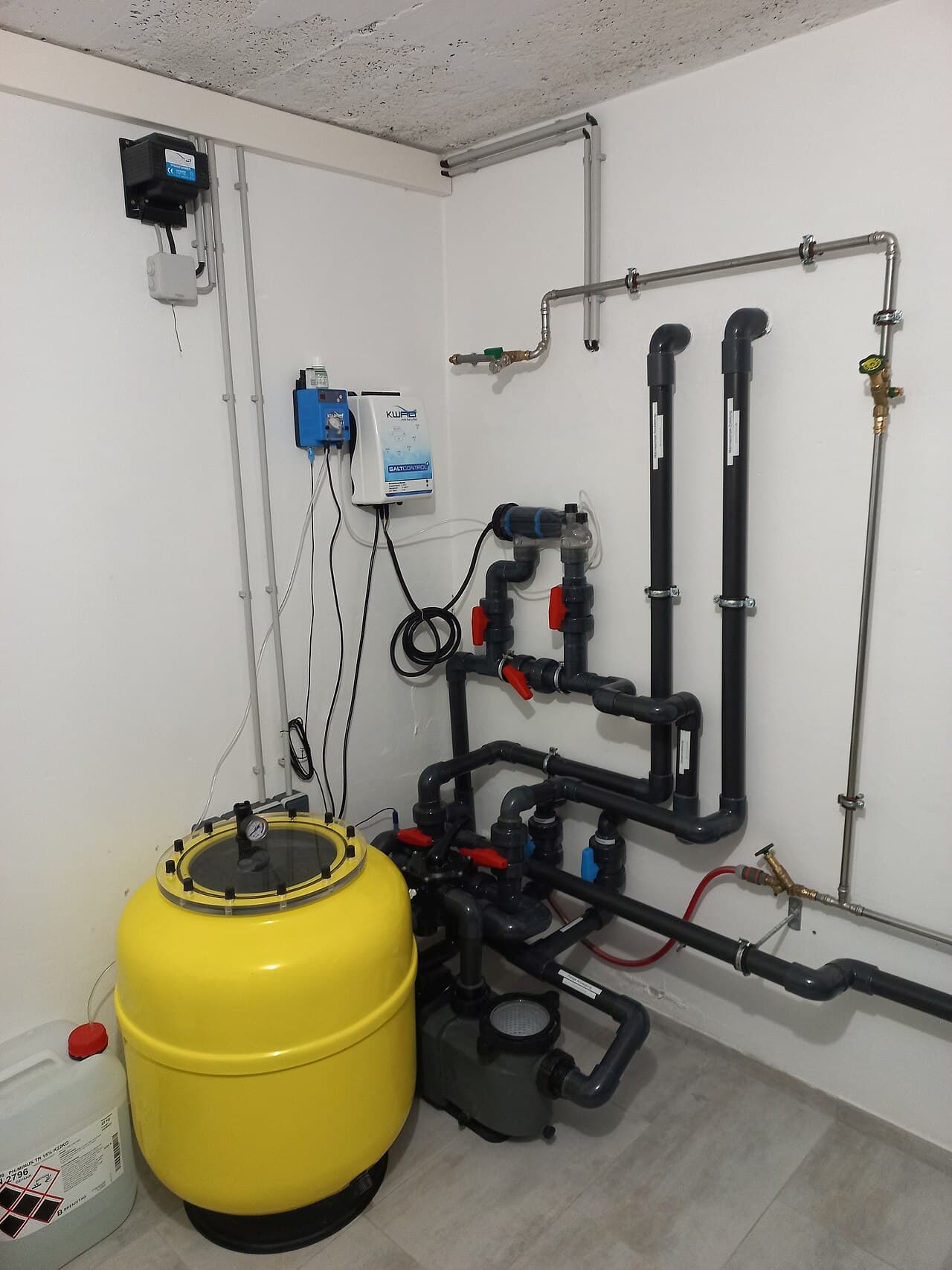
If your filter is above that line, it is due for backwashing or cleaning. Follow how to backwash a sand filter for a sand or media filter.
Why it climbs faster than usual
Some pools load the filter faster than others, and a few causes are worth ruling out before you blame the equipment.
- A new or freshly cleaned pool. During initial clean-up of the pool water it may be necessary to backwash frequently,[1] and Pentair notes that plaster dust can be responsible for short filter cycles, requiring frequent cleaning.[2]
- Algae and unbalanced water. Insufficient chlorine or an out of balance pH level will permit algae and bacteria to grow in your pool and make it difficult for your filter to properly clean the pool water.[1] A filter that clogs fast is often fighting the water, not failing.
- Heavy use and heat. Summer swimmer loads, sunscreen and warm water all load the filter faster.
When the filter is clean and pressure is still high
If pressure stays high right after a good backwash or cleaning, the cause is more likely a restriction after the filter or a bad reading than dirt.
A closed or partly closed valve. All suction and discharge valves must be open when starting the system.[1] A return valve, a diverter to a spa or water feature, or a multiport valve not fully seated in Filter can all squeeze flow and push the gauge up.
A blocked return path. Leaves or debris in a return fitting, or a clogged heater or chlorinator downstream of the filter, restrict flow in the same way.
A faulty gauge. The gauge should read zero (0) psi after pressure is relieved, indicate pressure while the system is operating, and be readable and undamaged.[2] A gauge stuck above zero with the pump off is giving you false numbers.
Packed or hardened sand. The Virginia Department of Health's pool guide says mudballs are caused by insufficient flow rates or time of backwashing, and that both mudballs and calcification in hard water areas are corrected by chemical treatment or replacement of the filter sand.[3] If you backwash correctly and pressure bounces back within days, suspect the sand.
High pressure is not the same as low pressure. If the gauge drops instead, the skimmer basket and pump basket are the first thing to check, then the pump.[2]
Work on the filter safely
Pool and spa water circulation systems operate under hazardous pressure during start up, normal operation and after pump shut off.[1] Before opening anything, shut off the pump and relieve pressure by opening the manual air relief valve, and keep it open after service until water comes out.[2]
To clean a cartridge, remove each cartridge and, using a garden hose with a straight flow nozzle, hold the nozzle at a 45-degree angle and wash the whole cartridge from top to bottom, paying special attention to the area between pleats.[2] Never loosen a clamp or lid while the system is pressurised.
Stop and call a pro if
- The gauge stays high after a backwash or cartridge cleaning and every valve is open. That points to packed sand, a blocked line or a failing gauge.
- The pressure climbs back within days. Sand that has clumped or calcified needs chemical treatment or replacement, as the VDH guide says.[3]
- The tank, clamp, lid or valve leaks, or you hear the pump struggling. Shut the system off and do not run it.
- The heater, chlorinator or controls are involved. Leave wiring and gas work to licensed trades. Virginia requires a contractor licence for work valued at $1,000 or more.[4]
Getting help in Virginia
Once pressure is back to normal, read how pool equipment repair answers fit together, and if you are topping up water often, try how to do a bucket test for a pool leak. To compare local companies, see pool and spa services, where each listing shows its licence details.
When you want someone to look at the filter, describe the problem once and local pros reply with quotes.
Common questions
- What pressure is too high for a pool filter?
- There is no single number, because every pool has its own clean pressure. Compare the gauge with the reading you noted when the filter was clean. Hayward's sand filter manual says to backwash at 6-8 PSI above that, and Pentair's cartridge filter guide says to clean at about 10 psi above it.
- My pressure is high right after backwashing. What does that mean?
- It points away from a dirty filter. Check that every suction and discharge valve is open, that the multiport valve is fully seated in Filter, and that the gauge returns to zero with the pump off. If all that checks out, the sand may be clumped into mudballs or hardened by calcium, which a pro can confirm.
- Can high filter pressure damage the pump or filter?
- It can shorten equipment life and cut flow, and the system always runs under pressure. Pentair says the maximum working pressure of its Clean & Clear Plus filter is 50 psi and that higher pressure can damage it, so there is no reason to run a filter that is already at its cleaning point.
- Why does pressure rise faster in summer?
- Heavy swimmer loads, warm water and algae all load the filter faster. Pentair notes the rise varies with bathing load, temperature and environmental conditions. Keeping chlorine and pH in range slows it, because Hayward says poor balance lets algae and bacteria grow and makes the filter's job harder.
- Does low pressure mean the same problem?
- No. Low pressure with weak flow usually means something is starving the pump. Pentair says that if pressure drops on the gauge, check the skimmer basket and pump basket first for debris, and if the baskets are clean, the pump is the likely cause.
Sources
- [1] S200 Series Owner's Manual, High Rate Sand Filter (IS200 Rev C), Hayward Industries (manufacturer's manual). Checked October 28, 2026.
- [2] Clean & Clear Plus Cartridge Filter Installation and User's Guide, Pentair (manufacturer's manual). Checked October 28, 2026.
- [3] Pool Operation and Maintenance Guide (Portsmouth Health Department, 2018), Virginia Department of Health. Checked October 28, 2026.
- [4] What You Should Know Before You Hire a Contractor, Virginia Board for Contractors, DPOR. Checked October 28, 2026.
Want a pro to handle it?
Describe the job once. Licensed local businesses send quotes, and you pay only when you book one.
Get a quote for Pool Equipment