How do I do a bucket test for a pool leak?
Pick a day without rain or heavy wind, shut off the pump, cleaner and automatic fill, and set a bucket of pool water on a step so the water inside is a little higher than the pool. Mark both levels, wait 24 hours and compare. If the pool dropped more than the bucket, it may have a leak.
Free to ask. Local shops send quotes, and you pay only when you book one.
By Kasra Taheri, Founder, LoclisPublished
Researched and drafted with AI, then checked claim by claim against the sources listed below before it was published. Prices and rules change; the dates beside each source say when it was last checked.
Step by step
Read when to stop and call a pro, further down this page, before you start.
Step 1: Choose a calm day
Pick a day without rain or heavy winds, because rain adds water and wind speeds evaporation.[1]
Step 2: Shut down the pool systems
Turn off the filtration system, pool cleaner and automatic fill, and leave the pool closed for 24 hours.[1]
Step 3: Fill the bucket
Fill a 2.5- to 5-gallon bucket with pool water to about 1 inch from the top.[1]
Step 4: Set it on a step
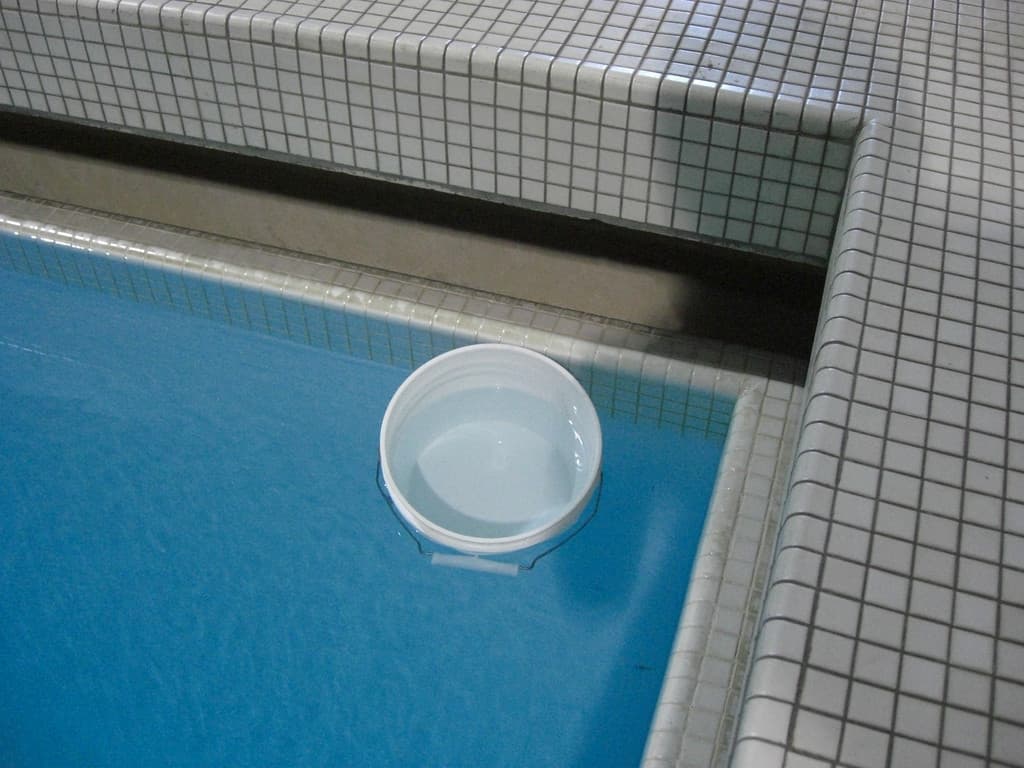
Set the bucket on a pool step or bench so at least two-thirds of it is submerged and the water inside is a little higher than the pool level.[1]
Step 5: Mark both water levels
Mark the bucket's water level with a marker or tape, or measure down from the rim. Do the same for the pool level, on the outside of the bucket.[1]
Step 6: Wait 24 hours
Leave everything alone for a full day, with nobody swimming and no one topping up the pool.[1]
Step 7: Compare the drops
Measure both levels again. If the pool lost more water than the bucket, the pool may have a leak.[1]
Step 8: Repeat with the pump running
Run the test a second time with the pump on. If the pool loses more water only while the pump runs, tell your pool professional, because that points to the pressure side of the plumbing.
Set a bucket of pool water on a step, mark the water level inside and outside it, and wait 24 hours. If the pool dropped more than the bucket, the pool may have a leak. If both dropped the same amount, the loss is probably evaporation. The test costs nothing, and the numbers give any pool professional you call a place to start.
What you need
A 2.5- to 5-gallon bucket, a permanent marker or a strip of tape, and a ruler or tape measure. Wait for a day with no rain and little wind, and tell everyone in the house the pool is closed for 24 hours.
How to run the test
The EPA's version is the one to follow. On a day without rain or heavy winds, shut down all pool systems (filtration systems, pool cleaners, automatic fills, etc.), and close the pool for 24 hours.[1] The automatic fill matters most. A fill valve that tops the pool up will hide exactly the loss you are trying to measure.
Fill the bucket with pool water, not tap water, to about 1 inch from the top.[1] Water from the pool is already at the pool's temperature, which keeps the comparison fair. Then set it on a step or bench so that at least two-thirds of the bucket is submerged in the pool, and the bucket water level is a little higher than the pool level.[1]
Mark the water level inside the bucket with a marker or tape, or measure down from the rim. Then mark the pool level the same way, on the outside of the bucket where the pool water touches it.[1] Write both measurements down.
After 24 hours, read both again. If pool water loss is greater than bucket water loss, the pool may have a leak.[1]
Reading the result
- Pool dropped more than the bucket. Suspect a leak. Note how much extra, and see the next section.
- Both dropped about the same. That is evaporation. Covering the pool when it is not in use cuts it; the EPA says a pool cover can prevent up to 95 percent of pool water evaporation.[2]
- The bucket dropped more than the pool. Something probably disturbed the test, such as splashing. Repeat it.
For a rough check without a bucket, the EPA says that if your pool is losing more than 2 inches of water per week, or 3 inches in hot, dry areas with high evaporation rates, then it is likely you have a leak.[1] For scale, the City of Tampa's water department says it takes about 600 gallons to fill up an average pool by 2 inches.[3]
Look while you wait
While the test runs, walk the equipment pad and the pool edge. The EPA says leaks can be found in the pool liner, the pump seal, pool piping, the pool-to-pipe connection, pool edges, and in pipe joints.[1] It adds that wet spots around the pool, or air bubbles in the water return pipeline or in the pump strainer can also be signs of leakage.[1] Photograph anything you find.
Test again on a schedule
If your pool has an automatic refill, the EPA says that once every three months, the automatic fill should be shut off for 24 hours to test for leaks.[1] Repeating the test on a schedule is cheap insurance.
Stop and call a pro if
- The pool lost more than the bucket. A pool leak is a job for a pool professional. A repair that costs $1,000 or more needs a licensed contractor: the Board for Contractors says that if the work you are considering is valued at $1,000 or more, a valid Virginia Contractor's License is required for the license category in which the contractor is to work.[4]
- Water is pooling near the pump, filter or heater, or the equipment pad is soaked. Stay clear of the equipment and do not touch it with wet hands or while standing in water. Have a licensed electrician or pool professional look at it.
- You see cracks, a bulging wall or soil sinking beside the pool. That can be structural. Stop using the pool and get it inspected.
- The loss continues after a repair. Take your before and after readings back to the contractor.
Getting help in Virginia
Once the test says leak, read how to find a leak in your pool for the next checks and who to call to fix a leaking pool. For what the work is likely to cost, see how much pool leak detection costs in Virginia. Loclis lists DPOR-licensed businesses: browse pool equipment repair or see more pool equipment repair answers.
When you are ready, describe the leak and licensed local pros can quote it.
Common questions
- Why does the bucket go inside the pool?
- So the bucket water and the pool water sit in the same sun, wind and temperature. Both lose water to evaporation at about the same rate, which means any extra drop in the pool is water going somewhere else. The EPA's test sets the bucket so at least two-thirds of it is submerged.
- How much water loss means a leak?
- The test itself is a comparison: if pool water loss is greater than bucket water loss, the pool may have a leak. As a rule of thumb, the EPA says a pool losing more than 2 inches of water per week, or 3 inches in hot, dry areas with high evaporation rates, likely has one.
- What if the pool and the bucket drop the same amount?
- Then the loss is most likely evaporation, and the pool is probably not leaking. A pool cover helps with that: the EPA says a cover can prevent up to 95 percent of pool water evaporation.
- Can I leave the automatic fill on during the test?
- No. A running fill valve tops up the pool and hides the loss. If you have an automatic refill, the EPA suggests shutting it off for 24 hours once every three months to test for leaks.
- Does the bucket test tell me where the leak is?
- No. It only tells you whether the pool is losing more than evaporation explains. Finding the spot, whether the liner, the pump seal, the piping or a fitting, is a separate job for a pool professional.
Sources
- [1] Jump Into Pool Water Efficiency (EPA-832-F-22-015, September 2022), U.S. Environmental Protection Agency, WaterSense. Checked October 27, 2026.
- [2] Pool Water Efficiency, U.S. Environmental Protection Agency, WaterSense. Checked October 27, 2026.
- [3] How to Check for Leaks, City of Tampa Water Department. Checked October 27, 2026.
- [4] What You Should Know Before You Hire a Contractor, Virginia Board for Contractors, DPOR. Checked October 27, 2026.
Want a pro to handle it?
Describe the job once. Licensed local businesses send quotes, and you pay only when you book one.
Get a quote for Pool Equipment