Why is my skylight leaking?
Most skylight leaks come from the flashing, underlayment or seal around the unit failing, not from the glass. Age, debris that blocks water flow, and a poor installation are common causes. Some drips are really condensation. Put a bucket under it and dry the area, then have a licensed roofer find the true entry point.
Free to ask. Local shops send quotes, and you pay only when you book one.
By Kasra Taheri, Founder, LoclisPublished
Researched and drafted with AI, then checked claim by claim against the sources listed below before it was published. Prices and rules change; the dates beside each source say when it was last checked.
This is a job for a licensed pro in Virginia
This page explains what the work involves, the permits, what a licensed pro does and what drives the cost. It does not give step-by-step instructions, because this work needs a licence, a permit or both, and doing it wrong can injure someone. Before you hire, check the licence on Virginia's DPOR record.
A skylight leaks because water finds a way past the flashing, underlayment or seal around it, and only occasionally because of the glass itself. Age, blocked drainage, bad installation and plain condensation account for most cases. Catch the drip, dry the area, and have a licensed roofer find the true entry point before anyone repairs anything.
The most common causes
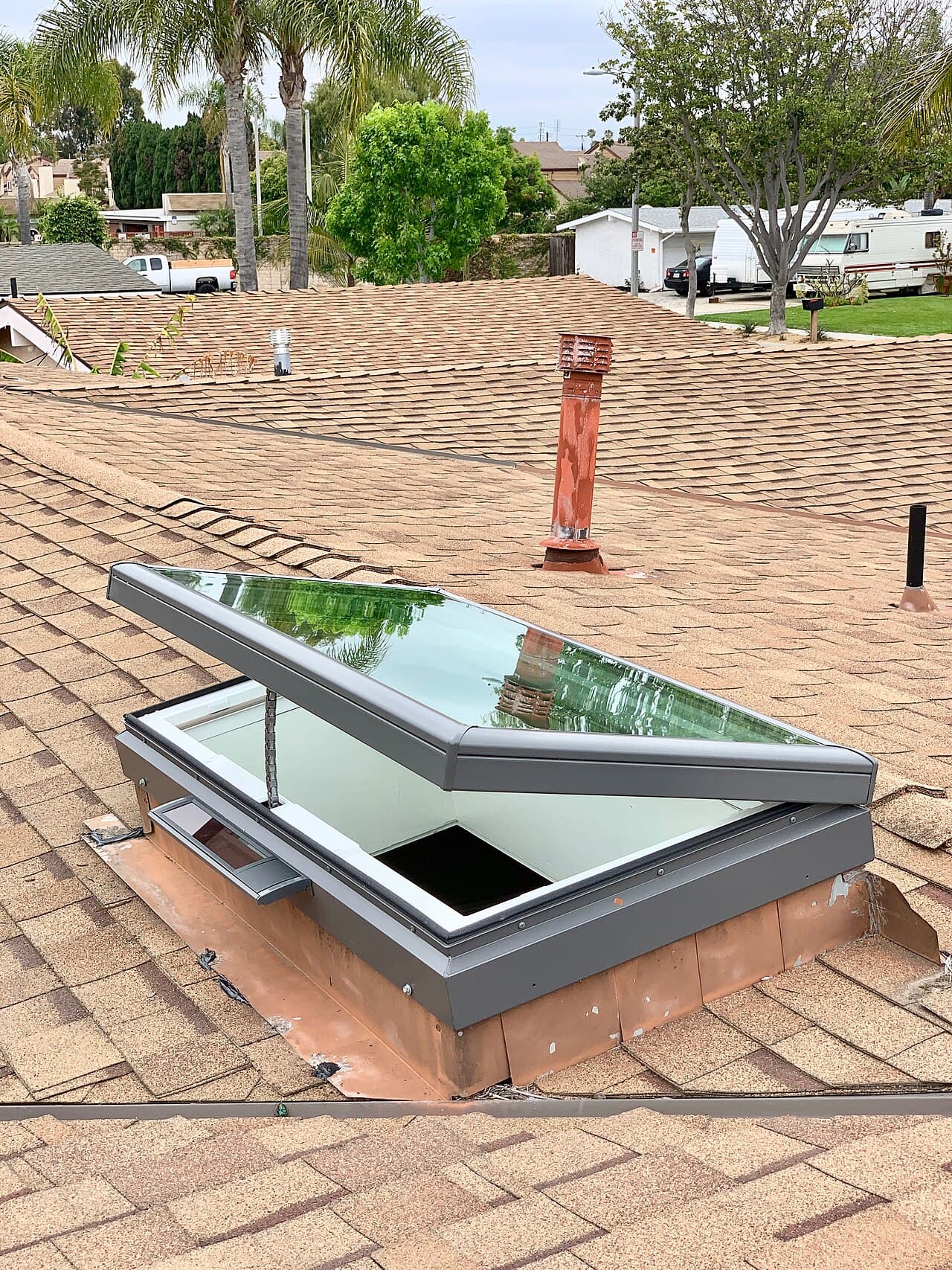
Failed or poorly installed flashing. A skylight is shingled in with layers that carry water over and around it. Once the skylight is mounted, a flashing system is installed to protect the skylight from weather and water leaks.[1] VELUX describes its deck-mounted and curb-mounted flashing systems as adhesive underlayment and engineered flashing.[1] If a layer was lapped the wrong way, left out, or has lifted or corroded, rain gets underneath it. The upper corners of the unit, where water collects, are a typical weak spot.
Old sealant and worn seals. Many older installations lean on sealant or roofing cement at the joints. VELUX describes its flashing systems as designed to shed water without relying on sealants that can break down over time.[1] When sealant dries, cracks or pulls away, the joint it was covering is exposed. Gaskets around the sash on an opening skylight wear out the same way.
Age of the unit. VELUX says average skylights last 20 to 30 years.[2] A skylight past that range often has tired seals, brittle flashing and a roof around it that has been patched more than once.
Debris around the curb. Leaves, pine needles and grit pile up against the upslope side of a skylight and hold water there. VELUX advises cleaning around skylights where the flashing is installed so rainwater keeps flowing freely around them, for example by using a leaf blower to clear away leaves or other debris.[2] Water that sits is much more likely to find a gap.
Damaged shingles or roofing nearby. Lifted shingles, exposed nails or a failing roof upslope can send water down toward the skylight and make it look like the skylight is the problem.
Installation errors. A leak that starts within the first year or two usually traces to the installation, not the product. That matters for who pays: VELUX says that the roofer who flashes in a skylight and replaces the shingles around it knows the work was done to their specifications and can continue to honor their warranty.[2] If someone installed or reroofed around your skylight recently, call them first.
Leak or condensation
Not every drip is a leak. Moisture beading on the inside of the glass, especially on cold mornings or in a kitchen or bathroom, is usually condensation. The EPA says that condensation on windows can be a sign of high humidity.[4] VELUX advises ventilating 3 to 4 times daily, keeping indoor temperatures above 68°F and reducing humidity to help prevent condensation on the glass.[3] There is more in why a skylight gets condensation.
Clues that point to a leak instead:
- drips, stains or bubbling paint that appear during or after rain
- staining that is worst at the corners of the light shaft
- wet insulation or dark, damp wood around the opening in the attic
- water that shows up even on dry, mild days after a storm
Why the stain is not where the leak is
Water travels along rafters, decking and drywall before it drops, so the spot on your ceiling can sit well away from where the water got in. That is why guessing and dabbing sealant on the nearest seam so often fails. A roofer works from the outside, checking the flashing on all four sides, the shingles and underlayment around it, and the seals on the sash, then looks in the attic for staining and wet insulation. Our guide to how a leaking skylight is repaired walks through the fixes that follow.
What you can do while you wait
Stay off the roof. Set a bucket under the drip, lay down towels or plastic, and move furniture. If the ceiling bulges or water is near a light fixture, keep clear of it and call a pro. Take dated photos of the damage and the stains for your records and any warranty or insurance claim.
Dry the area as soon as you can. The EPA says that if wet or damp materials or areas are dried 24 to 48 hours after a leak or spill happens, in most cases mold will not grow.[4] Fans and open windows help for damp drywall. Insulation that stays soaked usually has to come out.
When to call a licensed pro
For finding and fixing the leak, always. The work is on a roof, and doing it right means lifting shingles and rebuilding layers. DPOR says that if the work is valued at $1,000 or more, a valid Virginia contractor's licence is required for the licence category in which the contractor is to work.[5] Even smaller jobs are worth giving to a roofing business with a track record, and the repair should come with a written workmanship warranty.
A few things to ask any roofer you call:
- will you check the flashing, the roof around it and the attic, not just the skylight
- is the unit repairable, or is it past its useful life
- is any manufacturer or installer warranty still in effect
- what does the written quote include, and how is wet insulation or drywall handled
Prices depend on the roof, the skylight type and whether the unit is repaired or replaced, so get itemized written quotes; how much skylight repair costs in Virginia lists what drives them. Browse more roofing repair answers or roofing businesses on Loclis.
When you are ready, describe the leak once and licensed local roofers send quotes or offer an inspection visit.
Common questions
- Is my skylight leaking or just sweating?
- Look at when and where it happens. Moisture on the inside of the glass on cold mornings is condensation, and the EPA says that condensation on windows can be a sign of high humidity. Drips, stains or wet drywall after rain point to a leak. Both can happen at once.
- Will caulk stop my skylight from leaking?
- Rarely for long. VELUX describes its flashing systems as designed to shed water without relying on sealants that can break down over time. Caulk can also push water to another spot and hide the real entry point, so a roofer should find the source first.
- How long do skylights last before they start leaking?
- VELUX says average skylights last 20 to 30 years. An older unit with original flashing and seals is more likely to leak, and at that age replacing the whole skylight is often a better use of money than repeated patches.
- Why does my new skylight leak?
- A leak soon after installation usually points to the flashing, underlayment or shingle work rather than the unit. Contact the installer first: VELUX says that the roofer who flashes in a skylight and replaces the shingles around it knows the work was done to their specifications and can continue to honor their warranty.
- How fast should I dry water damage from a skylight leak?
- Quickly. The EPA says that if wet or damp materials or areas are dried 24 to 48 hours after a leak or spill happens, in most cases mold will not grow. Wet insulation and drywall may need to be removed if they cannot be dried.
Sources
- [1] Installation Type & Flashing Systems, VELUX America LLC. Checked October 26, 2026.
- [2] Skylight FAQs, VELUX America LLC. Checked October 26, 2026.
- [3] Installation Process, VELUX America LLC. Checked October 26, 2026.
- [4] A Brief Guide to Mold, Moisture and Your Home, U.S. Environmental Protection Agency. Checked October 26, 2026.
- [5] What You Should Know Before You Hire a Contractor, Virginia Board for Contractors, DPOR. Checked October 26, 2026.
Want a pro to handle it?
Describe the job once. Licensed local businesses send quotes, and you pay only when you book one.
Get a quote for Roofing