Why won't my riding mower move forward?
The most common causes are a released bypass or transmission dump valve, an engaged parking brake, and a slack or slipped drive belt. Check those first with the engine off and cool. If the mower still will not drive, the hydrostatic transmission or its fluid is the likely fault, and a small-engine shop should diagnose it.
Free to ask. Local shops send quotes, and you pay only when you book one.
By Kasra Taheri, Founder, LoclisPublished
Researched and drafted with AI, then checked claim by claim against the sources listed below before it was published. Prices and rules change; the dates beside each source say when it was last checked.
Step by step
Read when to stop and call a pro, further down this page, before you start.
Step 2: Release the parking brake
Make sure the parking brake is fully off. Husqvarna lists an activated park brake as a cause of a mower that moves slowly, unevenly or not at all.[1]
Step 4: Look at the drive belt
Look at the vehicle drive belt, idler pulley and idler spring for a belt that is off, cracked or slipping.[1] Do not put oil or cleaner on a belt.
Step 5: Clear the transmission cooling fan
Remove grass clippings, leaves and dirt from the transmission cooling fan and check it for broken or bent blades.[1]
Step 6: Check the control linkage
Look at the linkage from the pedal or levers to the arm on the transaxle, and make sure the arm is fastened to the transaxle.[1]
Step 7: Check fluid level only as the manual allows
On models with expansion tanks, check the level with the engine cold against the FULL COLD mark.[1] Do not open a sealed transmission.
Step 8: Try a short test drive
Reseat the levers, start the engine, release the brake and move off slowly on level ground. If the mower still will not move, stop and have the transmission tested.
Check the brake, the bypass and the belt first
A riding mower that runs but will not drive forward usually has a simple fault between the engine and the wheels. Husqvarna's troubleshooting chart for a mower that moves slowly, unevenly or not at all lists four causes: the park brake is activated, the bypass linkage is engaged, the transmission drive belt is slack or off, and air is trapped in the hydraulic system.[1] The first three are checks you can make in a few minutes. The fourth, and anything inside the transmission, is shop work.
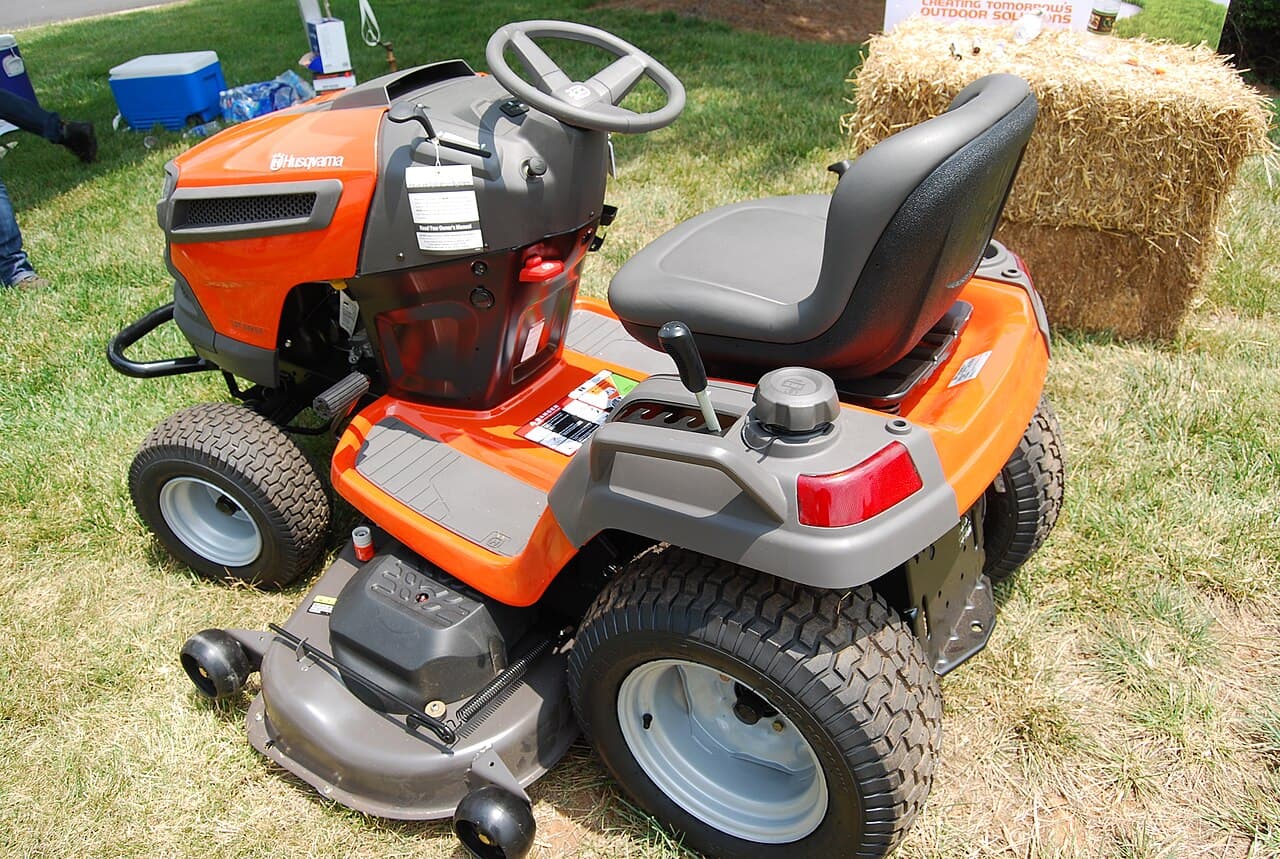
Start with the engine off and the key out. Virginia Cooperative Extension advises you to "Disconnect the spark or electric plug before troubleshooting or repairing the mower."[3]
The bypass lever or dump valve
Most hydrostatic mowers have a release that lets you push the machine by hand. Transaxle bypass linkages must be engaged when pushing or pulling the mower.[1] On Ariens tractors the same job is done by transmission dump valves: opening the dump valves allows the unit to be pushed by hand, and they must be closed to drive the unit.[2]
If someone moved the mower and left the lever in the push position, the engine will run and nothing will turn the wheels. Put the lever or rod back to the drive position described in your manual. The levers sit near the hot parts of the engine, so the engine should be shut off and allowed to cool before they are handled.[1]
The parking brake and linkage
Confirm the parking brake is fully released. An activated park brake is on Husqvarna's list of causes.[1] Then look at the control linkage from the pedal or levers to the arm on the transaxle, and make sure the arm is still fastened where it should be.[1] A pin that has fallen out or a rod that has come loose will leave the pedal moving and the mower still.
The drive belt
On many models a belt carries power from the engine to the transmission. Look at the belt, the idler pulley and the idler spring, and make sure none of them let the belt slip.[1] Slippage can cause low input speed to the transmission,[1] which feels like a mower that is weak, slow or stalls on a slope. A belt that is off a pulley, glazed or frayed needs to be rerouted or replaced. Check that it runs properly around the pulleys and inside all belt fingers. Keep oil and cleaners off belts and pulleys.
Cooling and fluid
Hydrostatic transmissions run hot and rely on airflow. Look at the cooling fan for broken or bent blades and remove any obstructions such as grass clippings, leaves or dirt.[1] A packed fan can overheat the transmission and make a mower lose drive as the afternoon goes on.
Where the manual shows expansion tanks, check them with the engine cold, where they should be at the FULL COLD level.[1] Low fluid, leaks at seals and trapped air all stop a hydrostatic drive from working. Do not loosen fittings or open the transmission yourself. Escaping hydraulic oil under pressure can have sufficient force to penetrate the skin, causing serious injury.[1]
Moving a stuck mower safely
If the mower has to go to a shop, do not tow it. Ariens warns to never push or pull (tow) the unit with another vehicle, because transmission damage will occur.[2] Open the bypass first, and do not push the tractor at more than five (5) mph.[2] A truck or trailer with ramps is the right way to move it.
Stop and call a pro if
- The belt, brake, bypass and linkage are all right and the mower still will not move. The transmission or its hydraulic circuit needs testing.
- You see oil leaking from the transaxle or hear whining, grinding or knocking from it. Seals, housing or internal parts may be damaged.
- The mower moves in one direction only, or loses drive when hot. That points to fluid, air in the system or wear inside the unit.
- A belt burns through again shortly after replacement. Something is binding or seized.
- The mower has to be purged, refilled or have its transmission opened. Husqvarna describes purging as a procedure for after the hydrostatic system has been opened,[1] and it needs the right fluid and method.
When you ask for a quote, get the diagnosis in writing, with parts and labor listed separately.
Getting help in Virginia
Other cost and repair questions are covered in how much riding mower repair costs in Virginia, whether it is worth fixing an old riding mower and how to change the oil in a riding mower. Browse more lawn equipment repair answers or lawn mowing services near you.
If the quick checks do not get it moving, describe the problem once and local small engine shops can quote it.
Common questions
- Why does the engine run but the mower will not move?
- The engine is working, so the problem is between the engine and the wheels: a released bypass or dump valve, an engaged brake, a slipped or broken drive belt, or a hydrostatic transmission that is low on fluid or worn. Work through the belt and bypass checks before suspecting the transmission.
- What is a bypass lever or dump valve?
- It is a release that lets fluid move freely inside a hydrostatic transmission so the mower can be pushed by hand. It has to be back in the drive position before the mower will drive. Many owners forget to reset it after moving the mower.
- Will it move in reverse but not forward?
- Sometimes. That can point to a linkage that is out of adjustment, a belt that slips only under the heavier forward load, or a wearing transmission. Check the linkage and belt first, and tell the shop exactly what the mower does in each direction.
- Can I tow it to the shop behind my truck?
- No. Ariens warns never to push or pull the unit with another vehicle, because transmission damage will occur. Use a truck or trailer and ramps, and follow the manual for loading.
- Is it worth repairing a transmission on an older mower?
- It depends on the mower's age and the quote. Ask the shop for a written diagnosis with parts and labor separate, then compare it with the mower's value before agreeing to work.
Sources
- [1] Operator Manual MZ 54 (967 696102-00), Husqvarna. Checked October 28, 2026.
- [2] EZR Zero Turn Mower, Owner/Operator Manual, Ariens Company. Checked October 28, 2026.
- [3] Lawn Care: Rotary Mower Safety (BSE-42P), Virginia Cooperative Extension, Virginia Tech. Checked October 28, 2026.
Want a pro to handle it?
Describe the job once. Licensed local businesses send quotes, and you pay only when you book one.
Get a quote for Lawn Equipment