What happens during an electrical repair service call?
A licensed electrician asks what you have noticed, looks at the panel and the problem outlet, switch or fixture, and traces the fault to its cause, often a loose connection, a worn device or an overloaded circuit. You should get a written price before the repair starts, then the fix, a test, and an invoice. New or altered wiring may also need a permit.
Free to ask. Local shops send quotes, and you pay only when you book one.
By Kasra Taheri, Founder, LoclisPublished
Researched and drafted with AI, then checked claim by claim against the sources listed below before it was published. Prices and rules change; the dates beside each source say when it was last checked.
This is a job for a licensed pro in Virginia
This page explains what the work involves, the permits, what a licensed pro does and what drives the cost. It does not give step-by-step instructions, because this work needs a licence, a permit or both, and doing it wrong can injure someone. Before you hire, check the licence on Virginia's DPOR record.
An electrical service call is a diagnosis followed, usually, by a repair. A licensed electrician listens to what you have noticed, checks the panel and the outlet, switch, light or appliance circuit involved, and traces the symptom to its cause. Before fixing anything, they should tell you what they found and what the repair will cost. The visit ends with the circuit tested, the work explained and an invoice.
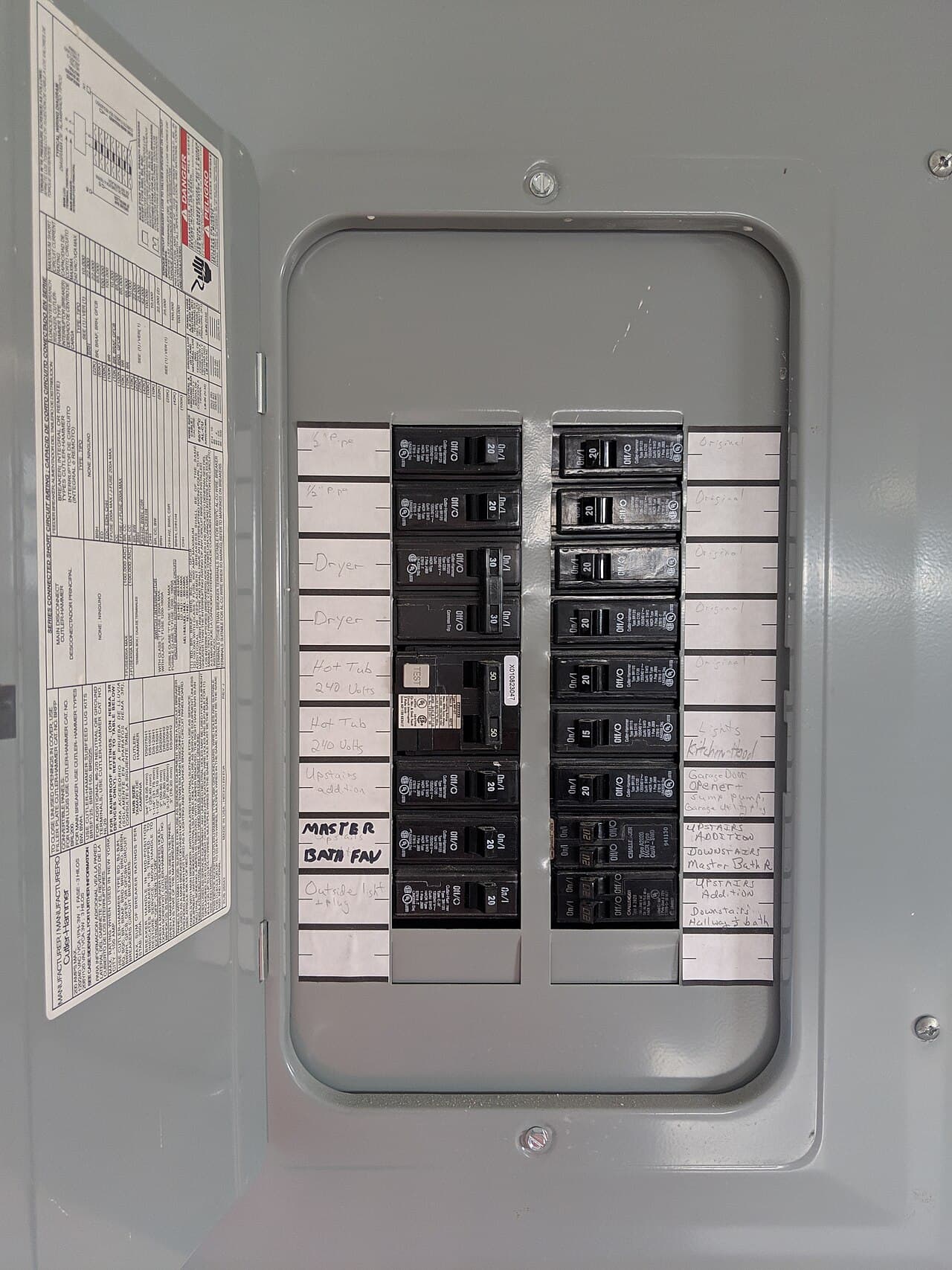
Before the visit
Write down what is happening, because the most useful thing you bring is a clear description. Which outlets, lights or rooms are affected? Does a breaker trip, and if so, when: as soon as it is reset, or only when the microwave and the space heater run together? Is there a smell, a sound or a warm cover plate? How old is the house, and has the panel ever been changed? Clear a path to the panel and to the problem area.
Some symptoms should not wait for a booked slot. The U.S. Consumer Product Safety Commission says unusually warm outlets or switches may point to a loose connection that can start a fire, and its advice is to stop using them until an electrician checks the problem.[1] It also says a shock from an appliance, other than static, indicates an extremely hazardous wiring condition: do not touch the appliance until an electrician has checked it, and turn off its power at the circuit breaker.[1]
Who should come
In Virginia, the person doing the work needs a licence. The Code of Virginia defines a tradesman as any individual who engages in, or offers to engage in, electrical, plumbing or HVAC work for the general public for compensation.[2] It then says no individual may do that work unless licensed, though someone working under the supervision of a tradesman licensed in that specialty does not need a licence of their own.[3] An apprentice working alongside a licensed electrician is normal; an unlicensed handyman working alone on your wiring is not.
The business needs its own licence for larger jobs. A Class C licence covers single jobs over $1,000 and under $30,000, and the Board for Contractors requires a master tradesman licence as a condition of licensing an electrical contractor.[4] Check both on DPOR's record before the visit. The Board warns that a licence number in an advertisement or on a business card does not necessarily mean the licence is valid.[6] Our guide to checking a contractor's licence in Virginia walks through the lookup.
What the electrician does on site
Expect questions first. A good electrician wants to know the history before opening anything, because many faults are intermittent and your description narrows the search.
Then comes the diagnosis. The electrician usually looks over the panel and the breaker or fuse for the affected circuit, works out what else is on that circuit, and checks the devices involved with test instruments. Opening an outlet, switch or fixture box is normally done with the circuit switched off. The aim is to find the actual cause, not just to make the symptom stop.
The causes found on a typical call are often small and specific. CPSC notes that a loose screw holding a wire or a worn-out switch can lead to electrical arcing, overheating or a fire,[1] and that loose-fitting plugs can cause overheating and fires.[1] In older houses with fuses, the problem may be a fuse that is too large for its circuit: CPSC warns that the wrong size fuse can let too much current flow and overheat the wiring.[1] Other common findings are an overloaded circuit, a failed breaker or GFCI, a damaged cable, or a connection that has loosened at a light fixture.
Sometimes the diagnosis turns up something bigger than the original complaint, such as scorched wiring inside a box, aluminum branch circuits or an overloaded panel. Then you should get an explanation and a separate written price, not an open-ended "while I'm here." Our answer on the warning signs of bad wiring explains what those findings mean.
The price and the paperwork
Shops price service calls in different ways: a service call or trip fee, a minimum charge, hourly time plus parts, or a flat price per repair. Ask which one applies before the visit, and whether the visit fee is credited against the repair. Our answer on what an electrician costs per hour in Virginia covers what drives the number.
Get the repair price in writing before work starts. Virginia law requires all licensed contractors to provide a written contract for residential work,[6] and the Board points out that any bid or estimate you sign may become the contract.[6] If the job changes once the electrician opens things up, the Board's advice is to put all changes in writing, signed by you and the contractor.[6] A small service call often involves no deposit; for larger repairs, the Board's rule of thumb is an initial deposit of no more than 10% of the total price or $1,000, whichever is less.[6] See how much deposit a contractor can ask for.
Permits
Many repairs need no permit, but wiring changes do. Virginia's Uniform Statewide Building Code says a permit is required before work starts on installations or alterations involving electric wiring.[5] It also says replacing general use switches, dimmers, 125-volt 15- or 20-amp receptacles, light fixtures and ceiling fans needs no permit application in Groups R-3, R-4 and R-5, and in Group R-2 where serving a single dwelling unit.[5] That exemption does not excuse the work from the code's other requirements.[5]
When a permit is needed, the Board's advice is plain: the contractor should apply for and obtain any necessary building permits.[6] Fees are set locally. When we checked on 26 October 2026, Montgomery County's fee schedule listed residential electrical trade permits at $0.03 per square foot with a $45 minimum, plus a 2% Virginia state levy on each fee.[7] An inspection follows the permit.
After the repair
The electrician should test the repaired circuit, show you what was wrong, and tell you whether anything else needs attention. Ask them to correct any wrong labels in the panel. The Board recommends keeping a job file with the signed contract and change orders, copies of the permit application and issued permit, and bills and invoices.[6] It also advises: do not pay 100% of the total bill until the work is 100% complete.[6]
When to call a licensed pro
Call a licensed electrician for any electrical fault inside the walls, the panel or a hard-wired fixture. Call the same day when:
- An outlet, switch or cover plate is warm or discoloured.
- A breaker trips again right after being reset, or a fuse keeps blowing.
- An appliance or fixture gave you a shock.
- Lights dim or flicker across several rooms at once.
- You smell burning plastic near an outlet, switch or the panel.
Find an electrician
Browse electrical services on Loclis, look up electricians in Blacksburg, or read more electrical answers. A business that needs to see the problem first can offer an estimate visit, and a paid visit's fee comes off its price; see pricing.
Describe the electrical problem and licensed local electricians quote the repair.
Common questions
- How long does an electrical service call take?
- It depends on how quickly the fault can be found. A single dead outlet with an obvious cause can be a short visit; an intermittent problem, such as lights that flicker only when the furnace starts, can take longer to trace. Ask the shop how it bills diagnostic time before the visit.
- Do I pay if the electrician only diagnoses the problem?
- Usually, yes. Shops often charge something for the visit and the diagnosis, whether as a service call fee, a minimum charge or hourly time. Ask before booking whether that fee is credited if you go ahead with the repair. On Loclis, a paid service call opens a repair whose fee comes off the repair price.
- Should I turn the power off before the electrician arrives?
- Only if something is unsafe. CPSC advises that if an appliance gives you a shock you should not touch it and should turn off its power at the breaker, and that a warm outlet should not be used until an electrician checks it. Otherwise leave things as they are so the electrician can see the fault happen.
- Will the electrician need a permit for a repair?
- Not always. Virginia's building code lets like-for-like replacement of switches, standard receptacles, light fixtures and ceiling fans in most homes go without a permit application, but new or altered wiring needs one. When a permit is needed, the contractor should be the one to get it.
- What should I have ready for the visit?
- A short list of what happens and when, which outlets, lights or breakers are involved, roughly how old the house and panel are, and clear access to the panel and the problem area. Photos of any scorch marks or the panel's circuit labels help too.
Sources
- [1] Home Electrical Safety Checklist (Publication 513), U.S. Consumer Product Safety Commission. Checked October 26, 2026.
- [2] Code of Virginia § 54.1-1128, Definitions (tradesmen), Code of Virginia, Legislative Information System. Checked October 26, 2026.
- [3] Code of Virginia § 54.1-1129, Necessity for licensure, Code of Virginia, Legislative Information System. Checked October 26, 2026.
- [4] Code of Virginia § 54.1-1100, Definitions (contractor classes), Code of Virginia, Legislative Information System. Checked October 26, 2026.
- [5] 13VAC5-63-80, Virginia Uniform Statewide Building Code, Section 108 Application for permit, Virginia Administrative Code, Legislative Information System. Checked October 26, 2026.
- [6] What You Should Know Before You Hire a Contractor, Virginia Board for Contractors, DPOR. Checked October 26, 2026.
- [7] Permit & Inspection Fees, Montgomery County, Virginia, Building Permits & Inspections. Checked October 26, 2026.
Want a pro to handle it?
Describe the job once. Licensed local businesses send quotes, and you pay only when you book one.
Get a quote for Electrical Repair