Do I need a permit to widen my driveway in Virginia?
Often not a building permit, but other approvals are common. Widening where the driveway meets the street needs the road owner's permit: VDOT on state-maintained roads, or your city or town on local streets. Your locality may also apply zoning setbacks and land-disturbance rules, and you must call Virginia 811 before digging. Check with the building office and road owner first.
Free to ask. Local shops send quotes, and you pay only when you book one.
By Kasra Taheri, Founder, LoclisPublished
Researched and drafted with AI, then checked claim by claim against the sources listed below before it was published. Prices and rules change; the dates beside each source say when it was last checked.
Step by step
Read when to stop and call a pro, further down this page, before you start.
Step 1: Find out who owns the road
Ask your county, city or town whether VDOT or the locality maintains your street, since each issues its own permits.[4]
Step 2: Ask the building office
Confirm whether your locality requires a building permit for the driveway; Fairfax County, for example, lists driveways as needing none.[1]
Step 3: Ask zoning about setbacks
Check setbacks, limits on front-yard paving and any overlay district with your zoning office before you settle on a width.
Step 4: Measure the disturbed area
Add up the ground you will dig or grade, since erosion and stormwater rules start at 10,000 square feet, or 2,500 in Chesapeake Bay Preservation Areas, unless your locality sets less.[10]
Step 5: Apply to the road owner
If the wider driveway changes the entrance, apply for the road owner's permit with a sketch of the work before anyone digs.[4]
Step 6: Check your HOA
Read your homeowners association covenants or ask its board, since covenants may require approval for driveway changes.
Step 7: Call Virginia 811
Contact Virginia 811 at least 3 working days before excavation, and mark the dig area in white paint or flags.[11]
Step 8: Put permits in the contract
Have the contract say who obtains each permit and that the contractor will comply with local permit, inspection and zoning requirements.[12]
Step 9: Ask for the final inspection
When a VDOT permit job is done, ask the VDOT office in writing for the final inspection, citing the permit number.[4]
Usually you do not need a building permit to widen a driveway in Virginia, but you may need other approvals. The one people miss is the road owner's permit: if the wider driveway changes where it meets the street, that work needs a permit from VDOT on state-maintained roads, or from your city or town on local streets. Zoning setbacks, land-disturbance rules and a Virginia 811 call can apply too. Here is how to sort out which apply to your lot.
The building permit: often not needed
Some Virginia localities do not require a building permit for a driveway at all. Fairfax County lists driveways among residential projects that need no building permit,[1] and Pittsylvania County lists driveways as needing no building permit unless they are greater than 10,000 square feet.[2] Rules differ by locality, so call your own building office.
Both counties add a warning. Fairfax notes that depending on the size and location of a project, site-related approval may be required, and setbacks and other zoning requirements may apply,[1] and Pittsylvania says setbacks and other zoning requirements may still apply.[2] Fairfax also points out that for driveway improvements within the state right-of-way, a VDOT permit may be required.[1]
The road owner's permit: needed when you touch the entrance
The strip between your property line and the street usually belongs to whoever maintains the road. Widening the driveway at the curb, adding a second curb cut, or extending a pipe in the roadside ditch all happen on that strip.
On VDOT roads. VDOT's land use permit rules are specific: making permanent upgrades to an existing entrance, constructing a permanent entrance to a highway, and cutting or disturbing highway pavement, shoulders or ditches each require a single use permit.[3] Another section states: "A permit is required for construction or reconstruction of roads, private or commercial entrances, bridges, drainage structures, or other transportation facilities."[5]
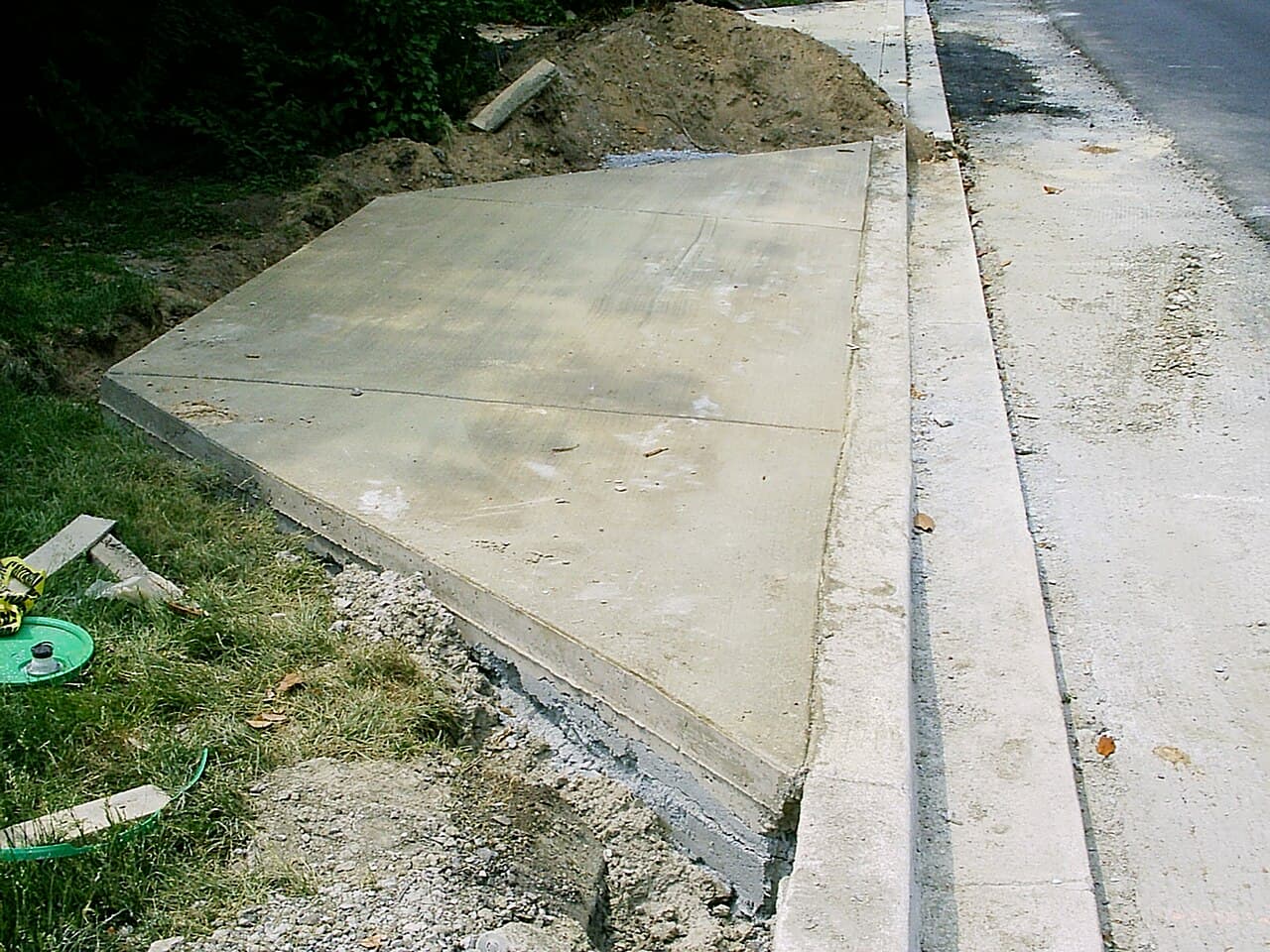
The process is straightforward. The adjacent property owner obtains an entrance permit, and it may be issued jointly to the owner and a contractor acting as the owner's authorized agent.[4] Applicants submit site plans or sketches of the proposed work for review,[4] and the permittee requests a final inspection in writing, with the permit number, when the work is finished.[4] When we checked on October 27, 2026, the regulation set a $100 application fee for a single use permit and listed no additional fee for a private entrance.[6]
VDOT's private entrance rule explains who does what. The property owner identifies the location of a private entrance with the help of VDOT's district staff, and where the sight distance standards cannot be met, the entrance goes where the sight distance is best.[7] On roads with shoulders and ditches, the owner is responsible for installing the entrance to VDOT's standards, though the owner may ask VDOT to install the entrance pipe and stabilize the shoulder at the owner's expense.[7] Grading and installing the driveway from the edge of the pavement to the right-of-way line is the owner's responsibility.[7]
On city and town streets. A VDOT permit is valid only on right-of-way under VDOT's jurisdiction, and county and city permits must be secured for work on roads and streets under their jurisdiction.[4] Two examples:
- Richmond says all work in the public right of way requires a Work in Streets Permit, and lists driveways and carriage walks among the work it covers.[8]
- Alexandria uses one application for a new curb cut or widening an existing one by four feet or more, and a separate application to widen an existing curb cut by less than four feet.[9]
If you live in a town, ask the town's public works or engineering office whether it maintains your street.
Land disturbance and stormwater
Widening a driveway is digging and grading, and Virginia's erosion and stormwater law sets size thresholds. Under the Code of Virginia, erosion control and stormwater requirements apply to land-disturbing activity of 10,000 square feet or more, and a locality may lower that threshold.[10] In a Chesapeake Bay Preservation Area the threshold is 2,500 square feet.[10] A modest widening rarely reaches these numbers, but a long new driveway or a large parking pad can, so give your locality the area when you ask.
Before anyone digs
Utility lines often run under the edge of a driveway. Virginia 811 says to contact Virginia 811 at least 3 working days before excavation, and outline the area you plan to dig in white paint or white flags.[11] A contractor usually makes this call, but confirm it was made.
Hiring someone to do it
If you hire the work out, settle in the contract who gets which permit. Virginia's Board for Contractors requires residential contracts to include a statement that the contractor will comply with all local requirements for building permits, inspections and zoning.[12] Ask the contractor which offices they have worked with before; one who has pulled entrance permits in your county will know the local details. What to ask a concrete contractor has a fuller list, and what a concrete driveway costs covers pricing the job.
Stop and call a pro if
- The entrance crosses a roadside ditch, so the pipe has to be extended or replaced.
- Drivers cannot see well when pulling out, since VDOT may move the entrance for sight distance.
- The widening needs a retaining wall, a large cut into a slope, or fill along a bank.
- Your lot is in a floodplain or a resource protection area. Fairfax County, for one, says separate county approval may be required for work in a floodplain or resource protection area.[1]
- The road owner asks for engineered drawings or a traffic plan.
Getting it done in Virginia
Loclis lists DPOR-licensed businesses with their licence number and class. Browse driveway contractors, find concrete businesses in Blacksburg, read how thick a driveway should be, or see all concrete and hardscaping answers.
When you know what the widening involves, describe the job once and licensed local businesses quote it.
Common questions
- Do I need a building permit to widen a concrete driveway?
- Many Virginia localities do not require one for an on-grade driveway. Fairfax County lists driveways among residential projects needing no building permit, and Pittsylvania County requires one only for driveways over 10,000 square feet. Both note that zoning and other approvals may still apply, so ask your own building office.
- I am only widening the part near the house. Do I still need VDOT?
- If the work stays out of the road right-of-way and does not change the entrance, a VDOT permit is usually not involved. VDOT's rules require a permit for permanent upgrades to an existing entrance and for cutting or disturbing pavement, shoulders or ditches. If you are unsure where the right-of-way line is, ask the VDOT residency or your county.
- Does VDOT charge for a private entrance permit?
- When we checked on October 27, 2026, the state's land use permit regulation set a $100 application fee for a single use permit and listed no additional fee for a private entrance.
- Who pays for the pipe under a widened entrance in a ditch?
- The owner. On roads with shoulders and ditches, VDOT's private entrance rule makes the owner responsible for installing the entrance to VDOT standards, and VDOT may install the pipe and stabilize the shoulder at the owner's expense if asked.
- Should my contractor or I get the permit?
- Either can, but decide in writing. A VDOT entrance permit is obtained by the property owner and may be issued jointly to the owner and a contractor acting as the owner's agent. Virginia's contractor rules require a written contract with a statement that the contractor will comply with local permit, inspection and zoning requirements.
- Can my HOA stop me from widening the driveway?
- It may be able to, if its covenants cover driveways or paving. Read your covenants or ask the board before you sign a contract; an HOA approval is separate from any permit.
Sources
- [1] When Is a Permit Required?, Fairfax County Land Development Services. Checked October 27, 2026.
- [2] Do I Need a Permit, Pittsylvania County. Checked October 27, 2026.
- [3] 24VAC30-151-30. Types of permits and permit agreements, Virginia Administrative Code (Virginia General Assembly). Checked October 27, 2026.
- [4] 24VAC30-151-40. General rules, regulations, and requirements, Virginia Administrative Code (Virginia General Assembly). Checked October 27, 2026.
- [5] 24VAC30-151-490. Construction or reconstruction of roads, entrances, bridges, drainage structures, or other transportation facilities, Virginia Administrative Code (Virginia General Assembly). Checked October 27, 2026.
- [6] 24VAC30-151-710. Fees, Virginia Administrative Code (Virginia General Assembly). Checked October 27, 2026.
- [7] 24VAC30-73-90. Private entrances, Virginia Administrative Code (Virginia General Assembly). Checked October 27, 2026.
- [8] Right of Way Management, City of Richmond Department of Public Works. Checked October 27, 2026.
- [9] Right-of-Way Permits, City of Alexandria Transportation and Environmental Services. Checked October 27, 2026.
- [10] Code of Virginia § 62.1-44.15:34. Regulated land-disturbing activities; submission and approval of plans, Code of Virginia (Virginia General Assembly). Checked October 27, 2026.
- [11] Homeowners FAQ, Virginia 811. Checked October 27, 2026.
- [12] 18VAC50-22-260. Filing of charges; prohibited acts, Virginia Administrative Code (Virginia General Assembly). Checked October 27, 2026.
Want a pro to handle it?
Describe the job once. Licensed local businesses send quotes, and you pay only when you book one.
Get a quote from a local pro