Do I need a sprinkler system for my lawn in Virginia?
Usually not. Established Virginia lawns can go dormant in a dry summer and recover when rain returns. A system is worth it for a new lawn, for turf you want green all season, or if you will not water by hand. If you install one, hire a licensed contractor and ask for a rain sensor and smart controller.
Free to ask. Local shops send quotes, and you pay only when you book one.
By Kasra Taheri, Founder, LoclisPublished
Researched and drafted with AI, then checked claim by claim against the sources listed below before it was published. Prices and rules change; the dates beside each source say when it was last checked.
Step by step
Read when to stop and call a pro, further down this page, before you start.
Step 1: Decide how green you need it
Decide whether you want the lawn green all summer or are happy to let it go dormant and recover with cooler weather.[1]
Step 2: Note the grass type and age
Check whether the lawn is cool-season or warm-season and whether it is under a year old, since young lawns have little drought tolerance.[1]
Step 3: Try a hose-end sprinkler with a timer
Run a low-throw sprinkler on an inexpensive hose timer for a summer to see whether you actually water.[1]
Step 4: Look up the licence
If you want an in-ground system, look up each bidder's licence on DPOR's license lookup before you take the bid seriously.[7]
Step 5: Get three written bids
Ask for at least three bids on the same zone layout, controller and backflow device.[6]
Usually not. A sprinkler system is a choice about how green you want the lawn in July and August, not something a Virginia lawn needs to survive. Established lawns commonly ride out a dry summer by going dormant, then green up again when rain returns. A system pays off for new lawns, high-maintenance turf, or owners who want it green all season and will not water by hand.
Lawns that receive little to no water from irrigation or rainfall during summer months will go dormant, and most lawns will recover when water returns.[1] Virginia Cooperative Extension's Henrico County office lists "Rarely irrigated once established" among the expectations for a regular-maintenance cool-season lawn.[2]
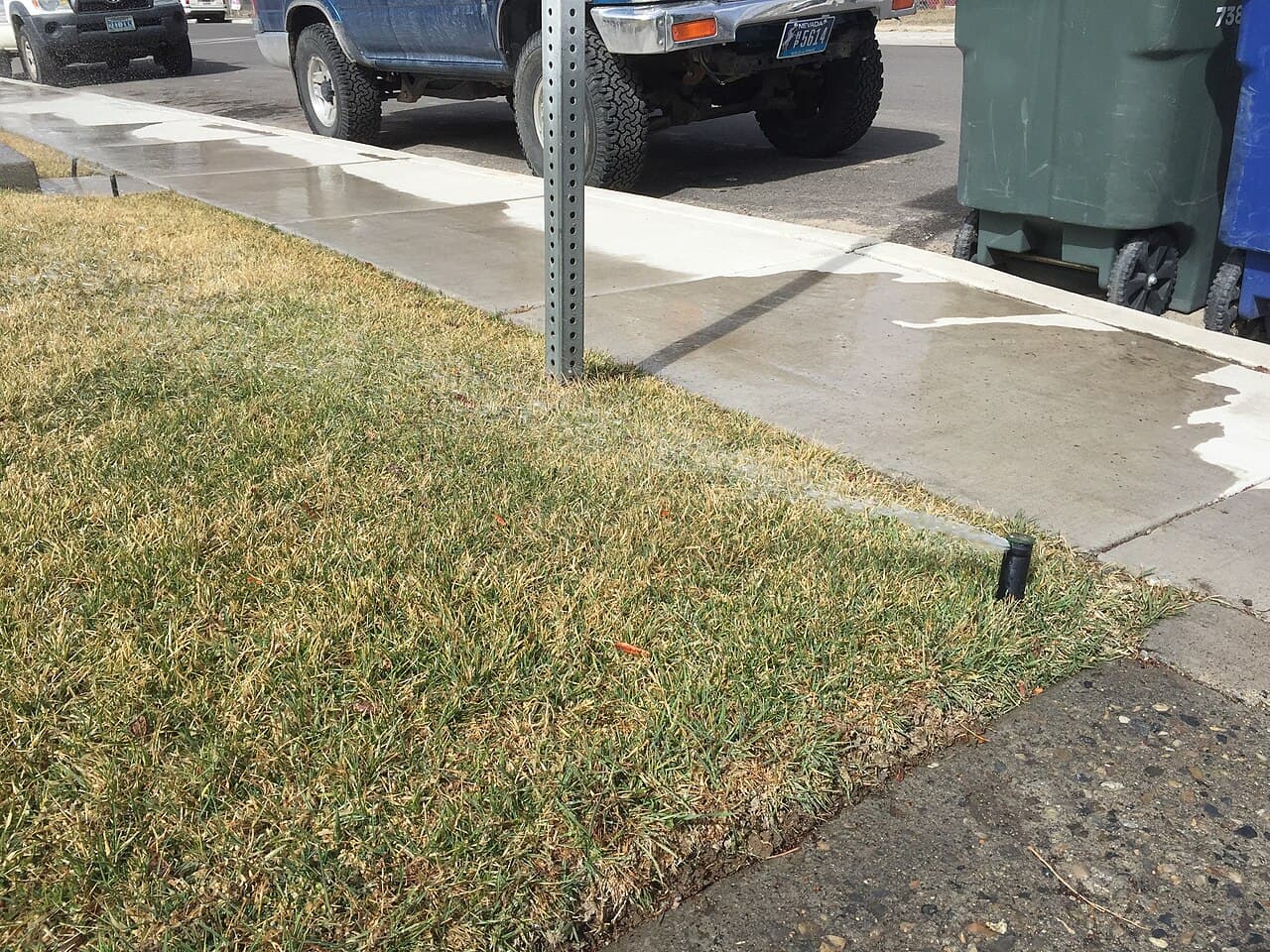
When a system is not worth it
If your lawn is established and you accept some brown in a dry spell, a system buys you little. Dormancy is a survival mechanism, not death. The limit is severe drought: during an extreme and persistent drought, it is possible that some cool-season grasses may die and require reseeding in the fall.[1] Warm-season grasses handle drought better,[1] and a drought-tolerant grass choice often does more for a dry lawn than an irrigation system does.
Overwatering is also a real cost. Overwatered lawns frequently lead to excess blade growth, summer fungal diseases, and more frequent mowing.[1] A system on autopilot makes that easy to do.
When it is worth it
A system earns its cost in a few situations:
- A new lawn. Seedling or recently established lawns, less than a year old, have little to no drought tolerance.[1]
- You want green turf all summer. Most turfgrasses require approximately 1 inch of water per week — whether from rainfall or supplemental irrigation — to sustain growth during warmer conditions.[1] A system delivers that on a schedule you do not have to remember.
- Large or awkward lawns, or beds that need frequent water, where dragging hoses is a chore you will drop.
Before committing, try the cheap version. Timers exist for aboveground setups too: Extension notes relatively inexpensive timers that are attached to hoses for aboveground sprinkler systems.[1] If a hose sprinkler on a timer keeps the lawn healthy, you may never need to dig.
If you do install one, make it efficient
Efficiency is where the money goes, in both water and the bill. Residential outdoor water use across the United States accounts for nearly 8 billion gallons of water each day, mainly for landscape irrigation,[4] and experts estimate that as much as 50 percent of this water is wasted due to overwatering caused by inefficiencies in irrigation methods and systems.[3]
Ask for these in writing:
- A rain sensor. Rain sensors optimize water use efficiency and should be a part of any installed irrigation system.[1]
- A smart controller. Replacing a standard clock-based controller with a WaterSense labeled irrigation controller can save an average home up to 15,000 gallons of water annually.[3]
- A soil moisture sensor, if the budget allows. Extension says they are much more effective in optimizing water savings, typically reducing watering needs by 50 to 75 percent.[1]
Who may install it in Virginia
Sprinkler work is licensed contracting. The Board for Contractors defines "Landscape irrigation contracting" as the service that provides for the installation, repair, improvement, or removal of irrigation sprinkler systems or outdoor sprinkler systems.[5] The PLB and H/H classifications also provide for this function.[5] (PLB is the plumbing classification.) A specialty irrigation contractor may also handle the backflow preventer: this specialty may install backflow prevention devices incidental to work in this specialty when the installer has received formal vocational training approved by the board.[5]
DPOR's consumer guide says a valid Virginia contractor's license is required for work valued at $1,000 or more.[6] Verify license status online[6] with DPOR's license lookup.[7] Get at least three written bids,[6] on the same zone layout and equipment so they compare, and limit your deposit to 10% down or $1,000, whichever is less.[6]
Price depends on lawn size, the number of zones, soil and obstacles to trenching, the type of heads, the controller and sensors, and the backflow device. Prices vary widely, so use a written quote rather than a rule of thumb, and ask it to list each of those items.
Stop and call a pro if
- You plan to dig trenches or tie into the water line yourself. No person shall make or begin any excavation or demolition without first submitting a locate request to the notification center.[8] Lawn irrigation work involves trenching, so call 811 before anyone digs.
- The bid is for $1,000 or more and the bidder has no licence on DPOR's lookup.[6]
- The work touches a household water line, a backflow preventer, or the controller's wiring. Leave these to a licensed contractor in the irrigation specialty or another classification the Board lists above.
- Water pools, a valve will not close, or the bill jumps on an existing system. That is a repair, not a settings problem.
Getting help in Virginia
If you already have a system, how long to run the sprinklers covers the settings, and how often to water new sod covers new lawns. Browse more lawn and landscaping answers or lawn and landscaping businesses.
When you are ready, describe the irrigation job once and licensed local contractors can quote it.
Common questions
- Do Virginia lawns need irrigation to survive the summer?
- Usually not. Established lawns go dormant in a dry summer and most recover when water returns. Severe, long drought can kill some cool-season grasses, and new lawns under a year old have little drought tolerance.
- Is a sprinkler system worth it for a lawn?
- It is worth it if you want green turf all summer, have a new lawn, or have a large lawn you will not water by hand. If you accept some summer dormancy, a hose sprinkler on a timer is often enough.
- Do I need a licence to install a sprinkler system in Virginia?
- Contractors need a Virginia contractor's license for work valued at $1,000 or more. The Board for Contractors has a landscape irrigation contracting specialty, and contractors in the plumbing (PLB) and H/H classifications may also do this work.
- Can I install a sprinkler system myself?
- The trenching, the water connection and the backflow device are the parts that call for a licensed contractor, and anyone digging must submit a locate request first. Many owners hire out the install and then manage the schedule themselves.
- What features make a sprinkler system more efficient?
- A rain sensor, a WaterSense labeled controller and, if the budget allows, a soil moisture sensor. Put them in the written bid.
Sources
- [1] Summer Lawn Management: Watering the Lawn (430-010), Virginia Cooperative Extension, Virginia Tech. Checked October 27, 2026.
- [2] SMART Lawns: A Residential Lawn Care Program to Protect Water Quality (revised March 2022), Virginia Cooperative Extension, Henrico County Office. Checked October 27, 2026.
- [3] WaterSense Labeled Controllers, U.S. Environmental Protection Agency, WaterSense. Checked October 27, 2026.
- [4] Outdoors, U.S. Environmental Protection Agency, WaterSense. Checked October 27, 2026.
- [5] 18VAC50-22-30, Definitions of specialty services (Board for Contractors Regulations), Virginia Administrative Code, Virginia General Assembly. Checked October 27, 2026.
- [6] What You Should Know Before You Hire a Contractor, Virginia Board for Contractors, DPOR. Checked October 27, 2026.
- [7] License Lookup, Virginia Department of Professional and Occupational Regulation. Checked October 27, 2026.
- [8] Code of Virginia § 56-265.17, Notification required prior to excavation or demolition, Code of Virginia, Legislative Information System. Checked October 27, 2026.
Want a pro to handle it?
Describe the job once. Licensed local businesses send quotes, and you pay only when you book one.
Get a quote from a local pro