What is a good yearly lawn care schedule for Virginia?
For a cool-season lawn such as tall fescue, build the year around fall: aerate and overseed in late summer to early fall, then feed in September, October and November. Add a crabgrass preventer around mid-March, spot-treat weeds in spring and again in October and November, mow at 3 to 4 inches, and test the soil every 3 to 4 years.
Free to ask. Local shops send quotes, and you pay only when you book one.
By Kasra Taheri, Founder, LoclisPublished
Researched and drafted with AI, then checked claim by claim against the sources listed below before it was published. Prices and rules change; the dates beside each source say when it was last checked.
Step by step
Read when to stop and call a pro, further down this page, before you start.
Step 2: Skip frozen ground
Do not spread fertilizer on frozen soil.[3]
Step 3: Put down the crabgrass preventer
In mid-March, apply a preventer without fertilizer, and follow the label for a second application.[4]
Step 5: Mow at the right height all season
Keep fescue at 3 to 4 inches, take off no more than one third of the blade, and leave the clippings.[4]
Step 7: Feed in September, October and November
Make three applications about four weeks apart, within the nitrogen limit on the bag.[4]
For a cool-season lawn such as tall fescue, the grass on most Virginia yards, the year runs on fall. Aerate and overseed in late summer to early fall, feed in September, October and November, and keep spring light: a crabgrass preventer around mid-March and spot treatment of weeds, not heavy fertilizer. If your lawn is bermudagrass or zoysia, the feeding calendar flips; see the note below the table.
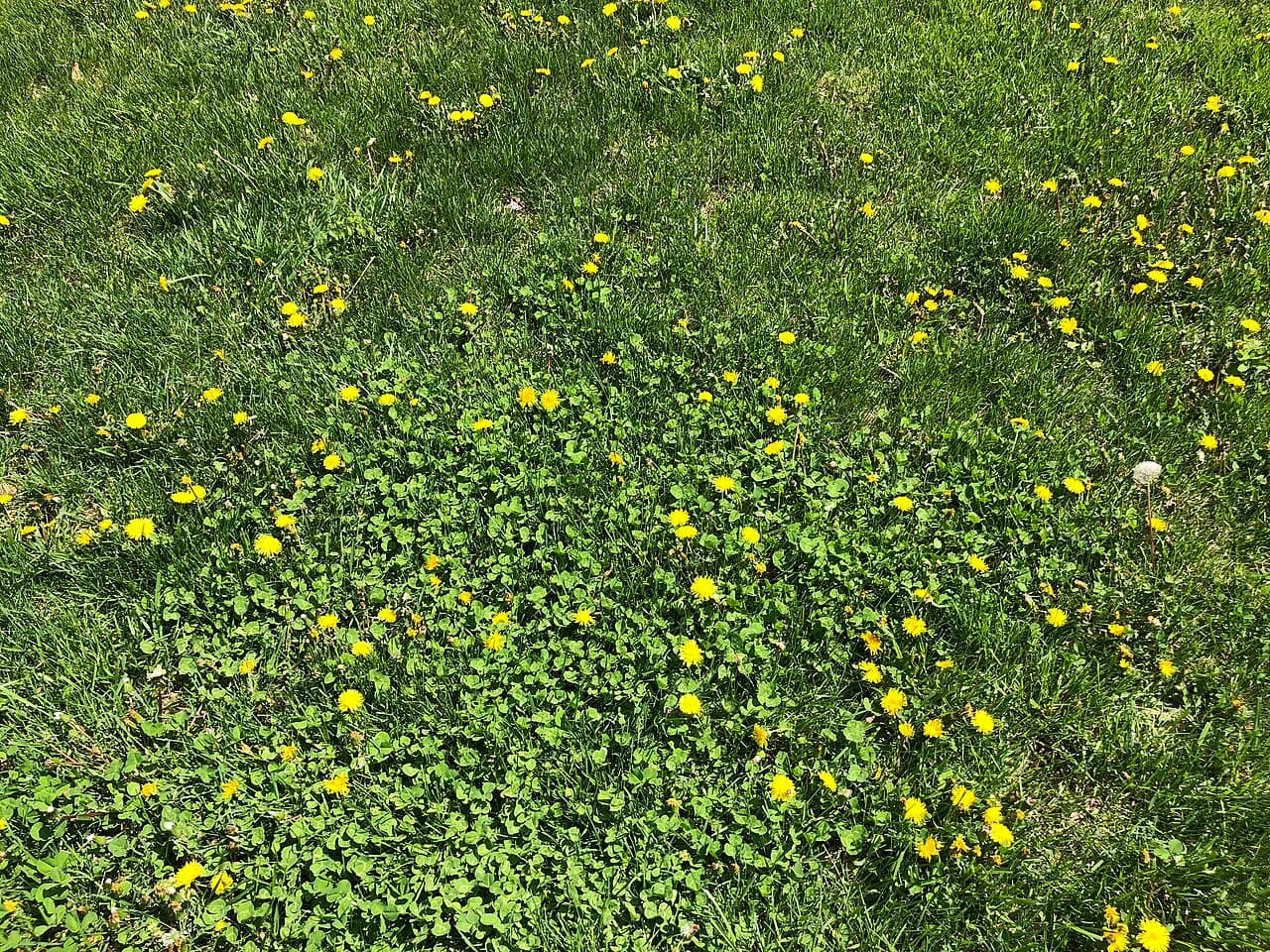
The year at a glance
| When | What to do |
|---|---|
| January to February | Soil test if due. No fertilizer on frozen ground. |
| Mid-March | Crabgrass preventer, without fertilizer. |
| April to May | Spot-treat summer broadleaf weeds. Mow at 3 to 4 inches. |
| June to August | Mow, return clippings, and decide whether to water or let the lawn rest. |
| Late August | Annual bluegrass preventer, unless you are seeding. |
| Late August to September | Core-aerate and overseed. |
| September, October, November | Feed three times, about four weeks apart. |
| October to November | Spot-treat winter weeds. Deal with leaves. |
Treat these dates as a guide, since timing varies with where you are in the state. Virginia Tech puts the best window to fertilize cool-season grasses from mid-August through early November.[2]
Winter: test and plan
Never apply fertilizer to frozen soil.[3] Winter is the time for the soil test, because Virginia Tech recommends you test home lawn soils every 3 to 4 years.[1] The results tell you whether you need lime, phosphorus or potassium; apply them only if the report says so.
Spring: preventer and light touch
Crabgrass is the main target. The first application should be made after the forsythias are in bloom but before the dogwoods are, about March 15.[4] Many products require a second application.[4] Henrico County's simple weed plan reads, in short: Mid-March: Apply crabgrass preventer (without fertilizer).[4] Later, summer annuals like lespedeza and spurge should be treated in April and May.[4] More on why timing matters is in why weeds keep coming back.
Go easy on nitrogen. Virginia Tech notes that adding small amounts of nitrogen to cool-season grasses can be beneficial for spring root growth, but very aggressive spring nitrogen programs are counter-productive.[2]
Summer: mow well, ask little of the grass
Set the mower blade height at 3 to 4 inches for fescue lawns and remove no more than one third of the leaf blade at each mowing.[4] Leave the clippings: clippings return up to one third of a lawn's annual nutrient needs.[4]
Tall fescue can go dormant in the heat of summer unless watered.[4] A brown summer lawn is not necessarily dead, so wait for the fall feeding window rather than fertilizing it in summer. If you irrigate, see how long to run sprinklers.
Late summer to early fall: rebuild
This is the most valuable stretch. Fall is the best time to aerate your lawn.[4] The soil should be moist, but not wet.[4] Late summer to mid-fall is the best time to establish cool-season turfgrass,[3] so seed thin areas while you are at it; how to aerate and overseed walks through the job.
Watch your preventers. Annual bluegrass is controlled by a pre-emergent herbicide applied in late August.[4] That product, like crabgrass preventers, will also prevent turf grass seed from germinating,[4] so choose one or the other on any patch you plan to seed.
Fall: feed, treat, deal with leaves
Make three fertilizer applications, applying no more than 0.9 lb. of N/1,000 ft2 of turfgrass, during September, October, and November for most lawn fertilizer products.[4] Applications should be made approximately four weeks apart.[4] On a well-established cool-season lawn, a single early September application of a controlled-release fertilizer may be enough.[3]
Winter weeds show up now. Winter annuals like henbit, bittercress and chickweed make their appearance in the fall, so treat them in October and November.[4] Follow the label every time; Pesticide labels are legally enforceable.[5]
Leaves come first. Chemical sprays over the top of leaves are often a waste of time, effort, and money.[3] One thing that can be done with the leaves before any chemical application is to simply mulch them back into the lawn.[3] See whether to mulch leaves into the lawn.
If you have warm-season grass
Warm-season grasses perform best when fertilized between April 1 and August 15 in Virginia.[2] Skip the September to November feedings and read when to fertilize a lawn in Virginia.
Stop and call a pro if
- Most of the lawn is weeds or bare soil. A schedule maintains a lawn; it does not rebuild one. See how to fix a lawn that is mostly weeds and bare spots.
- Weeds return in the same place every year after correctly timed treatment.
- You are not sure what the weed is, or what you are treating is a disease or insect problem rather than a weed.
- The lawn is large, steep or hard to reach safely with a spreader and mower.
- You want the schedule handled for you. Compare what a lawn treatment program costs in Virginia and whether treatment programs are worth it, and ask whether the applicator is certified.
Getting help in Virginia
Loclis lists local lawn pros. Browse lawn and landscaping providers or more lawn and landscaping answers.
When you are ready, describe your lawn once and local businesses quote it.
Common questions
- What if my lawn is bermudagrass or zoysia instead of fescue?
- The calendar flips. Virginia Tech says warm-season grasses perform best when fertilized between April 1 and August 15, so skip the fall feedings, start after green-up and finish well before frost. Our guide on when to fertilize a lawn in Virginia covers both.
- Do I really need all three fall feedings?
- Not always. The Extension program is three applications about four weeks apart, but Virginia Tech notes that on a well-established cool-season lawn a single early September application of a controlled-release fertilizer may be enough.
- Should I fertilize in spring?
- Lightly at most. Small amounts of nitrogen can help spring root growth, but very aggressive spring nitrogen programs are counter-productive. Most of the year's feeding belongs in fall.
- Do I need a different schedule if I hire a lawn company?
- The calendar is the same; a company just books the visits. Compare the visits in a program against this schedule, and see what a treatment program costs in Virginia before you sign.
- What do I do about fallen leaves before fall treatments?
- Mulch them back into the lawn with the mower or remove them first. Virginia Tech says chemical sprays over the top of leaves are often a waste, because the product does not reach the soil or the weeds underneath.
Sources
- [1] Maintenance Calendar for Cool-Season Turfgrasses in Virginia (430-523), Virginia Cooperative Extension, Virginia Tech. Checked October 28, 2026.
- [2] Lawn Fertilization in Virginia (430-011), Virginia Cooperative Extension, Virginia Tech. Checked October 28, 2026.
- [3] Fall Lawn Care (430-520), Virginia Cooperative Extension, Virginia Tech. Checked October 28, 2026.
- [4] SMART Lawns (revised March 2022), Virginia Cooperative Extension, Henrico County Office. Checked October 28, 2026.
- [5] Introduction to Pesticide Labels, U.S. Environmental Protection Agency. Checked October 28, 2026.
Want a pro to handle it?
Describe the job once. Licensed local businesses send quotes, and you pay only when you book one.
Get a quote from a local pro