Do I need to replace polybutylene pipes?
Not always at once, but most owners should plan for it. Polybutylene is an older plastic supply pipe, and public agencies that have dealt with it describe it as prone to degradation and sudden failure. A leaking line needs a licensed plumber promptly. A dry one can be assessed by a licensed plumber and replaced on your schedule.
Free to ask. Local shops send quotes, and you pay only when you book one.
By Kasra Taheri, Founder, LoclisUpdated
Researched and drafted with AI, then checked claim by claim against the sources listed below before it was published. Prices and rules change; the dates beside each source say when it was last checked.
This is a job for a licensed pro in Virginia
This page explains what the work involves, the permits, what a licensed pro does and what drives the cost. It does not give step-by-step instructions, because this work needs a licence, a permit or both, and doing it wrong can injure someone. Before you hire, check the licence on Virginia's DPOR record.
The short answer
You are not obliged to tear out polybutylene the day you find it, but most owners should plan to replace it. The material has a history of premature brittle failures, and it is no longer made for North American plumbing. If it is leaking, get it repaired now. If it is dry, a licensed plumber can look at it, and you can schedule a replacement before a failure schedules it for you.
What polybutylene is and why it failed
Polybutylene (PB) is a flexible plastic supply pipe that was installed in homes in past decades. It is a known problem material. The City of Thousand Oaks, California, is replacing 125 existing polybutylene water services lines with copper tubing, and describes the pipe as "prone to degradation from chlorine exposure, microfracturing, and sudden failures."[1]
That city is dealing with lines under its streets, not house plumbing, but the same material is the reason plumbers advise caution when they find it inside a house. The failure to worry about is the one inside a wall or ceiling, where a brittle line can run for hours before anyone notices.
Do you have it?
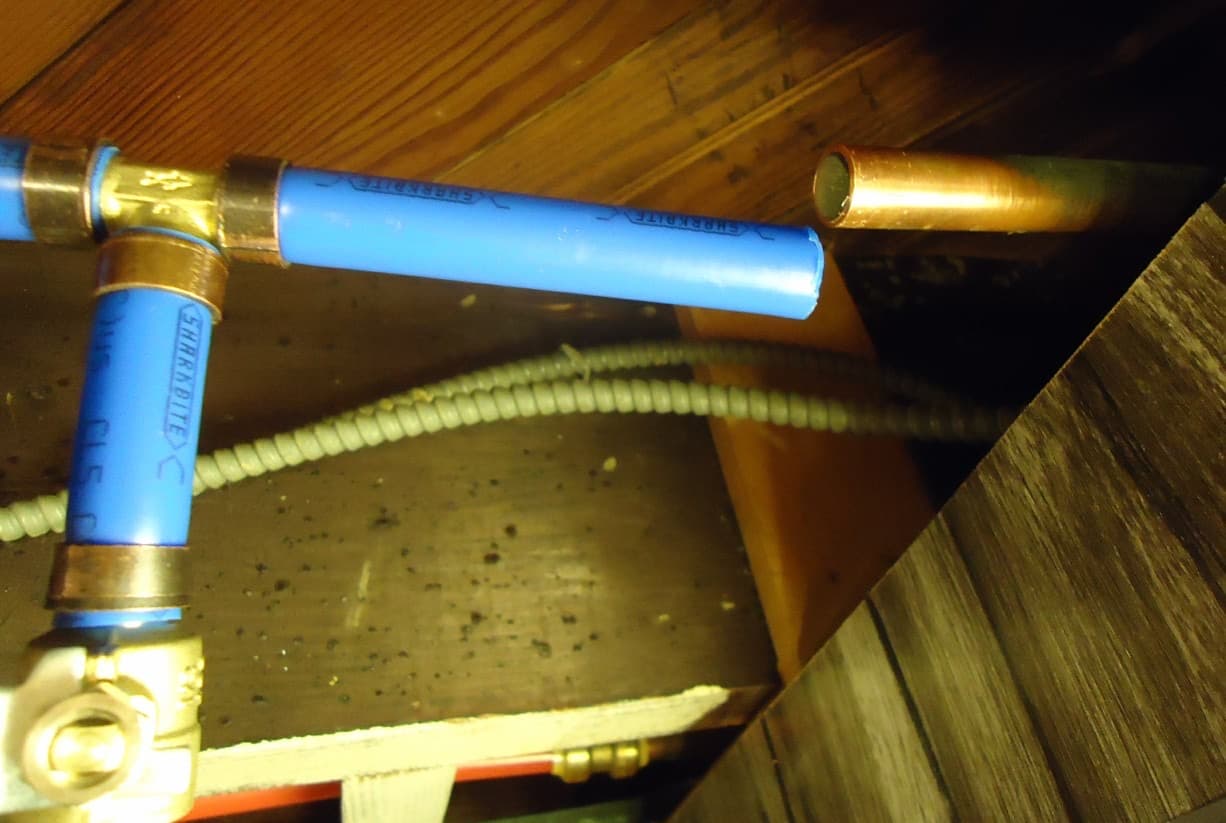
Look where the supply pipes are exposed: at the water heater, under sinks, behind the toilet, at the main shutoff and along the joists of an unfinished basement or crawlspace. Plastic tubing usually carries printed markings along its length. If you are not sure, a licensed plumber or a home inspector can confirm it in a few minutes, and the markings will usually settle it.
What Virginia's code says
Virginia's building code does not order owners to remove polybutylene by name. What its maintenance part does say is: "All water supply systems shall be free from obstructions, defects, and leaks."[2] It adds: "Where it is found that a plumbing system in a structure constitutes a hazard to the public, the occupants, or the structure, the code official shall require the defects to be corrected to eliminate the hazard."[2]
Enforcement in existing homes is up to the locality: under the Code of Virginia, "The local governing body may also inspect and enforce the provisions of the Building Code for existing buildings and structures, whether occupied or not."[6] Either way, a leak in a PB line needs a prompt repair, the same as a leak in copper. Whether to replace a dry system is your call.
Repair or replace
A spot repair makes sense for one failure in a system you plan to replace soon, or as an emergency fix. Ask how the plumber will join the new piece to the old pipe and which fittings they will use, because a connection between different materials is where repairs go wrong. A repair stops that leak, but the rest of the pipe and fittings are just as old as the part that failed.
A planned replacement makes sense when the system has failed more than once, when the original plastic fittings are still in place, when you are opening walls for a remodel anyway, or when the house is often empty and a burst would go unnoticed. Replacements usually use PEX or copper; our page on what repiping a house involves walks through the job, and what it costs to repipe a house in Virginia covers the price.
Ask your homeowner's insurer how it treats polybutylene before you decide.
Permits and licences
Replacing supply piping is permit work. Virginia's building code requires a permit before installations or alterations involving a building's water supply and distribution system.[3] A small repair can be different: the code exempts construction work the building official deems minor and ordinary that does not adversely affect public health or general safety,[3] so ask your plumber or building department whether a single-leak repair needs a permit where you live.
The work belongs to a licensed plumbing contractor. Virginia's plumbing contractor (PLB) classification covers the installation, alteration and removal of piping in connection with water supply systems within or adjacent to a building,[4] and for that classification the Board for Contractors requires the firm's qualified individual to hold a master plumber tradesman licence issued by the Board.[5] On permits the Board is direct: "Licensed contractors should apply for and obtain all building permits, not the consumer."[7]
Before you sign:
- check the licence on DPOR's lookup; our guide to checking a contractor's licence shows how;
- get a written contract, which "Virginia law requires all licensed contractors to provide" for residential work;[7]
- make sure the contract names the pipe material, every fixture reconnected, the permit, patching, and the warranty.
When to call a licensed pro
Call a licensed plumber now if a PB line is leaking, a fitting is wet or stained, or water pressure has suddenly changed; shut the main valve if water is running where it should not. Call to plan a replacement if you have confirmed PB and it has failed before, you are buying or selling the house, or you are about to finish a basement or remodel a bathroom over it. Working on PB means joining new material to aging pipe, and that is a job for a licensed plumber.
Find a licensed plumber
Loclis lists licensed businesses from Virginia's DPOR register with their licence number and class. Browse repiping services, look up plumbers in Blacksburg, or read more plumbing answers. When you are ready, describe the job once and licensed local businesses quote it.
Common questions
- Does Virginia law require me to replace polybutylene pipes?
- Virginia's maintenance code does not single out polybutylene. It requires water supply systems to be kept free from defects and leaks, and lets a code official order hazards corrected, though enforcement in existing homes is up to each locality. Either way, a leaking polybutylene line needs a prompt repair, and whether to replace a dry one is your decision, best made with a licensed plumber's assessment.
- How can I tell if I have polybutylene pipes?
- Look where pipes are exposed: at the water heater, under sinks, at the main shutoff and in an unfinished basement or crawlspace. The tubing carries printed markings along its length. A plumber or home inspector can confirm it.
- Can a plumber just repair the leaking section?
- Often, for a single failure, but ask how the plumber will join new pipe to the old. The connection between old and new pipe is the weak point, so ask which fittings will be used. A spot repair stops that leak but leaves the rest of the system as it was.
- Is PEX the same as polybutylene?
- No. Both are plastic, but PEX is crosslinked polyethylene, is a different material, and PEX tubing carries a printed rating for its chlorine resistance. A plumber can read the markings and explain what they mean.
- Who can replace polybutylene pipes in Virginia?
- A licensed plumbing contractor. Virginia's PLB classification covers water supply piping in buildings, and the Board for Contractors requires the firm's qualified individual for that licence to hold a master plumber tradesman licence. The contractor should pull the permit in its own name.
Sources
- [1] Polybutylene Service and Valve Replacements (CI 5688 & CI 5689), City of Thousand Oaks, California, via CEQAnet. Checked October 27, 2026.
- [2] 13VAC5-63-530, Virginia Uniform Statewide Building Code, Part III Maintenance: Chapter 5 Plumbing requirements, Virginia Administrative Code, Legislative Information System. Checked October 26, 2026.
- [3] 13VAC5-63-80, Virginia Uniform Statewide Building Code: Section 108 Application for permit, Virginia Administrative Code, Legislative Information System. Checked October 26, 2026.
- [4] 18VAC50-22-20, Board for Contractors Regulations: Definitions of license classifications, Virginia Administrative Code, Legislative Information System. Checked October 26, 2026.
- [5] 18VAC50-22-61, Board for Contractors Regulations: Qualifications for classifications and specialties, Virginia Administrative Code, Legislative Information System. Checked October 27, 2026.
- [6] Code of Virginia § 36-105, Enforcement of Code, Code of Virginia, Legislative Information System. Checked October 27, 2026.
- [7] What You Should Know Before You Hire a Contractor, Virginia Board for Contractors, DPOR. Checked October 26, 2026.
Want a pro to handle it?
Describe the job once. Licensed local businesses send quotes, and you pay only when you book one.
Get a quote for Plumbing Repair