Do I need a whole-house surge protector?
If you are building, or replacing your panel or service, Virginia localities say the 2021 code requires one at the service panel. Otherwise it is optional, and most worth it for homes full of electronics, appliances with electronic controls, a well pump, or frequent storms. It works with plug-in protectors, not instead of them, and a licensed electrician installs it.
Free to ask. Local shops send quotes, and you pay only when you book one.
By Kasra Taheri, Founder, LoclisPublished
Researched and drafted with AI, then checked claim by claim against the sources listed below before it was published. Prices and rules change; the dates beside each source say when it was last checked.
This is a job for a licensed pro in Virginia
This page explains what the work involves, the permits, what a licensed pro does and what drives the cost. It does not give step-by-step instructions, because this work needs a licence, a permit or both, and doing it wrong can injure someone. Before you hire, check the licence on Virginia's DPOR record.
You need a whole-house surge protector if you are building a new home or replacing your panel or service in Virginia: local building departments read the 2021 code as requiring one at the service panel. For an existing panel that is staying put, it is a choice, and a sensible one for many homes. Here is how to decide, what it does and does not cover, and how to hire for it.
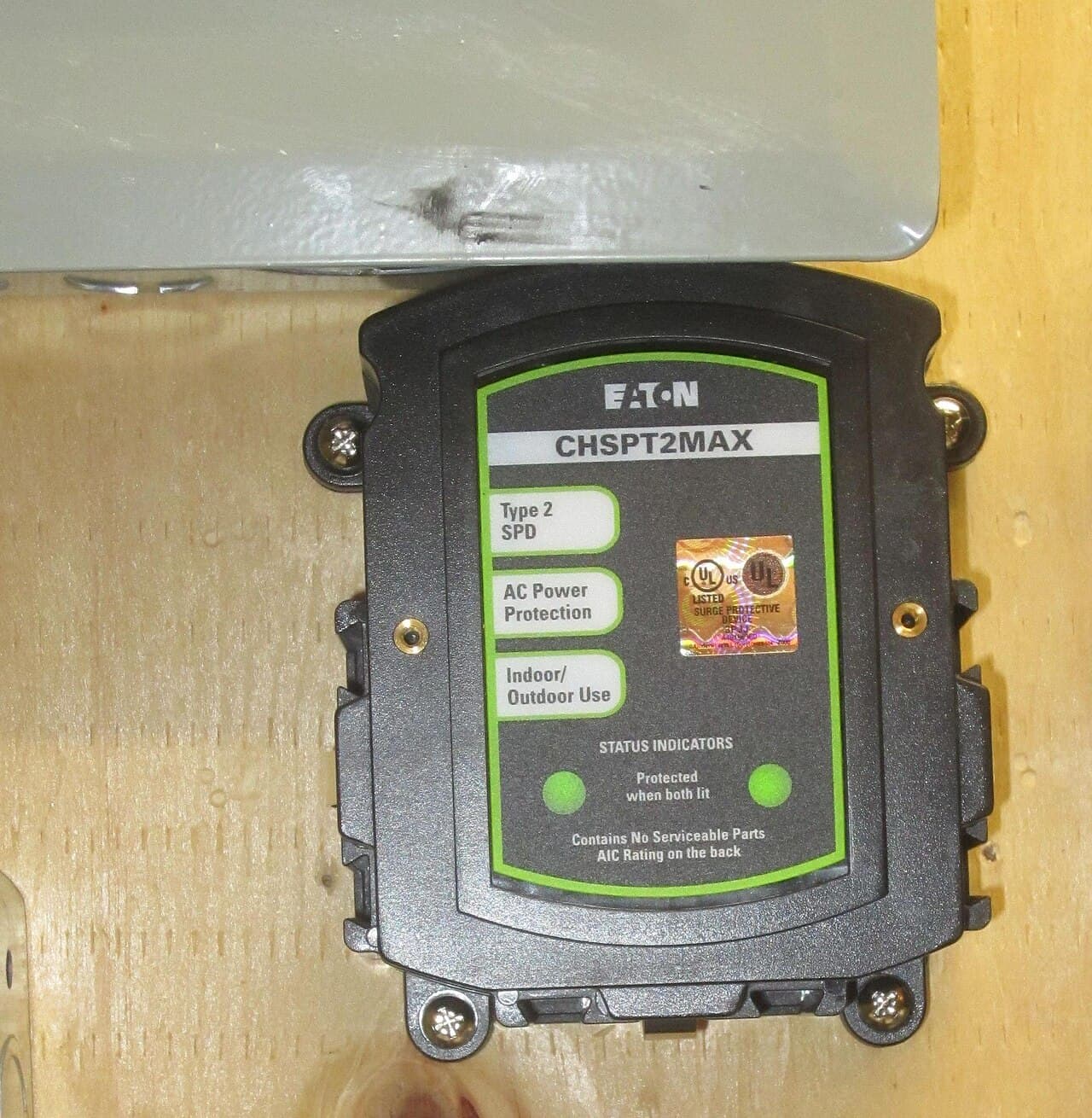
When the code requires one
Fairfax County's technical bulletin on the 2021 Virginia Uniform Statewide Building Code says a surge-protective device is required at the service panel, and that this also applies to replacement service equipment.[1] Pulaski County's summary puts it as all services supplying one- and two-family dwelling units shall be provided with a surge protective device,[2] and says that after January 18, 2025, the 2021 code is the one it enforces.[2] Franklin County's list of changes says service surge protection devices are required for each service panel.[3]
So if a panel or service replacement is on your list, the surge device comes with it. Our answer on whether you need a permit to replace a panel covers the rest of that job.
If your panel is not being replaced, nothing forces the change. Virginia's maintenance code says no provision of it shall require alterations to existing equipment unless conditions are present which meet the definition of an unsafe structure.[4]
When it is worth adding anyway
NIST's homeowner guide to surges suggests looking at your own situation before buying anything. The questions it raises are a good checklist.
What is plugged in. Appliances with mechanical controls are generally insensitive to surges, while appliances with electronic controls can be more susceptible to damage.[5] NIST counts programmable operation, a keypad or a display as signs of electronic control,[5] so look at your major appliances with that in mind. NIST adds that an appliance that is on all the time is at more risk than one used now and then.[5]
Everyday surges, not just storms. Leviton says everyday events such as utility work and air conditioners or washers and dryers switching on and off cause small surges inside a home, and that these can shorten the life of equipment over time.[6]
How the services enter the house. NIST says a detached house where power enters at one end and the telephone or cable TV at the opposite end is the worst arrangement,[5] and that insurance statistics show video equipment among the most frequent damage claims.[5]
A well pump. For a pump outside the house, NIST advises a surge protector should also be installed where the power line to the pump leaves the house,[5] so surges on that line do not enter the house wiring.
Where you live. NIST notes the frequency of lightning strikes varies over the years and with the part of the country you live in.[5] Your own experience of storms and outages in your neighbourhood counts.
If several of these describe your home, a panel device is a reasonable investment. If you have few electronics and no well pump, good plug-in protectors at the TV and computer may be all you want.
It works with plug-in protectors, not instead of them
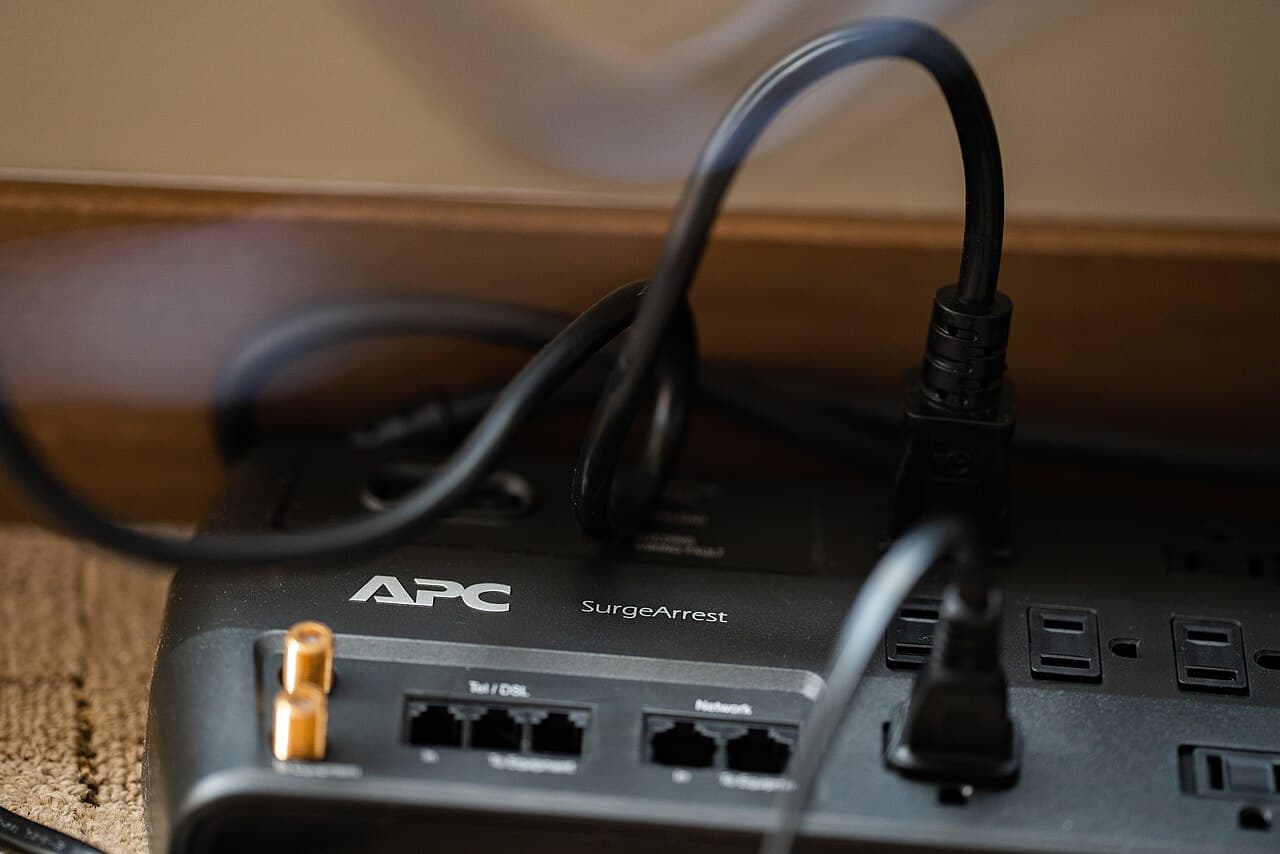
NIST says the honest answer to whether a service-entrance protector is enough for the whole house is no for appliances that are also on a phone, cable or satellite line,[5] because a surge on either system can still damage them. It also says an important function of the service-entrance protector is to divert large surges on the power line before they enter the house.[5] The practical setup is both: a panel device for the house, and a combined plug-in protector with coax or phone jacks, like the one above, at the television and the computer. Our explainer on how a whole-house surge protector works goes into the difference.
When to call a licensed pro
A whole-house unit is connected at the service equipment. NIST says installing a protector wired upstream of the service panel is a job for a licensed electrician, since the power cannot be turned off on that side,[5] and a protector fitted at the meter socket is out of the question as a do-it-yourself project and needs the power company's cooperation.[5] In Virginia, no individual may work as a tradesman unless licensed,[8] and the building code says a permit is required before work starts on electric wiring.[9]
When you hire:
- Check the licence. Virginia's Board for Contractors warns that a license number in an advertisement or on a business card does not necessarily mean the contractor's license is valid.[7] Look it up on DPOR; our guide to checking a contractor's licence shows how.
- Compare like with like. The Board advises to get at least three written bids or estimates using identical plans and specifications.[7] Ask each electrician to name the device, its type and surge rating, where it will mount, and whether your grounding and bonding need work first.
- Ask about the permit and who pulls it, and about registering any connected equipment warranty.
Our answer on what a whole-house surge protector costs in Virginia lists what a good quote shows.
Get it quoted
Browse Loclis surge protection services, look up electricians in Blacksburg, or read more electrical answers.
Describe your surge protector job and licensed local electricians quote it.
Common questions
- Does Virginia require me to add one to my existing panel?
- Not just because the code changed. Virginia's maintenance code does not require alterations to existing equipment unless conditions meet its definition of an unsafe structure. The requirement in the 2021 code applies at the service panel of new work and, per Fairfax County, to replacement service equipment.
- I'm replacing my panel. Will the surge protector be extra?
- It should be in the quote. Fairfax County's summary of the 2021 code says the surge requirement applies to replacement service equipment, so the electrician has to include one. Ask that the device, model and rating be named on the quote.
- Are good power strips enough?
- For a lamp or a radio, a plug-in protector or nothing may be fine. For a home with many electronics and appliances with electronic controls, a panel device diverts the big surges before they reach any circuit, and the plug-in protectors handle what is left at the devices that matter most.
- Can I install one myself?
- In Virginia, electrical work is licensed trade work and a panel-connected device involves the service equipment. Hire a licensed electrician. Our answer on whether a homeowner can do their own electrical work in Virginia covers that question in full.
- Does it help with power outages or brownouts?
- No. A surge protector deals with brief spikes. Sags and outages are a different problem; a battery backup (a UPS) keeps a computer running through short dips, and a generator covers longer outages.
Sources
- [1] Technical Bulletin 24-02: Summary of Code Changes in the 2021 Virginia Uniform Statewide Building Code, Fairfax County Land Development Services. Checked October 27, 2026.
- [2] Summary of Code Changes in the 2021 Virginia Statewide Building Code, Pulaski County Building Department. Checked October 27, 2026.
- [3] 2021 Significant Code Changes, Franklin County, Virginia. Checked October 27, 2026.
- [4] 13VAC5-63-470, Virginia Maintenance Code, Section 103 Application of code, Virginia Administrative Code, Legislative Information System. Checked October 27, 2026.
- [5] Surges Happen! How to Protect the Appliances in Your Home (NIST Special Publication 960-6, May 2001), National Institute of Standards and Technology. Checked October 27, 2026.
- [6] Whole Home Surge Protection, Leviton Manufacturing Co.. Checked October 27, 2026.
- [7] What You Should Know Before You Hire a Contractor, Virginia Department of Professional and Occupational Regulation, Board for Contractors. Checked October 27, 2026.
- [8] Code of Virginia § 54.1-1129, Tradesman license required, Code of Virginia, Legislative Information System. Checked October 27, 2026.
- [9] 13VAC5-63-80, Virginia Uniform Statewide Building Code, Section 108 Application for permit, Virginia Administrative Code, Legislative Information System. Checked October 27, 2026.
Want a pro to handle it?
Describe the job once. Licensed local businesses send quotes, and you pay only when you book one.
Get a quote for Electrical Repair