How much does a whole-house surge protector cost in Virginia?
There is no set statewide price. The total is the device plus a licensed electrician's labor, and it moves with the device's type and rating, where it mounts, whether the panel has room and sound grounding, and whether it rides along with a panel replacement. Permit fees are set locally; Montgomery County's electrical permit minimum was $45 when we checked on October 27, 2026.
Free to ask. Local shops send quotes, and you pay only when you book one.
By Kasra Taheri, Founder, LoclisPublished
Researched and drafted with AI, then checked claim by claim against the sources listed below before it was published. Prices and rules change; the dates beside each source say when it was last checked.
This is a job for a licensed pro in Virginia
This page explains what the work involves, the permits, what a licensed pro does and what drives the cost. It does not give step-by-step instructions, because this work needs a licence, a permit or both, and doing it wrong can injure someone. Before you hire, check the licence on Virginia's DPOR record.
There is no published statewide price for a whole-house surge protector in Virginia, and an honest answer starts with what you are paying for: the device itself, a licensed electrician's time to install it at the panel, and sometimes a permit. Each of those moves with your house. Here is what drives the number, what the public fees look like, and what a good written quote should spell out so you can compare bids.
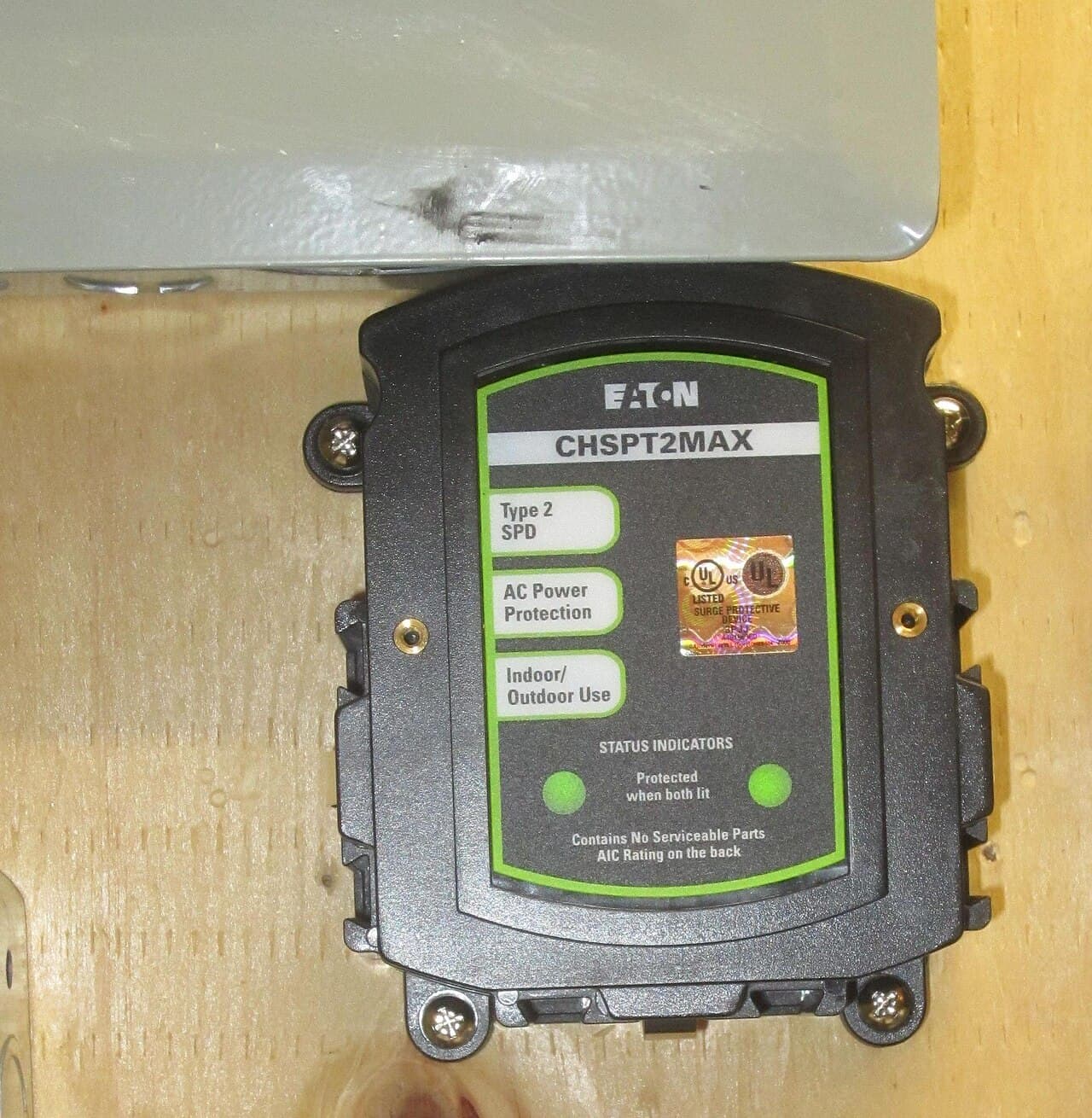
What drives the price
The device and its rating. Whole-house units come in a range of surge ratings. Leviton's residential line, for example, runs from a compact unit with a 36kA maximum surge current rating to one rated 50kA.[5] Siemens sells one model line in 60,000, 100,000 and 140,000 ampere versions, sized by thunderstorm frequency, geographic location and home size.[4] A higher rating, an outdoor-rated enclosure or extra features such as alarms and surge counters can raise the price. Our explainer on how a whole-house surge protector works covers what those ratings mean.
Your panel. Some breaker panel makers offer a snap-in protector that takes the space of two breakers, but it generally fits only a panel from the same manufacturer, possibly down to the model or vintage of the panel.[3] If your panel is full, or the matching part is not made, the electrician fits a separate unit beside it, which can mean more labor. NIST advises that the protector should sit within about one foot of the service panel,[3] so a cramped or finished wall around the panel can add time.
Grounding and bonding. A surge device works by sending the surge to ground, so the electrician should check the grounding first. Siemens's installation notes warn that neutral-to-ground bonding that is not done to the NEC will fail surge devices, and calls it the leading cause of their failures.[4] If the grounding or bonding needs correcting, that is extra work and should be its own line on the quote.
Where it connects. Most homes get a unit at the panel. NIST also describes how some power companies offer a protector fitted between the meter and its socket, which needs the utility's cooperation.[3] Ask your power company whether it runs such a program and what it charges before you compare that option.
Whether it is part of a bigger job. Fairfax County's summary of the 2021 Virginia building code says a surge-protective device is required at the service panel under the 2021 code, and that this also applies to replacement service equipment.[6] If you are already replacing the panel or service, the surge device is part of that job. See what a panel upgrade costs in Virginia for the larger picture.
Permit fees
Virginia's building code says a permit is required before work starts on electric wiring,[2] and the short list of ordinary electrical repairs exempt from a permit names switches, dimmers, 15- or 20-amp 125-volt receptacles, light fixtures and ceiling fans.[2] A panel-connected surge device is not on it, so ask your building department what it requires.
Fees are set locally. When we checked on October 27, 2026, Montgomery County's fee page listed a residential electrical permit at $0.03 per square foot with a $45 minimum,[1] plus a Virginia State Levy of 2% of each fee and a technology fee of 2% with a $10 minimum.[1] On the same page, Upgrade Residential Service was listed at $75.[1] Your county or city's fee page has its own figures, and the electrician usually pulls the permit and passes the fee through.
Warranties are part of the value
Many whole-house units come with a connected equipment warranty. Siemens advertises a 10 year product and connected equipment warranty, subject to its warranty terms,[4] and one Leviton model lists $25K of connected equipment warranty coverage.[5] Read the terms before you count on them, and keep the receipt and the electrician's invoice showing the installation.
Budget for plug-in protection too
A panel unit does not cover everything. For a TV set with only a power connection, a simple plug-in protector on the power cord is enough,[3] but for anything also connected to cable, phone or satellite, NIST recommends a combined protector that carries both the power and the communications line.[3] Plan for one at the television and the home office. Our answer on whether you need a whole-house unit helps you weigh both.
What a good written quote shows
Virginia's Board for Contractors advises homeowners to get at least three written bids or estimates using identical plans and specifications.[7] For a surge protector, identical means each quote names:
- the brand, model, type and surge rating of the device;
- where it mounts, and whether it uses breaker spaces in your panel;
- any grounding or bonding correction found necessary;
- the permit and inspection, if your locality requires them;
- warranty registration, and who handles it.
The Board also says: "Beware of any bid substantially lower than the others."[7] Its rule of thumb for deposits is an initial deposit of no more than 10% of the total price or $1,000, whichever is less,[7] and it notes that Virginia law requires all licensed contractors to provide a written contract for residential work.[7] For small jobs billed by time, see what an electrician costs per hour in Virginia.
When to call a licensed pro
This is panel work, and in Virginia no individual may work as a tradesman unless licensed.[8] Hire a licensed electrical contractor, check the licence on DPOR's record (our guide to checking a contractor's licence shows how), and ask for the permit in the contractor's name if your locality requires one.
Get it quoted
Browse Loclis surge protection services, look up electricians in Blacksburg, or read more electrical answers.
Describe your surge protector job and licensed local electricians quote it.
Common questions
- Why won't you quote a typical price?
- Because no primary source publishes a dated Virginia price for this job, and a number without a source is a guess. The device and labor vary with the unit, your panel and your grounding. Two or three written quotes for the same device will tell you more than any average.
- Is it cheaper to add one when the panel is replaced?
- Usually it is simpler, because the electrician is already working in the panel and the permit and inspection are already happening. Fairfax County's summary of the 2021 code says the surge requirement also applies to replacement service equipment, so a panel replacement quote should include one.
- Do I need a permit for a whole-house surge protector?
- Virginia's building code requires a permit before work on electric wiring, and a panel-connected surge device is not on the short list of exempt ordinary repairs. Ask your building department; the electrician normally pulls the permit and passes the fee through.
- Does the connected equipment warranty mean my TV is covered?
- Only on the manufacturer's terms, which set what is covered and what you must show to claim. Read the warranty before you rely on it, and keep the receipt and the installer's invoice.
- Will I still need plug-in surge protectors?
- For electronics that are also on a cable, phone or satellite line, yes. A panel device does not protect against surges that come in on those lines. Budget for a combined plug-in protector at the TV and computer.
Sources
- [1] Permit & Inspection Fees, Montgomery County, Virginia, Building Permits & Inspections. Checked October 27, 2026.
- [2] 13VAC5-63-80, Virginia Uniform Statewide Building Code, Section 108 Application for permit, Virginia Administrative Code, Legislative Information System. Checked October 27, 2026.
- [3] Surges Happen! How to Protect the Appliances in Your Home (NIST Special Publication 960-6, May 2001), National Institute of Standards and Technology. Checked October 27, 2026.
- [4] FirstSurge Whole House Surge Protection data sheet and installation notes, Siemens Canada Limited. Checked October 27, 2026.
- [5] Whole Home Surge Protection, Leviton Manufacturing Co.. Checked October 27, 2026.
- [6] Technical Bulletin 24-02: Summary of Code Changes in the 2021 Virginia Uniform Statewide Building Code, Fairfax County Land Development Services. Checked October 27, 2026.
- [7] What You Should Know Before You Hire a Contractor, Virginia Department of Professional and Occupational Regulation, Board for Contractors. Checked October 27, 2026.
- [8] Code of Virginia § 54.1-1129, Tradesman license required, Code of Virginia, Legislative Information System. Checked October 27, 2026.
Want a pro to handle it?
Describe the job once. Licensed local businesses send quotes, and you pay only when you book one.
Get a quote for Electrical Repair