Does Virginia require septic tanks to be pumped?
Not everywhere. In Chesapeake Bay Preservation Areas, which cover parts of Tidewater Virginia, septic systems must be pumped out at least once every five years, though some localities accept an inspection or a filter instead. Alternative systems anywhere in the state need a licensed operator visit at least yearly. Elsewhere pumping is recommended every three to five years, and local or HOA rules may add requirements.
Free to ask. Local shops send quotes, and you pay only when you book one.
By Kasra Taheri, Founder, LoclisPublished
Researched and drafted with AI, then checked claim by claim against the sources listed below before it was published. Prices and rules change; the dates beside each source say when it was last checked.
This is a job for a licensed pro in Virginia
This page explains what the work involves, the permits, what a licensed pro does and what drives the cost. It does not give step-by-step instructions, because this work needs a licence, a permit or both, and doing it wrong can injure someone. Before you hire, check the licence on Virginia's DPOR record.
The short version
Virginia does not set one pumping schedule for every septic tank in the state. Whether pumping is legally required depends on where the house is and what kind of system it has:
- Chesapeake Bay Preservation Areas in Tidewater localities: a pump-out at least once every five years, with some local alternatives.
- Alternative systems anywhere in Virginia: a licensed operator visit at least once a year.
- Some other localities and HOAs: their own pump-out rules for sensitive areas.
- Everyone else: no fixed legal deadline, but state agencies recommend pumping every three to five years.
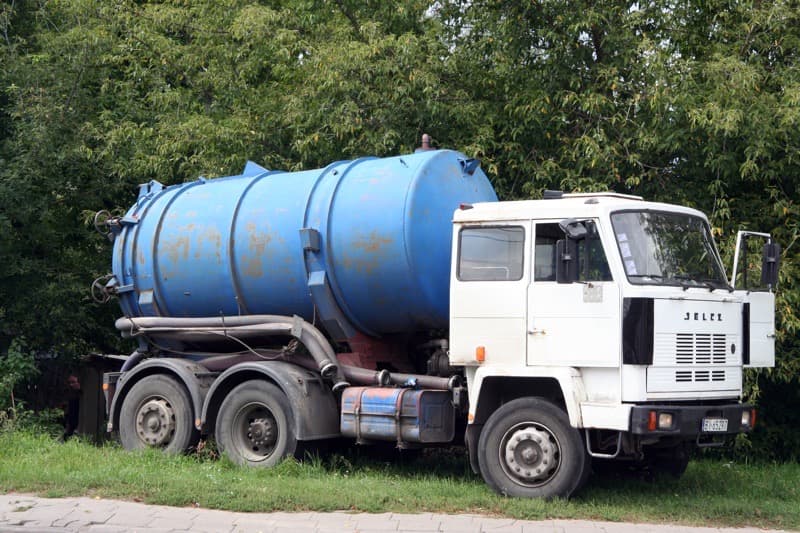
The Chesapeake Bay rule
The firmest requirement comes from the Chesapeake Bay Preservation Area regulations. Onsite sewage treatment systems that do not need a Virginia Pollutant Discharge Elimination System permit must have a pump-out at least once every five years.[1] Through their land use ordinances, local governments must apply that rule to use, development or redevelopment of land in Chesapeake Bay Preservation Areas.[1]
A Chesapeake Bay Preservation Area is any land a local government has designated as a Resource Protection Area or a Resource Management Area.[4] Not every parcel in a covered locality is in one. Contact your local government for maps of RPAs and RMAs in your community.[4]
The Bay Act applies in Tidewater Virginia, which state law defines as the Counties of Accomack, Arlington, Caroline, Charles City, Chesterfield, Essex, Fairfax, Gloucester, Hanover, Henrico, Isle of Wight, James City, King and Queen, King George, King William, Lancaster, Mathews, Middlesex, New Kent, Northampton, Northumberland, Prince George, Prince William, Richmond, Spotsylvania, Stafford, Surry, Westmoreland, and York,[3] and the Cities of Alexandria, Chesapeake, Colonial Heights, Fairfax, Falls Church, Fredericksburg, Hampton, Hopewell, Newport News, Norfolk, Petersburg, Poquoson, Portsmouth, Richmond, Suffolk, Virginia Beach, and Williamsburg.[3]
Alternatives a locality may allow
The regulation gives localities two options in place of a pump-out:
- A filter. If the local health department considers it appropriate, a locality may let owners install and maintain a plastic filter in the outflow pipe from the septic tank instead of the mandatory pump-out.[1]
- An inspection. A locality may also accept documentation every five years, certified by a licensed onsite sewage system operator or onsite soil evaluator, that the system has been inspected, is working properly and the tank does not need pumping.[1]
Which of these your locality accepts, and how it wants proof, is set locally, so ask your county or city before you book.
Twelve counties where VDH enforces it
Since July 1, 2023, the Virginia Department of Health has managed and enforced the pump-out requirement in Accomack, Essex, Gloucester, King and Queen, King William, Lancaster, Mathews, Middlesex, Northampton, Northumberland, Richmond, and Westmoreland Counties and the towns within them.[2][1] In those counties, licensed operators doing pump-outs there must report the results of the site visit through a web-based reporting system the Department developed.[2]
The penalties are real. Under the Code of Virginia, violating the pump-out requirement in those counties is a Class 3 misdemeanor,[2] and the Board of Health must set a uniform schedule of civil penalties for pump-out violations in those counties that are not remedied within 30 days after the Department serves notice.[2]
Alternative systems: yearly operator visits
If your system has a treatment unit, pumps, drip lines or an alarm, it is probably an alternative onsite sewage system, and the rules are stricter everywhere in Virginia. The owner must have the alternative system operated and maintained by an operator, have an operator visit it at the frequency the regulations require, and have the operator collect any required samples.[5] In practice, alternative onsite sewage systems are required to be inspected at least annually by a licensed operator.[4]
Owners must also keep the operator's log and the Operation and Maintenance Manual on the property, show them to VDH on request, and make a reasonable effort to pass them to the next owner.[5]
Local and HOA rules
Outside the Bay Act, check for local rules before assuming there are none. Other localities or even homeowner associations may have requirements mandating the frequency of pump outs for septic tanks in certain sensitive areas such as near recreational waters or caves.[4] Some counties in Virginia require that the tank be pumped every five years regardless of how full it is.[6] As a homeowner, you are responsible for being aware of all such requirements.[4] Your county or city government and your local health department are the places to ask.
Where no rule applies
For a conventional system with no local mandate, pumping is still part of owning the system. Household septic tanks should be pumped every three to five years.[4][6] Our guide on how often a septic tank should be pumped shows how tank size and household size change that number, and what happens during a pump-out explains the visit itself.
When to call a licensed pro
Book a licensed septic professional when your locality's deadline is coming up, when you buy a house in a Bay Act area and cannot find proof of the last pump-out, or when an alternative system's yearly visit is due.
Licensing matters here because the proof has to hold up. Virginia's onsite sewage licensing regulations say maintenance includes pumping the tanks or cleaning the building sewer on a periodic basis.[7] No individual may operate or maintain a conventional or alternative onsite sewage system without a valid onsite sewage system operator license issued by the board in the appropriate class.[8] The company hauling the waste also needs state approval: a sewage handler shall have a written sewage handling permit issued by the commissioner.[9] VDH recommends checking that a service provider is properly licensed on the DPOR website.[10]
Before you hire, ask for:
- The operator licence number, to look up with DPOR.
- The VDH sewage handling permit for the truck and company.
- A dated service report showing what was pumped, the tank condition, and the sludge and scum levels, in the form your locality accepts.
- Whether they report to VDH if you are in one of the twelve VDH-enforced counties.
Selling soon? See whether a septic inspection is required to sell a house in Virginia. For more, browse excavation and septic answers or excavation and septic businesses near Blacksburg.
When you are ready, describe the job once and get quotes from licensed septic businesses.
Common questions
- Is there a statewide law that every Virginia septic tank be pumped on a schedule?
- Not for every conventional system. The firm five-year pump-out rule applies in Chesapeake Bay Preservation Areas in Tidewater localities. Alternative systems anywhere need licensed operator visits at least yearly. Elsewhere, state agencies recommend pumping every three to five years, and your county, city or HOA may have its own rule.
- How do I find out whether my house is in a Chesapeake Bay Preservation Area?
- Ask your county or city government. Localities designate Resource Protection Areas and Resource Management Areas and keep the maps. VDH tells owners to contact their local government for those maps.
- Can an inspection replace the five-year pump-out?
- In some localities, yes. The state regulation lets local governments accept documentation, certified by a licensed operator or onsite soil evaluator, that the system was inspected, works properly and does not need pumping. Whether your locality allows it is up to that locality.
- What proof of pumping should I keep?
- Keep the pumper's dated service report showing the tank condition and the sludge and scum levels, and the operator's log if you have an alternative system. In the twelve counties where VDH enforces the Bay Act pump-out rule, the licensed operator reports the visit through VDH's web-based system.
- Does a home sale trigger a required pump-out in Virginia?
- Not as a general state rule, but buyers and lenders often ask for an inspection, and a pump-out is a common part of it. See our page on whether a septic inspection is required to sell a house in Virginia.
Sources
- [1] 9VAC25-830-130, Chesapeake Bay Preservation Area Designation and Management Regulations: General performance criteria, Virginia Administrative Code, Legislative Information System. Checked October 27, 2026.
- [2] Code of Virginia § 32.1-164, Powers and duties of Board; regulations; fees; onsite soil evaluators; letters in lieu of permits; inspections; civil penalty, Code of Virginia, Legislative Information System. Checked October 27, 2026.
- [3] Code of Virginia § 62.1-44.15:68, Chesapeake Bay Preservation Act: Definitions, Code of Virginia, Legislative Information System. Checked October 27, 2026.
- [4] Onsite Sewage System Owner Responsibilities, Virginia Department of Health. Checked October 27, 2026.
- [5] 12VAC5-613-140, Regulations for Alternative Onsite Sewage Systems: Owner responsibilities, Virginia Administrative Code, Legislative Information System. Checked October 27, 2026.
- [6] What to Expect When Getting Your Septic Tank Pumped (SPES-574NP), Virginia Cooperative Extension, Virginia Tech. Checked October 27, 2026.
- [7] 18VAC160-40-10, Onsite Sewage System Professionals Licensing Regulations: Definitions, Virginia Administrative Code, Legislative Information System. Checked October 27, 2026.
- [8] 18VAC160-40-170, Onsite Sewage System Professionals Licensing Regulations: License required, Virginia Administrative Code, Legislative Information System. Checked October 27, 2026.
- [9] 12VAC5-610-560, Sewage Handling and Disposal Regulations: Sewage handling; general, Virginia Administrative Code, Legislative Information System. Checked October 27, 2026.
- [10] Septic System and Private Well Service Providers, Virginia Department of Health. Checked October 27, 2026.
Want a pro to handle it?
Describe the job once. Licensed local businesses send quotes, and you pay only when you book one.
Get a quote from a local pro