How often should a septic tank be pumped?
Most household septic tanks in Virginia need pumping every three to five years, but the right interval depends on tank size, how many people live in the house, how much water you use and how many solids go down the drains. Have the tank checked at least every three years, alternative systems every year, and pump when the measured sludge and scum say so.
Free to ask. Local shops send quotes, and you pay only when you book one.
By Kasra Taheri, Founder, LoclisPublished
Researched and drafted with AI, then checked claim by claim against the sources listed below before it was published. Prices and rules change; the dates beside each source say when it was last checked.
This is a job for a licensed pro in Virginia
This page explains what the work involves, the permits, what a licensed pro does and what drives the cost. It does not give step-by-step instructions, because this work needs a licence, a permit or both, and doing it wrong can injure someone. Before you hire, check the licence on Virginia's DPOR record.
The short version
Plan on every three to five years for a typical household tank, then adjust to what the measurements show. Household septic tanks should be pumped every three to five years.[1][4][2] VDH and EPA recommend that the average household septic system be inspected at least every three years by a septic service professional,[1][4] and Virginia Cooperative Extension says inspecting the tank every 2 years is good practice, especially if you do not know when it was last pumped.[2]
The interval is not the same for every house. Four factors drive it: household size, total wastewater generated, volume of solids in wastewater, and septic tank size.[1][4]
Estimated pumping intervals by tank and household size
The table below, adapted by Virginia Cooperative Extension from a 1984 engineering study, estimates the years between pumpings for common tank sizes and household sizes.[3] Septic system records are available at your local health department on request, and the permit describes the system's parts, including the size of the septic tank.[9]
| Tank size (gallons) | 1 person | 2 people | 3 people | 4 people | 5 people | 6 people |
|---|---|---|---|---|---|---|
| 750 | 9.1 | 4.2 | 2.6 | 1.8 | 1.3 | 1.0 |
| 1,000 | 12.4 | 5.9 | 3.7 | 2.6 | 2.0 | 1.5 |
| 1,250 | 15.6 | 7.5 | 4.8 | 3.4 | 2.6 | 2.0 |
| 1,500 | 18.9 | 9.1 | 5.9 | 4.2 | 3.3 | 2.6 |
A 1,000-gallon tank serving four people works out to about 2.6 years, while the same tank serving two people works out to about 5.9 years.[3] The table is a starting point. Heavy water use, a garbage disposal or a lot of guests moves the date earlier.
Let the sludge and scum levels decide
The most reliable schedule comes from measuring what is in the tank. EPA's rule is that the tank should be pumped if the bottom of the scum layer is within six inches of the bottom of the outlet, if the top of the sludge layer is within 12 inches of the outlet, or if more than 25 percent of the liquid depth is sludge and scum.[4] EPA also gives a simpler version: a rule of thumb is to pump the tank when the solids are two-thirds of the volume in the tank.[5]
To keep track of when to pump, write down the sludge and scum levels the professional finds each time.[4] After two or three visits you will know how fast your household fills the tank, and the schedule stops being a guess. If you do not know when your tank was last pumped, have it inspected.[2]
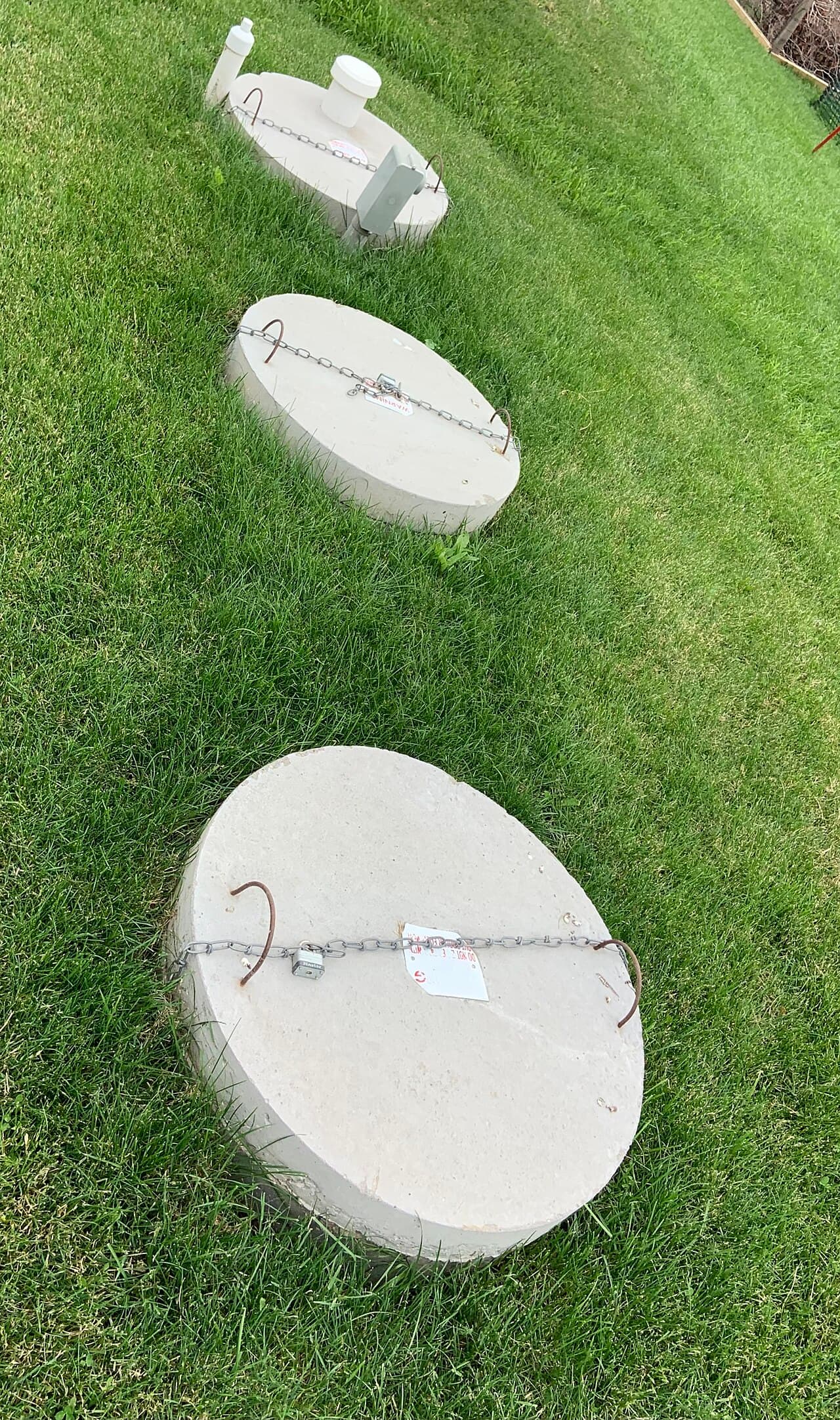
Habits that change the schedule
What goes down the drain changes how fast solids build up.
- Garbage disposals. If you must use a garbage disposal, your tank will need to be pumped more often.[4] Waste from garbage disposal units speeds up the build-up of solids in the tank.[6]
- Water use. The average indoor water use in a typical single-family home can be as much as 70 gallons per person per day, and a single leaky or running toilet can add as much as 200 gallons a day.[4] More water means less settling time in the tank. Fix running toilets and spread laundry across the week.
- Grease, wipes and trash. Keep cooking grease, wipes, diapers and other solids out of the system. They add to the sludge and scum the pumper has to remove.
- Additives. The small quantities of bacteria in additives are generally too small to make an impact, and some enzymes can break down the scum layer so that grease is carried into the drainfield.[6] Additives should never take the place of checking and pumping the tank.[6]
For more on day-to-day care, see keeping a septic system in good shape between inspections.
Why skipping pump-outs costs more later
Failure to have a tank regularly emptied is one of the major causes of septic system failure.[2] Without pumping, solids build up until they can enter the drainfield, where they block soil pores and stop the effluent from draining and being treated.[2] If the drainfield fails, a new drainfield may have to be installed, which can be very expensive.[2] A routine pump-out is a small bill next to that one; see what septic pumping costs in Virginia.
Systems with their own rules
Alternative systems. Systems with pumps, treatment units or alarms are on a stricter footing. Under Virginia rules, alternative onsite sewage systems are required to be inspected at least annually by a licensed operator.[1] Some systems also have a pump chamber. Pump chambers commonly need pumping less often than the tank.[2]
Chesapeake Bay Preservation Areas. In Chesapeake Bay Preservation Areas, onsite sewage systems must be pumped out at least once every five years,[7][1] though a locality may accept an inspection report or a filter instead. Some counties in Virginia require that the tank be pumped every five years regardless of how full it is.[2] Our page on whether Virginia requires septic pumping explains where these rules apply.
Before a storm. Virginia Cooperative Extension advises homeowners to avoid having the tank pumped right before a likely flood, because an empty tank can float.[8] If you are due in hurricane season, book before or after a forecast storm, not the day before.
When to call a licensed pro
Book a pump-out when the last inspection says the sludge or scum is close to the limits above, when you reach the interval the table suggests for your household, or when your locality's deadline comes up. Call sooner if drains slow down across the house, if sewage smells or wet spots appear over the tank or drainfield, or if an alternative system's alarm sounds. Our page on why a septic tank fills up fast covers those warning signs.
Hire a licensed septic professional for the pumping and the inspection. In Virginia, no individual may operate or maintain a conventional or alternative onsite sewage system without a valid onsite sewage system operator license,[10] and you can check a licence with DPOR. Browse more excavation and septic answers or see septic pumping services.
When you are due, describe the job once and get quotes from licensed septic businesses.
Common questions
- Can I go longer than five years if nothing seems wrong?
- Sometimes, if your tank is large and the household is small, but only on the strength of measured sludge and scum levels from an inspection. A system with no symptoms can still be close to pushing solids into the drainfield, and that damage is far more expensive than a pump-out.
- Does a household of one or two people still need regular pumping?
- Yes, just less often. For a 1,000-gallon tank, the Virginia Cooperative Extension estimate is about 12 years for one person and about 6 years for two. Have the tank checked every few years so the interval is based on what is actually in it.
- Do septic additives mean I can pump less often?
- No. Virginia Cooperative Extension says the bacteria in additives are generally too small in number to matter, some enzymes can push grease into the drainfield, and additives should never replace checking and pumping the tank.
- How often does an alternative septic system need service?
- Virginia requires a licensed operator to visit an alternative onsite sewage system at least once a year, or more often if its operating permit says so. The operator decides when the tank itself needs pumping.
- I just bought a house. When should I pump the tank?
- If there are no records showing when it was last pumped, have it inspected soon, and pumped if the sludge and scum levels call for it. Ask the local health department for the system's permit, which shows the tank size you need to plan the schedule.
Sources
- [1] Onsite Sewage System Owner Responsibilities, Virginia Department of Health. Checked October 27, 2026.
- [2] What to Expect When Getting Your Septic Tank Pumped (SPES-574NP), Virginia Cooperative Extension, Virginia Tech. Checked October 27, 2026.
- [3] What to Expect When Getting Your Septic Tank Pumped (SPES-574NP), PDF with Table 1, Virginia Cooperative Extension, Virginia Tech. Checked October 27, 2026.
- [4] How to Care for Your Septic System, U.S. Environmental Protection Agency. Checked October 27, 2026.
- [5] Resolving Septic System Malfunctions, U.S. Environmental Protection Agency. Checked October 27, 2026.
- [6] Septic Tank Best Management Practices (SPES-380), Virginia Cooperative Extension, Virginia Tech. Checked October 27, 2026.
- [7] 9VAC25-830-130, Chesapeake Bay Preservation Area Designation and Management Regulations: General performance criteria, Virginia Administrative Code, Legislative Information System. Checked October 27, 2026.
- [8] Safeguarding Your Well and Septic System Against Flooding Hazards (BSE-369), Virginia Cooperative Extension, Virginia Tech. Checked October 27, 2026.
- [9] What You Should Know When Buying a House with an Onsite System, Virginia Department of Health. Checked October 27, 2026.
- [10] 18VAC160-40-170, Onsite Sewage System Professionals Licensing Regulations: License required, Virginia Administrative Code, Legislative Information System. Checked October 27, 2026.
Want a pro to handle it?
Describe the job once. Licensed local businesses send quotes, and you pay only when you book one.
Get a quote from a local pro