Why does my septic tank fill up so fast?
A working septic tank is always full of liquid up to its outlet, so a tank that looks full soon after pumping is normal. A tank that truly needs pumping too often usually has too many solids going in, too much water going through, or a drainfield that is no longer taking effluent. Liquid standing above the outlet points to the drainfield, not the tank.
Free to ask. Local shops send quotes, and you pay only when you book one.
By Kasra Taheri, Founder, LoclisPublished
Researched and drafted with AI, then checked claim by claim against the sources listed below before it was published. Prices and rules change; the dates beside each source say when it was last checked.
This is a job for a licensed pro in Virginia
This page explains what the work involves, the permits, what a licensed pro does and what drives the cost. It does not give step-by-step instructions, because this work needs a licence, a permit or both, and doing it wrong can injure someone. Before you hire, check the licence on Virginia's DPOR record.
The short version
First, check what "full" means. A septic tank is meant to be full of liquid. When the liquid in the tank rises to the level of the outflow pipe, it flows out to the drainfield.[1] So a tank that looks full a few weeks after pumping is working as designed.
The goal of pumping is to remove the solids, the sludge on the bottom and the fats, oils and grease on top; the liquid effluent should not cause problems as long as the drain lines are working.[1] A tank that really does need pumping too often has one of three problems:
- Too many solids going in for the size of the tank.
- Too much water going through, so solids do not settle.
- A drainfield that is not taking effluent, so the liquid backs up into the tank.
Liquid above the outlet: look at the drainfield
The level of the liquid is the most useful clue, and a pumper can see it when the lid is off. A septic inspection looks for signs of backup, such as staining in the tank above the outlet pipe,[3] and for signs of leakage, such as low water levels in the tank.[3]
If the liquid stands above the outlet, the tank is not the problem. If the drainfield is overloaded with too much liquid, it can flood, causing sewage to flow to the ground surface or create backups in toilets and sinks.[5] Pumping empties the tank for a while, but it refills quickly because the effluent still has nowhere to go.
Too many solids for the tank
More people than the tank was sized for. Tank size and household size set the pace. In Virginia Cooperative Extension's estimates, a 1,000-gallon tank is estimated to need pumping about every 5.9 years for two people but about every 1.5 years for six.[2] Problems can also occur if the system is undersized for the number of people in the house.[7] A new baby, a relative moving in or a home business can change your interval.
A garbage disposal. Using an in-sink garbage disposal can affect how often you need to pump, because food waste is digested slowly and can build up as scum and sludge.[4]
Things that do not break down. Diapers, feminine hygiene products, flushable wipes, any kind of plastic and excess paper break down very slowly or not at all in septic tanks.[6] Grease and cooking oil add to the scum.
Killing the bacteria. Bacteria do much of the work of breaking down solids. Chemicals such as bleach, paint and paint thinners, and antibacterial cleaners can harm the bacteria the system relies on to break down solids,[6] and some products sold to clean or unclog septic systems are harsh enough to kill those bacteria.[6]
Too much water going through
The higher the volume of water that goes in, the less time solids have to settle in the tank and the less chance bacteria have to break them down.[6] Common culprits:
- Leaks. A single leaky or running toilet can add as much as 200 gallons of water per day.[4] Listen for toilets that refill on their own and look for dripping faucets.
- Laundry day. Doing all the household laundry in one day does not give the tank enough time to treat waste and could flood the drainfield.[4] Spread loads through the week.
- Rain and runoff. Virginia Cooperative Extension advises that roof drains and sump pumps should not be discharged close to or upslope of the drainfield.[6] Periods of extremely high precipitation can also cause system failures, especially if they leave standing water over the drainfield.[7] After a flood, reduce water use as much as possible until the water table drops enough for the septic system to begin operating correctly.[8]
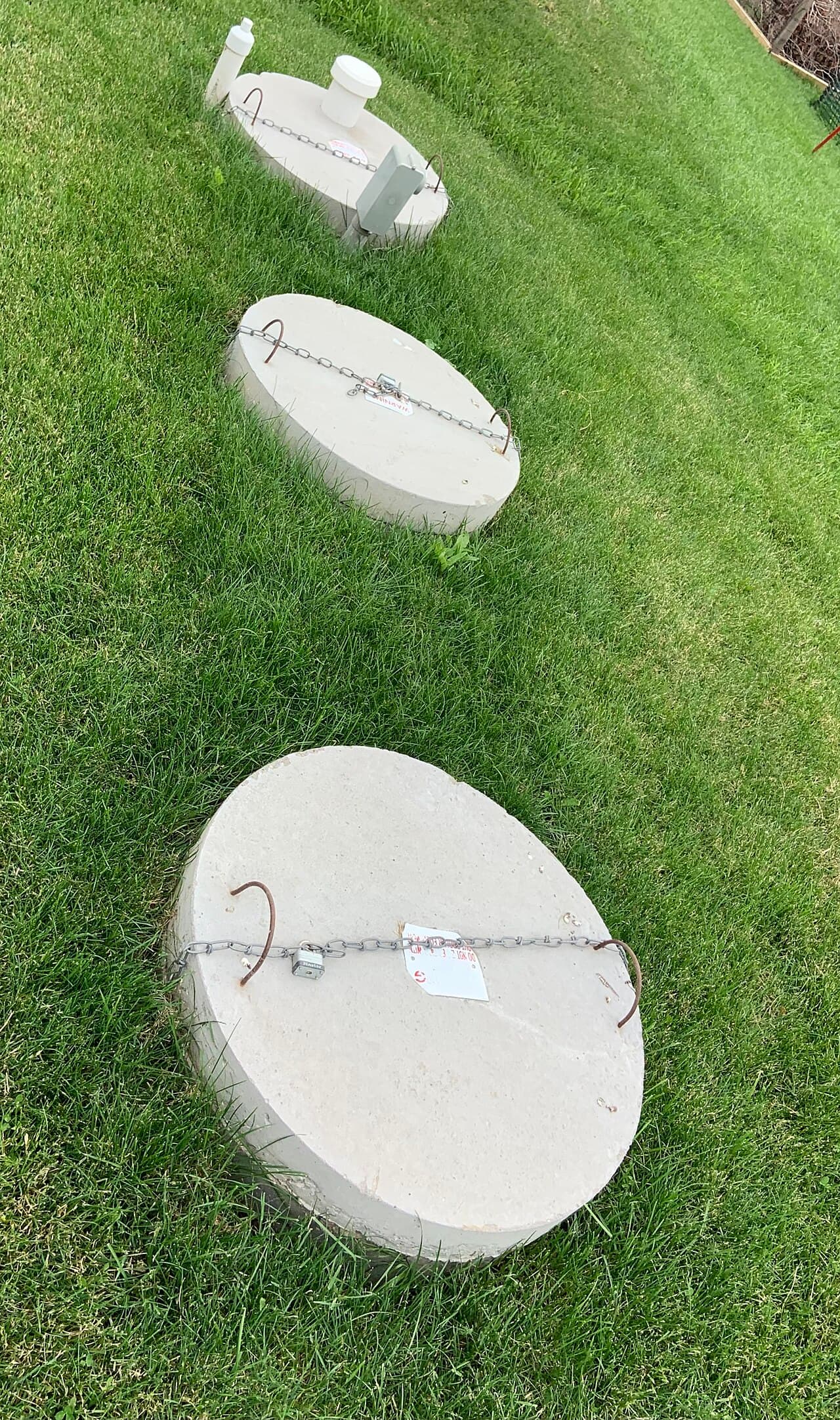
A drainfield or tank that is failing
One of the most common reasons septic systems fail is that the tank is not pumped often enough, so solids fill the tank and then enter the drainfield.[7] Once solids clog the soil, the field cannot drain and treat effluent as it should. Other causes:
- Roots. Tree and shrub roots can enter and damage the drainlines, distribution box or the septic tank itself.[7]
- Worn baffles. A degraded outlet baffle lets solids enter the drainfield, where they can clog the soil in the trench.[7]
- Alternative systems. If the system has an alarm and the alarm goes off, contact your service provider immediately.[9]
For drainfield repair options, see what repairing a septic drain field involves.
Warning signs to watch for
Signs of a failing system include:
- Water and sewage from toilets, drains, and sinks backing up into the home's plumbing[3]
- Standing water or damp spots near or over the septic tank or drainfield[3]
- Bright green, spongy lush grass over the septic tank or drainfield, even during dry weather[3]
Under Virginia's sewage regulations, the presence of raw or partially treated sewage on the ground's surface or in adjacent ditches or waterways is evidence of system failure.[10] When the health department sees and documents a failure, it issues the owner a Notice of Alleged Violation with the steps and a time frame to repair it.[7] Our page on why a septic system backs up into the house covers indoor backups.
When to call a licensed pro
Call a septic professional if you are pumping more often than your household and tank size suggest, if the liquid stands above the outlet, if drains slow down across the house, or if you see any of the warning signs above. Stay out of the tank: opening it and diagnosing the drainfield is work for a licensed pro, and toxic gases build up in septic tanks that can quickly overcome anyone who comes into contact with them.[1]
Ask for a pump-out with an inspection, a written note of the liquid level, sludge and scum depths and baffle condition, and a separate written quote for any repair. In Virginia, no individual may operate or maintain a conventional or alternative onsite sewage system without a valid onsite sewage system operator license,[11] so check the licence with DPOR. Related reading: how often a septic tank should be pumped, more excavation and septic answers, and septic pumping services.
To get it looked at, describe the problem once and get quotes from licensed septic businesses.
Common questions
- My tank was pumped a month ago and it is full again. Is something wrong?
- Probably not. A septic tank refills with household wastewater and runs at the level of its outlet pipe. What matters is the sludge and scum, and whether the liquid sits above the outlet. Ask the pumper whether they saw staining above the outlet or water flowing back from the drainfield.
- Will pumping more often fix a failing drainfield?
- No. If the drainfield cannot take effluent, the tank stays high however often it is pumped. Frequent pump-outs can buy time, but the fix is to find out why the field is failing and repair it, which in Virginia usually needs a health department repair permit.
- Can heavy rain make my septic tank fill up?
- Heavy rain and a high water table can saturate the drainfield so effluent has nowhere to go, and roof drains or sump pumps aimed at the field make it worse. Use as little water as you can until the ground drains, and call a septic professional if problems last.
- Do septic additives slow down how fast the tank fills?
- Virginia Cooperative Extension has no data showing additives improve septic performance. Some enzymes break up the scum so grease reaches the drainfield, and some cleaners are harsh enough to kill the bacteria that digest solids.
- Could a leak make my tank fill more slowly instead?
- Yes, a tank with an unusually low liquid level can be leaking, which is a problem of its own. Ask the pumper to note the liquid level and the condition of the tank in the service report.
Sources
- [1] What to Expect When Getting Your Septic Tank Pumped (SPES-574NP), Virginia Cooperative Extension, Virginia Tech. Checked October 27, 2026.
- [2] What to Expect When Getting Your Septic Tank Pumped (SPES-574NP), PDF with Table 1, Virginia Cooperative Extension, Virginia Tech. Checked October 27, 2026.
- [3] Resolving Septic System Malfunctions, U.S. Environmental Protection Agency. Checked October 27, 2026.
- [4] How to Care for Your Septic System, U.S. Environmental Protection Agency. Checked October 27, 2026.
- [5] How Your Septic System Works, U.S. Environmental Protection Agency. Checked October 27, 2026.
- [6] Septic Tank Best Management Practices (SPES-380), Virginia Cooperative Extension, Virginia Tech. Checked October 27, 2026.
- [7] What Happens If My Septic System Fails? (SPES-379), Virginia Cooperative Extension, Virginia Tech. Checked October 27, 2026.
- [8] Safeguarding Your Well and Septic System Against Flooding Hazards (BSE-369), Virginia Cooperative Extension, Virginia Tech. Checked October 27, 2026.
- [9] Onsite Sewage System Owner Responsibilities, Virginia Department of Health. Checked October 27, 2026.
- [10] 12VAC5-610-350, Sewage Handling and Disposal Regulations: Failure of a sewage disposal system, Virginia Administrative Code, Legislative Information System. Checked October 27, 2026.
- [11] 18VAC160-40-170, Onsite Sewage System Professionals Licensing Regulations: License required, Virginia Administrative Code, Legislative Information System. Checked October 27, 2026.
Want a pro to handle it?
Describe the job once. Licensed local businesses send quotes, and you pay only when you book one.
Get a quote from a local pro