How does a heat pump work in cold weather?
Even freezing air holds some heat. A heat pump's outdoor coil runs colder than the air around it, so its refrigerant soaks up that heat, the compressor concentrates it and the indoor coil releases it into your ducts. As temperatures fall it delivers less heat per unit of electricity, defrosts its outdoor coil from time to time, and leans on backup heat on the coldest days.
Free to ask. Local shops send quotes, and you pay only when you book one.
By Kasra Taheri, Founder, LoclisUpdated
Researched and drafted with AI, then checked claim by claim against the sources listed below before it was published. Prices and rules change; the dates beside each source say when it was last checked.
This is a job for a licensed pro in Virginia
This page explains what the work involves, the permits, what a licensed pro does and what drives the cost. It does not give step-by-step instructions, because this work needs a licence, a permit or both, and doing it wrong can injure someone. Before you hire, check the licence on Virginia's DPOR record.
Even freezing air holds some heat, and a heat pump is built to collect it. Its outdoor coil runs colder than the air around it, so the refrigerant picks up heat outside, the compressor concentrates it, and the indoor coil releases it into your ducts. The colder it gets, the harder the machine works for each unit of heat, which is why it defrosts now and then and has backup heat for the coldest days.
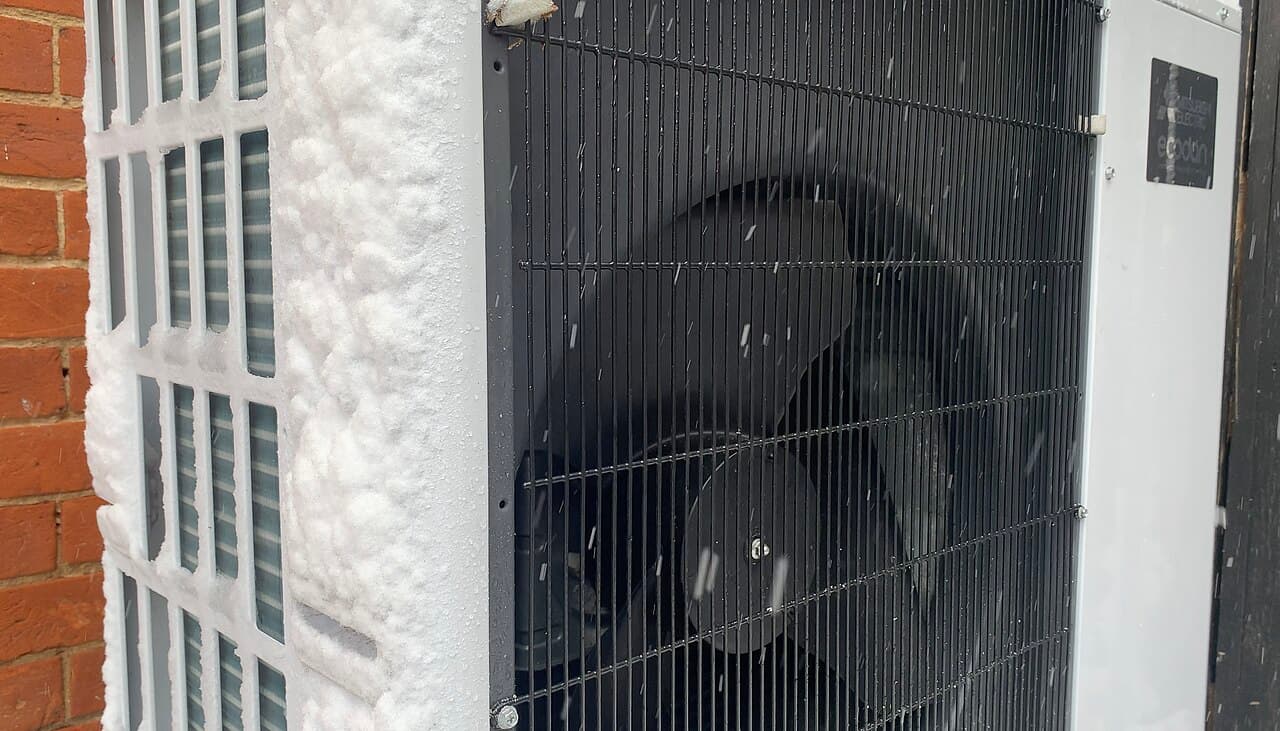
Where the heat comes from
In summer a heat pump works like a central air conditioner, moving heat from inside the house to the outdoors. In winter, ENERGY STAR explains, the same cycle is run in reverse to extract heat energy from the outside and transfer it into your home.[1] The key fact is simple: "Even when it's really cold out, there is still some amount of heat energy in the air."[1]
The refrigerant does the carrying. Because the outdoor air is warmer than the refrigerant, the cold, low-pressure refrigerant in the outdoor coil absorbs that heat and evaporates. The compressor then pressurizes the gas, which raises its temperature, and indoors the refrigerant gives up that heat to the air and condenses back into a liquid.[1] Then the cycle repeats.
How can a coil pick up heat from air that is already cold? Trane says the outdoor coil is typically 10 to 20 degrees colder than the air outside.[4] Heat flows from warmer to colder, so even 20-degree air can warm a coil that is colder still.
Moving heat costs far less energy than making it. ENERGY STAR says an air-source heat pump can deliver up to three times more heat energy to a home than the electrical energy it consumes.[2] According to Virginia Cooperative Extension, electric resistance space heaters have a coefficient of performance (COP) of 1, and a unit rated 3 is three times more energy-efficient than electric resistance heating.[3]
What changes as it gets colder
Heat pumps naturally lose some efficiency as temperatures drop below freezing.[6] There is less heat in the air to collect, so the system runs longer to keep up, and on a bitter night it may not keep up alone.
How cold is too cold depends on the equipment. Carrier says older heat pumps may struggle when temperatures drop below 25-30°F and need supplemental heat, while modern cold-climate heat pumps can operate efficiently in temperatures well below zero.[6] ENERGY STAR's cold-climate certification requires third-party verified performance at low temperatures, with heat pumps tested down to 5°F.[2] Below that, ENERGY STAR says: "Your cold climate ASHP will continue working at temperatures below 5°F, but pairing it with a back-up energy source will heat your home the most efficiently when temperatures are even lower."[2]
Winters differ a lot between Virginia's coast, Piedmont and mountains, so the right equipment differs too. For one local benchmark, Spotsylvania County's HVAC design worksheet, completed by the mechanical contractor as part of its permit packet, uses a winter design outdoor temperature of 14°F and an indoor temperature of 70°F.[8] Your contractor sizes the system and its backup heat for the design temperature where you live.
The air at the registers also feels different from a furnace's. Heat pump supply air can typically be around 85–100°F during heating, compared with roughly 120–140°F from a gas furnace.[6] Held up to a hand, air in that range can feel cool even while it is warming the house.
Defrost: the outdoor coil melts its own frost
Because the coil is so cold, Trane notes that moisture from the air collects on the cold outdoor coil and turns to frost, and that this is normal.[4] The defrost control reads two sensors, one for the outdoor temperature and one for the coil temperature, and a microprocessor decides when to run a defrost cycle.[4] While the heat pump is in defrost mode, the thermostat brings on backup heat to keep the house warm.[5]
A typical defrost cycle lasts about 5–10 minutes.[7] According to Carrier, "A light, thin layer of frost—generally less than 1/4 inch—is normal during winter operation and should clear during the unit's automatic defrost cycle."[7] The HSPF rating used for heat pumps already counts the energy lost during defrost cycles,[3] so defrosting is part of normal operation, not a sign of failure.
Backup heat: auxiliary and emergency
According to Trane, "Every heat pump (HP) should have an auxiliary heat source".[5] It usually takes one of two forms:
- electric heat strips installed in the indoor air handler, which Trane says almost all dealers install with a heat pump as best practice[5]
- a gas furnace paired with the heat pump in a dual-fuel system, where the thermostat switches to the furnace when it gets very cold[5]
ENERGY STAR notes that adding a heat pump to a relatively new furnace creates a dual-fuel system for a modest extra cost over an air conditioner.[2]
You do not switch auxiliary heat on yourself. According to Trane, the thermostat brings on auxiliary heat when the outside temperature is below 40 degrees or a set trigger temperature, when the heat pump is in defrost mode, and when you raise the setting by more than 3-4 degrees.[5] What that costs depends on the backup. "Auxiliary heating with electric heating strips is less efficient and will use more energy than your heat pump".[5] With a dual-fuel system, Trane says: "Having your furnace kick in may or may not cost more, depending on the price of natural gas vs electricity costs."[5]
Emergency heat is different. "Emergency heat is a heat pump thermostat setting that you should only use in a true emergency".[5] Switching it on shuts down the heat pump and makes the auxiliary system the main heat source, and Trane says to call for HVAC service right away when you do.[5]
Settings that help in winter
According to ENERGY STAR, "Unlike a furnace or boiler, heat pumps do not save energy by turning it down when you're away or asleep."[2] Pick a comfortable temperature and leave it. ENERGY STAR also suggests you set the system to "heat" rather than Auto so it does not switch modes on an unseasonable day.[2] Outside, Carrier's general guideline is to keep at least 24 inches of clear space around the heat pump, while following the clearance requirements for your specific model.[7] For a fuller winter routine, see how to keep a heat pump running well in winter.
Signs it is not coping
- Aux heat that will not turn off in mild weather. If it's above 40 degrees and your thermostat shows AUX HEAT for more than an hour or two, Trane suggests investigating.[5]
- Heavy ice. Ice thicker than 1/4 inch, a solid coating of ice, or ice that does not clear during defrost is not normal.[7]
- New noises. Trane counts banging, screeching, rattling, buzzing, grinding or gurgling as noises that call for a professional.[4]
- Cool air for long stretches, not just during a short defrost. See why a heat pump blows cool air in winter.
When to call a licensed pro
What happens inside the unit, the refrigerant charge, the defrost controls, the reversing valve and the compressor, is work for a licensed technician. Under EPA's Section 608 rules, technicians who maintain, service, repair, or dispose of equipment that could release refrigerants into the atmosphere must be certified.[9] Under Virginia law, no individual may work as a tradesman without a licence, and the Code defines a tradesman as someone who does electrical, plumbing or heating, ventilation and air conditioning work for the general public for compensation.[10][11] You can confirm a business's licence on DPOR's License Lookup.[12]
If you are choosing a new system, read how much a heat pump costs in Virginia and what to ask a contractor before installing one. Loclis lists DPOR-licensed HVAC businesses with their licence number and class: browse heat pump services, find HVAC businesses in Blacksburg, or read more heating and cooling answers.
If your heat pump is struggling this winter, describe what it is doing and licensed local HVAC businesses quote the repair.
Common questions
- At what temperature does a heat pump stop working?
- There is no single cutoff. Carrier says older heat pumps may struggle below 25-30°F and need supplemental heat, while modern cold-climate models keep heating well below zero. ENERGY STAR tests its cold-climate units down to 5°F and says they keep working below that, with a backup heat source most efficient when it is colder still.
- Why does my heat pump air feel lukewarm?
- Because it is supposed to. Carrier puts typical heat pump supply air at around 85–100°F, against roughly 120–140°F from a gas furnace. The air is still warmer than the room, so the house warms, just more gently. Air that is truly cold for a long stretch is a different matter.
- Is it normal for the outdoor unit to frost over?
- Light frost is. Carrier calls a thin layer under about 1/4 inch normal in winter and says it should clear during the automatic defrost cycle, which typically lasts about 5–10 minutes. Thicker ice, a solid coat, or ice that stays after defrost needs a technician.
- Should I turn my heat pump down at night in winter?
- Usually not by much. ENERGY STAR says heat pumps do not save energy by being turned down when you are away or asleep, and Trane notes that raising the setting by more than 3-4 degrees brings on auxiliary heat. With electric heat strips as the backup, that uses more energy than the heat pump. Pick a comfortable temperature and leave it there.
- What is the difference between aux heat and emergency heat?
- Auxiliary heat is backup heat the thermostat adds on its own, in very cold weather, during defrost, or after a big jump in the setting. Emergency heat is a setting you choose by hand: it shuts the heat pump off and runs only the backup. Trane says to use it only in a true emergency and to call for service right away.
Sources
- [1] How Does a Heat Pump Work?, ENERGY STAR, U.S. Environmental Protection Agency. Checked October 26, 2026.
- [2] Air-Source Heat Pumps, ENERGY STAR, U.S. Environmental Protection Agency. Checked October 26, 2026.
- [3] ENERGY SERIES: What about the Heating System?, Virginia Cooperative Extension, Virginia Tech. Checked October 26, 2026.
- [4] Heat Pump Troubleshooting: Diagnosing Common Issues, Trane. Checked October 26, 2026.
- [5] What Is Auxiliary Heat in a Heat Pump System?, Trane. Checked October 26, 2026.
- [6] Heat Pump Not Heating? Here's How to Troubleshoot, Carrier. Checked October 26, 2026.
- [7] Heat Pump Troubleshooting Guide, Carrier. Checked October 26, 2026.
- [8] Mechanical (HVAC Only) Application Packet, Spotsylvania County, Virginia. Checked October 26, 2026.
- [9] Section 608 Technician Certification Requirements, U.S. Environmental Protection Agency. Checked October 27, 2026.
- [10] Va. Code § 54.1-1129, Necessity for licensure, Code of Virginia, Virginia General Assembly. Checked October 26, 2026.
- [11] Va. Code § 54.1-1128, Definitions, Code of Virginia, Virginia General Assembly. Checked October 26, 2026.
- [12] License Lookup, Virginia Department of Professional and Occupational Regulation. Checked October 26, 2026.
Want a pro to handle it?
Describe the job once. Licensed local businesses send quotes, and you pay only when you book one.
Get a quote for HVAC Repair