How do I keep a heat pump running well in winter?
Have a licensed technician service it in the fall, keep the filter clean, and keep the outdoor unit clear of snow, leaves and dripping gutters with about two feet of space around it. Hold a steady thermostat setting on Heat, raise it gradually, keep emergency heat for real failures, and call for service when ice will not clear or aux heat runs in mild weather.
Free to ask. Local shops send quotes, and you pay only when you book one.
By Kasra Taheri, Founder, LoclisUpdated
Researched and drafted with AI, then checked claim by claim against the sources listed below before it was published. Prices and rules change; the dates beside each source say when it was last checked.
This is a job for a licensed pro in Virginia
This page explains what the work involves, the permits, what a licensed pro does and what drives the cost. It does not give step-by-step instructions, because this work needs a licence, a permit or both, and doing it wrong can injure someone. Before you hire, check the licence on Virginia's DPOR record.
A heat pump runs hardest in winter, so the habits that keep it healthy are about airflow and steady demand. Book a licensed fall check-up, keep the filter clean, keep the outdoor unit clear of snow, leaves and gutter drips, and hold a steady thermostat setting. Then watch two signals: ice that will not clear and aux heat that runs in mild weather.
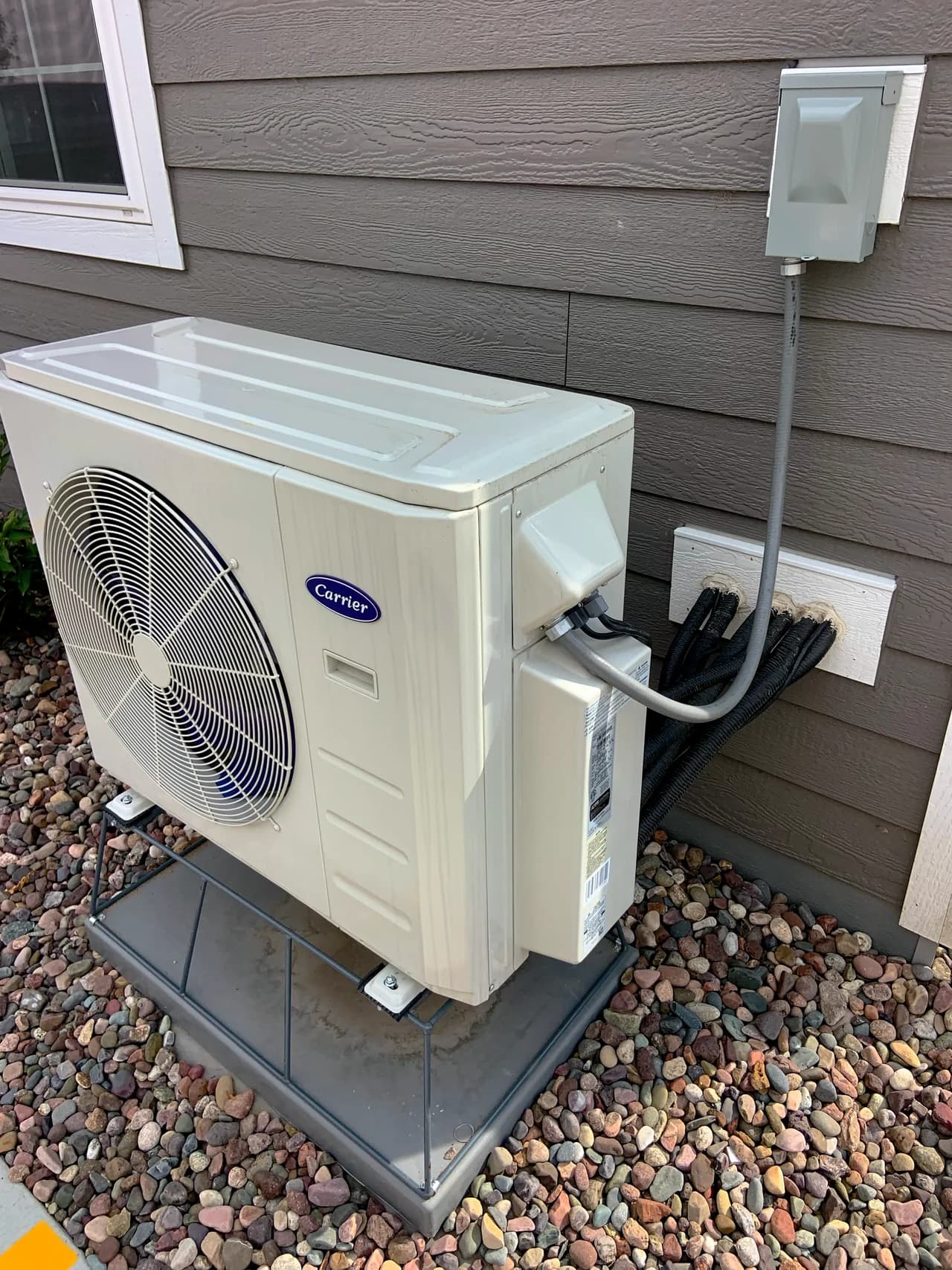
Book a fall check-up
ENERGY STAR's timing advice: "Contractors get busy once summer and winter come, so it's best to check the cooling system in the spring and the heating system in the fall."[1] A heat pump is both systems in one box, and Lennox recommends a professional check-up or tune-up twice a year, in spring and fall.[4]
A real check-up goes well beyond a filter. ENERGY STAR's checklist includes tightening electrical connections and measuring voltage and current on motors, lubricating moving parts, checking the controls and the starting cycle, cleaning the coils, and cleaning and adjusting the blower.[1] The airflow work matters: "Airflow problems can reduce your system's efficiency by up to 15 percent."[1] For a heat pump in winter, Lennox adds that the technician should inspect the defrost sensor and controls during professional maintenance visits.[3]
For prices, see how much an HVAC tune-up costs in Virginia, and for whether a service contract makes sense, are HVAC maintenance plans worth it.
Keep the filter clean
The filter is the homeowner's job. ENERGY STAR's checklist says to inspect, clean, or change air filters once a month,[1] and for heat pumps specifically: "Heat pump filters should be cleaned when visibly dirty or when indicated by the filter light."[2] Lennox suggests replacing the filter every 1-3 months to keep air moving.[3] The reason is the same everywhere: "A dirty filter can increase energy costs and damage your equipment, leading to early failure."[1] More in how often to change a furnace filter and what MERV rating filter to use.
Keep the outdoor unit clear
The outdoor unit pulls heat out of the air, so it needs air. Carrier's general guideline is to keep at least 24 inches of clear space around the heat pump, while following the clearance requirements for your specific model.[5] Lennox advises, "Trim vegetation at least two feet away from the unit on all sides",[3] and adds a few snow-day habits:
- clear snow away after storms without piling it against the sides[3]
- brush light snow off the top with a broom, never a sharp tool[3]
- if you want a cover, use a protective cover for the top only, never the sides, which blocks airflow[3]
- check that the unit sits level on its pad, because settling can cause drainage problems[3]
Watch the roofline above it. "During the winter, water from melting snow or ice can leak onto the coil and then freeze."[5] Lennox's advice is to make sure gutters and downspouts don't drain onto or near the heat pump.[3] A leaking gutter is a job for a gutter or roofing pro, not a reason to move the heat pump yourself.
Let defrost do its job
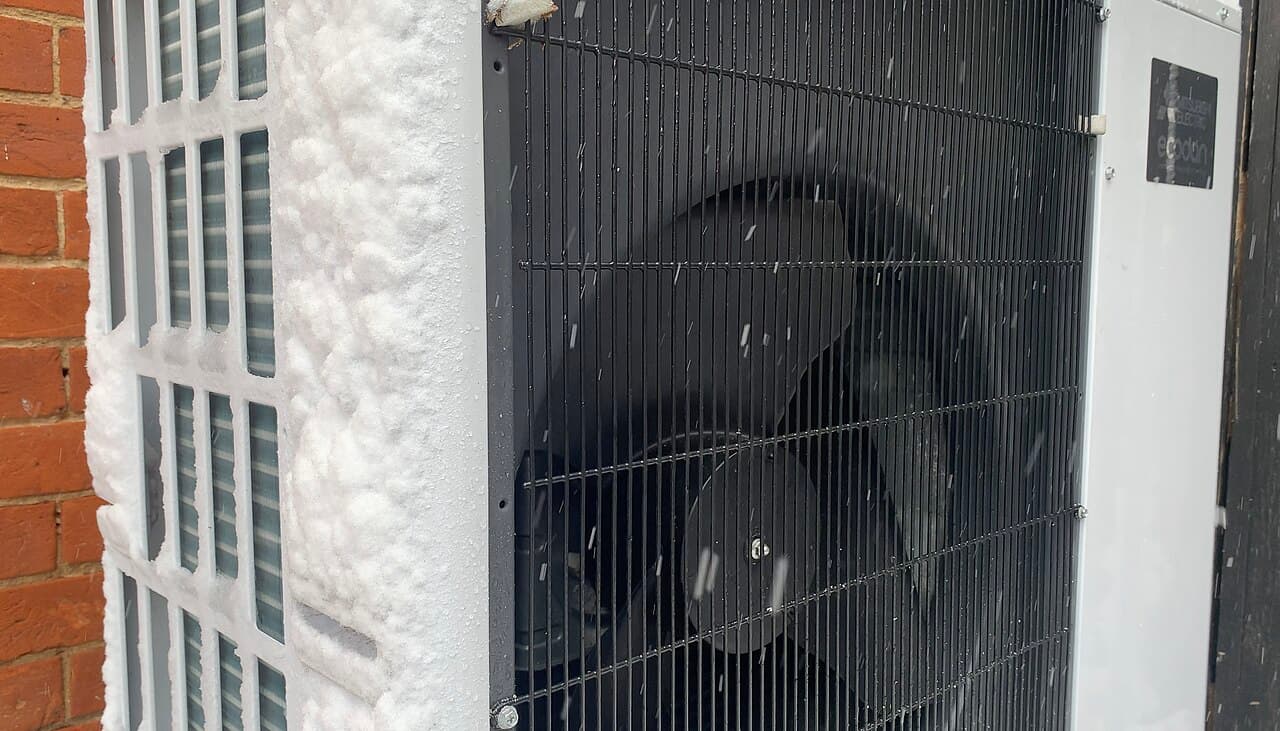
Frost is expected. "A light, thin layer of frost—generally less than 1/4 inch—is normal during winter operation and should clear during the unit's automatic defrost cycle."[5] If more ice builds up, Trane's advice is patience first: "If you suspect your heat pump is frozen, wait a few hours without doing anything to see if the ice melts and the unit defrosts itself."[7]
What you should not do is fight it. "Never try to chip ice from the coil."[5] Lennox also says never pour hot water on the unit, as the sudden temperature change can crack components.[3] If the ice is still there after a few hours, call a technician.
Set the thermostat for a heat pump
Hold the temperature steady. ENERGY STAR: "Unlike a furnace or boiler, heat pumps do not save energy by turning it down when you're away or asleep."[2] It also advises setting the system to heat rather than Auto, to avoid the system switching modes during unseasonably warm or cold days.[2]
Big jumps bring on the backup heat. According to Trane, raising the setting by more than 3-4 degrees is one of the things that triggers auxiliary heat.[6] What that costs depends on the backup: "Auxiliary heating with electric heating strips is less efficient and will use more energy than your heat pump",[6] while with a gas furnace, "Having your furnace kick in may or may not cost more, depending on the price of natural gas vs electricity costs."[6] Lennox warns that "Setting winter temperatures higher than about 68º can put a lot of extra stress on your heat pump",[4] and "When and if you do need to raise the temperature, only raise it one degree at a time."[4]
Leave emergency heat alone unless the heat pump has failed. "Emergency heat is a heat pump thermostat setting that you should only use in a true emergency".[6]
Cut the heat the house loses
The less heat the house leaks, the less often the backup runs. ENERGY STAR says that in a typical house, about 20 to 30 percent of the air that moves through the duct system is lost due to leaks, holes, and poorly connected ducts.[8] Ask your technician to look at accessible ducts in the attic or crawlspace during the fall visit. Lennox also notes: "Leaky or drafty windows and doors can be a huge source of lost heat".[4]
Signs it needs service now
- Ice that does not clear after a few hours, or covers the coil.
- Aux heat running in mild weather. Trane: "If it's above 40 degrees and your thermostat shows AUX HEAT for more than an hour or two, you might want to investigate."[6]
- Cool air for long stretches. See why a heat pump blows cool air in winter.
- A breaker that trips, or new grinding, banging or rattling from the outdoor unit.
When to call a licensed pro
Everything inside the cabinet is licensed work: refrigerant charge, coils, defrost controls, motors and wiring. Under EPA's Section 608 rules, technicians who maintain, service, repair, or dispose of equipment that could release refrigerants into the atmosphere must be certified,[9] and under Virginia law no individual may work as a tradesman without a licence, and the Code defines a tradesman as someone who does electrical, plumbing or heating, ventilation and air conditioning work for the general public for compensation.[10][11] Check a business on DPOR's License Lookup[12] before you book. For the wider picture, read how a heat pump works in cold weather.
Loclis lists DPOR-licensed HVAC businesses with their licence number and class. Browse HVAC maintenance, find HVAC businesses in Blacksburg, or read more heating and cooling answers.
If your heat pump needs attention this winter, describe what it is doing and licensed local HVAC businesses quote the work.
Common questions
- How often should a heat pump be serviced?
- Because a heat pump both heats and cools, it works hard all year. Lennox recommends a professional check-up twice a year, in spring and fall, and ENERGY STAR advises checking the heating system in the fall before contractors get busy. If you only do one visit, book it before the first cold snap.
- Should I cover my heat pump in winter?
- Not the whole unit. Lennox says a protective cover, such as a snow guard, should go on the top only and never the sides, which blocks airflow. A heat pump runs all winter and needs air moving freely through its coil.
- Is it bad to turn my heat pump down at night?
- It usually does not save much. ENERGY STAR says heat pumps do not save energy by being turned down when you are away or asleep, and Trane notes that raising the setting by more than 3-4 degrees brings on auxiliary heat. If that backup is electric heat strips, it uses more energy than the heat pump. A steady setting is usually the better habit.
- How much frost on a heat pump is too much?
- Carrier calls a thin layer under about 1/4 inch normal in winter and says it should clear during the automatic defrost cycle. Thicker ice, a solid coat or ice that stays after defrost needs a technician. Trane suggests waiting a few hours to see if the unit defrosts itself before calling.
- Should I use emergency heat when it is very cold?
- No. In normal cold weather the thermostat brings on auxiliary heat by itself. Trane says emergency heat is a setting to use only in a true emergency, when the heat pump has failed, and to call for service right away when you switch to it.
Sources
- [1] Maintenance Checklist, ENERGY STAR, U.S. Environmental Protection Agency. Checked October 26, 2026.
- [2] Air-Source Heat Pumps, ENERGY STAR, U.S. Environmental Protection Agency. Checked October 26, 2026.
- [3] What to Do If Your Heat Pump Is Frozen?, Lennox. Checked October 26, 2026.
- [4] What Does Aux Heat Mean on My Thermostat?, Lennox. Checked October 26, 2026.
- [5] Heat Pump Troubleshooting Guide, Carrier. Checked October 26, 2026.
- [6] What Is Auxiliary Heat in a Heat Pump System?, Trane. Checked October 26, 2026.
- [7] Heat Pump Troubleshooting: Diagnosing Common Issues, Trane. Checked October 26, 2026.
- [8] Duct Sealing, ENERGY STAR, U.S. Environmental Protection Agency. Checked October 26, 2026.
- [9] Section 608 Technician Certification Requirements, U.S. Environmental Protection Agency. Checked October 27, 2026.
- [10] Va. Code § 54.1-1129, Necessity for licensure, Code of Virginia, Virginia General Assembly. Checked October 26, 2026.
- [11] Va. Code § 54.1-1128, Definitions, Code of Virginia, Virginia General Assembly. Checked October 26, 2026.
- [12] License Lookup, Virginia Department of Professional and Occupational Regulation. Checked October 26, 2026.
Want a pro to handle it?
Describe the job once. Licensed local businesses send quotes, and you pay only when you book one.
Get a quote for HVAC Repair