How does a well pump work?
A well pump lifts groundwater into a pressure tank, where the water squeezes a cushion of air. A pressure switch starts the pump when pressure falls to a set point and stops it at a higher one, typically 20 to 40 psi on and 40 to 60 psi off. A submersible pump is commonly used in drilled wells; shallower wells may use a jet pump.
Free to ask. Local shops send quotes, and you pay only when you book one.
By Kasra Taheri, Founder, LoclisUpdated
Researched and drafted with AI, then checked claim by claim against the sources listed below before it was published. Prices and rules change; the dates beside each source say when it was last checked.
This is a job for a licensed pro in Virginia
This page explains what the work involves, the permits, what a licensed pro does and what drives the cost. It does not give step-by-step instructions, because this work needs a licence, a permit or both, and doing it wrong can injure someone. Before you hire, check the licence on Virginia's DPOR record.
The short version
A private water system has three working parts besides the well itself: a pump that lifts water out of the ground, a pressure tank that stores it under pressure, and a pressure switch that turns the pump on and off. Virginia's well regulations treat these parts as one water well system: the well itself, plus the pump, the tank and the pipe and wire between them, as far as the point where they connect to the house's plumbing and electrical systems.[3]
When you open a faucet, water leaves the tank first. As the tank empties, pressure falls, the switch closes, and the pump runs until pressure is back up. Then it stops and waits for the next draw.
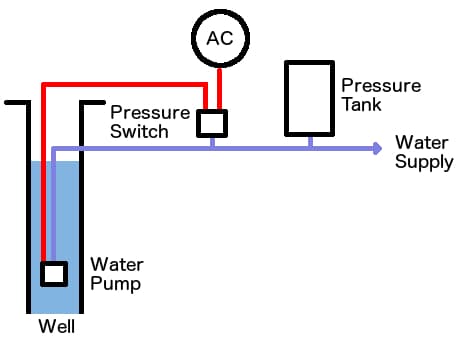
Submersible pumps: common in drilled wells
A submersible pump is commonly used in drilled wells.[1] The pump and motor are one unit, usually about 3½ inches in diameter and 2 to 3 feet long, placed in the well below the water level.[1] A pipe carries water up from the pump, and an electrical cable runs down beside it to power the motor.
Because the whole unit sits underwater below the frost line, it needs no frost protection,[1] and you never see it. The trade-off is access. If it needs repair, the pump has to be pulled from the well.[1] That is usually a job for a crew with lifting equipment, and it is a big part of why submersible work costs what it does.
Check valves hold pressure in the system when the pump stops.[2] Without one, the water in the pipe would drain back down the well each time the pump shut off, and the system would lose pressure between cycles.
Jet pumps: above ground, for shallower water
Some wells use a jet pump, which sits on top of the well or in a pump house. As a rule of thumb, shallow-well jet pumps are used when the water is less than 25 feet below the surface, and deep-well jet pumps when it is 25 to 250 feet down.[1]
A jet pump works by forcing water through a narrow, cone-shaped device called a venturi, which creates a partial vacuum that draws water up from the well.[1] Because the pump sits above ground it is easy to reach for repairs, but it needs frost protection, and it has to be primed (filled with water) when first started.[1] An air leak in the suction pipe or a water leak in the drop pipe will cause it to lose its prime.[1] Virginia's regulations name these setups too, including deep well ejector pump systems, which must maintain a constant vacuum to operate.[3]
The pressure tank and the pressure switch
The tank is where the system gets its pressure. When water is pumped into a tank that holds air, the air is compressed, and that puts the water under pressure.[1] In a typical household system the pump shuts off at a preset level, typically 40 to 60 psi, and starts again when pressure falls to a lower preset level, typically 20 to 40 psi.[1] The pressure switch, usually at or near the tank, is what decides those start and stop pressures.[1]
The tank does a second job that matters just as much: it builds a reserve of water so the pump starts and stops less often, which prolongs the pump's life.[1] Since 1970, most private water systems have used diaphragm or bladder-type tanks, in which a bladder keeps the water from touching the air.[1] In an older galvanized steel tank, air and water are in direct contact and the water slowly absorbs the air; if that air is not replaced, the tank becomes waterlogged and the pump runs nearly every time water is used.[1] Whatever the tank, a waterlogged tank causes rapid cycling.[2]
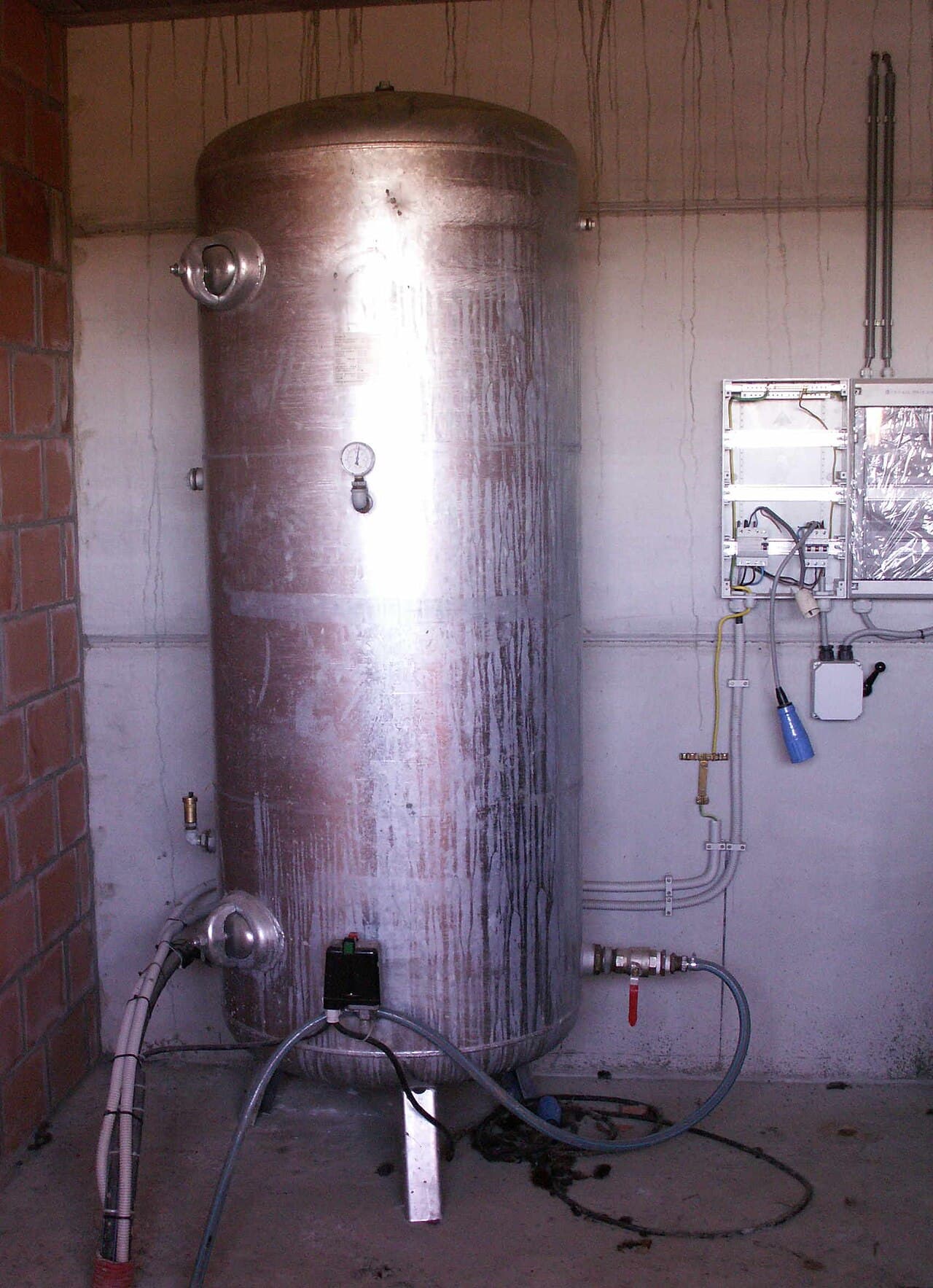
Starts are what wear a pump motor: excessive cycling shortens the life of the control components and can damage the motor's splines and bearings or overheat it.[2] A Franklin Electric submersible motor should run for at least one minute each time it starts, so the heat built up by the starting current can dissipate.[2] A correctly sized tank and switch are how a system meets that.
Constant-pressure systems
Some newer systems replace the on-off switch with a variable frequency drive. Instead of running flat out and stopping, a controller sets the motor's speed to hold pressure nearly constant: the pump speeds up when water is used and slows down or stops when use drops.[1] These systems use less energy, because the pump runs longer with fewer startups,[1] and they need only a small pressure tank, although a larger one may be used.[2] You notice it as steady pressure in the shower instead of a slow fade and surge.
When to call a licensed pro
Repairing a well is licensed work in Virginia. The state's private well regulations say: "Persons engaged in the construction, repair, or alteration of a private well shall be licensed and certified".[4] The Board for Contractors' water well and pump specialty covers the installation of the well pump and tank, including pipe and wire, up to and including the point of connection to the plumbing and electrical systems.[5] The same regulation does not exclude plumbing, electrical or HVAC contractors from installing pumps and tanks.[5]
There is a safety reason too. The pump runs on electricity,[6] and submersible pump and motor equipment "should be installed and serviced by technically qualified personnel".[2] Some controls can hold lethal voltage after power has been disconnected.[2]
Call a licensed well and pump contractor when:
- you have no water, or pressure keeps fading while the pump runs
- the pump clicks on and off rapidly, or starts every time you open a tap
- the pump runs and will not shut off
- the breaker for the pump trips, or the faucets spit air
- water looks cloudy, sandy or different after a repair or a storm
After any repair, ask the contractor about disinfecting the well. Virginia Cooperative Extension recommends shock chlorination after any maintenance or repair of a private water supply system,[6] and the EPA says to test the well immediately when you replace or repair any part of your well system.[7] Before you hire, check the contractor's licence on DPOR's record.
Find a well pump pro
Loclis lists licensed businesses from Virginia's DPOR register. Browse well pump services, see the rest of the plumbing answers, or look up plumbers in Floyd. When the pump is acting up, describe the job once and licensed local businesses quote it.
Common questions
- What is the difference between a submersible pump and a jet pump?
- A submersible pump and its motor are one unit that sits in the well below the water level, and it is commonly used in drilled wells. A jet pump sits above ground, on the well or in a pump house, and draws water up with a venturi. It is easier to reach but needs frost protection and must stay primed.
- What does the pressure tank do?
- It holds water under pressure so you can run a faucet without the pump starting every time, and it builds a reserve so the pump starts and stops less often, which prolongs its life. A typical system shuts the pump off somewhere between 40 and 60 psi and starts it again between 20 and 40 psi.
- Why does my well pump click on every time I use water?
- A pump that starts every time you open a tap often points to a waterlogged pressure tank, which causes rapid cycling. A pressure switch, a check valve that is not holding or a leak can do it too. Frequent starts wear the motor and controls, so have a licensed well or pump contractor look at it.
- Do I lose water when the power goes out?
- Yes. The pump runs on electricity, so it stops when the power does. You can usually still draw some of what is stored in the pressure tank until the pressure falls, and then the taps run dry until power returns.
- Who is allowed to repair a well pump in Virginia?
- Virginia's private well regulations require anyone who builds, repairs or alters a private well to be licensed and certified. Installing the pump and tank falls under the Board for Contractors' water well and pump specialty, and that definition does not exclude plumbing, electrical or HVAC contractors from installing pumps and tanks.
Sources
- [1] Private Drinking Water Wells: The Distribution System (G2152), University of Nebraska-Lincoln Extension. Checked October 26, 2026.
- [2] AIM Manual, 60 Hz Submersible Systems: Application, Installation, Maintenance (2026 edition), Franklin Electric. Checked October 26, 2026.
- [3] 12VAC5-630-10, Private Well Regulations: Definitions, Virginia Administrative Code, Legislative Information System. Checked October 26, 2026.
- [4] 12VAC5-630-80, Relationship to the Department of Professional and Occupational Regulation, Virginia Administrative Code, Legislative Information System. Checked October 26, 2026.
- [5] 18VAC50-22-30, Board for Contractors Regulations: Definitions of specialty services, Virginia Administrative Code, Legislative Information System. Checked October 26, 2026.
- [6] Virginia Household Water Quality Program: Shock Chlorination, Disinfecting Private Household Water Supply Systems (442-663), Virginia Cooperative Extension, Virginia Tech. Checked October 26, 2026.
- [7] Private Wells: Protect Your Home's Water, U.S. Environmental Protection Agency. Checked October 26, 2026.
Want a pro to handle it?
Describe the job once. Licensed local businesses send quotes, and you pay only when you book one.
Get a quote for Plumbing Repair