Who can work on a private well in Virginia?
Anyone who builds, repairs or alters a private well in Virginia must be a licensed contractor and a certified water well systems provider, both through DPOR's Board for Contractors. Only the water well and pump specialty may drill wells. Licensed plumbing, electrical and HVAC contractors may also install pumps and pressure tanks; that allowance covers installation only. Drilling, deepening or abandoning a well needs a Virginia Department of Health permit.
Free to ask. Local shops send quotes, and you pay only when you book one.
By Kasra Taheri, Founder, LoclisUpdated
Researched and drafted with AI, then checked claim by claim against the sources listed below before it was published. Prices and rules change; the dates beside each source say when it was last checked.
This is a job for a licensed pro in Virginia
This page explains what the work involves, the permits, what a licensed pro does and what drives the cost. It does not give step-by-step instructions, because this work needs a licence, a permit or both, and doing it wrong can injure someone. Before you hire, check the licence on Virginia's DPOR record.
The short version
Building, repairing or altering a private well in Virginia is licensed work. The state's private well regulations put it in one sentence: "Persons engaged in the construction, repair, or alteration of a private well shall be licensed and certified in accordance with §§ 54.1-1103 and 54.1-1129.1 of the Code of Virginia."[1] Those two sections of the Code are the contractor's business licence and the individual's water well certification, both issued through DPOR's Board for Contractors. On top of that, drilling, altering, deepening or abandoning a well needs a permit from the Virginia Department of Health.
Two credentials: the business and the people
The business holds a contractor's licence. For most home improvement work, a valid Virginia Contractor's License is required when the work is valued at $1,000 or more.[11] Well drilling is different: when the work is the construction of a water well, the contractor shall be licensed, regardless of the contract amount.[3] The licence class depends on the size of the work:
- A Class C licence covers a single water well contract of no more than $10,000, or no more than $150,000 of such contracts in any 12 months.[3]
- A Class B licence covers a single contract of $10,000 or more but less than $120,000, or $150,000 or more but less than $750,000 in 12 months.[3]
- A Class A licence covers a single contract of $120,000 or more, or $750,000 or more in 12 months.[3]
The workers hold a water well systems provider certification. The Board certifies individuals at three levels. Under the Code, a trainee needs at least one year of full-time practical experience, a journeyman at least three years and a master at least six, all in the drilling, installation, maintenance or repair of water wells or water well systems under the supervision of a certified master.[2] To renew, a certified provider must complete at least eight hours of Board-approved continuing education[2] covering well construction, the regulations and business practices.
Which licence covers which part of the well
The Board's regulations define a water well and pump specialty, abbreviated WWP. It covers the installation of a water well system, including geothermal wells, which includes construction of a water well to reach groundwater,[4] and the installation of the well pump and tank, including pipe and wire, up to and including the point of connection to the plumbing and electrical systems.[4]
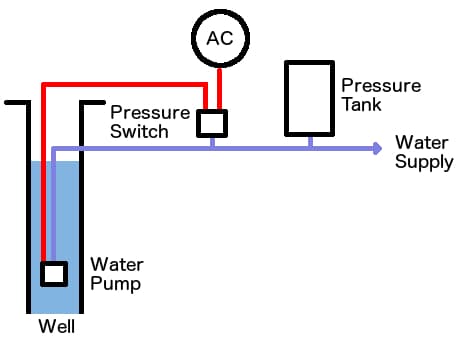
Two lines in that definition decide who you can call:
- Drilling is reserved. "No other classification or specialty service provides for construction of water wells."[4] Only a well contractor drills, deepens or rebuilds the well itself.
- Pumps and tanks are shared. "This regulation shall not exclude the PLB, ELE, or HVA classification from installation of pumps and tanks."[4] PLB, ELE and HVA are the Board's plumbing, electrical and HVAC contractor classifications; HVA covers heating, ventilating and cooling systems.[5] So a licensed plumbing contractor may also install a pump or pressure tank.
For a dead pump, low pressure or a cycling tank, call a water well and pump contractor, the specialty built around the pump and tank. For a dry well, a cracked casing, a new well or an old one to be closed, call a water well contractor.
Permits from the Virginia Department of Health
The health department regulates the well itself. Under its regulations, no one may construct, alter, abandon or deepen a private well without a written construction permit from the health commissioner.[6] Routine equipment work is carved out: replacing a well pump, replacing a well seal or cap with an equivalent one, or extending the casing upward above the ground is not a well alteration.[6]
For a new or rebuilt well, two more rules apply. A private well may not be placed in operation without a written inspection statement,[6] and a construction permit is valid for 18 months, with one 18-month renewal.[6] The permit fee for a private well construction or abandonment was $300 when we checked the state's fee schedule on October 26, 2026.[7] One useful exception: an owner applying to properly and permanently abandon an existing well on the property that is their principal residence is not charged an application fee.[8]
Closing an old well is a job for a pro as well. Virginia Cooperative Extension recommends having a licensed well contractor properly abandon wells no longer in use,[10] and the EPA's advice is the same for new wells and changes to a well: "Hire a certified well driller for any new well construction, modification, or abandonment and closure."[9]
Checking a well contractor before you hire
The Board for Contractors warns that a license number in an advertisement or on a business card does not necessarily mean the contractor's license is valid.[11] Look the business up on DPOR's record, or call the Board for Contractors at (804) 367-8511.[11] Information on past complaints and disciplinary actions is also available from the Board.[11] Our guide to checking a contractor's licence walks through the lookup.
When you look, check three things: the licence is current, its class fits the size of the job, and its classification or specialty covers the work (WWP for drilling; WWP, PLB, ELE or HVA for installing a pump or tank). Then get the job in writing. Virginia law requires all licensed contractors to provide a written contract for residential work.[11]
When to call a licensed pro
Call a licensed pro for any part of the water well system: the pump, the pressure switch and control box, the wiring to the well, the pitless adapter and well cap, the casing, and the well itself. Call right away if you lose water, the pump will not stop running or cycles every few seconds, the water turns cloudy or sandy, or the wellhead is damaged. If you are buying a house on a well, a licensed well contractor can also tell you the condition of the pump and tank before you close. To understand what they will be looking at, read how a well pump works.
Find a licensed well pro
Loclis lists licensed businesses from Virginia's DPOR register with their licence number and class. Browse well pump services, look up plumbers in Floyd, or see more plumbing answers. When you are ready, describe the job once and licensed local businesses quote it.
Common questions
- Can a plumber install a well pump in Virginia?
- A licensed plumbing contractor may install pumps and tanks. The Board for Contractors' water well and pump specialty covers installing the pump and tank, and its definition states that it does not exclude the plumbing, electrical or HVAC classifications from installing pumps and tanks. That allowance is about installation. For repairs, the private well regulations require anyone repairing a private well to be licensed and certified, so a water well and pump contractor is the clearest call. Drilling the well itself is reserved for the water well specialty.
- Do I need a permit to replace a well pump?
- Not a health department well permit. Virginia's private well regulations say replacing a well pump, or replacing a well seal or cap with an equivalent one, is not a well alteration. Drilling, deepening, altering or abandoning the well does need a construction permit.
- Who drills a new well in Virginia?
- A contractor licensed for water well work, with certified water well systems providers on the job. The Board's regulations say no other classification provides for constructing water wells, and the well needs a construction permit from the Virginia Department of Health before drilling starts.
- Does abandoning an old well need a professional?
- It needs a permit, and a pro is the recommended route. Abandoning a well needs a construction permit from the Virginia Department of Health. Virginia Cooperative Extension recommends a licensed well contractor for the job, and the EPA advises hiring a certified well driller for abandonment and closure. An owner abandoning a well at their principal residence is not charged the application fee.
- How do I check a well contractor's licence?
- Search the business on DPOR's licence lookup or call the Board for Contractors at (804) 367-8511. Check that the licence is current and that its classification or specialty covers the work, and ask the Board about past complaints.
Sources
- [1] 12VAC5-630-80, Relationship to the Department of Professional and Occupational Regulation, Virginia Administrative Code, Legislative Information System. Checked October 26, 2026.
- [2] Code of Virginia § 54.1-1129.1, Certification of water well systems providers; continuing education, Code of Virginia, Legislative Information System. Checked October 26, 2026.
- [3] Code of Virginia § 54.1-1103, Necessity for license; requirements for water well drillers and landscape irrigation contractors, Code of Virginia, Legislative Information System. Checked October 26, 2026.
- [4] 18VAC50-22-30, Board for Contractors Regulations: Definitions of specialty services, Virginia Administrative Code, Legislative Information System. Checked October 26, 2026.
- [5] 18VAC50-22-20, Board for Contractors Regulations: Definitions of contractor classifications, Virginia Administrative Code, Legislative Information System. Checked October 27, 2026.
- [6] 12VAC5-630-220, Private Well Regulations: Permits and inspection statement; general, Virginia Administrative Code, Legislative Information System. Checked October 26, 2026.
- [7] 12VAC5-620-70, Regulations Governing Application Fees: Establishing fees, Virginia Administrative Code, Legislative Information System. Checked October 26, 2026.
- [8] 12VAC5-620-80, Regulations Governing Application Fees: Waiver of fees, Virginia Administrative Code, Legislative Information System. Checked October 26, 2026.
- [9] Private Wells: Protect Your Home's Water, U.S. Environmental Protection Agency. Checked October 26, 2026.
- [10] 10 Tips for Managing your Private Water Supply (BSE-367), Virginia Cooperative Extension, Virginia Tech. Checked October 27, 2026.
- [11] What You Should Know Before You Hire a Contractor, Virginia Board for Contractors, DPOR. Checked October 26, 2026.
Want a pro to handle it?
Describe the job once. Licensed local businesses send quotes, and you pay only when you book one.
Get a quote for Plumbing Repair