How much does a well pump replacement cost in Virginia?
There is no standard Virginia price; the number comes from a written quote. It turns on the pump type, how deep the pump is set, the motor size, and whether the tank, switch and control box are replaced. A pump swap is not a well alteration under state rules; a failed well that has to be replaced needs a health department permit, $300 when we checked on October 26, 2026.
Free to ask. Local shops send quotes, and you pay only when you book one.
By Kasra Taheri, Founder, LoclisUpdated
Researched and drafted with AI, then checked claim by claim against the sources listed below before it was published. Prices and rules change; the dates beside each source say when it was last checked.
This is a job for a licensed pro in Virginia
This page explains what the work involves, the permits, what a licensed pro does and what drives the cost. It does not give step-by-step instructions, because this work needs a licence, a permit or both, and doing it wrong can injure someone. Before you hire, check the licence on Virginia's DPOR record.
The short version
No Virginia agency publishes a going rate for well pump replacement, so the only honest number is a written quote for your well. What a contractor charges depends on what is down your well and how much of the system needs to change. The useful thing to know before you call is what moves the price, and what to ask for so the quotes you get can be compared.
What drives the price
The type of pump. Repairing a worn or bound submersible pump means pulling it from the well,[5] together with its pipe and cable, so the labor depends on how deep it hangs and what lifting equipment the job takes. By contrast, a jet pump sits above ground, where it is easy to reach for repairs,[4] which usually keeps labor down.
How deep the pump is set. A deeper setting usually means more drop pipe, more electrical cable and a larger motor to lift the water, and more time to pull and reset it. Have your well's details ready: if your well was built after 1992, a Uniform Water Well Completion Report should be on file with your local health department, and it lists the total depth of the well and the static water level.[6] Contractors can quote more accurately from that report than from a guess.
The motor and its controls. Bigger motors cost more, and some motors need an above-ground control box. The parts have to be matched: the control box's horsepower rating and voltage must match the motor exactly, or the box or the motor can be expected to fail early.[5] The control box and the motor should also be made by the same manufacturer.[5] If the old box is a different size or brand, expect it to be replaced along with the motor.
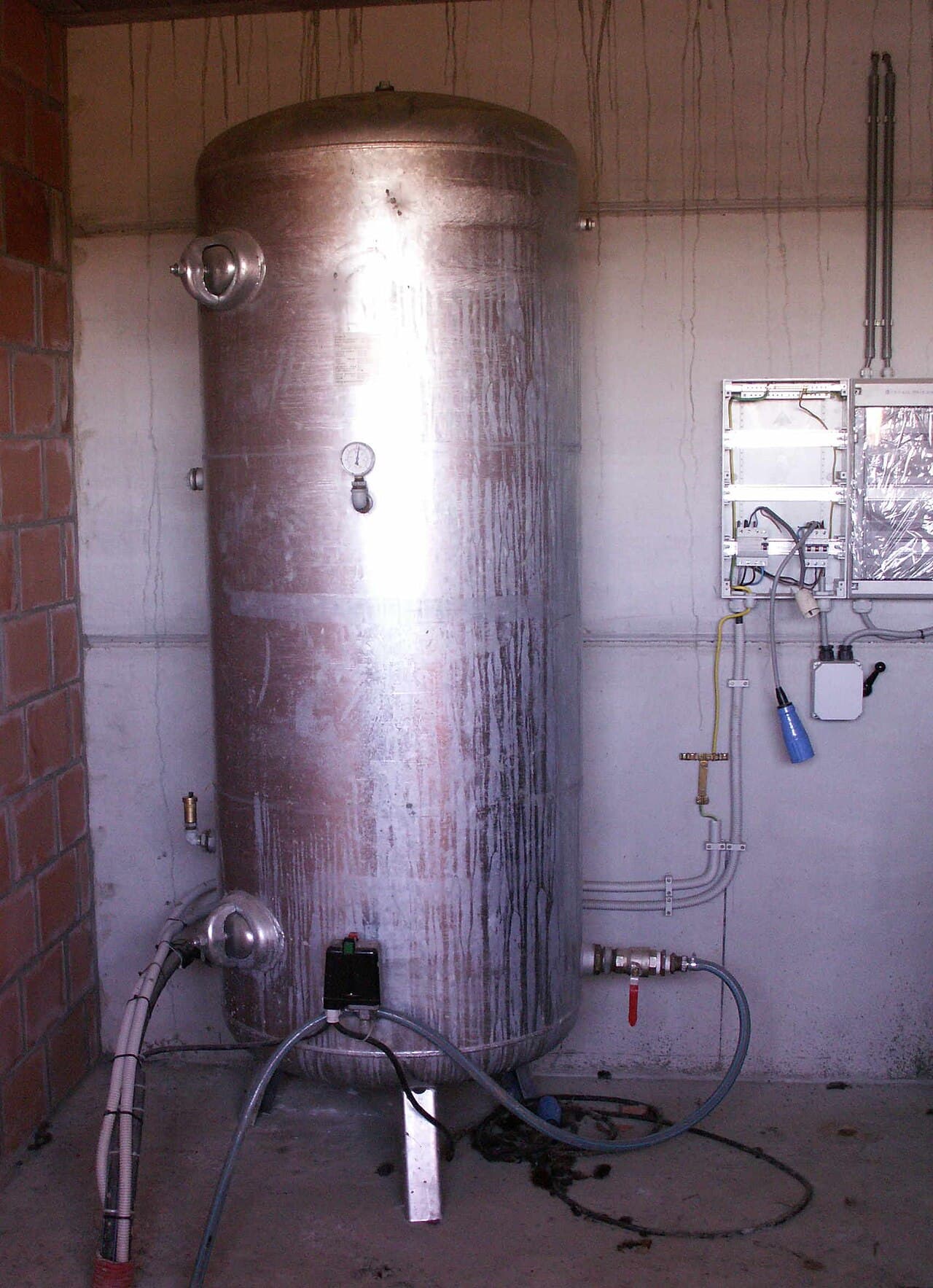
The rest of the system. A pump that failed early often had help. A waterlogged tank causes rapid cycling,[5] and every extra start wears the motor. Since 1970, most private water systems have used diaphragm or bladder-type pressure tanks,[4] so an older house may still have an original steel tank. If the tank, pressure switch or check valve is part of the problem, replacing only the pump can mean paying for a second visit later.
A constant-pressure upgrade. Some contractors will offer a variable-speed drive instead of a standard pump and switch. It adds a controller to the bill, but these systems need only a small pressure tank[5] and use less energy, because the pump runs longer with fewer startups.[4] Ask for both options priced side by side if you are interested.
Disinfection and testing. Virginia Cooperative Extension recommends shock chlorination after any maintenance or repair of a private water supply system,[6] and the EPA says to test the well immediately when you replace or repair any part of the well system.[7] Some contractors include the disinfection; the lab test is often separate. Before paying for one, ask: your local health department may provide private well testing for free.[7]
Permits and state fees
A pump swap does not need a health department well permit. Virginia's private well regulations state: "The replacement of a well pump, the replacement of a well seal or cap with an equivalent well seal or cap, or the vertical extension of the well casing above the ground surface shall not be considered a well alteration."[1]
The cost changes sharply if the problem is the well, not the pump: a well that has run dry, collapsed or been contaminated beyond repair. Then constructing, altering, abandoning or deepening a private well needs a written construction permit from the health commissioner.[1] The fee for a private well construction or abandonment permit was $300 when we checked the state's fee schedule on October 26, 2026.[2] For a replacement well, the application fee for a replacement well's permit is refunded in full once the health department receives a well completion report showing the old well was permanently and properly abandoned.[3] No application fee is charged to properly and permanently abandon an existing well on property that is the owner's principal residence,[3] and an owner whose family income is at or below the federal poverty income guidelines is not charged these fees at all.[3] The drilling itself is a separate, much larger quote.
The health department rule is not the only one that can apply. Whether the electrical or plumbing side of a pump replacement needs a local building permit is a question for your county or city building department, so ask it, and ask each contractor whether their quote includes pulling one.
What to put in a written quote
Virginia's Board for Contractors advises that you get at least three written bids or estimates using identical plans and specifications.[8] For a well pump, "identical" means each quote lists:
- the pump and motor make, model and horsepower, and whether it is submersible, jet or constant-pressure
- the setting depth, and the length and type of drop pipe and cable being replaced
- the check valves, pressure switch, control box and pressure tank, each marked as reused or new
- disinfecting the well, and whether a water test is included
- haul-away of the old equipment, and the warranty on parts and labor
- the contractor's licence number and classification
Beware of any bid substantially lower than the others.[8] It often means something on that list is missing. A sensible rule of thumb is an initial deposit of no more than 10% of the total price or $1,000, whichever is less,[8] and get the job in writing: Virginia law requires all licensed contractors to provide a written contract for residential work.[8]
When to call a licensed pro
Installing the well pump and tank, including pipe and wire, up to the point where they connect to the plumbing and electrical systems, is part of the Board for Contractors' water well and pump (WWP) specialty,[9] and plumbing (PLB), electrical (ELE) and HVAC (HVA) contractors are not excluded from installing pumps and tanks.[9] Under the state's private well regulations, anyone engaged in the construction, repair or alteration of a private well must be licensed and certified,[11] and a contractor building a water well must be licensed regardless of the contract amount.[10] Call as soon as you lose water, the pump runs without stopping, or it clicks on and off every few seconds: excessive cycling can overheat the motor and damage its bearings,[5] turning a tank or switch repair into a pump replacement.
Before you sign, check the contractor's licence, and read how a well pump works so the quote's line items make sense.
Get quotes from licensed pros
Loclis lists licensed businesses from Virginia's DPOR register. Browse well pump services or plumbers in Blacksburg, see more plumbing answers, or describe the job once and licensed local businesses quote it. Ask each one to price the same list above.
Common questions
- Do I need a permit to replace a well pump in Virginia?
- Not a health department well permit: Virginia's private well regulations say replacing a well pump is not a well alteration. Building, altering, deepening or abandoning the well itself does need a construction permit from the Virginia Department of Health. Ask your local building department whether it wants a building or electrical permit for the pump work, and ask the contractor who pulls it.
- Why do quotes for the same pump vary so much?
- Mostly because of what is included. One quote may cover only the pump, another the pump, motor, wire, drop pipe, check valve, control box, tank and disinfection. Ask every contractor to quote the same list so the numbers can be compared.
- Should the pressure tank be replaced at the same time?
- Only if it has failed or is near the end of its life. A waterlogged tank makes the pump cycle rapidly, which wears out a new pump too, so ask the contractor to check the tank's condition and air charge and to say in the quote whether it needs replacing.
- What does a new well cost if the old one has failed?
- The drilling is quoted by a licensed well contractor and depends on the depth needed. The state's private well construction permit fee was $300 when we checked on October 26, 2026. For a replacement well that fee is refunded once the old well is properly abandoned, abandoning a well at your principal residence carries no application fee, and owners at or below the federal poverty guidelines pay no fee.
- Is the water test after a pump replacement extra?
- Often it is a separate line. The EPA advises testing a well immediately after any part of the system is repaired or replaced, and your local health department may provide private well testing for free, so ask there first.
Sources
- [1] 12VAC5-630-220, Private Well Regulations: Permits and inspection statement; general, Virginia Administrative Code, Legislative Information System. Checked October 26, 2026.
- [2] 12VAC5-620-70, Regulations Governing Application Fees: Establishing fees, Virginia Administrative Code, Legislative Information System. Checked October 26, 2026.
- [3] 12VAC5-620-80, Regulations Governing Application Fees: Waiver of fees, Virginia Administrative Code, Legislative Information System. Checked October 26, 2026.
- [4] Private Drinking Water Wells: The Distribution System (G2152), University of Nebraska-Lincoln Extension. Checked October 26, 2026.
- [5] AIM Manual, 60 Hz Submersible Systems: Application, Installation, Maintenance (2026 edition), Franklin Electric. Checked October 26, 2026.
- [6] Virginia Household Water Quality Program: Shock Chlorination, Disinfecting Private Household Water Supply Systems (442-663), Virginia Cooperative Extension, Virginia Tech. Checked October 26, 2026.
- [7] Private Wells: Protect Your Home's Water, U.S. Environmental Protection Agency. Checked October 26, 2026.
- [8] What You Should Know Before You Hire a Contractor, Virginia Board for Contractors, DPOR. Checked October 26, 2026.
- [9] 18VAC50-22-30, Board for Contractors Regulations: Definitions of specialty services, Virginia Administrative Code, Legislative Information System. Checked October 26, 2026.
- [10] Code of Virginia § 54.1-1103, Necessity for license; requirements for water well drillers and landscape irrigation contractors, Code of Virginia, Legislative Information System. Checked October 26, 2026.
- [11] 12VAC5-630-80, Relationship to the Department of Professional and Occupational Regulation, Virginia Administrative Code, Legislative Information System. Checked October 26, 2026.
Want a pro to handle it?
Describe the job once. Licensed local businesses send quotes, and you pay only when you book one.
Get a quote for Plumbing Repair