How long does a well pump last?
Well pumps have no standard lifespan that holds across wells, so no single number of years is reliable. What wears one out is better documented: frequent starting, which can overheat the motor and damage its bearings, along with a failing pressure tank, poor voltage, power surges, too little cooling water around the motor, and sand. Keeping those in check is how a pump lasts.
Free to ask. Local shops send quotes, and you pay only when you book one.
By Kasra Taheri, Founder, LoclisUpdated
Researched and drafted with AI, then checked claim by claim against the sources listed below before it was published. Prices and rules change; the dates beside each source say when it was last checked.
This is a job for a licensed pro in Virginia
This page explains what the work involves, the permits, what a licensed pro does and what drives the cost. It does not give step-by-step instructions, because this work needs a licence, a permit or both, and doing it wrong can injure someone. Before you hire, check the licence on Virginia's DPOR record.
The short version
Well pumps have no standard lifespan that holds across wells, so no single number of years is reliable. What is documented is what wears a pump out. For best system life, a Franklin Electric submersible motor should average no more starts per day than the company recommends.[1] A pump in a well-designed, well-kept system that starts a modest number of times a day is in a better position than the same pump in a system that short-cycles, runs on poor voltage or draws sand.
So the practical question is not only "is my pump old?" but "is anything wearing it out faster than it should?" Most of the answers are above ground, in the pressure tank, the switch and the power supply.
What wears a pump out
How often it starts. Starting current builds heat in the motor, and the starts add up. Excessive cycling shortens the life of the control components and can damage the motor's splines and bearings or overheat it.[1] For scale, Franklin Electric's recommended maximum for its encapsulated single-phase motors of 1 to 5.5 horsepower is 100 starts in 24 hours, and 300 for its motors up to 0.75 horsepower.[1] Its motors should also run at least one minute each time they start, so the heat built up by the starting current can dissipate.[1]
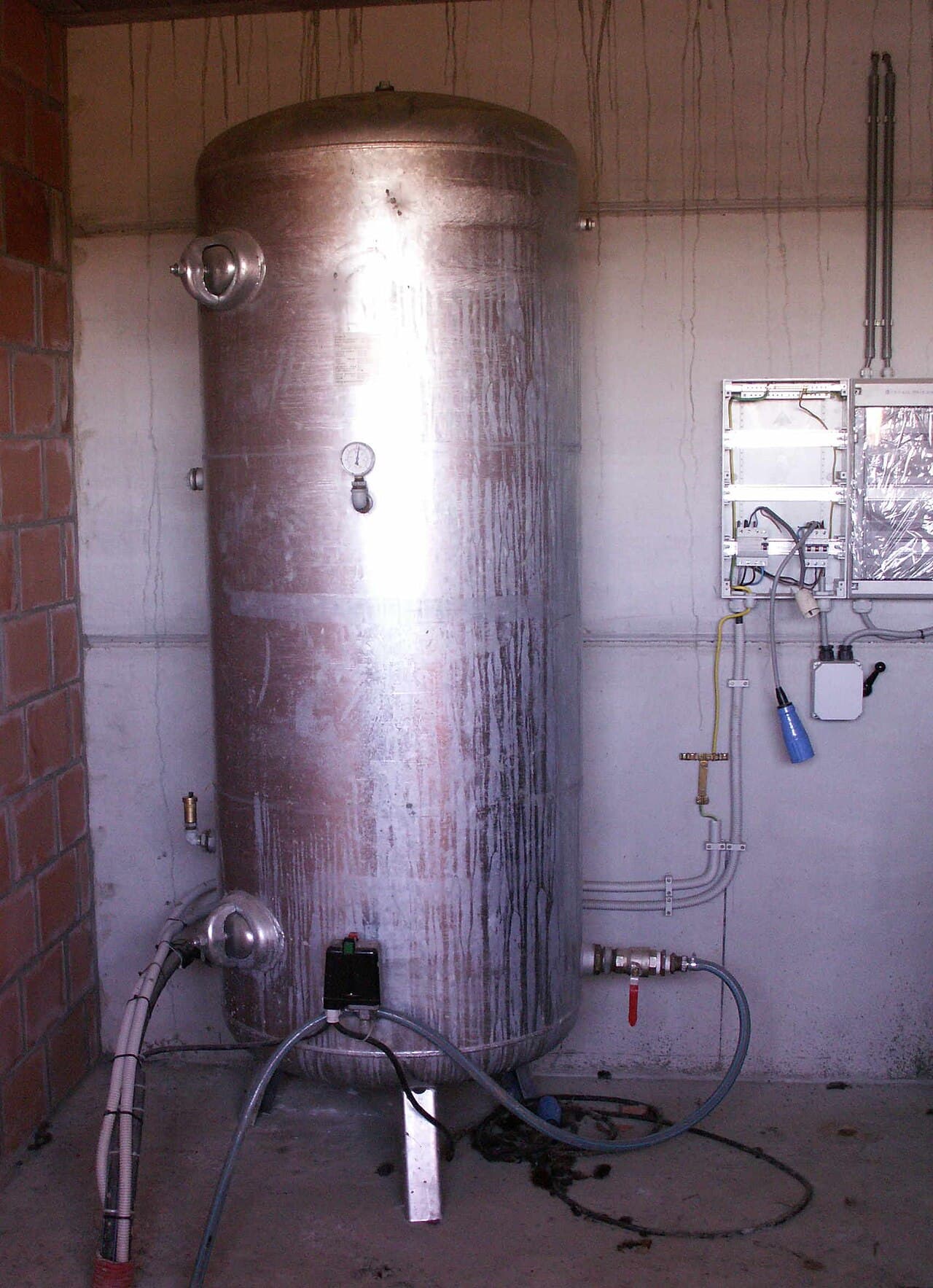
The pressure tank. The tank is part of how a system limits starts: the pump size, the tank size and the other controls are chosen to keep the starts per day as low as possible.[1] When the tank fails, the pump pays for it. A waterlogged tank causes rapid cycling.[1] Our guide to a pump that keeps turning on and off covers the signs.
Voltage. Incorrect voltage can make a running motor trip its overload. The voltage at the line terminals must be within 10% of the motor's rated voltage, and the remedy when it is not is to contact the power company.[1]
Lightning and surges. "All submersible motors require a dedicated surge arrestor."[1] Some come with one: motors of 5 horsepower and smaller marked "Equipped with Lightning Arrestors" have one built in.[1] Ask your contractor whether yours is protected.
Cooling. A submersible motor is cooled by the water moving past it. Franklin Electric's submersible motors need water flowing past them along the whole length of the motor to stay cool.[1] Some installations need a flow inducer sleeve to get that flow, including a well whose diameter is too large and a pump set below the well casing.[1] That is a question for the installer, and one more reason to use someone who knows wells.
Matched parts. On motors with an above-ground control box, the control box's horsepower rating and voltage must match the motor exactly, or the box or the motor can be expected to fail early.[1] A mismatched box left over from an earlier repair can shorten a new motor's life.
Sand and sediment. A sand-locked pump can bind so the motor cannot turn.[1] A well that produces sand is a well problem as much as a pump problem.
Signs a pump is wearing out
A worn pump is one of the reasons a motor runs continuously without shutting off, and a worn pump can also make the motor draw lower current than normal.[1] Those signs overlap with other faults: the symptoms of a worn pump are similar to those of a leak in the drop pipe or a low water level in the well.[1] That is why a good contractor tests before replacing, including checking the motor's running current against its specifications,[1] rather than pulling the pump on a guess.
What keeps a well system healthy
Most of the upkeep that protects a pump is checking and scheduling, not tools:
- Test the water every year. Test the water once a year for total coliform bacteria, nitrates, total dissolved solids and pH.[2] The Virginia Department of Health also recommends testing once a year.[3] Then test again immediately after any part of the well system is replaced or repaired.[2]
- Look at the wellhead. Check the exposed parts of the well now and then for cracked, corroded or damaged well casing, a broken or missing well cap, and settling and cracking of surface seals.[2]
- Keep the area clear. Virginia's well regulations say: "No objects, articles, or materials that are not essential to the operation of the well shall be placed or stored in a well, well house, on the well head or well pump or water treatment system, or within close proximity to them."[4] They also say the area around the well must be graded to divert surface water away from it.[4]
- Keep records. Keep records of the well's installation and maintenance, any treatment devices, and every water test.[5] It helps to add when the pump, tank and switch were installed, the pump's make and horsepower, and the switch settings, so the next contractor can quote faster and more accurately.
- Pay attention to cycling. If the pump starts every time you open a tap, get the tank and switch checked before the motor suffers.
After any repair, ask about disinfecting the well. Virginia Cooperative Extension recommends shock chlorination following any maintenance or repair of a private water supply system.[6]
When to call a licensed pro
The checks above are a homeowner's; the repairs are not. Virginia's private well regulations say: "Persons engaged in the construction, repair, or alteration of a private well shall be licensed and certified".[7] Installing the well pump and tank is part of the Board for Contractors' water well and pump specialty,[8] and its definition does not exclude licensed plumbing, electrical or HVAC contractors from installing pumps and tanks.[8]
Call a licensed well or pump contractor, or a plumber who does well work, when the pump cycles rapidly, runs without stopping, trips its breaker, or pressure is falling off; when the water turns cloudy or sandy; or after a lightning strike or flood near the well. Before you hire, check the contractor's licence. If it does come to a replacement, what drives the cost explains what to ask for in a quote.
Find a well pump pro
Loclis lists licensed businesses from Virginia's DPOR register. Browse well pump services or well water testing, see more plumbing answers, or describe the job once and licensed local businesses quote it.
Common questions
- What shortens a well pump's life?
- Frequent starting is the best-documented cause. Excessive cycling shortens the life of the control components and can damage the motor's splines and bearings or overheat it. A waterlogged pressure tank causes rapid cycling, so a healthy tank protects the pump.
- Should I replace an old well pump before it fails?
- Not on age alone. A pump that still delivers good pressure, starts normally and draws normal current can keep running. Ask a licensed well or pump contractor to check the running current against the motor's specifications, and to look at the tank and switch, before deciding.
- Does lightning damage well pumps?
- It can. Every submersible motor needs its own surge arrestor, mounted close to the motor and grounded. Smaller Franklin Electric motors marked as equipped with lightning arrestors have one built in; if yours is not, ask your contractor whether the control box or pump panel has one.
- Does well water quality affect pump life?
- It can. Sand can bind a pump so the motor cannot turn. If your water carries sand or the pump has been sand-locked before, ask a contractor about the well and the pump setting, not just a replacement pump.
- How often should a well be tested?
- The EPA and the Virginia Department of Health both recommend testing once a year, and the EPA adds that you should test immediately after any part of the well system is replaced or repaired.
Sources
- [1] AIM Manual, 60 Hz Submersible Systems: Application, Installation, Maintenance (2026 edition), Franklin Electric. Checked October 26, 2026.
- [2] Private Wells: Protect Your Home's Water, U.S. Environmental Protection Agency. Checked October 26, 2026.
- [3] Private Well Water Information, Virginia Department of Health, Division of Onsite Sewage and Water Services. Checked October 26, 2026.
- [4] 12VAC5-630-390, Private Well Regulations: Site protection, Virginia Administrative Code, Legislative Information System. Checked October 26, 2026.
- [5] 10 Tips for Managing your Private Water Supply (BSE-367), Virginia Cooperative Extension, Virginia Tech. Checked October 27, 2026.
- [6] Virginia Household Water Quality Program: Shock Chlorination, Disinfecting Private Household Water Supply Systems (442-663), Virginia Cooperative Extension, Virginia Tech. Checked October 26, 2026.
- [7] 12VAC5-630-80, Relationship to the Department of Professional and Occupational Regulation, Virginia Administrative Code, Legislative Information System. Checked October 26, 2026.
- [8] 18VAC50-22-30, Board for Contractors Regulations: Definitions of specialty services, Virginia Administrative Code, Legislative Information System. Checked October 26, 2026.
Want a pro to handle it?
Describe the job once. Licensed local businesses send quotes, and you pay only when you book one.
Get a quote for Plumbing Repair