How is a metal roof installed over shingles?
A roofer first checks that the old roof can stay: usually one flat layer of shingles over a sound deck, with local code allowing a recover. The metal then goes on in one of three ways: over wood furring strips fastened through to the structure, directly through the shingles over a separation layer, or on a manufacturer's clip-and-panel recover system. New flashing and trim finish the job.
Free to ask. Local shops send quotes, and you pay only when you book one.
By Kasra Taheri, Founder, LoclisPublished
Researched and drafted with AI, then checked claim by claim against the sources listed below before it was published. Prices and rules change; the dates beside each source say when it was last checked.
This is a job for a licensed pro in Virginia
This page explains what the work involves, the permits, what a licensed pro does and what drives the cost. It does not give step-by-step instructions, because this work needs a licence, a permit or both, and doing it wrong can injure someone. Before you hire, check the licence on Virginia's DPOR record.
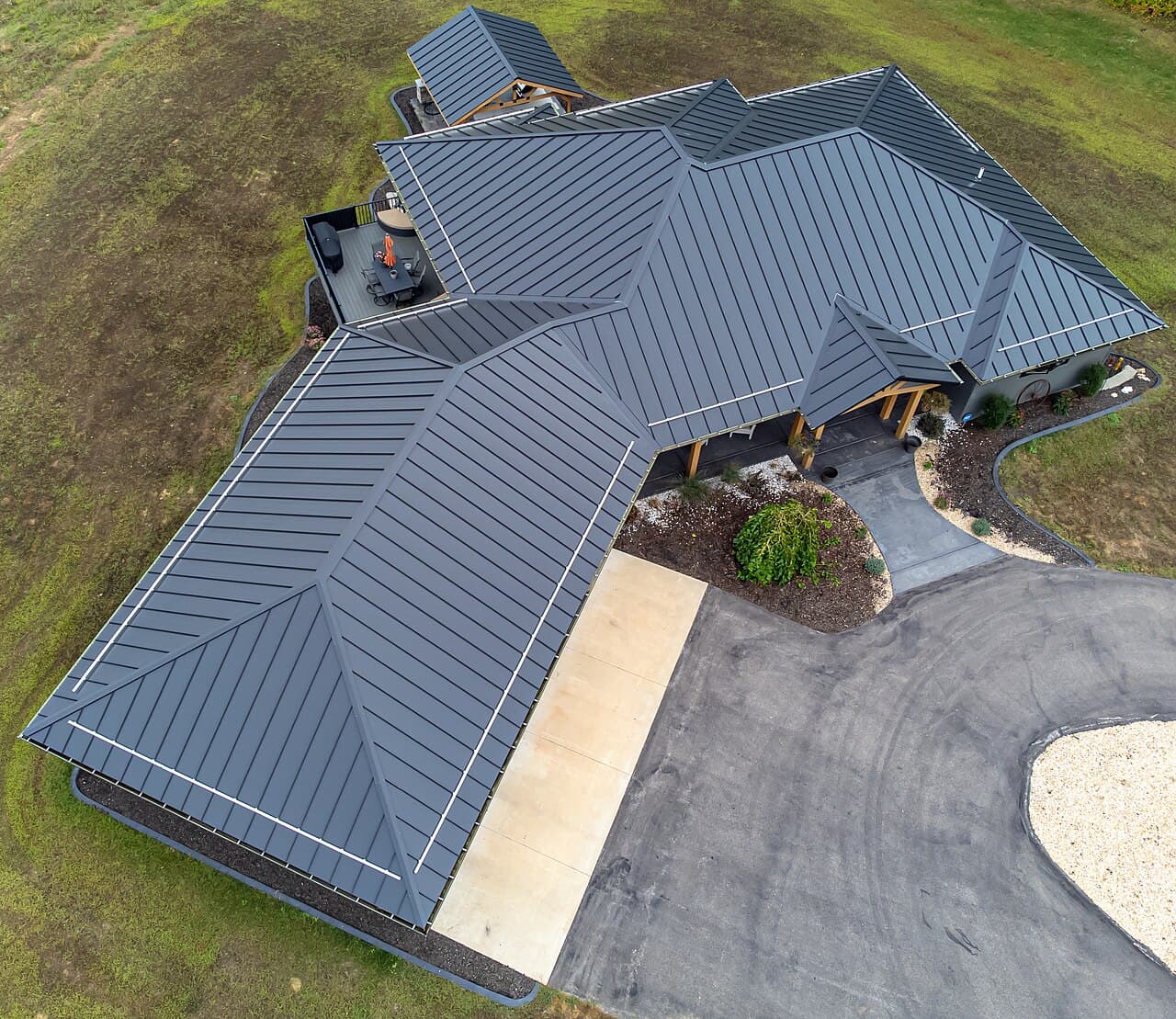
A metal roof goes over shingles in three stages: an inspection to confirm the old roof can stay, a base that separates or lifts the metal off the shingles, and then the panels, flashing and trim. The base is where the methods differ. Here is what a roofer does at each stage, so you can follow the quote and ask the right questions.
First, can the shingles stay?
Installing over the old roof, without removing it, is called a recover. McElroy Metal, a panel maker, says in many cases a metal roof can go directly over one layer of existing shingles, and that local code and the condition of the existing roof determine eligibility.[2]
The roofer looks for the conditions that usually force a tear-off: rotted or warped wood or large gaps between deck boards, more than one layer of existing shingles, or a structure that sags across the ridge or truss lines. A sagging roof should be inspected by a structural engineer before anyone adds a new covering. Local code may also limit how many layers a roof can carry, so the building department's answer matters. Expect the roofer to go into the attic as well, to look at the underside of the deck for stains and soft spots.
Method 1: furring strips over the shingles
In this approach, wood purlins or sub-girts are fastened over the old roof as furring strips and attached to the structure below, and the metal panels are fastened to that framing.[1] It gives the panels a flat, even base and leaves room for air to move under the metal.
There are trade-offs. McElroy notes that the furring adds weight, so someone has to determine that the structure can carry it,[1] and that with the cost of the furring material and labor, the final price can be similar to a tear-off.[1] If the furring is pressure-treated, there is a corrosion issue: copper in pressure-treated lumber can aggressively attack metal panels,[1] so McElroy calls for a barrier of #30 felt or synthetic underlayment between treated furring and the panels.[1]
Method 2: panels straight through the shingles
The least expensive method is direct attachment: panels are fastened through the shingles into the wood deck below.[1] It saves the furring, but it has two drawbacks. First, steel can telegraph unevenness in the deck and shingles through the panels,[1] which is a cosmetic issue, not a leak. Second, direct attachment makes above-sheathing ventilation hard to achieve,[1] which costs some of the energy benefit described below.
A separation layer is not optional here. A barrier layer between the shingles and the metal is required, to keep the shingles from wearing through the panels as the metal expands and contracts.[1] Common barriers are #30 felt, synthetic underlayment or thin foil-faced insulation.[1]
Method 3: a manufacturer's recover system
Some panel makers sell systems built for this job, with clips that hold the panels above the shingles without a full furring grid. The point of the raised design is airflow. Above-sheathing ventilation creates a vented air space between the metal panel and the substrate, so heat that would pass into the house vents back outdoors.[3] McElroy also notes that leaving the existing shingles in place adds a layer of insulation between the metal and the living space.[3] If a contractor proposes one of these systems, ask for the maker's installation guide and warranty terms in writing.
Underlayment, slope, flashing and trim
Whatever the base, the rest of the job follows the panel maker's manual. Panels have minimum slopes. Metal Sales, for example, says its Vertical Seam panel has a minimum recommended slope of 3:12 over open framing and 1:12 over solid substrate,[4] so a low-pitch porch roof may need a different panel than the main roof.
Prince William County's building division points out that the Virginia code calls for an ice barrier along the eaves for metal roof shingles, among other coverings, in areas with a history of ice forming there and backing up water.[5] Ask your roofer whether that applies to your panel type and your county.
The crew then replaces the flashing at walls, chimneys, valleys and vent pipes, adds closures and trim at the eaves, rakes and ridge, and fastens the panels to the pattern in the manual. Old shingle flashing is rarely reused; metal panels need flashing designed for them. Panel makers are blunt about foot traffic during this work: "Do not use the roof panel as a walking platform."[4] Crews walk on supports and use fall protection.
Permits and the contract in Virginia
Under Virginia's building code, replacing an unlimited amount of roof covering on a one- or two-family house or townhouse needs no permit, unless the house is in an area where the nominal design wind speed is greater than 100 miles per hour.[6] Separately, the building official may require a permit application for replacement roofing in a locally designated historic district.[6] Because a recover adds a layer rather than replacing one, ask your local building department how it treats the job; see do you need a permit to replace a roof for more.
In Virginia, the contract must be signed by you and the contractor before work starts or any payment is accepted.[8] It has to list the materials and work, and include a statement that the contractor will comply with local requirements for building permits, inspections and zoning.[8] Have it name the method (furring, direct or recover system), the barrier layer, the panel and coating, and who handles any deck repairs found along the way.
When to call a licensed pro
From the first inspection to the last trim piece, this is a job for a licensed roofer. Falls from roofs accounted for nearly 1,200, or 34%, of construction fall deaths between 2003 and 2013,[10] and new metal panels are slick underfoot. In Virginia, roofing contracting is the licensed specialty for installing the materials that form a watertight, weather-resistant roof surface.[7] Check a contractor using DPOR's License Lookup or by calling (804) 367-8511,[9] or follow how to check a contractor's licence.
Before you decide, read what a metal roof costs in Virginia, whether a metal roof is worth it and what happens during a full roof replacement, or browse more exterior answers. Loclis lists licensed businesses from Virginia's DPOR register: see metal roofing contractors or exterior contractors in Blacksburg.
When you are ready, describe your metal roof project once and licensed local roofers send quotes or offer an estimate visit.
Common questions
- Can a metal roof go over two layers of shingles?
- Usually not. A metal recover over a single layer of shingles is the common case, and with two layers already on the roof expect the roofer to recommend a tear-off first. Local code and the condition of the existing roof decide, so ask your local building department what it allows.
- Is it cheaper to put metal over shingles than to tear them off?
- Often, because there is no tear-off labor or disposal. The saving shrinks when furring strips are used: McElroy Metal notes the added furring material and labor can bring the price close to a tear-off. Ask for written quotes for both a recover and a tear-off so you can compare.
- Will I see the old shingles through the new metal?
- Sometimes. When panels are fastened straight through the shingles, steel can show the unevenness of the shingles and deck underneath. It does not affect performance. If a smooth look matters to you, ask about furring, a clip-based recover system or a tear-off.
- Does a metal recover need a permit in Virginia?
- Virginia's building code exempts replacing roof covering on one- and two-family houses and townhouses from permits, except in areas with design wind speeds over 100 mph and in some historic districts. Whether your building official treats a recover the same way is a question for that office; your contract should say the contractor will handle any permits.
- Can I install metal panels over my shingles myself?
- No. It is roof work at height on slippery panels, and the structure, layout, fastening and flashing all need a trained crew. Hire a licensed roofing contractor.
Sources
- [1] How to Install Metal Roofing Over Shingles, McElroy Metal. Checked October 27, 2026.
- [2] Residential Metal Roofing Guide: What Homeowners Need to Know, McElroy Metal. Checked October 27, 2026.
- [3] Are Metal Roofs Energy Efficient?, McElroy Metal. Checked October 27, 2026.
- [4] Residential Design Manual (2024), Metal Sales Manufacturing Corporation. Checked October 27, 2026.
- [5] Residential Roof Replacements (FAQ, version 2021-06-24), Prince William County Building Development Division. Checked October 27, 2026.
- [6] 13VAC5-63-80, Section 108 Application for permit (Virginia Uniform Statewide Building Code), Virginia Administrative Code. Checked October 27, 2026.
- [7] 18VAC50-22-30, Definitions of specialty services, Virginia Board for Contractors (Virginia Administrative Code). Checked October 27, 2026.
- [8] 18VAC50-22-260, Filing of charges; prohibited acts, Virginia Board for Contractors (Virginia Administrative Code). Checked October 27, 2026.
- [9] Disaster Recovery: Avoiding Fraud, Virginia Department of Professional and Occupational Regulation. Checked October 27, 2026.
- [10] Protecting Roofing Workers (OSHA 3755-05 2015), U.S. Occupational Safety and Health Administration. Checked October 27, 2026.
Want a pro to handle it?
Describe the job once. Licensed local businesses send quotes, and you pay only when you book one.
Get a quote for Roofing