Why is my metal roof making popping noises?
Popping, ticking or banging from a metal roof is usually thermal movement: steel panels grow and shrink as the sun heats them and the air cools them. A roof built to let the panels slide stays fairly quiet; one where clips, screws, tight trim or insulation hold the panels back makes noise. Loose screws and wavy, oil-canned panels can add to it.
Free to ask. Local shops send quotes, and you pay only when you book one.
By Kasra Taheri, Founder, LoclisPublished
Researched and drafted with AI, then checked claim by claim against the sources listed below before it was published. Prices and rules change; the dates beside each source say when it was last checked.
This is a job for a licensed pro in Virginia
This page explains what the work involves, the permits, what a licensed pro does and what drives the cost. It does not give step-by-step instructions, because this work needs a licence, a permit or both, and doing it wrong can injure someone. Before you hire, check the licence on Virginia's DPOR record.
Popping, ticking and banging from a metal roof almost always come from the metal moving with temperature. Steel grows as the sun heats it and shrinks as it cools, and when something stops the panels from sliding freely, the stress builds up and releases with a sound. Most of the time it is a nuisance, not damage. Below are the usual causes, how to tell them apart from the ground, and when the noise is a reason to call a roofer.
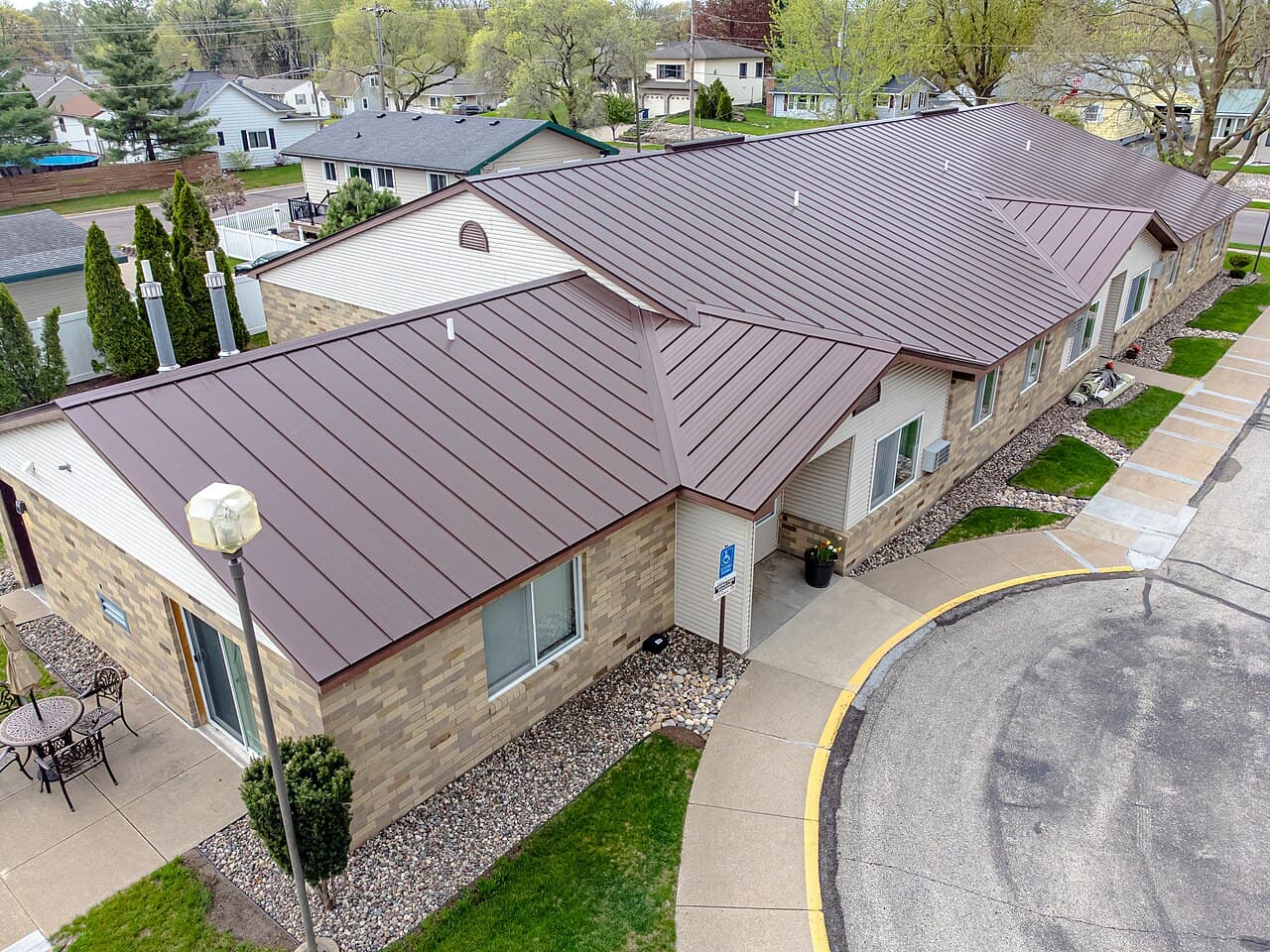
The usual cause: thermal movement
Metal Sales, a panel maker, puts it this way: Steel roofing panels are subject to dimensional changes after installation due to exposure to varying temperatures.[1] It adds: "The greatest influence is solar energy."[1] That is why the noise tends to follow the sun. Many owners hear it in the morning as the roof warms, when a cloud passes on a hot day, and again in the evening as it cools.
Movement itself is expected. Noise comes when the movement is held back. Sheffield Metals, a metal supplier, says: When you restrict the expansion and contraction a panel needs, you can run into a noise issue,[3] along with other problems.
Why some metal roofs are louder than others
Standing seam roofs. These are designed to move. On Metal Sales' standing seam system, floating clips let the panels move independently of the roof structure underneath,[1] and when a panel run is longer than the clips can accommodate, expansion joints must be designed into the roof.[1] If fixed clips, tight trim or a bead of sealant pin the panels where they should slide, the roof can pop.
Screw-down (exposed-fastener) roofs. Here every screw holds the panel to the framing. Metal Sales warns that thermal movement can loosen the screws' grip in the framing, make fasteners back out, break fasteners and elongate the holes in the panels.[2] Its guide says thermal movement should be considered on panels longer than 20 feet, and panel runs longer than 40 feet generally need some way to accommodate it.[2] Long, single-piece panels on a barn, porch or house are the ones most likely to tick and pop.
Loose fasteners. A panel that can rattle against a loose screw makes more noise in wind and as it moves. Sheffield notes that exposed fastener roofs should have their fasteners checked every year because they can back out from expansion and contraction over time.[5]
Wavy panels and oil canning
Oil canning makes a metal panel look wavy or distorted.[4] McElroy Metal lists common causes including over-driven fasteners, deviations in the roof structure, movement of the structure, and temperature differences along the roof, usually when one part is in sun and another in shade.[4] McElroy calls it in almost all cases an aesthetic issue that does not affect performance.[4] It matters here because it shares a root cause with noise: Sheffield lists restricted thermal movement as a cause of both noise and oil canning.[3] If your noisy roof also has rippled, shiny patches that shift with the light, the two are likely connected.
Rain noise is a different problem
A drumming sound in rain or hail is not thermal movement. Sheffield explains that rain and hail are more noticeable on metal installed directly over open framing, because there is no deck, sheathing or insulation to muffle the sound.[3] On a house it is different: McElroy says rain on a residential metal roof over decking, underlayment, attic insulation and a ceiling sounds about the same as rain on any other roof.[6]
If you are adding insulation to quiet a garage, shop or porch roof, Sheffield suggests you ask the installer to make sure the insulation allows for adequate thermal movement.[3] Otherwise you can trade drumming for popping.
What you can note without going on the roof
A roofer will find the cause faster with a few observations from you:
- When it happens. Morning warm-up, midday sun and clouds, evening cool-down, wind, or rain.
- Where it comes from. One slope, a long run of panel, near a chimney, wall or skylight, or over a porch.
- What it looks like from the ground. Binoculars help: look for screws standing proud, lifted panel edges, wavy panels or loose trim.
- What is inside. In the attic, look for daylight at screw holes and for wet spots. Drips that appear on cool, clear mornings rather than in rain point to condensation: The underside of a metal roof can dip below the dew point on clear, cool nights, even in summer.[7] See why a metal roof leaks at the screws for how to tell the two apart.
Short videos with sound, taken at the time of day the noise happens, are worth more than a description.
When to call a licensed pro
Call a roofer when the noise is new, getting louder or more frequent, follows a storm, or comes with loose screws, lifted panels, waviness that is spreading, or water inside. Those signs point to fasteners letting go or panels working loose, which can lead to leaks or wind damage.
Do not go up to look. Metal Sales' own guide warns installers: "Never walk on frosty, icy, or wet panels."[1] Re-securing panels, replacing fasteners or freeing trim is roof work. In Virginia, roofing contracting is the licensed specialty for repairing the materials that form a watertight, weather-resistant roof surface.[9] Check a roofer using DPOR's License Lookup or by calling (804) 367-8511,[10] and, if the roof is young, call the original installer first, since a workmanship warranty covers the installer's own work, such as clip, fastener and trim installation.[8]
For related problems, see how leaking screws on a metal roof are fixed and whether a metal roof needs maintenance, or browse more exterior answers and metal roof repair. Loclis lists licensed businesses from Virginia's DPOR register, including exterior contractors in Blacksburg.
Describe the noise and add your videos, and licensed local roofers send quotes or offer an estimate visit.
Common questions
- Is it normal for a metal roof to pop when the sun comes out?
- Some sound as the roof heats and cools is common, because steel panels change size with temperature and sunlight is the biggest driver. A roof that lets the panels slide should stay fairly quiet. Loud, frequent bangs suggest something is holding the panels back and is worth having a roofer look at.
- Why does my metal roof make noise at night?
- As the roof cools after sunset the panels shrink, and if they catch on screws, clips or trim they can tick or pop. If you also see drips inside on cool, clear mornings, that is likely condensation on the underside of the metal rather than a leak.
- Are popping noises a sign my roof is failing?
- Not usually by themselves. They become a concern when they come with loose or lifted panels, screws backing out, new leaks or stains, or after a storm. Then have a licensed roofer inspect it.
- Can a roofer make a noisy metal roof quieter?
- Often. Depending on the cause, a roofer may re-secure or replace loose fasteners, free trim that pins the panels, or add insulation that still lets the metal move. Some noise from a roof built without room for movement is hard to remove without reworking panels.
- Should I tighten the screws myself to stop the noise?
- No. Metal panels are slippery and a fall from a roof can kill. Over-driving a screw also crushes its washer and can dent the panel. Leave it to a licensed roofer.
Sources
- [1] Magna-Loc 90 Installation Guide (10/26), Metal Sales Manufacturing Corporation. Checked October 27, 2026.
- [2] Post Frame Installation Guide (10/25), Metal Sales Manufacturing Corporation. Checked October 27, 2026.
- [3] Metal Roofing Myths: Lightning, Noise, Rust, Denting, & More, Sheffield Metals. Checked October 27, 2026.
- [4] What is Oil Canning of a Metal Roof?, McElroy Metal. Checked October 27, 2026.
- [5] Metal Roofing Maintenance: How to Best Care for Your Metal Roof, Sheffield Metals. Checked October 27, 2026.
- [6] Residential Metal Roofing Guide: What Homeowners Need to Know, McElroy Metal. Checked October 27, 2026.
- [7] Condensation, Ventilation, and Your Metal Roof, McElroy Metal. Checked October 27, 2026.
- [8] What Warranties or Guarantees are Typically Offered For Metal Roofing, and What Do They Cover?, McElroy Metal. Checked October 27, 2026.
- [9] 18VAC50-22-30, Definitions of specialty services, Virginia Board for Contractors (Virginia Administrative Code). Checked October 27, 2026.
- [10] Disaster Recovery: Avoiding Fraud, Virginia Department of Professional and Occupational Regulation. Checked October 27, 2026.
Want a pro to handle it?
Describe the job once. Licensed local businesses send quotes, and you pay only when you book one.
Get a quote for Roofing